AI
SCCG Management Announces Strategic Partnership with SSTrader the Next-Gen Sports Analytics and AI-powered Predictions Platform

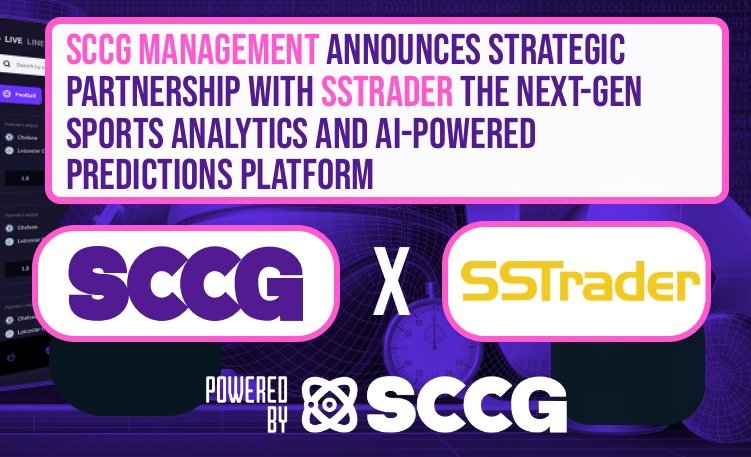
SCCG Management, the leading management advisory firm in the gambling industry, is excited to announce its partnership with SSTrader, a state-of-the-art AI-powered sports analytics platform that is set to redefine sports betting. This collaboration marks a significant step forward in the sports betting industry, combining SCCG’s global influence and expertise with SSTrader’s innovative technological solutions.
Stephen Crystal, CEO of SCCG Management, said, “At SCCG, we pride ourselves on identifying and partnering with the most groundbreaking ventures in the gambling arena. SSTrader’s unique platform, which merges the complexities of big data, AI, and machine learning, represents the future of sports betting. In addition, we believe their proprietary AI-powered chatbot is a first-of-its-kind customer engagement and retention tool, set to take the industry by a storm. We’re thrilled to be part of their journey and to provide them with unparalleled access to global markets through our extensive network.”
Boris Chaikin, Strategic Advisor and Partner at SSTrader expressed his enthusiasm for the partnership, stating, “We are honoured and humbled to have the ability to work with SCCG at this early stage of our development. The assistance we expect to receive is instrumental in the development of our team’s product and vision. We look forward to tapping into SCCG’s unrivaled industry network for early market penetration and further technological development in the sports betting space.”
With SCCG Management’s global offices located in every corner of the world, and its position as the top-tier advisory firm in the gambling industry, SSTrader is poised to expand its reach and disrupt traditional sports betting experiences.




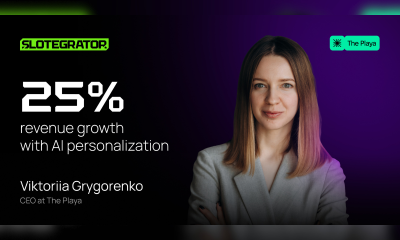






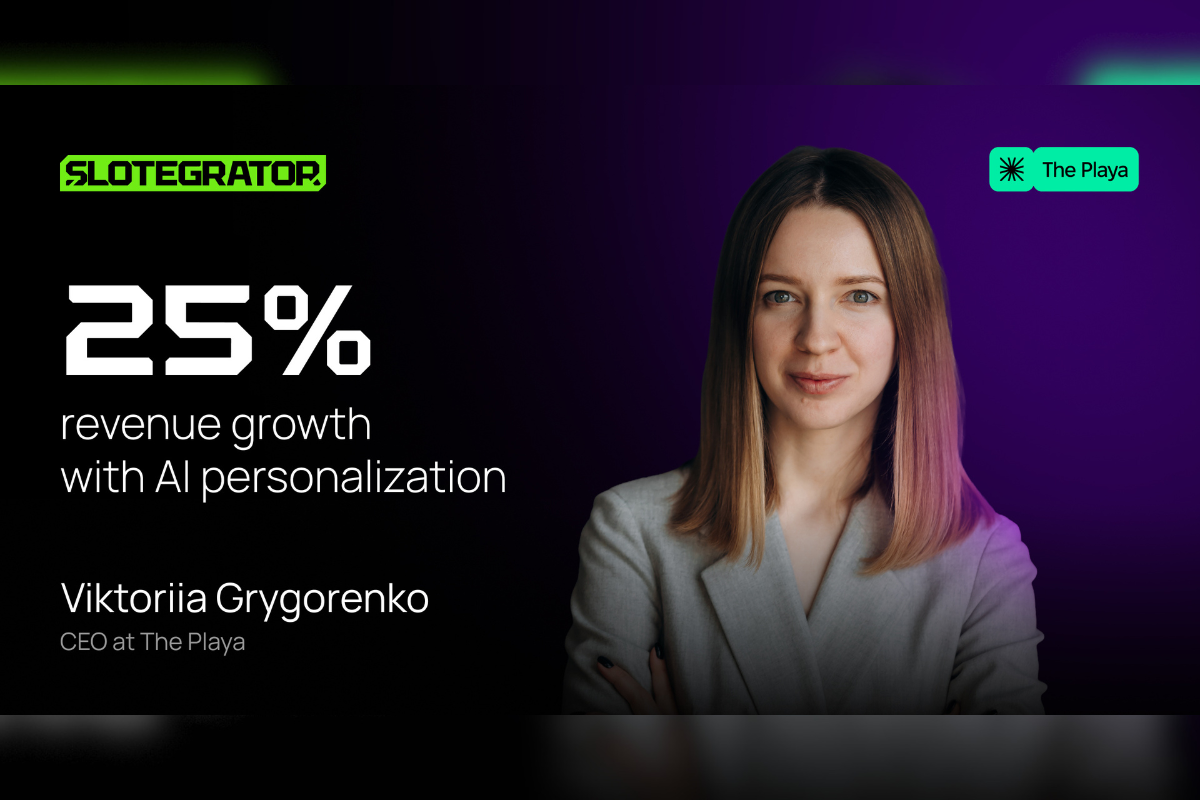
As player expectations rise, generic casino lobbies are no longer enough — AI-driven personalization is becoming essential to engage, retain, and grow audiences.
In this evolving landscape, The Playa is positioning itself at the forefront of iGaming personalization. Slotegrator spoke with Viktoriia Grygorenko, CEO, about the company’s journey, emerging industry trends, and how data-driven experiences can boost revenue by up to 25%, and often beyond.
Founded at the intersection of artificial intelligence and iGaming, The Playa started as a small experimental project and quickly grew into a full-scale platform. Today, the company delivers solutions across the entire player lifecycle — from lobby personalization and acquisition intelligence to VIP insights and retention optimization — serving operators with a monthly GGR of over $10 million.
According to Viktoriia, the industry has long underutilized one of its most valuable assets: player data. “iGaming generates enormous amounts of behavioral data — from game preferences to betting patterns — but most operators still rely on basic segmentation,” she explains. “That’s a missed opportunity.”
The gap is even more obvious compared to global entertainment platforms competing for audience attention. As Viktoriia points out, top companies invest billions in learning what their users want and delivering it instantly, while many online casinos offer identical experiences to all players. However, the industry is beginning to catch up.
Internal research by The Playa shows that 77% of iGaming companies leaders believe AI will be a key competitive advantage within the next two to three years. At the same time, major operators are rapidly expanding their data science capabilities — a clear signal of where the market is heading.
Beyond technology, player behavior itself is evolving. A new generation of users is entering the market, bringing different expectations around user experience. Behavioral data can reveal differences in preferences and risk patterns — opening the door to more effective personalization strategies.
Looking ahead to 2026, Viktoriia highlights three major trends shaping the industry: a stronger focus on retention, the rise of true one-to-one personalization, and a redefinition of loyalty. Retention, in particular, is becoming critical as rising acquisition costs and tighter regulations put pressure on margins.
Read the full interview to discover how The Playa is transforming player experiences with AI-driven personalization and why growth in iGaming depends on understanding players at every step of their journey.
Contact Slotegrator to learn how customized solutions can help grow your business.
Slotegrator
ABOUT THE COMPANY
Since 2012, Slotegrator has been one of the iGaming industry’s leading software and business solution providers for online casino and sportsbook operators.
The company’s main focus is software development and support for online casino platforms, as well as the integration of game content and payment systems.
The company works with licensed game developers and offers a vast portfolio of casino content: slots, live casino games, poker, virtual sports, table games, lotteries, casual games, and data feeds for betting.
Slotegrator also provides consulting services in gambling license acquisition and business incorporation.
ABOUT THE PLAYA
The Playa is a leading iGaming company specializing in AI-powered personalization solutions, enabling operators to deliver tailored player experiences across the full lifecycle — from lobby personalization and acquisition intelligence to VIP insights and retention optimization.
Through advanced behavioral profiling and personalized player recommendations, the company provides iGaming operators with the tools they need to grow, retain players, and maximize revenue.
The post The Playa for Slotegrator: why personalized player experiences are the future of growth appeared first on Eastern European Gaming | Global iGaming & Tech Intelligence Hub.
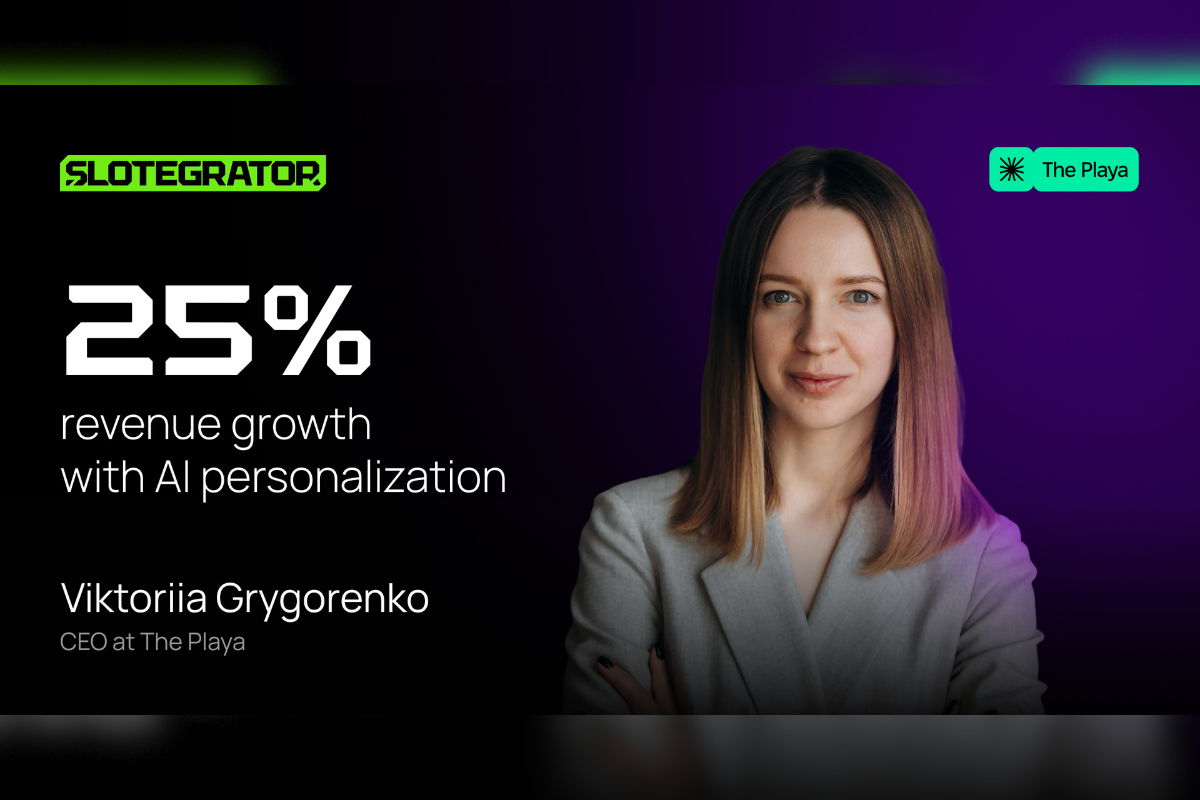
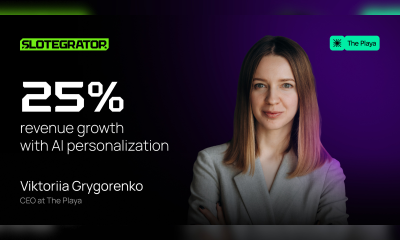
As player expectations rise, generic casino lobbies are no longer enough — AI-driven personalization is becoming essential to engage, retain, and grow audiences.
In this evolving landscape, The Playa is positioning itself at the forefront of iGaming personalization. Slotegrator spoke with Viktoriia Grygorenko, CEO, about the company’s journey, emerging industry trends, and how data-driven experiences can boost revenue by up to 25%, and often beyond.
Founded at the intersection of artificial intelligence and iGaming, The Playa started as a small experimental project and quickly grew into a full-scale platform. Today, the company delivers solutions across the entire player lifecycle — from lobby personalization and acquisition intelligence to VIP insights and retention optimization — serving operators with a monthly GGR of over $10 million.
According to Viktoriia, the industry has long underutilized one of its most valuable assets: player data. “iGaming generates enormous amounts of behavioral data — from game preferences to betting patterns — but most operators still rely on basic segmentation,” she explains. “That’s a missed opportunity.”
The gap is even more obvious compared to global entertainment platforms competing for audience attention. As Viktoriia points out, top companies invest billions in learning what their users want and delivering it instantly, while many online casinos offer identical experiences to all players. However, the industry is beginning to catch up.
Internal research by The Playa shows that 77% of iGaming companies leaders believe AI will be a key competitive advantage within the next two to three years. At the same time, major operators are rapidly expanding their data science capabilities — a clear signal of where the market is heading.
Beyond technology, player behavior itself is evolving. A new generation of users is entering the market, bringing different expectations around user experience. Behavioral data can reveal differences in preferences and risk patterns — opening the door to more effective personalization strategies.
Looking ahead to 2026, Viktoriia highlights three major trends shaping the industry: a stronger focus on retention, the rise of true one-to-one personalization, and a redefinition of loyalty. Retention, in particular, is becoming critical as rising acquisition costs and tighter regulations put pressure on margins.
Read the full interview to discover how The Playa is transforming player experiences with AI-driven personalization and why growth in iGaming depends on understanding players at every step of their journey.
Contact Slotegrator to learn how customized solutions can help grow your business.
Slotegrator
ABOUT THE COMPANY
Since 2012, Slotegrator has been one of the iGaming industry’s leading software and business solution providers for online casino and sportsbook operators.
The company’s main focus is software development and support for online casino platforms, as well as the integration of game content and payment systems.
The company works with licensed game developers and offers a vast portfolio of casino content: slots, live casino games, poker, virtual sports, table games, lotteries, casual games, and data feeds for betting.
Slotegrator also provides consulting services in gambling license acquisition and business incorporation.
ABOUT THE PLAYA
The Playa is a leading iGaming company specializing in AI-powered personalization solutions, enabling operators to deliver tailored player experiences across the full lifecycle — from lobby personalization and acquisition intelligence to VIP insights and retention optimization.
Through advanced behavioral profiling and personalized player recommendations, the company provides iGaming operators with the tools they need to grow, retain players, and maximize revenue.
The post The Playa for Slotegrator: why personalized player experiences are the future of growth appeared first on Americas iGaming & Sports Betting News.
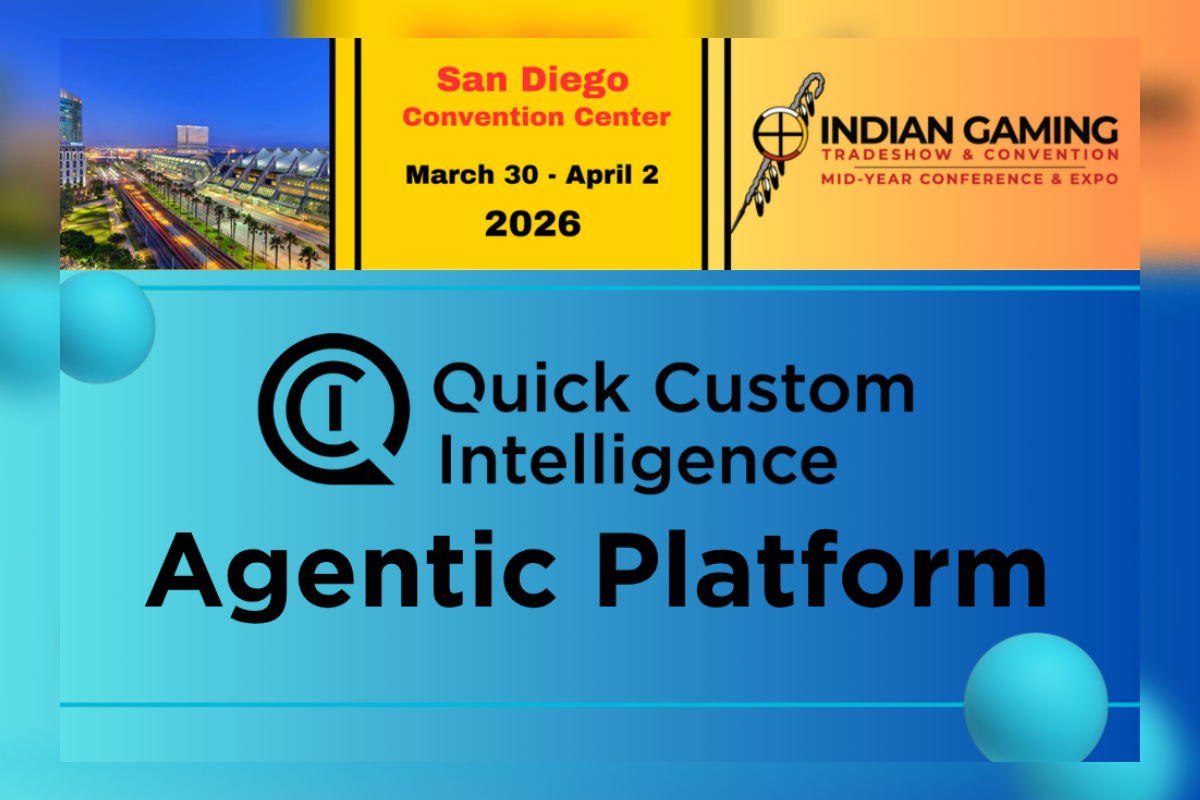
Quick Custom Intelligence (QCI), a leading provider of AI-driven operations software for tribal gaming resorts, announced it will showcase its evolving QCI Agentic Platform at the Indian Gaming Association (IGA) Tradeshow & Convention, March 31–April 2, 2026, at the San Diego Convention Center (Booth #2735).
The QCI Agentic Platform reflects the continued advancement of the company’s enterprise system, enabling operators to move from real-time insight to real-time action across gaming, marketing, player development, and hotel operations. Designed for on-premise and hybrid environments, the platform supports secure, property-level AI deployment while maintaining full operational control.
Rather than introducing a new system, QCI’s approach extends the capabilities operators already use—bringing analysis and execution closer together within a unified operational environment.
“This is a continuation of the platform our customers already rely on. We’re building on what works and extending it, so operators can act on information faster, without changing the way their business runs,” said Dr. Ralph Thomas, Co-Founder and CEO of QCI.
The QCI Agentic Platform builds on QCI’s established product suite, including:
• AGI56.1, a major platform release featuring more than 1000 enhancements across operations
• Chatalytics, QCI’s conversational analytics interface for real-time data access
• QCI Dispatch, a new core operational tool supporting real-time coordination and execution
Together, these capabilities enable operators to unify data, streamline workflows, and respond more quickly to changing conditions across the property.
Attendees will experience how QCI connects data, decision-making, and execution within a single operational system.
“We’re focused on practical improvements that help teams do their jobs more effectively. This is about making systems more responsive, more connected, and easier to use in day-to-day operations,” added Thomas.
The post QCI to Showcase Agentic Platform Capabilities at IGA 2026 appeared first on Americas iGaming & Sports Betting News.

-

 Asia6 days ago
GLI Becomes the First Company Accredited by PAGCOR to Test and Certify iGaming Platforms in the Philippines
-
40 Sparkling Crown7 days ago
TaDa Gaming Enters South Africa via Strategic Betway Partnership
-
Alberta7 days ago
Media Troopers Prepares for Alberta iGaming Launch with Canadian Gaming Law Firm
-
Bettingbladet.se7 days ago
Bettingbladet Aims to Become Sweden’s Central Hub for Gambling Industry News & Trends
-
Barbie Nerz Head of Online Games at Staatliche Toto-Lotto GmbH Baden-Württemberg7 days ago
Peter & Sons Partners with Staatliche Toto-Lotto GmbH Baden-Württemberg for German Market Entry
-
Games Global7 days ago
Games Global and Just For The Win® continue the ghostly adventure in Dark Waters III Power Combo: The Cursed Voyage™
-
ADM7 days ago
ENJOY gains Italian approval amid advancing regulated expansion strategy
-
Bragg Gaming Group7 days ago
Bragg Gaming Group Reports Record Fourth Quarter and Full Year 2025 Revenues