Industry News
Evolution Gaming – INTERIM REPORT FOR JANUARY-MARCH 2020

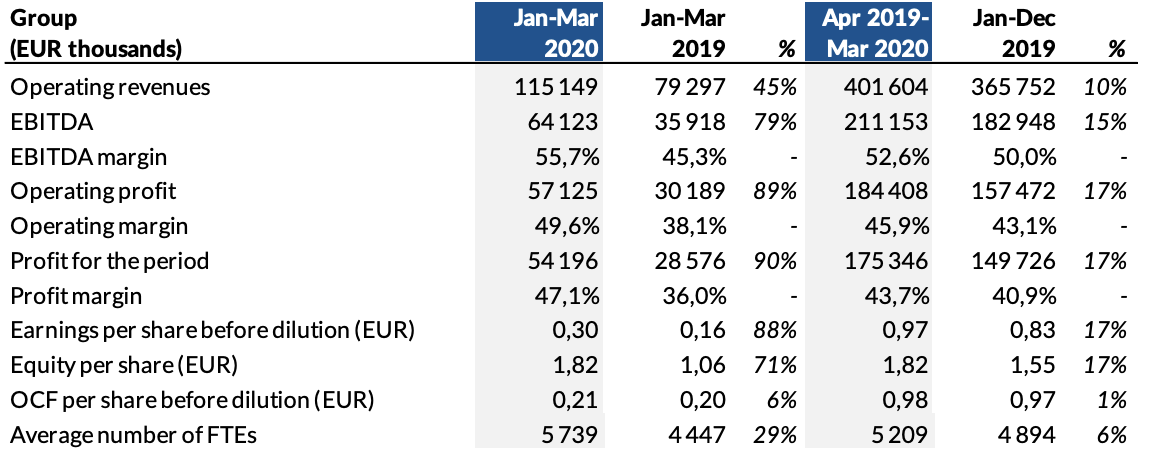
Evolution released its Interim Report for January-March 2020.
First quarter of 2020 (Q1 2019)
- Operating revenues increased by 45% to EUR 115.1 million (79.3)
- EBITDA increased by 79% to EUR 64.1 million (35.9), corresponding to a margin of 55.7% (45.3)
- Profit for the period amounted to EUR 54.2 million (28.6)
- Earnings per share before dilution amounted to EUR 0.30 (0.16)
Events during the first quarter of 2020
- Continued high demand generates a positive effect on margin development.
- Adaptation of operations as a result of covid-19 to ensure the operation and safety of employees.
- Repurchase of 338,000 shares in order to improve the capital structure by reducing the capital, and thereby creating added shareholder value.
Summary of the first quarter 2020
Comments from Group CEO Martin Carlesund:
“The spread of COVID-19 has put the world in an exceptional and challenging situation which has also meant operational trials for Evolution. So far, we have handled the situation in a good way, and financially, Evolution has started 2020 very strongly in terms of both growth and profitability.
Revenues for the first quarter amounted to EUR 115 million, an increase of 45 percent compared to the first quarter of 2019. EBITDA amounted to EUR 64 million with a margin of 55.7 percent. With a good financial start to the year, great confidence ahead of the upcoming product launches and a good momentum at the start of the second quarter, I am more certain of our objective for 2020 to improve the margin level compared to 2019. Together, all employees did a fantastic job during the first quarter. I am deeply grateful for the energy and determination with which we have taken up the challenge – we have step-by-step, methodically moved forward every day. Of course, this work continues as we work to stay ahead of the developing situation. Our main priorities in dealing with the COVID-19 situation are to minimize the risk of spreading the virus and to create a safe workplace for our employees as well as to maintain the operation for our operators. We continue to comply with all the requirements from the authorities in the countries we operate in, and in many cases we have taken more far-reaching initiatives. Thanks to the extensive measures that have been implemented in terms of social distancing, changed working processes and routines for our employees, our operations have been able to continue without any large negative effects. However, in several of our studios, we operate with fewer tables compared to normal, and our studios in Georgia and Spain have been temporarily closed during limited periods. During these periods, a large share of the traffic has been managed by the company’s other studios. To be a global company with sites across multiple territories has been an important factor during these times. With that said, our studios in Latvia and Malta are important hubs from which several of our most popular titles are broadcasted.
We have seen an increased and strong demand for our products all through the first quarter. During the end of the quarter the absence of sporting betting games likely also favoured growth in our products. This circumstance effects also the start of the second quarter and we now see many new players being introduced to the Live segment. All in all, this means that we have a very good start to the year so far, but there will be also continuous challenges as we have not seen the end of the development of COVID-19 yet.
We continue unabated with investments in both studios and new games. During ICE in London earlier this year, 12 new titles were announced, of which two went live during the first quarter; Speed Blackjack and Lightning Baccarat. Today, 23 April, we are launching Mega Ball – including a First Person version. Mega Ball is our first game in the lottery vertical. During its beta phase, the game has exhibited a high attraction and it will be interesting to follow the games development. In addition, we will extend our First Person portfolio with three more launching in the second quarter. Another two table games will also be launched during the quarter, Power Blackjack and Baccarat Multiplay.
The construction of our new studio in Pennsylvania continues but with a postponed timetable due to the COVID-19 situation. However, our aim to launch it before year-end remains. Michigan has accelerated its casino regulation process and we hope that the state soon will be the third regulated market in the US. In South Africa we have received a National Manufacturer license. The license means that Evolution now is able to offer its and the subsidiary Ezugi’s products to all licensed gaming operators in South Africa.
To conclude, I am proud of how we have started off the year from a financial perspective, but even prouder of how we have handled these difficult times from an operational standpoint. All employees have showed that they are fast-paced, flexible and that even in hard circumstances they are able to maintain their focus on our given path; to continue to increase the gap to the competition and to strengthen our leading position.”
Powered by WPeMatico



Turnkey iGaming platform Betable has promoted Daniel Shannon to the newly created role of Director of Growth, as the company prepares for its next phase of expansion in regulated markets.
In his new position, Shannon will lead Betable’s growth strategy across key territories, including the UK and the Philippines, with several major deals expected to be finalised in the near future.
Shannon previously served as Head of Acquisition at Betable and brings additional experience from senior roles at Manchester-based CBS Global Marketing.
As Director of Growth, he will be responsible for driving commercial performance, scaling revenue, optimising operations, and expanding Betable’s presence across global regulated markets.
Charlie Noble, COO at Betable, said:
“Dan has quickly become an integral part of the Betable team, and this promotion reflects both his impact and our confidence in his ability to lead the business forward. As we continue to grow in regulated markets, his commercial insight and operational focus will be invaluable.”
Daniel Shannon, Director of Growth at Betable, added:
“I’m excited to take on this role at such a pivotal time for Betable. We’ve built strong foundations, and the focus now is on scaling that success into new regulated markets, strengthening partnerships, and delivering consistent growth. There’s a significant opportunity ahead, and I’m looking forward to helping the business realise it.”
The post Betable promotes Daniel Shannon to lead next stage of expansion appeared first on Eastern European Gaming | Global iGaming & Tech Intelligence Hub.
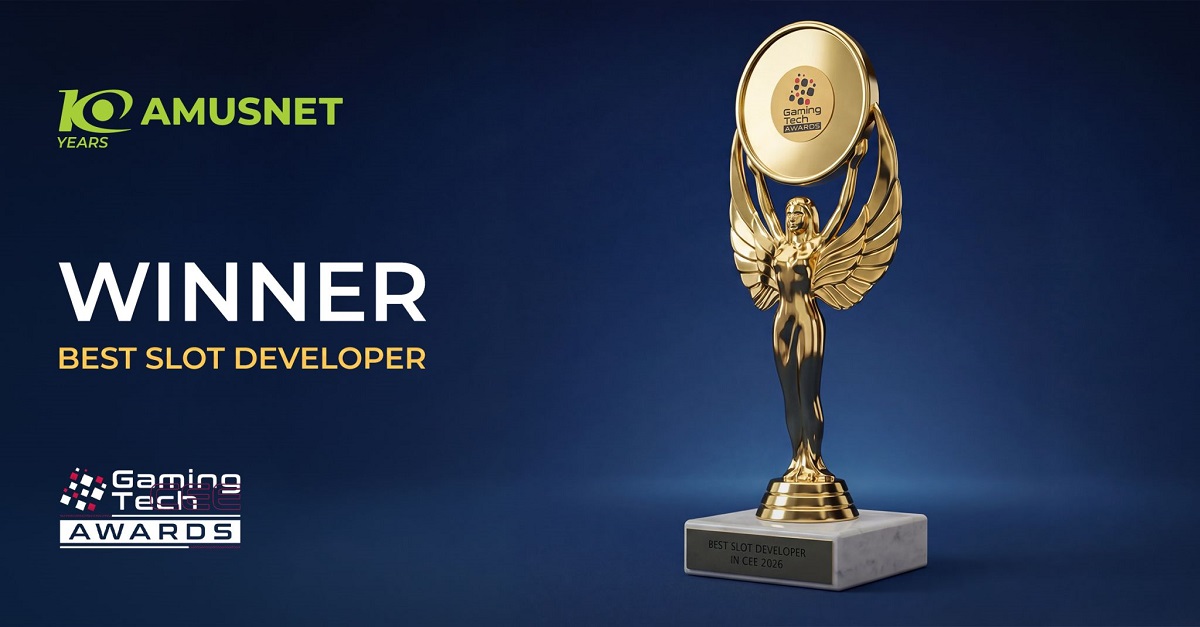
Amusnet has been awarded the title of Best Slot Developer at the GamingTECH Awards 2026, marking a notable acknowledgment of the company’s innovative and technical prowess. Unveiled on March 25th in Prague at the 10th-anniversary edition of the Prague Gaming & TECH Summit, this recognition emphasizes the influence of the company’s varied, high-achieving slot collection throughout Central and Eastern European markets.
This accolade highlights the organization’s capacity to provide a diverse array of titles that satisfy the changing needs of both operators and players. By prioritizing technical dependability, dynamic animations, and captivating features, Amusnet has positioned itself as a key partner in the area.
“We are truly honoured to receive the Best Slot Developer award,” commented Julia Peeva-Sertov, CEO & Director at Amusnet Gaming, Malta. “This recognition reflects the dedication of our entire team and our commitment to delivering exceptional gaming experiences for players. Empowering our partners continues to inspire us to push boundaries and set new benchmarks in the industry.”
The Prague Gaming & TECH Summit united industry leaders and top executives to explore the connection between gaming, AI, and fintech. During the event, representatives from Amusnet Gaming participated in strategic networking and high-level discussions within the industry, enhancing connections with partners in the CEE area. Winning this title at a milestone anniversary occasion reinforces the company’s position as an innovative leader in the digital entertainment industry.
The post Amusnet Named Best Slot Developer at GamingTECH Awards 2026 appeared first on Eastern European Gaming | Global iGaming & Tech Intelligence Hub.
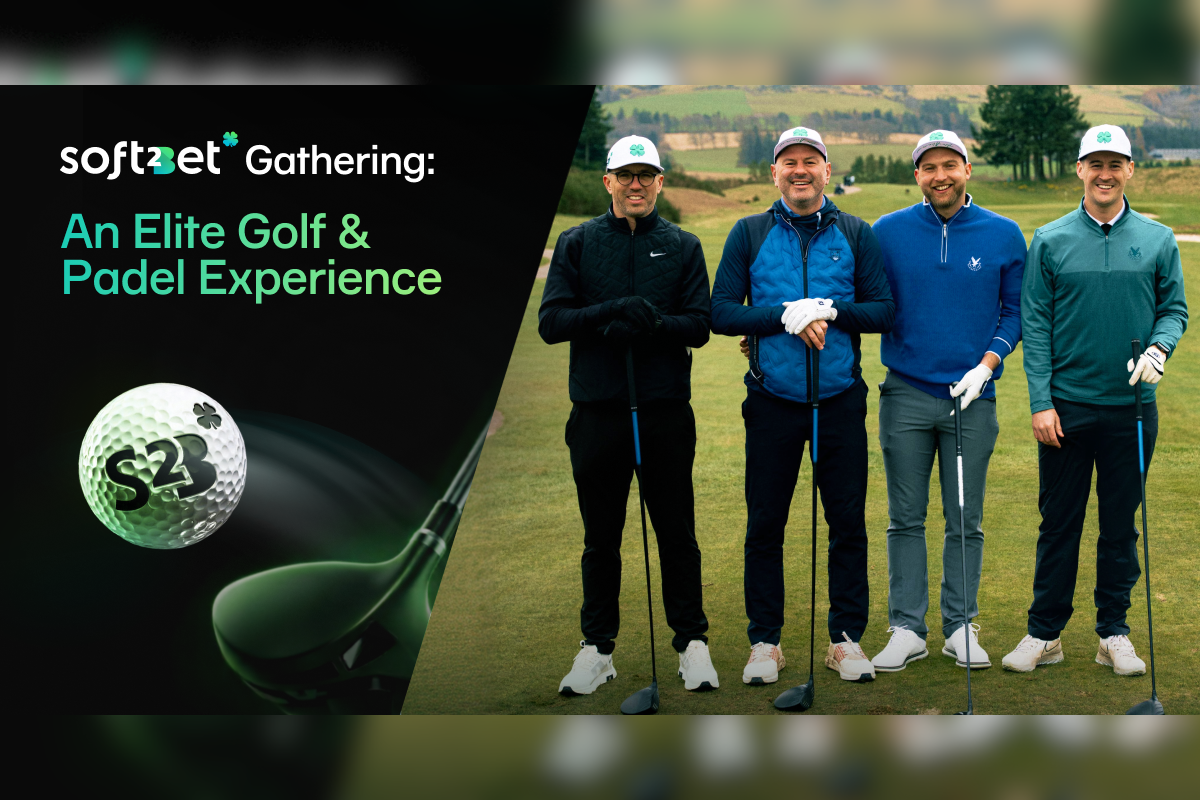
Soft2Bet, a leading iGaming turnkey solutions provider, recently brought together industry connections for an exclusive two-day golf and padel experience at the Gleneagles Hotel in Scotland. The event brought Soft2Bet’s friends and connections together to enjoy a relaxed day of golf and padel, meaningful conversations, and shared moments in an inspiring setting, celebrating the spirit of connection and community that defines the company’s approach.
Set against the backdrop of one of Scotland’s best-known sporting estates, the day paired competitive play with the camaraderie and shared spirit that are such a valued part of the game. Attendees enjoyed access to Gleneagles’ most exclusive Ryder Cup & Solheim courses, where the relaxed setting encouraged genuine connection and reflected the supportive atmosphere that made the gathering especially memorable.
Gleneagles was a fitting venue for the occasion. With more than a century of golfing history, three championship courses and a reputation built on world-class hospitality, it remains one of Scotland’s standout golf destinations. Its PGA Centenary Course hosted the 2014 Ryder Cup and the 2019 Solheim Cup, making Gleneagles the only golfing destination in Europe to have staged both events.
The event reflects Soft2Bet’s belief that strong connections are built through shared goals, trust and collaboration. Creating space for in-person connection allows the company to deepen those relationships and support long-term success.
Harrison Barrett, VP of Business Development at Soft2Bet, commented: “Bringing the industry together in a setting like Gleneagles allows us to go beyond day-to-day operations and focus on what truly drives success, while playing golf and padel. Events like this are an opportunity to align on vision, exchange ideas and celebrate the momentum.”
Stuart Trigwell, Director of Business Development at Play’n GO said: “The time spent at Gleneagles, enjoying the incredible courses and engaging in genuine, strategic conversations, was an absolute highlight. It is events like these that reinforce the trust and collaborative spirit at the core of our relations.”
The gathering reflects Soft2Bet’s wider approach to the iGaming community engagement, creating opportunities for stronger collaboration and supporting growth across key markets.
The post Soft2Bet Gathering: An Elite Golf & Padel Experience appeared first on Eastern European Gaming | Global iGaming & Tech Intelligence Hub.

-

 Booming Games6 days ago
Booming Games releases Ultra Buffalo Hold and Win
-
Baroness Fiona Twycross7 days ago
BGC AGM 2026 Discussed About Surging Illegal Gambling Black Market
-
Big Time Gaming6 days ago
BTG brings iconic board game action to the reels with MONOPOLY MEGAPOTS™
-
Latest News5 days ago
ELA Games Contributes to Discussions on Scalable iGaming Ecosystems and Studio Innovation at HIPTHER Prague Summit
-
Brazil6 days ago
Brazil advances integrity agenda amid strong market growth
-
Brasil6 days ago
Brasil impulsa su agenda de integridad en un contexto de fuerte crecimiento del mercado
-
Brazil5 days ago
Brazil advances integrity agenda amid strong market growth
-
BGaming6 days ago
Ascend With the Gods in BGaming’s Gates of Power