Latest News
Movers and Shakers: Building Resilience – The Importance of Agility in the iGaming Industry

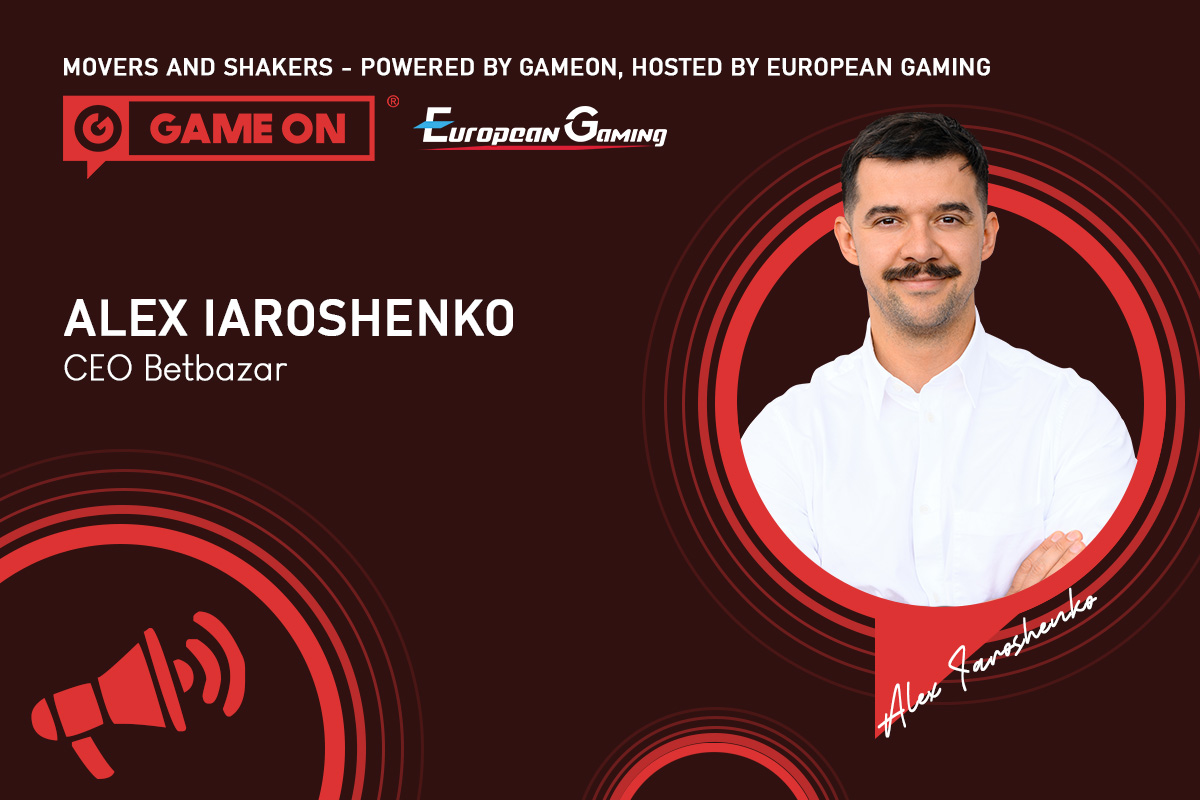
“Movers and Shakers” is a dynamic monthly column dedicated to exploring the latest trends, developments, and influential voices in the iGaming industry. Powered by GameOn and supported by HIPTHER, this op-ed series delves into the key players, emerging technologies, and regulatory changes shaping the future of online gaming. Each month, industry experts offer their insights and perspectives, providing readers with in-depth analysis and thought-provoking commentary on what’s driving the iGaming world forward. Whether you’re a seasoned professional or new to the scene, “Movers and Shakers” is your go-to source for staying ahead in the rapidly evolving iGaming landscape.
With global B2B iGaming marketplace gurus, Betbazar, having had to deal with their fair share of challenges over the past few of years, we sat down with the company’s CEO, Alex Iaroshenko to learn how an agile approach to business has helped them foster both resilience and adaptability.
What challenges do you see as the biggest tests for iGaming companies today?
The iGaming industry is currently facing several critical challenges – and in my opinion, regulation and compliance is right at the top of that list. As governments around the world continue to tighten their legislation to ensure fair play and responsible gaming, iGaming businesses have little choice but to adapt in order to remain compliant across multiple jurisdictions. Of course, for global companies like Betbazar that work in various regions with vastly differing rules, this adds an extra layer of complexity to operations, so our job is becoming increasingly difficult as well.
In addition to ongoing regulatory changes, another big challenge for iGaming companies is the current level of competition within the market. Over the past few years, the iGaming sector has become increasingly crowded and standing out from your competitors requires you to have strong branding, innovation and the agility to consistently deliver value to customers and their clients. In order to do this effectively, I believe companies generally need to invest in technology like AI and machine learning to personalise player experiences and improve user engagement.
The last test that I think is worth mentioning here is that online security and data privacy remain ongoing concerns – particularly with the rise of cyber threats that we’ve witnessed in recent months. Given the vast amount of personal data that is now being managed by companies, it’s imperative that they implement robust cyber security measures in order to protect sensitive player information, build trust and comply with all applicable privacy regulations in their regions.
How can companies in the iGaming space cultivate resilience and adaptability?
For me, the real key is to foster a culture that is open to change and encourages continuous learning and innovation. One of the most important steps in that process is to build an agile organisation where teams are empowered to make decisions quickly and feedback loops from customers and the market are integrated into product development and operations swiftly and efficiently without needing to go through multiple rounds of approval. At Betbazar, we focus on creating a mindset of flexibility that embraces new technologies and adjusts them to the business models of our clients so that we can meet their specific demands in the best conceivable way.
Being able to constantly change in this manner is what separates a good business that actually performs from one that struggles – especially in an industry where customer preferences, technology and regulations change so rapidly. I honestly believe that if the culture at Betbazar was not as adaptable and resilient as it is, we wouldn’t still be here today. As a company, we’ve had to work through some very challenging periods and have always come out stronger on the other side, mainly because we use these situations as a chance to improve the ways we operate.
Of course, investing in professional development and cross-functional collaboration also plays a big role in making your business adaptable and resilient, as you always want teams to hone their technical and strategic skills so that they can navigate challenges efficiently. On top of that, you need strong leadership that promotes a proactive, solution-based approach to tackling adversity.
What role does leadership play in driving an agile culture within an organisation?
I believe that a company is always made by a team, and though teams are led by leaders, it’s impossible to build your entire business philosophy on one person’s shoulders. Instead, an agile culture should be built on clear communication and trust between leadership and employees, as when people feel empowered to make decisions and know that their contributions are valued, it fosters a sense of ownership and accountability. It’s for this reason that we encourage a collaborative approach at Betbazar where teams are given the autonomy to experiment, test new ideas and iterate quickly without fear of failure – and this is what trusting your team is truly about.
Speaking as a CEO, I feel it’s my responsibility to not only set the strategic direction of the company, but also create an environment where all employees have space to grow. For me, it’s very important to look into each person’s individual goals and understand their ideas for how they’d like to develop in their role, as only then can you adjust the company’s strategic path to better accommodate each employee’s personal ambitions. This in turn empowers you to create a culture where people want the company to reach its goals so that they can also reach their own, meaning everyone shares the success in equal measure and deals with any setbacks as a team.
Could you share an example of a time when Betbazar had to pivot quickly to respond to an industry change?
I think when you’re part of an industry that shifts and evolves as quickly as iGaming, you pretty much have to pivot all the time in order to stay ahead of emerging trends and customer demands. One of the things that Betbazar is very good at is that when we see that the popularity of a product is skyrocketing and we don’t have an existing connection to it, we’re fast to rectify the situation and fill any gaps that we have in our marketplace. A good example of this would be crash games, as when these became popular and we realised that we didn’t have a product that met the demands of the market, we very quickly found a partner who could help us expand our portfolio.
Generally speaking, once we have a product available in our line-up, it becomes competitive within the market quite quickly, so the onus is then on us to pivot again and find something new, rather than to simply stand still and be happy with what we’ve got. In this way, Betbazar is constantly changing and adjusting to the demands of the industry, and we always make sure we keep an eye on the competition to understand what others are doing. This is ultimately our goal and our way of being flexible so that we’re constantly primed to pivot into newer, better products.
About Betbazar
Betbazar is a B2B worldwide iGaming marketplace which has set a new sales standard, sourcing specialist iGaming products and advising on their role within existing strategies to deliver growth to our partners. The company’s ambition is building a digital iGaming marketplace that connects creators with operators to accelerate growth powered by best-in-class products.
Website: https://betbazar.com
LinkedIn: https://www.linkedin.com/company/betbazar
The post Movers and Shakers: Building Resilience – The Importance of Agility in the iGaming Industry appeared first on European Gaming Industry News.









Traffic performance isn’t just about volume or source. What really matters is how well the product turns the first deposit into repeat ones. That’s what drives conversion, retention, repeat deposits, and ultimately LTV — and that’s what defines a partner’s real revenue.
Behind the Game is a series of expert-driven articles where N1 Partners’ gambling affiliate program teams break down what’s happening inside the product and which decisions actually move key metrics.
In this edition, we focus on retention and how it impacts product sustainability and partner earnings.
Why Retention Turns Traffic Into Revenue
Retention is the clearest indicator of whether your traffic matches the actual value of the product. If players don’t come back after their first deposit, the product simply doesn’t convert in the long run.
In Tier-1 GEOs, acquisition costs can reach hundreds of euros. If players don’t make repeat deposits, both the operator and the partner lose.
That’s why success isn’t just about acquisition — it’s about product quality. The N1 Partners portfolio includes high-converting brands with Reg2Dep reaching up to 70% and strong LTV, allowing partners to monetize traffic more efficiently and reach profitability faster.
1. What “Healthy Retention” Looks Like in 2026
In 2026, retention is no longer measured by a single metric. It’s a combination of signals across the entire post-FTD journey.
The key is not just how many players return, but where they drop off.
What key indicators help quickly assess retention quality after FTD?
The core metrics are funnel progression and cohort analysis. Players who move quickly through stages like 1–6 / 1–8 deposits typically form a loyal, active base.
All further communication and retention flows are built to increase transition rates across these stages.
Where does the player journey usually break after the first deposit, and how is it reflected in the data?
The most sensitive point in the FTD funnel is the 1-2 deposit transition. After the first deposit, players start actively testing the product.
At this stage, retention is influenced by several factors: product UX, game variety, overall experience, and withdrawal speed.
All of these pain points are taken into account when building communication flows.
2. Why Retention Drops and What Can Be Fixed Fast
Retention drops are usually caused by mismatched expectations, bonus fatigue, weak personalization, or poor timing in communication.
Some issues can be fixed quickly via CRM and offer adjustments, while others require deeper product-level changes.
What are the top 3 reasons for retention drop across projects? What can be fixed quickly vs. what requires systemic changes?
Retention issues can be divided into three main groups.
Technical and operational issues: payment methods, access to the product, mirrors. These directly impact churn and can usually be fixed quickly. Solutions include alternative payment options, explanatory communication, temporary bonuses, and updated access points.
Product and retention mechanics: weak offers, low engagement. These require revisiting promo strategies, segmentation, and retention flows, and cannot be fixed instantly.
Traffic quality. This is the most complex area, as the issue may lie either in the traffic itself or in how it is processed. It requires behavioral analysis, source comparison, and hypothesis testing across offers, channels, and mechanics. In some cases, this leads to a full revision of the traffic strategy.
What traffic red flags almost always lead to weak retention?
- A high share of players with only one deposit and an untouched balance is a major red flag and often indicates fraud.
- Another common case is bonus hunters. These users exploit welcome offers and then either create duplicate accounts or move on to other brands with the same intent.
3. Reactivation and Bringing Players Back
Reactivation plays a critical role in extending LTV. Players may lose interest, shift habits, or move to other products — but that doesn’t mean they’re gone for good.
What are the key advantages of the reactivation funnel across N1 Partners projects?
The reactivation approach combines team experience with flexible scenarios. Multiple return flows are used, each with different types and values of offers.
Additionally, a system has been implemented to increase engagement after the player returns, which helps grow the share of repeat deposits within this segment.
Another key factor is the speed of identifying players who are about to churn. This is achieved through platform updates, filtering systems, and accumulated behavioral insights.
These elements, combined with a variety of offers and alternative communication channels such as SMS and call centers, make it possible to bring back players who are typically considered “lost.”
4. Mechanics That Actually Retain Players
Retention works best when the product taps into different player motivations: emotion and chance, progress and achievement, status and competition.
What unique features or promos across N1 Partners projects stand out and why do they work for retention?
With deeper analytics, the team gained a better understanding of player behavior and preferences. Promos are now built around real data: favorite games, average bets, and behavioral patterns, making them significantly more effective.
Key mechanics include front-facing features like Bonus Shop and Lucky Spin & Lucky Box. Around 60% of the loyal user base makes at least one purchase in the bonus shop monthly, while over 70% engage with randomizer mechanics.
Puzzle Hunt has also shown strong results, combining randomness with gamification through puzzle collection and a high-value final reward. This mechanic performs especially well among VIP players.
5. Building the Habit: Missions, Calendars, and Loyalty
Strong retention comes from giving players a reason to come back regularly.
Why do missions, calendar-based activities, and loyalty progression drive retention and LTV?
Gamification and FOMO play a key role. Mechanics are designed to drive continuous engagement:
- Earning in-product points
- Daily bonus loops (“come back every day”)
- Loss aversion (miss a day – lose rewards)
Instant reward missions are especially effective. Players complete a task, get rewarded immediately, and return for the next one.
With a younger audience, the “here and now” principle becomes one of the strongest engagement drivers.
6. Loyalty and VIP: Why Progression Beats One-Off Bonuses
Loyalty programs outperform one-time bonuses when players have a clear sense of progression. Levels and checkpoints create momentum and give players a reason to keep coming back.
The key is balance: early levels must feel rewarding and accessible, while higher tiers and VIP rewards should motivate high-value players.
How can you tell if a loyalty program truly drives retention rather than just distributing bonuses?
Effectiveness is measured through impact on behavioral and financial metrics. Key indicators include repeat deposits, ARPU, GGR per player, retention, and churn rate.
It’s also critical to compare program participants with a control group. If participants generate higher revenue and stay active longer, the program is delivering value.
If bonus costs increase without corresponding growth in GGR or LTV, the program is likely just giving away money.
Why Retention Equals Long-Term Revenue
Retention determines whether traffic turns into long-term profit. When done right, the first deposit becomes the start of a cycle of repeat activity — not a one-off event.
If there’s one key criterion for choosing a RevShare brand, what should it be?
Repeat deposit rate. In RevShare models, partner revenue depends on player lifetime. The more often players deposit, the higher the total earnings.
This is exactly why it’s crucial to work with products that already deliver solid performance across key metrics. N1 Partners gambling affiliate program brings together 14+ casino and betting brands across 10+ Tier-1 GEOs, offering competitive scaling conditions — CPA up to €700 for top partners and RevShare up to 45% + NNCO.
A product that consistently retains players and grows LTV delivers stable, long-term revenue — and that’s what makes it worth scaling.
Be number one with N1 Partners
The post Behind the Game: Retention That Drives Revenue appeared first on Eastern European Gaming | Global iGaming & Tech Intelligence Hub.

Traffic performance isn’t just about volume or source. What really matters is how well the product turns the first deposit into repeat ones. That’s what drives conversion, retention, repeat deposits, and ultimately LTV — and that’s what defines a partner’s real revenue.
Behind the Game is a series of expert-driven articles where N1 Partners’ gambling affiliate program teams break down what’s happening inside the product and which decisions actually move key metrics.
In this edition, we focus on retention and how it impacts product sustainability and partner earnings.
Why Retention Turns Traffic Into Revenue
Retention is the clearest indicator of whether your traffic matches the actual value of the product. If players don’t come back after their first deposit, the product simply doesn’t convert in the long run.
In Tier-1 GEOs, acquisition costs can reach hundreds of euros. If players don’t make repeat deposits, both the operator and the partner lose.
That’s why success isn’t just about acquisition — it’s about product quality. The N1 Partners portfolio includes high-converting brands with Reg2Dep reaching up to 70% and strong LTV, allowing partners to monetize traffic more efficiently and reach profitability faster.
1. What “Healthy Retention” Looks Like in 2026
In 2026, retention is no longer measured by a single metric. It’s a combination of signals across the entire post-FTD journey.
The key is not just how many players return, but where they drop off.
What key indicators help quickly assess retention quality after FTD?
The core metrics are funnel progression and cohort analysis. Players who move quickly through stages like 1–6 / 1–8 deposits typically form a loyal, active base.
All further communication and retention flows are built to increase transition rates across these stages.
Where does the player journey usually break after the first deposit, and how is it reflected in the data?
The most sensitive point in the FTD funnel is the 1-2 deposit transition. After the first deposit, players start actively testing the product.
At this stage, retention is influenced by several factors: product UX, game variety, overall experience, and withdrawal speed.
All of these pain points are taken into account when building communication flows.
2. Why Retention Drops and What Can Be Fixed Fast
Retention drops are usually caused by mismatched expectations, bonus fatigue, weak personalization, or poor timing in communication.
Some issues can be fixed quickly via CRM and offer adjustments, while others require deeper product-level changes.
What are the top 3 reasons for retention drop across projects? What can be fixed quickly vs. what requires systemic changes?
Retention issues can be divided into three main groups.
Technical and operational issues: payment methods, access to the product, mirrors. These directly impact churn and can usually be fixed quickly. Solutions include alternative payment options, explanatory communication, temporary bonuses, and updated access points.
Product and retention mechanics: weak offers, low engagement. These require revisiting promo strategies, segmentation, and retention flows, and cannot be fixed instantly.
Traffic quality. This is the most complex area, as the issue may lie either in the traffic itself or in how it is processed. It requires behavioral analysis, source comparison, and hypothesis testing across offers, channels, and mechanics. In some cases, this leads to a full revision of the traffic strategy.
What traffic red flags almost always lead to weak retention?
- A high share of players with only one deposit and an untouched balance is a major red flag and often indicates fraud.
- Another common case is bonus hunters. These users exploit welcome offers and then either create duplicate accounts or move on to other brands with the same intent.
3. Reactivation and Bringing Players Back
Reactivation plays a critical role in extending LTV. Players may lose interest, shift habits, or move to other products — but that doesn’t mean they’re gone for good.
What are the key advantages of the reactivation funnel across N1 Partners projects?
The reactivation approach combines team experience with flexible scenarios. Multiple return flows are used, each with different types and values of offers.
Additionally, a system has been implemented to increase engagement after the player returns, which helps grow the share of repeat deposits within this segment.
Another key factor is the speed of identifying players who are about to churn. This is achieved through platform updates, filtering systems, and accumulated behavioral insights.
These elements, combined with a variety of offers and alternative communication channels such as SMS and call centers, make it possible to bring back players who are typically considered “lost.”
4. Mechanics That Actually Retain Players
Retention works best when the product taps into different player motivations: emotion and chance, progress and achievement, status and competition.
What unique features or promos across N1 Partners projects stand out and why do they work for retention?
With deeper analytics, the team gained a better understanding of player behavior and preferences. Promos are now built around real data: favorite games, average bets, and behavioral patterns, making them significantly more effective.
Key mechanics include front-facing features like Bonus Shop and Lucky Spin & Lucky Box. Around 60% of the loyal user base makes at least one purchase in the bonus shop monthly, while over 70% engage with randomizer mechanics.
Puzzle Hunt has also shown strong results, combining randomness with gamification through puzzle collection and a high-value final reward. This mechanic performs especially well among VIP players.
5. Building the Habit: Missions, Calendars, and Loyalty
Strong retention comes from giving players a reason to come back regularly.
Why do missions, calendar-based activities, and loyalty progression drive retention and LTV?
Gamification and FOMO play a key role. Mechanics are designed to drive continuous engagement:
- Earning in-product points
- Daily bonus loops (“come back every day”)
- Loss aversion (miss a day – lose rewards)
Instant reward missions are especially effective. Players complete a task, get rewarded immediately, and return for the next one.
With a younger audience, the “here and now” principle becomes one of the strongest engagement drivers.
6. Loyalty and VIP: Why Progression Beats One-Off Bonuses
Loyalty programs outperform one-time bonuses when players have a clear sense of progression. Levels and checkpoints create momentum and give players a reason to keep coming back.
The key is balance: early levels must feel rewarding and accessible, while higher tiers and VIP rewards should motivate high-value players.
How can you tell if a loyalty program truly drives retention rather than just distributing bonuses?
Effectiveness is measured through impact on behavioral and financial metrics. Key indicators include repeat deposits, ARPU, GGR per player, retention, and churn rate.
It’s also critical to compare program participants with a control group. If participants generate higher revenue and stay active longer, the program is delivering value.
If bonus costs increase without corresponding growth in GGR or LTV, the program is likely just giving away money.
Why Retention Equals Long-Term Revenue
Retention determines whether traffic turns into long-term profit. When done right, the first deposit becomes the start of a cycle of repeat activity — not a one-off event.
If there’s one key criterion for choosing a RevShare brand, what should it be?
Repeat deposit rate. In RevShare models, partner revenue depends on player lifetime. The more often players deposit, the higher the total earnings.
This is exactly why it’s crucial to work with products that already deliver solid performance across key metrics. N1 Partners gambling affiliate program brings together 14+ casino and betting brands across 10+ Tier-1 GEOs, offering competitive scaling conditions — CPA up to €700 for top partners and RevShare up to 45% + NNCO.
A product that consistently retains players and grows LTV delivers stable, long-term revenue — and that’s what makes it worth scaling.
Be number one with N1 Partners
The post Behind the Game: Retention That Drives Revenue appeared first on Americas iGaming & Sports Betting News.

El mercado regulado de apuestas en Brasil continúa ganando estructura y dinamismo, a medida que el país equilibra la consolidación regulatoria, las salvaguardas de integridad y el crecimiento comercial.
Durante la última semana, desarrollos clave, desde la implementación de políticas federales hasta asociaciones estratégicas e innovación de productos, ponen de relieve cómo el ecosistema está madurando de cara a grandes eventos deportivos globales.
El Gobierno lanza una política nacional para combatir la manipulación de partidos
Un hito regulatorio importante se alcanzó con la creación de la Política Nacional para la Prevención y el Combate de la Manipulación Deportiva (PNPEMR). Establecida mediante una ordenanza conjunta de los Ministerios de Deportes, Hacienda y Justicia, la política introduce un marco nacional integral diseñado para abordar los riesgos de integridad en el deporte.
La iniciativa se estructura en torno a cuatro pilares centrales: regulación, prevención, monitoreo y fiscalización, con el objetivo de proteger la credibilidad y la imprevisibilidad de las competiciones deportivas en Brasil.
La política enfatiza la cooperación interinstitucional, reuniendo a autoridades públicas, organizaciones deportivas, operadores de apuestas y organismos internacionales. Entre sus principales medidas se incluyen:
- Estandarización de los flujos de reporte de actividades de apuestas sospechosas
• Programas de educación continua para atletas, árbitros y oficiales deportivos
• Mecanismos de protección para denunciantes
• Refuerzo de las investigaciones penales dirigidas a redes organizadas de manipulación de partidos
En el marco de esta política, el Ministerio de Deportes coordinará la implementación, mientras que el Ministerio de Hacienda supervisará la regulación de las apuestas y el cumplimiento por parte de los operadores.
El Ministerio de Justicia y Seguridad Pública, junto con la Policía Federal, liderará los esfuerzos de intercambio de inteligencia y aplicación de la ley, especialmente en casos con alcance interestatal o internacional. Vea-se DOU.
Un comité de gobernanza con múltiples actores será responsable de monitorear los avances y proponer ajustes, garantizando que la política evolucione junto con el mercado.
Este movimiento refuerza la intención de Brasil de alinear su supervisión regulatoria con los estándares globales de integridad, especialmente relevante a medida que el país se prepara para escenarios de alto volumen de apuestas durante competiciones internacionales de gran escala.
Sportradar amplía su estrategia de iGaming con el lanzamiento de Playradar
En el frente corporativo, Sportradar anunció el lanzamiento de Playradar, una nueva marca dedicada a su vertical de iGaming, lo que señala un cambio estratégico hacia experiencias de apuestas más integradas e inmersivas.
La nueva oferta se basa en conceptos de juego híbridos, combinando datos deportivos en tiempo real e históricos con streaming en vivo y contenido de casino.
Entre sus principales características se encuentra un hub de experiencia en vivo 24/7, donde los usuarios pueden interactuar simultáneamente con eventos deportivos y formatos de juego interactivos.
La iniciativa estará liderada por Edo Haitin, un ejecutivo con más de dos décadas de experiencia en gaming en vivo y desarrollo de productos.

La compañía planea lanzar Playradar a partir de 2026, inicialmente en mercados regulados del Reino Unido, América del Norte y América Latina.
Según el CEO Carsten Koerl, este movimiento representa una evolución natural de las capacidades de la empresa, aprovechando su infraestructura existente en datos, streaming y análisis del comportamiento de los usuarios para mejorar el engagement y la monetización a lo largo del ciclo de vida del jugador.
Haitin también destacó la visión estratégica detrás del lanzamiento, subrayando la capacidad de combinar tecnología y contenido en línea con las demandas cambiantes del mercado, especialmente a medida que los operadores buscan experiencias de usuario diferenciadas e inmersivas.
Es importante destacar que Playradar operará exclusivamente en entornos regulados, manteniendo un fuerte enfoque en el juego responsable y la integridad, en línea con las tendencias más amplias del sector y la regulación.
Playson refuerza su presencia en Brasil mediante una asociación con Betnacional
Reforzando aún más la posición de Brasil como un mercado de alto crecimiento, Playson amplió su presencia regional a través de una nueva asociación con Betnacional, un operador local líder propiedad de Flutter Entertainment.
El acuerdo permitirá la integración de un portafolio de títulos destacados de Playson en la plataforma de Betnacional, incluyendo 4 Pots Riches, Diamonds Power y Sugar Teddy x1000, todos reconocidos por su sólido rendimiento en mercados regulados y mecánicas de juego atractivas como Hold and Win.
La asociación refleja una tendencia más amplia de la industria hacia la localización y estrategias mobile-first, a medida que los operadores buscan alinear mejor su contenido con las preferencias de los jugadores regionales.
Cristhian Zito, Head de LatAm en Playson, destacó la importancia estratégica del acuerdo:
“Associarnos con Betnacional es un hito importante para nosotros en Brasil. Es una marca local muy respetada con un profundo conocimiento de su audiencia, y estamos seguros de que nuestro contenido resonará fuertemente con sus jugadores.
“ Este lanzamiento refuerza aún más nuestra posición en el mercado y refleja nuestro compromiso de ofrecer juegos atractivos y de alto rendimiento a operadores en toda América Latina”.
Desde la perspectiva del operador, Frederico Cunha, Head Comercial de Betnacional, también subrayó el valor de la colaboración:
“Estamos encantados de dar la bienvenida al portafolio de Playson en Betnacional. Sus juegos son reconocidos por su calidad, mecánicas sólidas y rendimiento consistente, lo que los convierte en una valiosa incorporación a nuestra oferta. Esperamos trabajar estrechamente y ofrecer una experiencia de entretenimiento mejorada a nuestros jugadores”.
Un mercado que equilibra integridad y crecimiento
En conjunto, los desarrollos de esta semana ilustran una clara doble trayectoria en el sector de apuestas en Brasil: el fortalecimiento de los marcos institucionales y de integridad, al mismo tiempo que se atraen inversión, innovación y asociaciones internacionales.
A medida que las estructuras regulatorias se vuelven más sofisticadas y se profundiza la colaboración entre los actores del ecosistema, Brasil se posiciona no solo como un mercado conforme y seguro, sino también como un hub central de crecimiento para la industria del gaming en América Latina.
SportyBet nombra a DJ Khaled como embajador global para reforzar la conexión entre deporte, cultura y entretenimiento
SportyBet anunció a DJ Khaled como su nuevo embajador global, reforzando su posicionamiento en la intersección entre deporte, música y cultura contemporánea.
Se une a un roster global que incluye a José Mourinho y Éder Militão, fortaleciendo la estrategia de la compañía de conectar con audiencias a través del entretenimiento.

La asociación se desplegará en mercados clave como Brasil, Estados Unidos, México y partes de África, apoyando la expansión de SportyBet como una plataforma centrada en la experiencia.
Según Elias Gallego, vicepresidente de Sporty Group, la colaboración refleja el enfoque de la empresa en asociarse con figuras culturalmente relevantes para conectar con audiencias diversas, especialmente en mercados como Brasil, donde el deporte y el estilo de vida están estrechamente vinculados.
Mayor apuesta por la música y el entretenimiento
El movimiento también señala un esfuerzo más amplio de Sporty Group por integrar la música en su ecosistema de entretenimiento.
A principios de este año, la compañía se asoció con Burna Boy en el proyecto “For Everybody”, combinando música, fútbol y cultura global.
En este contexto, la incorporación de DJ Khaled refuerza una estrategia centrada en el storytelling y el engagement de los fans, especialmente en regiones donde el deporte y la música están profundamente conectados.
Mentalidad global y evolución de marca
DJ Khaled destacó la visión compartida detrás de la asociación, enfatizando la mentalidad, la autenticidad y la conexión global con los fans.
El acuerdo refuerza la evolución de SportyBet más allá de las apuestas deportivas, posicionando la marca dentro de un ecosistema de entretenimiento más amplio.
En Brasil, se alinea con el crecimiento continuo de la compañía y su enfoque en ofrecer experiencias integradas que combinan contenido, cultura y engagement del usuario.
The post Brasil impulsa su agenda de integridad en un contexto de fuerte crecimiento del mercado appeared first on Americas iGaming & Sports Betting News.

-

 BIS SIGMA SOUTH AMERICA 20267 days ago
VeliTech makes its Brazil debut at BiS SiGMA South America 2026
-
Canada7 days ago
Peter & Sons Goes Live in Ontario with Ellipse Entertainment
-
Austria7 days ago
Wazdan strengthens European foothold with Austrian market entry via win2day
-
AMUSEBOX7 days ago
Casino Iveria Tbilisi Installs Amusnet’s Type S 50 F Slot Cabinets at its Gaming Floor
-
Canada7 days ago
Peter & Sons Goes Live in Ontario with Ellipse Entertainment
-
ELA Games7 days ago
Endless Super Free Spins in ELA’s Spring Release, Golden Bunny
-
eSports7 days ago
Esports Nations Cup 2026 Awards Official Partner Status Across 100+ Nations to Build the Future of Nation-Based Esports
-
Africa4 days ago
Virgin Bet goes live in South Africa