Latest News
Tackling latency in next-gen gaming

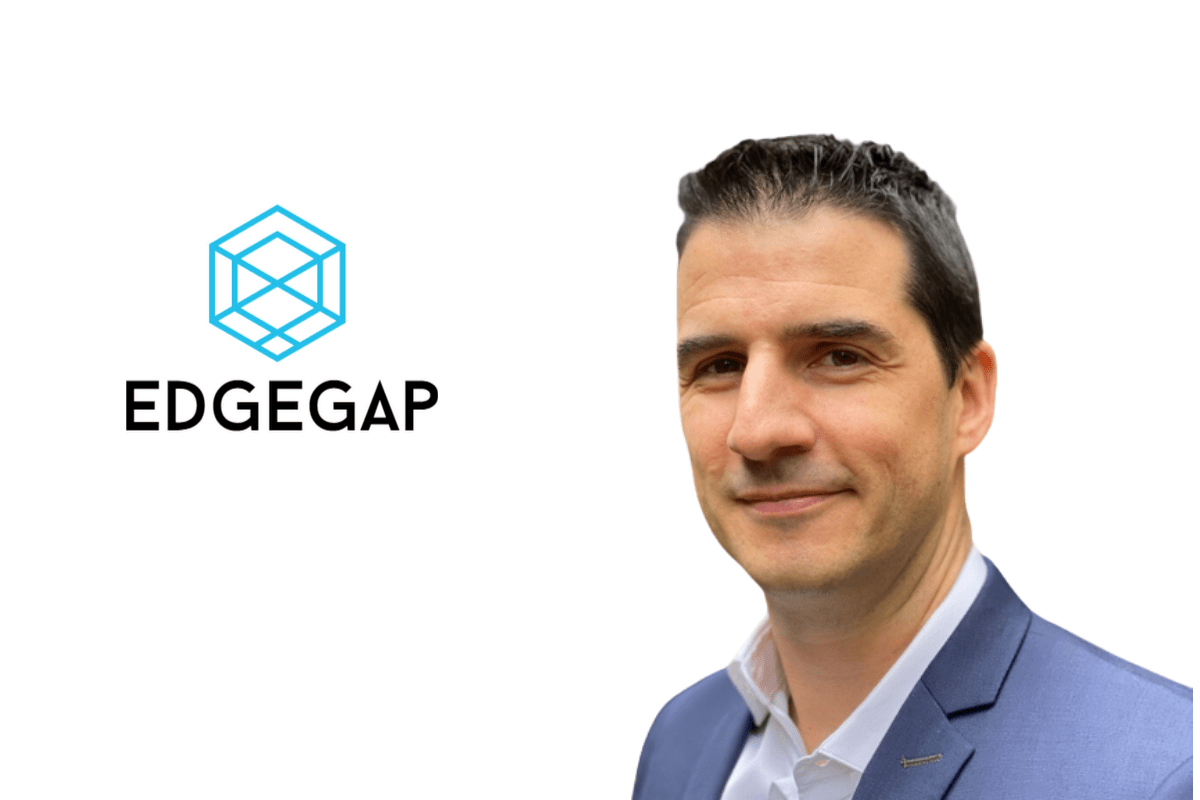
Mathieu Duperré, CEO at Edgegap
Anyone that’s played a video game online has almost certainly experienced some kind of lag and connectivity issues. Despite huge infrastructure advances in the last few decades, latency remains a constant thorn in the side of gamers and detracts from the real-time experience that’s expected today.
Delivering a consistent experience to gamers playing on different devices with varying connection speeds – many of which are separated by thousands of miles – is a complex challenge. Massively popular online games like Roblox and Fortnite are just two of the many games which have benefited from years of investment into infrastructure in order to support millions of concurrent players. As the below chart from SuperJoost shows, multiplayer and online gaming is becoming the preferred way to play games amongst the most active gaming demographic, with all the technical challenges that this creates.
Games which can be played seamlessly across mobile, PC and console (so-called cross-play games) are also pushing the limits of what current internet infrastructure can deliver. Add in a new generation of streaming cloud gaming services like Stadia, Blacknut Games and Amazon’s Luna – plus Microsoft’s Game Pass and Sony’s revamped PlayStation Plus service, and you can see how the promise of console-quality performance over a broadband connection risks overloading networks that were never designed for this level of gaming.
So how can game companies, telcos and ISPs deliver on the performance promises being made to gamers? That’s where edge computing comes in.
Lag, latency and the Edge
When talking about latency it’s important to make it clear exactly what we mean. Latency refers to the amount of time it takes for game data to travel from one point to another. From the gamer’s perspective, it’s the delay between their command and seeing it happen in-game. How much latency a gamer experiences is dependent on the physical distance the data must cross through the multiple networks, routers and cables before it reaches its destination.
To use an extreme example, NASA’s Voyager 1 has made it about 14.5 billion miles from our planet so far, and it takes about 19 hours for its radio waves to reach us. Here on Earth, your latency is (hopefully) measured in milliseconds rather than hours; and gamers need around 30ms for the most optimal performance. Anywhere above 100ms can lead to noticeable lag and a frustrating experience.
This is where Edge computing comes in. As the name implies, Edge computing brings computation and data storage closer to the sources of data, placing it on the edge of the network where the performance gain is the greatest. As you’d expect, reducing unnecessary travel drastically speeds up the process providing an almost lag-free experience.
More players equals more chance for latency to be a problem
In the early days of gaming, local, couch play was part and parcel of the gaming experience. Today, a game where hundreds or even thousands of players are in the same session is nothing out of the ordinary, and there are Battle Royale games now, a whole genre of games where a hundred or more players are whittled down to a single winner.
The sheer scale of some online games dwarfs many of the most popular streaming services. Whilst Netflix remains the most successful streaming video site with 222 million subscribers, kids game Roblox has 230 million active accounts and Fortnite has over 350 million registered players. So if we assume these games reflect a growing trend, the demand on server networks is only going to increase, and gaming companies will have to look for more innovative solutions to continue meeting demand.
Cross-Platform
The ability for gamers on different devices and platforms to play and compete together is becoming an increasingly common feature of AAA multiplayer games like Apex Legends, Fornite and Call of Duty. EA Sports recently confirmed that FIFA 23 will be joining other heavy hitters in exploring cross-platform play. Considering the large amount of games on the market, and the various game modes for each game, studios are looking at crossplay to increase the amount of players who can play together. One of the main driver is to lower matchmaking time and prevent players from having to wait hours before opponents are ready to play with them.
From a latency perspective, different infrastructure across platforms means lag and downtime are far more likely. When it comes to cross-play, studios can’t use P2P (peer-to-peer) since console vendors don’t support direct communication (i.e. an Xbox can’t communicate directly with a playstation). On top of that, P2P may be limited by player’s home network (restrictive natting for example). That’s why studios typically use relays in a handful of centralised locations. Relays are seen as cheaper than authoritative server. They although have large flaws like making it harder for studios to prevent cheating, which is becoming more and more important with Web3 & NFT. This causes higherlatency since traffic needs to travel longer distances between players. For example, when Apex Legends went cross-platform, players were inundated with frame rate drops, lags and glitches.
Edge computing allows studios to deploy cross-play games as close as possible to their players, significantly reducing latency. Which can negate some of the delay issues around differing platforms.
VR and the Metaverse
Despite hitting shelves in 2016, VR is only now slowly making its way into mainstream gaming. Advances in technology have gradually improved the user experience, while also bringing the price of hardware down and closer to the mass market – not to mention the metaverse bringing renewed attention to the tech. But latency issues still present a serious hurdle to wider adoption unless it’s addressed.
Latency impacts the player experience far more in VR than in traditional gaming as it completely disrupts the intended immersive experience. A 2020 research paper found latency of over 30-35ms in VR, had a significant impact on players’ enjoyment and immersion, which was far lower than acceptable margins on a controller. But when it comes to the metaverse, achieving this might not be enough. Latency between headset and player has to be sub 5ms to prevent motion sickness.
In a recent blog, Meta’s VP, Dan Rabinovitsj, explained that cloud-based video games require a latency of around 75–150ms, while some AAA video games with high graphical demand require sub 35ms. Comparatively, Rabinovitsj suggests metaverse applications would need to reduce latency to low double or even single digits.
For better or worse, we’ve seen glimpses of what the metaverse has to offer already. Decentraland’s metaverse fashion week gave major brands like Dolce & Gabbana an opportunity to showcase virtual versions of their products. But attending journalists reported that the event was fraught with lag and glitches.
Gamers are a fickle bunch, so early adopters will simply move back to other games and platforms if they have poor initial experiences. Google’s Stadia promised to revolutionise gaming, but its fate was sealed at launch as the platform simply couldn’t compete with its competitors’ latency. Today, Google has ‘deprioritised’ the platform in favour of other projects.
If the metaverse goes to plan, it should encompass a lot more than traditional gaming experiences. But if it’s going to live up to players’ lofty expectations, akin to Ready Player One, more thought needs to be given to scalable and optimised infrastructure.
Unlocking next-gen gaming
The pace at which modern gaming is evolving is astounding, making the components discussed here work lag-free and as players expect will be a huge undertaking, and even more so when developers attempt to bring them all together in the metaverse.
The issue of latency may be less headline-grabbing than virtual fashion shows, NFTs and Mark Zuckerberg’s slightly unsettling promotional video, but the ability to seamlessly stitch all of these elements together will be critical in making the metaverse live up to expectations, and therefore, to its success.
Powered by WPeMatico

Jack Watson Brand Manager at Zingo Bingo
Zingo Bingo pushes “community, accessibility” message for National Bingo Week

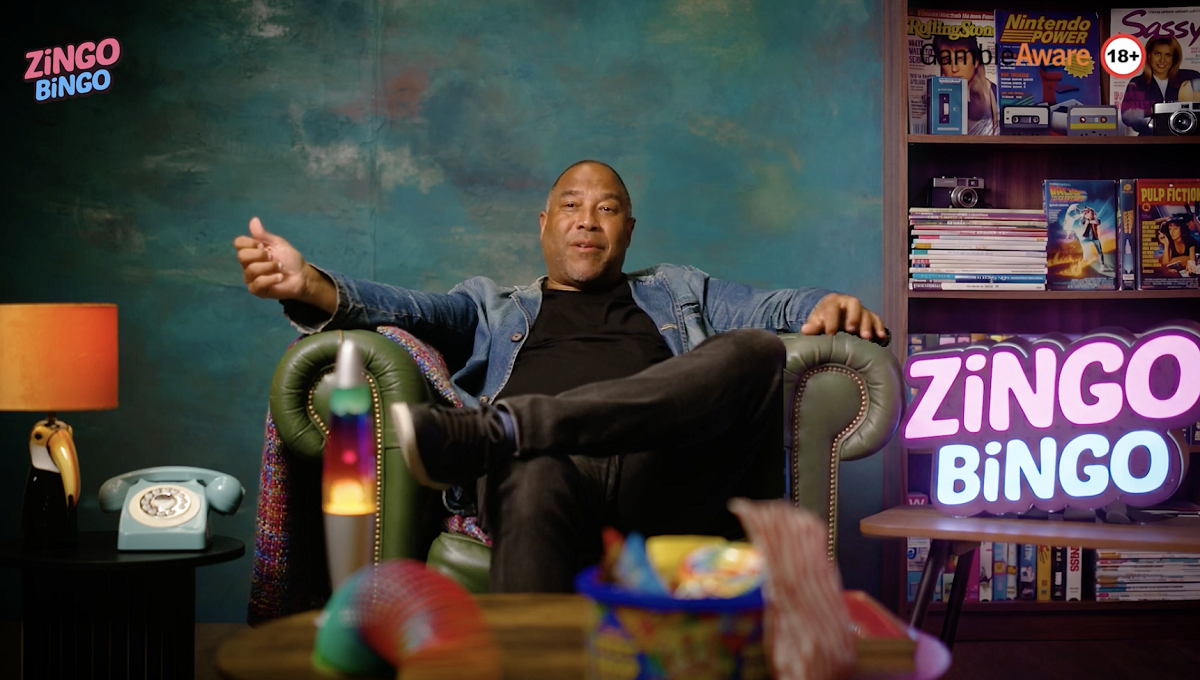
Brand manager Jack Watson argues bingo’s growth should focus on social play and cultural moments, as the operator plans a free-to-play day on 27 June.
Zingo Bingo is using National Bingo Week to argue that bingo’s next phase should prioritise “community, accessibility and shared cultural experiences” over “innovation for innovation’s sake,” according to Jack Watson, Brand Manager at Zingo Bingo.
In the statement, Watson says technology is reshaping gaming, but that bingo’s core appeal remains social interaction and shared entertainment. He points to sector shifts including mobile-first experiences, personalised content and themed gameplay, while claiming players still want “the shared excitement that comes from participating alongside others.”
Watson also flags nostalgia as a product and marketing lever, describing it as an “instant emotional connection” that can help online bingo feel “both fresh and recognisable.” He adds that operators should focus on presentation—such as “mobile optimisation, themed rooms, contemporary branding and strong community experiences”—rather than changing the fundamentals of the game.
Zingo Bingo said it will mark National Bingo Day with “a full day of free bingo, running from 12pm to 8pm on Saturday 27 June,” allowing players to participate without purchasing tickets. Watson positions free-to-play events as a way to reduce friction for first-time players who may hold outdated views of online bingo.
The company also highlights responsible gambling measures, stating it offers tools including deposit limits, session reminders and self-exclusion.
The post Zingo Bingo pushes “community, accessibility” message for National Bingo Week appeared first on EE Gaming | Global iGaming & Tech Intelligence Hub.
Boomerang Partners
Boomerang Partners’ case study: how affiliates prepare traffic campaigns around major sports events
On June 11, the FIFA World Cup 2026 starts in North America. It will be the biggest sports event of the year, but the real challenge for affiliates is the rest of the schedule. Throughout 2026, dozens of major tournaments – from football and tennis to Formula 1 – are running almost back-to-back across the sports calendar. This creates one of the most overloaded sports calendars affiliates have worked with in recent years.
Periods like these usually bring some of the highest traffic volumes and strongest audience engagement of the year for affiliate teams.
But data from Boomerang Partners shows that old tactics no longer work. You cannot just launch a campaign on match day and expect good results. Today, teams have to plan their traffic and content weeks before the first game begins.
Regular leagues create more stable traffic
The pressure of this busy schedule became clear during the recent TIME TO WIN affiliate tournament, organized by Boomerang Partners. The project became a live test for different traffic strategies during major events.
The tournament highlighted one clear pattern. Teams like Fumma LTD pointed to the UEFA Champions League and the English Premier League as some of the most reliable traffic drivers. This approach gives affiliates several advantages:
- Fixed schedules make it easier to prepare content and distribute traffic across several tournament stages.
- Recurring match cycles help teams plan campaign timing and prioritize key fixtures well before kick-off.
The real problem in sports is overlapping events. Several big tournaments now run simultaneously across different regions and time zones.
For sports-focused affiliates, this means competing for the same audience attention at the same time. In many cases, the audiences overlap as well. If two major match cycles collide, teams have to choose quickly where to push traffic. Otherwise, they will lose their visibility entirely.
Campaigns must start before kick-off
The timeline for traffic preparation has completely changed. Affiliate teams increasingly start campaign preparation long before the opening match. By the time the live event starts, much of the preparation work is already done.
Preparation now involves several steps. Content teams need to prepare match materials in advance, and media buyers must schedule traffic around the most important fixtures and play-offs.
During the live match, there is no time to fix mistakes. Audiences move too fast between different games. This is especially true when several big matches happen on the same day. If a campaign fails at kick-off, fixing it on the fly is almost impossible.
This is why arbitrage remains one of the strongest sources for sports campaigns. As Sanan Kamilli, CBO at Fumma LTD, noted during TIME TO WIN: “Google PPC works best for sports-focused campaigns because it captures high-intent users actively searching for event-related queries, allowing precise targeting, scalable volume, and strong conversion rates compared to other channels.”
Users searching for specific matches, teams, or betting odds usually show much stronger intent than broader tournament audiences. This makes search traffic particularly valuable during major sports events.
Sports traffic extends beyond the final match
Many affiliates think that sports traffic disappears once the final whistle blows. This is a mistake.
As Fumma LTD noted during TIME TO WIN, sports-driven audiences typically remain valuable for several weeks after the event. The company continues working with these users through retargeting, promoting upcoming matches, and using CRM campaigns to drive repeat engagement and increase lifetime value.
Fumma LTD also highlighted conversion rate (CR), earnings per click (EPC), and player lifetime value (LTV) as some of the key metrics for evaluating traffic quality and long-term profitability in sports-focused campaigns.
For affiliate teams, this creates opportunities beyond a single tournament window. Large finals still generate the biggest traffic peaks, but audience activity often continues into the following match cycles as well.
Using the 2026 Calendar to manage niche traffic
With so many tournaments running back-to-back in 2026, the main difficulty is managing multiple campaigns at once. Content creation, publishing, and ad buying must happen simultaneously.
To help with this, Boomerang Partners launched the Sports Marketing & Betting Calendar 2026. This tool gathers major leagues, global tournaments, and niche events in one place.
For teams like Paradise Media, this centralized schedule solved a major workflow problem. As the company noted during TIME TO WIN, football still accounts for more than 80% of online sports betting activity, so having all World Cup match days, groups, and teams in one place helps speed up research and campaign preparation. To make their workflow faster, the team also combines the calendar with different AI and LLM tools to gather information and cross-check with the calendar to enrich their content, said Mehdi, Director of Affiliates at Paradise Media.
Niche sports also play an important role during quieter periods between major football tournaments. They may not generate the same traffic volume as top leagues, but they help affiliates maintain publishing activity and keep audiences engaged throughout the year.
For many teams, this is no longer just about traffic volume. Covering niche events also helps build authority and positions affiliate platforms as more consistent sports sources outside the biggest football peaks.
A structured calendar always beats reaction
The main takeaway from the market is simple: sports marketing is no longer about quick reactions. 2026 requires good coordination, pre-made content, and smart scheduling across overlapping tournament cycles.
The strongest affiliate teams are already moving toward structured, calendar-based strategies where preparation starts weeks before kick-off and continues well beyond the final match.
About Boomerang
Boomerang Partners is a rapidly growing global marketing agency offering a wide range of services. Boomerang Partners is an Official Regional Partner of AC Milan. In 2024, it launched the inaugural Golden Boomerang Awards – a global tournament for affiliate teams. More than 400 affiliate teams participated in the second season of the tournament in 2025. Partners of the Agency launched six new products in 2024-2025, contributing to a nearly 1.5-fold increase in product users.
The Agency’s clients’ portfolio contains 10+ brands offering affiliate and entertainment services across multiple markets in compliance with local regulations. These products provide incentive programs and 24/7 multilingual support.
FIFA World Cup and other third companies are made for descriptive purposes only. Boomerang Partners is not affiliated with, endorsed by, or officially connected to these entities in any way.
The post Boomerang Partners’ case study: how affiliates prepare traffic campaigns around major sports events appeared first on EE Gaming | Global iGaming & Tech Intelligence Hub.
Boomerang Partners
Boomerang Partners’ case study: how affiliates prepare traffic campaigns around major sports events

On June 11, the FIFA World Cup 2026 starts in North America. It will be the biggest sports event of the year, but the real challenge for affiliates is the rest of the schedule. Throughout 2026, dozens of major tournaments – from football and tennis to Formula 1 – are running almost back-to-back across the sports calendar. This creates one of the most overloaded sports calendars affiliates have worked with in recent years.
Periods like these usually bring some of the highest traffic volumes and strongest audience engagement of the year for affiliate teams.
But data from Boomerang Partners shows that old tactics no longer work. You cannot just launch a campaign on match day and expect good results. Today, teams have to plan their traffic and content weeks before the first game begins.
Regular leagues create more stable traffic
The pressure of this busy schedule became clear during the recent TIME TO WIN affiliate tournament, organized by Boomerang Partners. The project became a live test for different traffic strategies during major events.
The tournament highlighted one clear pattern. Teams like Fumma LTD pointed to the UEFA Champions League and the English Premier League as some of the most reliable traffic drivers. This approach gives affiliates several advantages:
- Fixed schedules make it easier to prepare content and distribute traffic across several tournament stages.
- Recurring match cycles help teams plan campaign timing and prioritize key fixtures well before kick-off.
The real problem in sports is overlapping events. Several big tournaments now run simultaneously across different regions and time zones.
For sports-focused affiliates, this means competing for the same audience attention at the same time. In many cases, the audiences overlap as well. If two major match cycles collide, teams have to choose quickly where to push traffic. Otherwise, they will lose their visibility entirely.
Campaigns must start before kick-off
The timeline for traffic preparation has completely changed. Affiliate teams increasingly start campaign preparation long before the opening match. By the time the live event starts, much of the preparation work is already done.
Preparation now involves several steps. Content teams need to prepare match materials in advance, and media buyers must schedule traffic around the most important fixtures and play-offs.
During the live match, there is no time to fix mistakes. Audiences move too fast between different games. This is especially true when several big matches happen on the same day. If a campaign fails at kick-off, fixing it on the fly is almost impossible.
This is why arbitrage remains one of the strongest sources for sports campaigns. As Sanan Kamilli, CBO at Fumma LTD, noted during TIME TO WIN: “Google PPC works best for sports-focused campaigns because it captures high-intent users actively searching for event-related queries, allowing precise targeting, scalable volume, and strong conversion rates compared to other channels.”
Users searching for specific matches, teams, or betting odds usually show much stronger intent than broader tournament audiences. This makes search traffic particularly valuable during major sports events.
Sports traffic extends beyond the final match
Many affiliates think that sports traffic disappears once the final whistle blows. This is a mistake.
As Fumma LTD noted during TIME TO WIN, sports-driven audiences typically remain valuable for several weeks after the event. The company continues working with these users through retargeting, promoting upcoming matches, and using CRM campaigns to drive repeat engagement and increase lifetime value.
Fumma LTD also highlighted conversion rate (CR), earnings per click (EPC), and player lifetime value (LTV) as some of the key metrics for evaluating traffic quality and long-term profitability in sports-focused campaigns.
For affiliate teams, this creates opportunities beyond a single tournament window. Large finals still generate the biggest traffic peaks, but audience activity often continues into the following match cycles as well.
Using the 2026 Calendar to manage niche traffic
With so many tournaments running back-to-back in 2026, the main difficulty is managing multiple campaigns at once. Content creation, publishing, and ad buying must happen simultaneously.
To help with this, Boomerang Partners launched the Sports Marketing & Betting Calendar 2026. This tool gathers major leagues, global tournaments, and niche events in one place.
For teams like Paradise Media, this centralized schedule solved a major workflow problem. As the company noted during TIME TO WIN, football still accounts for more than 80% of online sports betting activity, so having all World Cup match days, groups, and teams in one place helps speed up research and campaign preparation. To make their workflow faster, the team also combines the calendar with different AI and LLM tools to gather information and cross-check with the calendar to enrich their content, said Mehdi, Director of Affiliates at Paradise Media.
Niche sports also play an important role during quieter periods between major football tournaments. They may not generate the same traffic volume as top leagues, but they help affiliates maintain publishing activity and keep audiences engaged throughout the year.
For many teams, this is no longer just about traffic volume. Covering niche events also helps build authority and positions affiliate platforms as more consistent sports sources outside the biggest football peaks.
A structured calendar always beats reaction
The main takeaway from the market is simple: sports marketing is no longer about quick reactions. 2026 requires good coordination, pre-made content, and smart scheduling across overlapping tournament cycles.
The strongest affiliate teams are already moving toward structured, calendar-based strategies where preparation starts weeks before kick-off and continues well beyond the final match.
About Boomerang
Boomerang Partners is a rapidly growing global marketing agency offering a wide range of services. Boomerang Partners is an Official Regional Partner of AC Milan. In 2024, it launched the inaugural Golden Boomerang Awards – a global tournament for affiliate teams. More than 400 affiliate teams participated in the second season of the tournament in 2025. Partners of the Agency launched six new products in 2024-2025, contributing to a nearly 1.5-fold increase in product users.
The Agency’s clients’ portfolio contains 10+ brands offering affiliate and entertainment services across multiple markets in compliance with local regulations. These products provide incentive programs and 24/7 multilingual support.
FIFA World Cup and other third companies are made for descriptive purposes only. Boomerang Partners is not affiliated with, endorsed by, or officially connected to these entities in any way.
The post Boomerang Partners’ case study: how affiliates prepare traffic campaigns around major sports events appeared first on Americas iGaming & Sports Betting News.

-

 Australia5 days ago
Former Star Entertainment Executives Mathias Bekier and Paula Martin Disqualified and Ordered to Pay Penalties
-
CFTC6 days ago
Novig Secures CFTC Designation, Bringing the First Prediction Market Built for Sports Fans Nationwide
-
LatAm6 days ago
Innovative payment solutions provider teams up with leading LATAM fintech platform to expand digital wallet access for online betting customers in Mexico
-
Alberta6 days ago
MediaTroopers lines up eight operator partners ahead of Alberta launch
-
Alberta6 days ago
Why Alberta Represents the Next Major Growth Opportunity for Gaming Operators
-
Alina Mihaela Popa Chief Commercial Officer at ICONIC216 days ago
ICONIC21 launches live casino and RNG titles with Maxbet in Romania
-
Aviator Studio7 days ago
Aviator Studio Secures Significant Legal Victory in Brazil as Federal Court Suspends Spribe’s Aviator Trademark Rights
-
ATG6 days ago
ATG Casino player in Sweden wins €2m jackpot powered by EveryMatrix