Latest News
Brazilian Ministry of Sports and IBIA sign sports betting integrity agreement


The Brazilian Ministry of Sports and the International Betting Integrity Association (IBIA) have signed a sports betting integrity cooperation agreement. This partnership will enable the sharing of information concerning suspicious betting activity connected to Brazilian sports and support collaboration on integrity-related investigations.
The agreement brings together the governmental body tasked with safeguarding the integrity and development of Brazilian sport, and the largest international betting integrity monitor for private operators in the world. Leading industry data and intelligence company H2 Gambling Capital has forecast that IBIA covers more than 70% of Brazil’s licensed remote gambling market.
According to ‘The Availability of Sports Betting Products: An Economic and Integrity Analysis’ study published last year, the sports betting regulatory regime in Brazil is projected to create $34bn (R$191.7bn) in sports betting turnover by 2028. With this increased growth comes a greater responsibility to protect customers, sports and betting operators from match-fixing.
A key element of the new Brazilian regulatory framework is the requirement that operators seeking a licence must join an independent sports integrity monitoring body. This licensing requirement is helping to strengthen IBIA’s capacity to monitor, assess and protect betting transactions in Brazil’s regulated sports betting market and maintain the integrity of Brazilian sporting events.
Minister of Sport, André Fufuca, said: “Today we are signing a milestone in the fight against match-fixing in Brazilian sport. Integrity must be a constant principle when it comes to transparency, ethics and, above all, the correctness of sports results. With these agreements, we will have more than enough instruments to curb this practice and guarantee greater transparency in competitions. Thus, athletes, clubs, organizations, fans and the entire population will be able to fully trust in the fairness of the results and, with this, will have peace of mind to develop the full potential of Brazilian sport.”
Khalid Ali, IBIA CEO, said: “IBIA welcomes this important partnership with the Brazilian Ministry of Sports. As the market grows, so too does the responsibility to ensure that robust integrity safeguards are in place. This agreement will ensure that information on suspicious betting is swiftly shared with the Ministry to support effective integrity actions. This includes access to detailed, account-level data available only through IBIA’s unique network.”
IBIA is a globally recognised non-profit organization that seeks to safeguard the integrity of the sports and betting sectors by fighting betting related match-fixing and fraud. It provides a free integrity monitoring service to sports governing bodies, regulatory authorities, government ministries, and law enforcement agencies that, importantly, has no potential conflicts created by the provision of competing commercial services, enabling all parties to efficiently and effectively cooperate in investigating, prosecuting and deterring sports betting related match-fixing.
IBIA monitors over $300bn per annum in betting turnover across more than 140 sports betting brands globally, making IBIA the largest betting integrity monitor of its type for private operators in the world. The association’s unrivalled access to detailed global customer transactional data has, and will continue, to play a pivotal role in protecting the Brazilian sports betting market and sporting events from corrupt activity. IBIA recently released its global alert data for the first quarter of 2025, detailing that 63 cases of suspicious betting were reported to the relevant authorities.
The post Brazilian Ministry of Sports and IBIA sign sports betting integrity agreement appeared first on Gaming and Gambling Industry in the Americas.











Today marks the official launch of Alberta’s regulated online gaming market, a significant milestone for the Canadian iGaming industry and an important step in Altenar’s continued expansion across North America.
Having secured approval from the Alberta Gaming, Liquor and Cannabis Commission (AGLC), Altenar is fully prepared to support licensed operators entering Canada’s newest regulated jurisdiction with its award-winning sportsbook technology.
The opening of Alberta’s market establishes Canada’s second regulated online gaming province after Ontario, creating fresh opportunities for operators seeking sustainable growth within a regulated framework.
With a strong track record across regulated markets worldwide, Altenar is well positioned to help partners launch competitive sportsbook offerings that prioritize player engagement, operational flexibility and long-term success.
As competition intensifies from day one, operators will be focused on delivering high-quality betting experiences capable of attracting playersAltenar’s scalable sportsbook solution, extensive customization capabilities and regulatory expertise provide operators with the tools needed to compete effectively in this evolving market.
Matthew Ferrara, Sales Manager at Altenar, said:
“The launch of Alberta’s regulated market is an important moment not only for the province but for the wider Canadian industry. Regulation creates opportunities for operators to build trusted brands while giving players access to safer, more transparent betting environments.
“We’re excited to support our partners as they enter this new market. Success in Alberta will depend on offering a premium player experience from the very beginning – fast, reliable technology, competitive betting content and the flexibility to adapt as the market evolves. Those are exactly the areas where Altenar delivers value, and we look forward to helping operators grow sustainably in one of North America’s most promising new jurisdictions.”
Alberta represents another important milestone in Altenar’s North American growth strategy as the company continues to expand its presence in regulated markets, providing operators with the technology and expertise needed to succeed in increasingly competitive environments.
The post Altenar Joins Alberta’s New Regulated iGaming Market appeared first on EE Gaming | Global iGaming & Tech Intelligence Hub.

Playtech PLC on Thursday said it expects 2026 results to beat market expectations, with its first half supported by an “excellent performance in the US”.
Playtech shares jumped 18% to 378.60 pence each in London on Thursday morning. It is up around 3% over the past 12 months but had been around 10% lower prior to Thursday’s surge.
The Douglas, Isle of Man-based gambling software firm now expects adjusted earnings before interest, tax, depreciation and amortisation of EUR270 million, “significantly above the current analyst consensus”. It puts the current consensus range at EUR205 million to EUR225 million.
Playtech’s current forecast represents a 37% rise from the EUR197.0 million achieved in 2025.
“Playtech’s trading has delivered results significantly ahead of market expectations, driven by excellent performance in the US and continued strength in Mexico, Colombia and certain European markets. The performance in the Americas, as consistently flagged since the start of the year, continued to accelerate through May and June,” the firm said.
It expects a first half adjusted Ebitda of over EUR155 million, rising at least 69% from EUR91.6 million a year prior.
Chief Executive Officer Mor Weizer said: “We achieved an excellent performance in the first half of 2026, reflecting continued momentum in regulated markets, notably the Americas and certain European markets. Performance in the US, driven by our partnership with Hard Rock Digital, has been exceptionally strong, and we are delighted to see returns on our investments over recent years accelerate and contribute significantly to profitability and cash flow.
“Playtech continues to further establish itself in regulated and regulating markets going into the second half of the year, and we are pleased with the progress towards our medium-term targets.”
Playtech releases half-year results on September 10.
Looking ahead, it expects second half earnings to decline from the first, with UK regulatory measures partly to blame.
“Hard Rock Digital has become one of Playtech’s largest customers and is expected to remain so going forward, albeit Playtech’s revenue with the operator is likely to continue at a lower but more sustainable level in H2 2026 and into 2027. Elsewhere, the company has been investing into a significant partnership in Brazil, ahead of expected signing and launch, which is likely to begin contributing to growth in 2027. In addition, in H2 2026 Playtech will also absorb the full impact of increased remote gaming duty in the UK, which became effective in April 2026,” the firm explained.
From April 2026 there was an increase in UK remote gaming duty 40% from 21%. Remote gaming duty is a levy applied on online casino offerings, poker and slots.
The post Playtech Raises its Full-year 2026 Adjusted EBITDA Forecast to €270 Million appeared first on EE Gaming | Global iGaming & Tech Intelligence Hub.
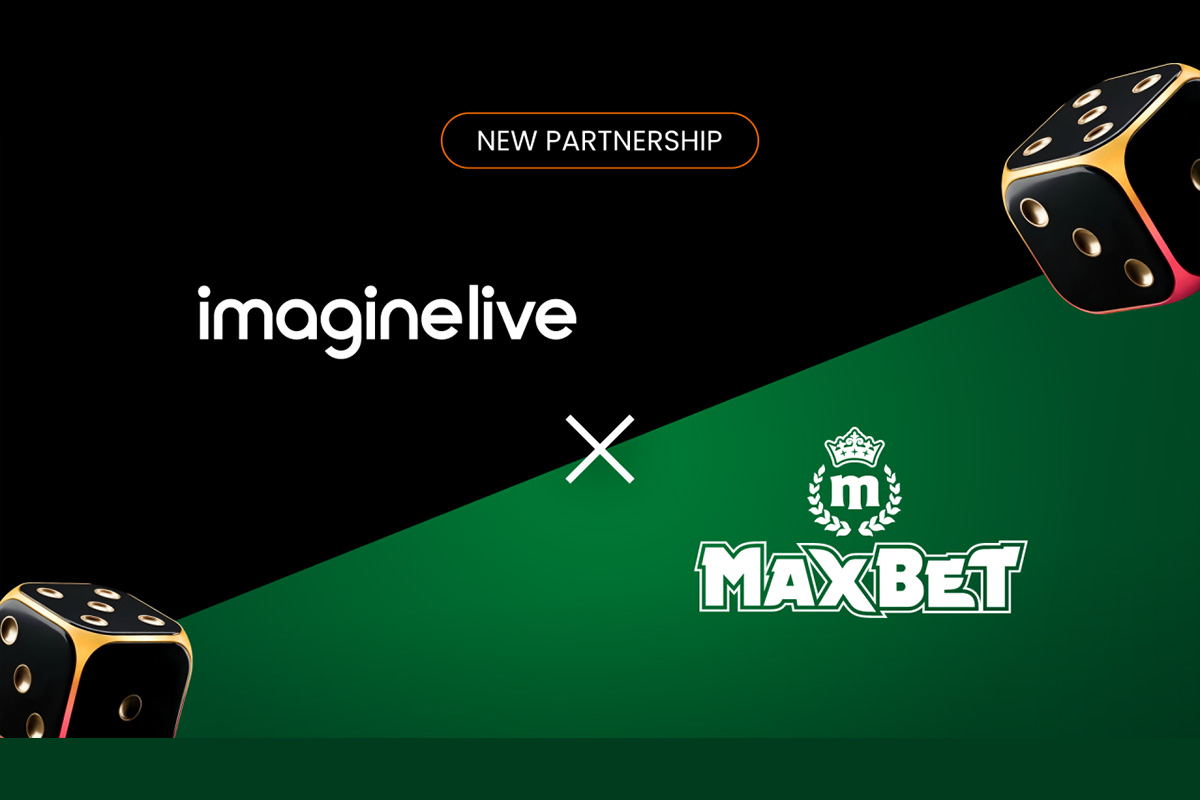
Imagine Live, the live casino provider, has partnered with MaxBet, one of the leading sports betting and gaming operators in the Balkans.
The partnership extends Imagine Live’s presence across regulated markets, bringing its live dealer games and game show content to MaxBet’s player base.
Now agreed and rolling out, the collaboration will go live first in Montenegro, followed by Serbia and then Bosnia & Herzegovina.
MaxBet serves around 95,000 online players each month, holding a leading position in its core Serbian market. The business has been majority-owned by Flutter Entertainment – the global operator behind brands including Paddy Power and Betfair – since 2023.
Its players will gain access to Imagine Live’s portfolio of live dealer tables and game shows, streamed from the provider’s studios in Armenia, Romania and Spain.
Launched in 2022, Imagine Live operates more than 200 tables and holds licences with the UKGC, MGA, ONJN, HGC and other regulators, extending its footprint in a region where regulated online play continues to grow.
Nadiya Attard, Chief Commercial Officer at Imagine Live, said: “Going live with MaxBet reflects the strength of our content and our focus on partnering with established operators across regulated markets.
“MaxBet is one of the most respected names in the Balkans, and starting in Montenegro before expanding into Serbia and Bosnia & Herzegovina gives us a strong platform in a region we know well.”
Tornike Tordia, Head of Gaming at MaxBet, said: “Bringing Imagine Live’s live casino content to our players reflects our commitment to offering a varied, high-quality gaming experience.
“Their live dealer games and game shows add real depth to our offering, and we look forward to rolling them out across our markets as the partnership grows.”
The post Imagine Live Goes Live with MaxBet Bringing Live Casino to the Balkans appeared first on EE Gaming | Global iGaming & Tech Intelligence Hub.

-

 Bucharest6 days ago
Eeze opens 1,200 sqm Bucharest hub for technical teams
-
AB Trav och Galopp5 days ago
BetMakers Technology Group Selected to Distribute ATG Horse Racing Content Across Australia and New Zealand
-
BETANO6 days ago
Play’n GO strengthens Latin American presence with Betano Colombia launch
-
API integration6 days ago
Belatra signs cooperation deal to distribute slots via VeliGames
-
Aviator6 days ago
Pernambuco court revokes Spribe’s interim relief in Aviator trademark dispute
-
affiliate marketing7 days ago
SEOBROTHERS’ Aleksandra Drigo flags higher barriers for affiliates in regulated Alberta
-
Aino Lahti6 days ago
Kasinohai Audit: Most Slots Could Be Affected by Finland’s Draft Gambling Rules
-
game content6 days ago
R. Franco Digital releases fighting game-themed slot Spin Fighters