Interviews
Exclusive Q&A w/ Luke Sammut, Director of Finance & Accounting at Booming Games


Can you tell us a little more about your role at Booming Games?
In my role as the Director of Finance & Accounting at Booming Games, I oversee our finance team and the financial strategy of the group. Our department’s responsibilities range from day-to-day accounting operations to more complex tasks such as financial planning and analysis.
Joining Booming Games in its early stages was both a challenge and an exciting opportunity to build the finance function from scratch. Each step in establishing internal processes, implementing new finance tools and software, and so much more, helped in making the department a valuable business partner within the company. Seeing all these pieces come together has been very rewarding.
Over the years, it has become more and more important for my role to ensure that the department is well-equipped to support the business in scaling up its operations, developing long-term financial planning and most importantly ensuring financial stability. All very important for the business to be able to make well-informed decisions. My role and that of our department has grown to extend beyond the traditional finance functions but to be a strong pillar of our organisation.
What career path did you take to get into the industry and your current role?
I started my journey in the iGaming industry after a three-year stint as an auditor at PwC Malta, where I was fortunate enough to be surrounded by some of the best minds in the profession. Working in such a high standard and demanding environment was a very important part of my career in building a strong technical expertise in the field.
Moving to Booming Games in 2017 as a Senior Accountant was a significant transition motivated by the sector’s dynamic environment as well as the opportunity to be part of a growing company. Every stage in advancing to my current position has been a path marked with significant personal and company achievements, making it an incredible journey!
What is the most challenging part about your role?
Dealing with challenges is a continuous aspect of my role. Central to these challenges is the need for continuous learning to keep up to date with professional standards and the industry.
Another aspect is balancing between being process-oriented and having robust controls whilst remaining agile. Equipping our team with the right tools at the right time is important to achieve this. At Booming Games, we’re committed to embrace technology, and we constantly strive to be aligned with the latest advancements in our field.
Building a strong and dedicated team is probably the biggest challenge. Overcoming this has been crucial for our success. It is not simply about increasing headcount but making sure that our people grow on a personal level by providing opportunities for professional development and good leadership. This not only increases our department’s capabilities, but with their support it becomes much easier to navigate through the complexities of our role. I am proud to say that within Booming Games, our team transformed the perception of finance being primarily administrative to being a key business partner.
What is the most rewarding part? What does success look like for you?
Seeing Booming Games reach new heights and knowing that my role played an important part in that journey is particularly satisfying. But the most rewarding part is the success in building a team of hard-working and exceptionally talented individuals with a very strong sense of teamwork and collaboration. Observing their development and growth over time is motivating.
As for my view on success, it includes two main elements. Firstly, it involves the company achieving its objectives and milestones. Secondly, and equally important, is fostering a great company culture and values which sets an environment where team members feel valued, challenged, and engaged. True success is achieving these two aspects simultaneously.
What would you say to someone looking to get into the industry? What are the pros/cons?
The iGaming industry is characterised by a forward-thinking nature, constantly evolving through innovation and creativity. Personally, I find this super exciting as it keeps the day-to-day job interesting. However, I do understand that this can be challenging for those who prefer a more constant environment.
To those looking to join the industry, it’s definitely a very rewarding journey, with plenty of opportunities.
Recently you have won an iGaming Idol Award. How does it feel to be considered the best of the best in this industry?
Receiving the iGaming Idol Award was a very proud moment. Each challenge and every milestone reached throughout this journey has contributed to this award. It’s a reminder that hard work does get recognised, and it motivates me to keep on pushing boundaries. Once again, a big thanks to Booming Games, our excellent team, and the judges. I’m eager to see what the future holds!












API integration
Reliability in Motion: Why Modern Digital Businesses are Abandoning the Single-Vendor Model


In the fast-paced environment of digital businesses, communication isn’t just a utility – it’s the heartbeat of the business. Whether it’s a high-stakes trade confirmation or a time-sensitive user’s notification, a lost message is often a direct precursor to lost revenue. Today, we sat down with Bohdan Bulatsan, CTO at CommsHub to discuss why the industry is shifting away from traditional messaging setups toward a more resilient, “strategic redundancy” approach. We explore how CommsHub is redefining delivery standards through intelligent routing and financial transparency.
In the high-stakes world of digital businesses, we often talk about “guaranteed delivery,” but the reality of infrastructure is that things break. From a technical leadership perspective, why is the “Single Vendor” model becoming a terminal risk for modern enterprises?
That’s right. No technical system is infallible. Downtime and glitches are inherent to infrastructure; the real differentiator is how you manage those failures to protect the business. Relying on a single vendor creates a “Single Point of Failure.” If that one provider goes down, your entire operation grinds to a halt.
At CommsHub, we address this by implementing a sophisticated provider cascading system. This architecture ensures that if one path is blocked, the traffic finds another. By eliminating the reliance on a single provider, we transform communication from a financial gamble on uptime into a stable, predictable business process.
CommsHub moves the conversation from “sending messages” to “strategic redundancy.” Can you walk us through the logic of your automated routing – how does the platform decide which path a message takes in milliseconds to ensure the highest delivery rate?
Our cascading logic functions as an intelligent safety net. When our system detects a failure signal from a provider, it triggers a reaction in milliseconds. The mechanism immediately consults a predefined routing roadmap and reroutes the message through the next optimal path in the chain.
Crucially, we allow clients to configure response wait times in both static and dynamic modes. This is a game-changer for businesses where speed is as vital as the delivery itself. Ultimately, our system is built for flexibility; we don’t just send messages – we architect a logic that supports virtually any messaging scenario a business requires.
Integration speed is often a bottleneck; you’ve managed to cut the industry standard from 45 days down to just 10. How does this technical agility impact a brand’s ability to scale into new, unpredictable international markets?
In the modern economy, standing still is the same as moving backward. Our clients are constantly expanding into new geographic territories and they need a partner that moves at their speed. By shrinking integration time to around 10 days, we allow businesses to respond to market opportunities almost instantly.
Our priority is the continuous onboarding of validated providers. This doesn’t just give our clients access to new GEOs; it gives them the power of choice within their existing markets, ensuring they always have the most competitive and reliable options available.
We’ve seen that “lost messages” translate directly to “lost revenue.” How does CommsHub’s unified dashboard bridge the gap between technical delivery logs and the financial transparency that C-level executives need?
Data is only useful if it’s actionable. C-level executives need to see the “why” behind the spend. The CommsHub analytics module is divided into two pillars: Performance and Finance.
The Performance section allows teams to monitor delivery rates and message statuses by country in real-time. Meanwhile, the Financial section provides total visibility into spending, broken down by provider and region. This bridge between technical performance and cost-efficiency allows Finance and Marketing departments to make data-driven decisions rather than educated guesses.
Looking at the mission of CommsHub – to make communication “simple, clear and predictable” what is the one technical myth about bulk messaging you want to debunk for businesses currently struggling with delivery stability?
The most dangerous myth is the belief that finding one “perfect” or “premium” provider is enough. The reality is that no provider – regardless of their size – is immune to regional outages, regulatory shifts or sudden performance drops.
If you want stability, stop looking for the perfect provider and start building a resilient strategy. True reliability comes from intelligent routing, multi-vendor redundancy and the ability to adapt to changing conditions in real-time. That is the mission we fulfill at CommsHub.
As we’ve discussed, the transition from a single-vendor dependency to a diversified, intelligent routing system is no longer a luxury – it is a necessity for survival in high-growth sectors. CommsHub continues to lead this charge, proving that when technical agility meets financial transparency, businesses can scale without the fear of silence. For those looking to turn their communication infrastructure into a competitive advantage, the path forward is clear: prioritize resilience over the illusion of a “perfect” single source.
The post Reliability in Motion: Why Modern Digital Businesses are Abandoning the Single-Vendor Model appeared first on Eastern European Gaming | Global iGaming & Tech Intelligence Hub.

As the Lanyard Sponsor of HIPTHER Baltics: Vilnius 2026, DSTGAMING brings more than a decade of iGaming technology expertise to the Baltic stage. Known for white-label and turnkey casino solutions, advanced game aggregation, secure payment gateways, and GLI-19 compliant platforms certified by BMM Testlabs, DSTGAMING represents the next generation of scalable and regulation-ready gaming infrastructure.
Ahead of the conference, we speak with John Tan, Digital Marketing Analyst at DSTGAMING, about one of the most important topics shaping regulated industries today: The role of AI and automation in regulatory processes.
Regulation is becoming faster, stricter, and more data-heavy. Where do you see AI making the biggest immediate impact in regulatory and compliance workflows?
AI is already proving valuable in areas where large volumes of operational data must be processed quickly and accurately. One of the most immediate impacts is in automated data validation, reporting preparation, and anomaly detection. Regulatory workflows often involve reviewing player activity logs, financial transactions, and system records, which can be time-consuming when handled manually.
For platform providers like DSTGAMING, AI can assist operators by flagging irregular patterns, organizing compliance-related records, and improving the speed and consistency of reporting processes. This reduces the burden on compliance teams while helping ensure that submissions to regulators are more accurate and timely. The ability to turn raw operational data into structured insights is where AI delivers strong short-term value.
Many businesses still view compliance as reactive and manual. How can automation transform it into a smarter, proactive function?
Automation shifts compliance from a task-driven activity into a continuous monitoring function. Instead of waiting for scheduled checks or audits, automated systems can monitor key indicators in real time and notify operators when thresholds are exceeded or unusual activity is detected.
This proactive approach allows operators to address potential risks before they escalate into compliance issues. Over time, automation also creates consistent records and audit trails, making regulatory reporting more structured and transparent. From a platform perspective, embedding automation into workflows ensures that compliance checks become part of daily operations rather than a separate responsibility handled only during audits or investigations.
From AML monitoring to player protection and fraud detection, which regulatory areas are best suited for AI-driven decision support today?
Fraud detection and transaction monitoring are among the most mature use cases for AI-driven support, as they rely heavily on identifying patterns across large datasets. AI models are particularly effective at detecting irregular transaction behaviors, unusual login patterns, or activity sequences that differ from typical user behavior.
Player protection is another area where AI can add value by identifying behavioral signals that may indicate risk, such as sudden changes in activity intensity or spending patterns. While AML monitoring also benefits from AI, the most practical applications today involve supporting human analysts by highlighting suspicious cases rather than replacing manual decision-making entirely. The strength of AI lies in prioritizing risk signals so compliance teams can focus their attention where it matters most.
How can operators balance efficiency through automation while still maintaining human oversight, judgment, and accountability?
Automation should be viewed as a decision-support layer rather than a decision-maker. The most effective balance is achieved when automated systems handle repetitive tasks—such as monitoring, logging, and flagging—while human teams retain authority over final decisions and interpretations.
Clear governance frameworks are also essential. Operators should establish defined escalation paths, validation checkpoints, and audit procedures to ensure that automated outputs are reviewed when necessary. This hybrid approach preserves accountability while still benefiting from improved speed and efficiency. Human judgment remains critical, particularly in complex cases that require contextual understanding or regulatory interpretation.
What are the biggest mistakes companies make when trying to introduce AI into regulated environments?
One of the most common mistakes is adopting AI without clearly defining its role within regulatory workflows. Without structured objectives and validation processes, organizations risk creating systems that generate outputs without meaningful oversight or traceability.
Another challenge is underestimating the importance of data quality. AI systems depend heavily on reliable, well-organized datasets, and inconsistent data can lead to inaccurate outputs. Companies also sometimes move too quickly without aligning AI deployment with regulatory expectations, which can create compliance risks instead of reducing them. Introducing AI gradually, with clear documentation and validation processes, helps ensure responsible adoption.
As a technology provider, how does DSTGAMING approach building solutions that are both innovative and regulator-ready from day one?
DSTGAMING prioritizes architecture that supports transparency, scalability, and operational clarity. From the early stages of development, systems are designed to maintain structured logs, clear data flows, and configurable reporting capabilities that help operators meet regulatory expectations across different jurisdictions.
Innovation is approached with practicality in mind. New technologies, including AI-driven features, are integrated in ways that enhance performance and usability without compromising system reliability. The focus is on delivering tools that support operators in maintaining operational discipline, while also enabling flexibility to adapt to evolving regulatory standards.
By aligning technical development with industry compliance requirements from the outset, DSTGAMING ensures that innovation and regulatory readiness progress together rather than in conflict.
The post AI Meets Accountability: DSTGAMING on the Future of Regulatory Automation appeared first on Eastern European Gaming | Global iGaming & Tech Intelligence Hub.
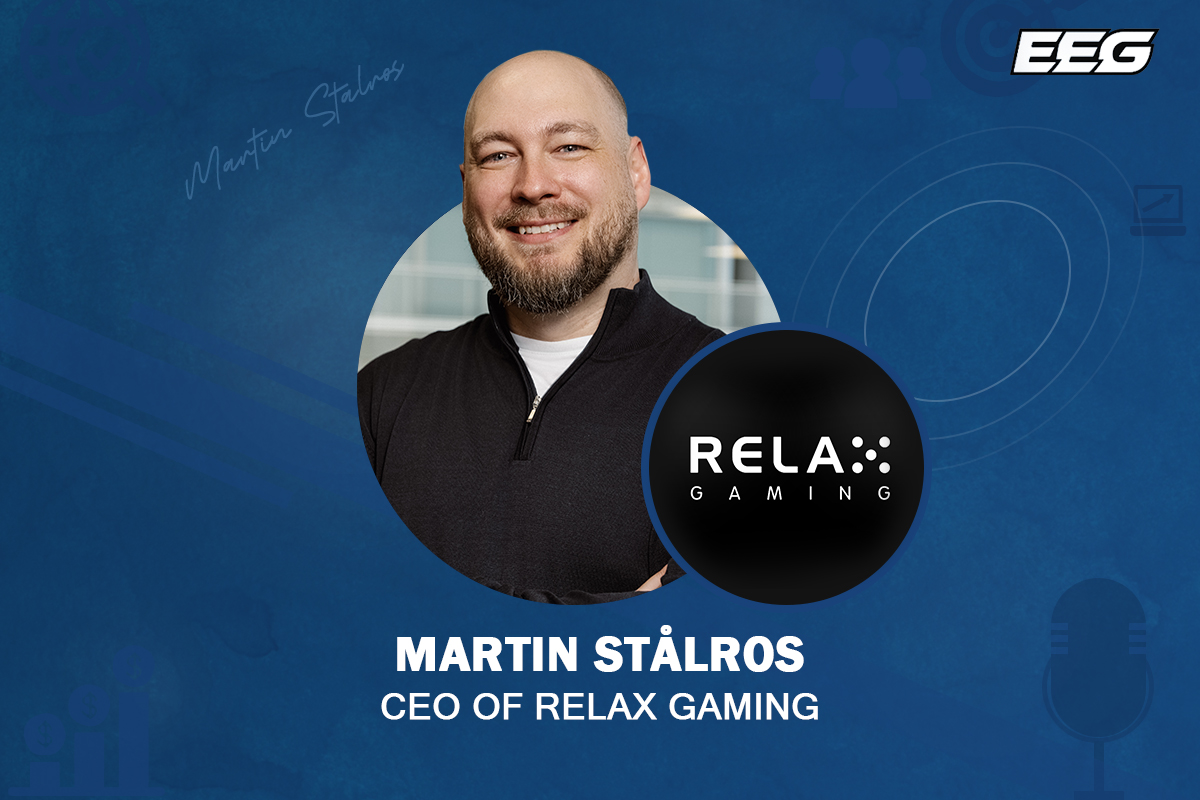
Relax Gaming CEO Martin Stålros explores the growing power of slot sequels, revealing how data, player feedback and innovation are driving franchise success in today’s gaming landscape.
Relax has built a reputation for turning strong titles into even stronger sequels. What signals tell you a game has the potential to evolve into a franchise rather than remain a one-off success?
The main signal is the engagement response from both players and operators. Within the first couple of weeks following a launch, we get a clear indication of whether a game has long-term potential, as there needs to be strong demand for a sequel to even be considered.
From there, our in-house studios analyse behavioural patterns to understand what resonates with players, identifying how a game can be further developed while aligning with both player preferences and operator requirements.
We typically see franchise potential when player retention is driven by the core gameplay loop and the excitement of “near-miss” moments, rather than simply high RTP or jackpot size. Increasingly, the response from the streaming community also plays a role, with titles that deliver high volatility, watchable moments tending to sustain interest over time.
Mechanical versatility is another key factor, and we look for frameworks where the underlying math model is robust enough to support feature layering. If a mechanic can be expanded or refined without breaking the game’s logic, it becomes a strong candidate for a sequel.
Alongside this, distinct character and theme identity are crucial. Memorable protagonists, such as the Money Train crew or the duo in Bill & Coin, help build an emotional connection with players. For example, in Bill & Coin 2, we introduced Dicey and The Mummy to extend the narrative and integrate them into gameplay.
Looking at Relax’s most successful titles like Bill & Coin 2 and the Money Train series, how do you approach evolving mechanics and features without losing the simplicity and appeal that made the original resonate with players?
Our approach is to retain a familiar base game while introducing one major new layer or hero mechanic. This allows us to deliver an exciting experience that still feels natural and recognisable to players.
As mechanics become more complex, such as the addition of more symbols in Money Train 4, we rely on intuitive visual cues. We use distinct animations and sound design to ensure that players clearly understand why they have won, even if the underlying math behind it is more sophisticated.
At the same time, we focus on retaining the soul of a title and preserving what we consider the non-negotiables, which are the specific features that players loved in the original. These elements remain the anchor of the experience, even as we expand volatility or increase maximum win potential, maintaining that balance is key to evolving a game without losing the original appeal.
The Money Train series is often cited as a benchmark for sequel success. How important has player and operator feedback been in shaping each iteration of the franchise?
Operator feedback is crucial when it comes to technical and UI refinements, while player feedback directly influences feature frequency and volatility curves, and together these insights play an important role in shaping how each instalment evolves and improves on the last.
Building on this, each Money Train sequel has been developed using the data from its predecessor; for instance, the introduction of persistent symbols was a direct response to player desire for high-anticipation, long-tail bonus rounds. This allows us to refine the experience while continuing to build on what players already enjoy.
As a result, the Money Train series has become part of the Relax DNA, with each instalment somehow managing to take the game even further. Everyone has their favourite Money Train slot, and that is a testament to all of the teams involved in creating such a powerful series over a number of years.
With recognisable IP now proving so effective, how do you balance investing in established franchises versus taking risks on entirely new concepts?
Established franchises act as an anchor for stability and performance within our roadmap, which is carefully planned, and this foundation allows us to invest in new concepts and bring fresh ideas to market.
We believe taking risks on new titles is essential, as this is how future franchises are discovered. Without backing original concepts like Bill & Coin, we would not be able to create the “new classics” of tomorrow.
From a resource perspective, this balance is reflected in how we operate, with our core internal studios focus on developing flagship sequels, while our Silver Bullet and Powered By partners are empowered to explore more niche or experimental gameplay. This ensures we can continue to innovate while building on proven successes.
Looking ahead, do you think the industry is moving toward a more franchise-driven approach?
We are seeing a clear trend shifting from simple sequels to broader ecosystems, where a franchise can span multiple verticals, including slots, crash games, and even brand-integrated jackpot systems like Dream Drop. This reflects a move towards more connected, long-term player experiences, where a title can evolve beyond a single release into something more expansive.
Franchises will continue to play a dominant role, but the breakout hit will always come from a new concept, with the future belonging to those who can build a franchise around genuine innovation rather than simply reskinning existing ideas.
The post Expanding on excellence: The power of sequels appeared first on Eastern European Gaming | Global iGaming & Tech Intelligence Hub.

-

 Betsson4 days ago
What the Betsson/Inter Milan case reveals about cross-border gambling branding when two restrictive regimes collide
-
Balkans4 days ago
CT Interactive Expands its Certified Portfolio in Bulgaria
-
ABBIATI Casino Equipment4 days ago
Abbiati to Exhibit at G2E Asia 2026
-
Africa3 days ago
Amusnet and Goldrush Strike Strategic Partnership to Enhance SA Online Gaming
-
Betting and Gaming Council3 days ago
Betting and Gaming Council Appoints Kane Purdy as New Chair
-
Anatel4 days ago
El choque entre crecimiento, política y supervisión en Brasil
-
AGLC3 days ago
Inspired Entertainment Secures Alberta iGaming Supplier Registration
-
Africa3 days ago
TaDa Strengthens its Presence in South Africa Through New Partnership with Sunbet