Compliance Updates
New Initiative from DI Council Aims to Enable Betting on Professional Sports

The Division I Council introduced a proposal that, if adopted in October, would change sports betting rules to permit student-athletes and staff members to bet on professional sports and refocus the Association’s enforcement efforts on college sports betting and behaviors that directly impact game integrity. If adopted, the change will be implemented only if Divisions II and III also vote to allow betting on pro sports.
The council’s introduction of the proposal, which comes after a directive from the Division I Board of Directors in April that the council adopt changes to sports betting rules, is not an endorsement of sports betting behaviors, especially for college athletes. The NCAA’s prohibition against betting on college sports would remain in place, as would the prohibitions against sharing information about college events with bettors. The NCAA also would continue to maintain its prohibition for NCAA championships against advertising and sponsorships associated with betting.
“NCAA rules prohibiting sports betting at all levels were written and adopted at a time when sports gambling was largely illegal nationwide,” said Josh Whitman, athletics director at Illinois and chair of the council. “As betting on sports has become more widely accepted across the country, Division I members have determined that further discussion of these sports betting rules is warranted, particularly as it relates to the potential distinctions between betting on professional versus collegiate sports. Throughout our discussions, the council has remained focused on student-athlete wellness and educating student-athletes about the risks and potentially harmful impacts of betting.”
Current NCAA rules do not allow student-athletes or institutional staff to engage in sports betting at any level (professional, college or amateur) for any sports that have NCAA championships, and NCAA members have continually maintained that any betting by a student-athlete on his or her own team or own sport in college should continue to result in a permanent loss of any remaining collegiate eligibility. However, in 2023, Division I changed the reinstatement guidelines for student-athletes who participate in sports betting on professional sports to focus on harm reduction for problematic betting behaviors.
“Deregulating professional sports betting may provide schools an additional opportunity to implement harm-reduction strategies, which can be more effective and have long-term benefits not seen with abstinence-only approaches. Harm-reduction strategies include education, stigma reduction and acknowledging actual behaviors,” said Dr. Deena Casiero, NCAA chief medical officer. “By meeting student-athletes where they are, schools may be more effective at preventing, identifying and supporting student-athletes with problematic gambling behaviors. Regardless of the change, schools are encouraged to use the many sports betting resources already available.”
The recently released Harm Reduction Considerations for Gambling & Sports Betting in Collegiate Sports references available sports betting resources, including the NCAA Mental Health Best Practices. Additionally, more than 100,000 student-athletes, coaches and administrators have been reached through the NCAA’s education efforts with EPIC Global Solutions, and the NCAA has launched an e-learning module to educate student-athletes on problem gambling harms and the integrity risks associated with sports betting.
Several sports betting-related violations by staff members at NCAA schools have been resolved through the infractions process in recent years, and the enforcement staff is working on issuing Notices of Allegations in several ongoing cases that involve allegations of betting on professional and college sports by student-athletes and/or athletics department staff members at a handful of NCAA schools.
The proposed rule change would not be retroactive. If it is adopted, it would apply only to sports betting activities that occur after the effective date of the proposal.
“The enforcement staff’s sports betting-related caseload has significantly increased in recent years, and our staff — including our new sports betting integrity unit — has been effective in detecting and pursuing violations,” said Jon Duncan, NCAA vice president of enforcement.
The Association prioritizes competition integrity, which is vital to college sports. The NCAA uses a layered strategy to respond responsibly to the rise in sports betting across the United States by monitoring over 22,000 contests per year, advocating for limits on prop bets that pose heightened risks, reducing the potential for student-athlete abuse by aggrieved bettors, and creating greater transparency to assist with the timely investigation and resolution of integrity-related issues.
This layered approach includes the most recent agreement extension with Genius Sports to establish unprecedented betting restrictions on high-risk proposition bets. Sportsbooks licensing NCAA championship data must cooperate fully with NCAA investigations, including providing access to account data, financial history and geolocation records. This will allow the NCAA to work with the sportsbooks to gather detailed account information when harassers are identified to prevent repeat offenders from continuing to place bets across platforms, increasing safeguards to protect student-athlete mental health and well-being.
The post New Initiative from DI Council Aims to Enable Betting on Professional Sports appeared first on Gaming and Gambling Industry in the Americas.












The Betting and Gaming Council (BGC) has responded to the UK Gambling Commission’s decision to introduce Financial Risk Assessments (FRAs) in stages.
Grainne Hurst, Chief Executive of the Betting and Gaming Council, said:
“We are deeply disappointed and frustrated that the Gambling Commission has decided to press ahead with Financial Risk Assessments despite the significant concerns raised over the last 18 months by the BGC, operators, racing, parliamentarians and customers.
“The fact that the Gambling Commission has delayed implementation, raised thresholds and abandoned its original timetable is a clear recognition that the concerns raised by the BGC and others were well founded. Unfortunately, the central issues around reliability, consumer impact and the practical operation of these checks remain unresolved.
“The Commission has failed to address the fundamental issues identified during its own pilot. It has not demonstrated that the data underpinning these checks is accurate, reliable or consistent enough to support regulatory decisions affecting customers.
“The pilot exposed inconsistencies in the information returned by credit reference agencies, with the same customer potentially receiving different outcomes depending on the provider. Customers risk being wrongly identified as financially vulnerable based on a system that remains unproven. That is not a sound basis for regulatory intervention.
“The Commission has yet to publish a full evaluation of the pilot, so neither the industry nor the public has seen the evidence needed to justify introducing these checks.
“These checks cannot be described as genuinely frictionless if they produce unreliable outcomes, lead to unnecessary account restrictions or ultimately result in customers being asked to provide documents or open banking information.
“While the Commission has announced implementation groups, it has given no indication that they will resolve the outstanding questions around reliability, consumer impact and how the system will operate in practice.
“We support evidence-led, proportionate regulation that protects vulnerable people while allowing the 22.5 million adults in Britain who bet each month to do so safely. But until the Commission can demonstrate these checks are accurate, consistent and genuinely frictionless, our fundamental concerns remain, including the risk of driving customers towards the growing illegal gambling market.”
The post BGC Responds to Gambling Commission’s Announcement on FRAs appeared first on EE Gaming | Global iGaming & Tech Intelligence Hub.

The Gambling Regulatory Authority of Ireland has announced the signing of a Memorandum of Understanding with the Danish Gambling Authority, further strengthening collaboration between European gambling regulators.
The MOU reflects a continued commitment to closer cooperation on compliance, monitoring, and enforcement. It is designed to support more effective information sharing and coordination between jurisdictions that oversee many of the same operators and market practices.
A recent meeting between CEO of the Gambling Regulatory Authority of Ireland, Anne Marie Caulfield, and Director General of the Danish Gambling Authority, Anders Dorph, provided an opportunity to exchange perspectives on key regulatory challenges and to align approaches where possible, especially in a digital-first age where gambling regulation increasingly requires coordinated European responses to address cross-border risks.
Welcoming the agreement, CEO of the GRAI, Anne Marie Caulfield, said: “This Memorandum of Understanding with the Danish Gambling Authority is another vital milestone in strengthening cooperation between regulators operating in closely connected markets.
“Continued dialogue and collaboration between Ireland and Denmark will support more effective oversight and regulation, and we see this agreement as part of our continued efforts to deepen cooperation with regulatory partners across Europe.”
The post GRAI Signs Memorandum of Understanding with Danish Gambling Authority appeared first on EE Gaming | Global iGaming & Tech Intelligence Hub.
Compliance Updates
ECA: EU Member States Miss Out on €22.9 Billion in Tax Revenue Due to Illegal Online Gambling


The European Casino Association (ECA) hosted a high-level roundtable in the European Parliament on tackling illegal online gambling. The event title still referred to the 2024 figure of €80 billion, the figure available when the roundtable was organised, but that number was overtaken at the event itself: the 2025 figures, released for the first time during the roundtable, showed that the illegal online gambling market aimed at EU consumers had reached €91.6 billion, an increase of around 14%. The title was therefore already outdated the moment the new numbers were presented. Drawn from the study commissioned by the ECA to Gambling Compliance International (GCI) and set out by ECA Chair Erwin van Lambaart, this rise deprived EU Member States of an estimated €22.9 billion in tax revenue.
A high-level roundtable in the European Parliament
The European Casino Association (ECA) organised a high-level roundtable discussion on illegal gambling in the European Parliament. Hosted by MEP Lukas Mandl, the gathering brought together EU lawmakers, the European Commission, the Anti-Money Laundering Authority (AMLA), Eurojust, the Joint Parliamentary Scrutiny Group (JPSG) on Europol, national gambling regulators and industry experts.
During the discussion, ECA Chair Erwin van Lambaart presented the 2025 figures from the impact study on illegal online gambling that the ECA commissions annually from Gambling Compliance International (GCI). Participants exchanged views under the Chatham House Rule on the growing scale of illegal online gambling, how it is currently tackled, and what more can be done at European level. They acknowledged the growing scale of the problem and called for stronger enforcement and closer cooperation to support a safe, well-regulated gambling environment.
The discussion is timely, coming shortly after the European Commission’s proposal to reform the mandate of Europol, a key institution in the fight against cross-border crime, including illegal gambling.
What the 2025 GCI figures show
The latest impact study, commissioned by the ECA to Gambling Compliance International (GCI), shows that the illegal online gambling market aimed at EU consumers reached €91.6 billion in 2025, an increase of around 14% on the previous year. This clear upward trend deprived EU Member States of an estimated €22.9 billion in tax revenue in 2025.
The figures also show that illegal operators now account for the majority of online gambling revenue in the EU-27, that more than 6200 illegal operators are actively targeting European consumers, and that the overwhelming majority of online gambling content Europeans are exposed to promotes illegal, unlicensed operators.
What is meant by “illegal gambling”
In the 27 Member States of the European Union, there is no grey market and no third category. A gambling operator is either legal, meaning it is licensed in the country where it serves its customers, or it is unlicensed and therefore illegal. When the ECA speaks of illegal gambling, it means operators serving European consumers without the licence that national law requires.
What sets legal and illegal operators apart
Legal, licensed operators abide by national and EU law, apply anti-money-laundering measures and cooperate closely with national and EU authorities. They protect vulnerable consumers, with particular care for young adults, through strict responsible-gambling programmes; they make significant tax contributions; and they support local development, tourism and jobs.
Illegal, unlicensed operators, by contrast, operate outside any licence and any regulatory or ethical standard. They fail to apply anti-money-laundering measures and can facilitate money laundering and the financing of crime. They ignore age and identity checks and actively target young and vulnerable players, using aggressive marketing, personalised bonuses and free plays to drive compulsive play. They pay no tax in the countries they target, and they mislead consumers, for example by using the logos of legitimate operators in advertising to commit fraud.
ECA Chair Erwin van Lambaart said: “The 2025 data from the GCI report leaves no room for doubt: illegal online gambling is a fast-growing, cross-border problem that puts players, especially young adults, at high risk, deprives societies of much-needed tax revenues, and undermines trust in the regulated market. Licensed casinos and their online businesses operate under strict rules and invest heavily in responsible gambling and anti-money-laundering measures. Yet illegal operators, often based outside the EU, can reach European consumers at the click of a button, without safeguards, without oversight and without contributing to our communities.”
“This is why we need strong political will and strengthened public-private cooperation that is aligned with this reality. By connecting national enforcement efforts, financial intelligence units and sector expertise, European institutions and agencies such as the European Commission, Europol and AMLA can help us turn data into action. If we fail to act now, the illegal online market will continue to grow at the expense of players, public finances and legitimate businesses.”
MEP Lukas Mandl said: “Illegal online gambling is not a niche issue, it is a serious cross-border threat that touches on consumer protection, organised crime and the integrity of our internal market. Europol is a crucial partner for Member States, but we must ensure that its mandate and resources allow it to fully support the fight against these illegitimate activities.”
“The evidence presented by the European Casino Association today show where cooperation is needed to do more. I will bring these insights into our parliamentary work and encourage colleagues cross-party to jointly go against the negative effects of illegal gambling from mental health issues to existential disasters of individuals and entire families, so that we can better protect citizens and make a clear difference between criminal activities and those operators who play by the rules.”
The post ECA: EU Member States Miss Out on €22.9 Billion in Tax Revenue Due to Illegal Online Gambling appeared first on EE Gaming | Global iGaming & Tech Intelligence Hub.

-

 AGCO7 days ago
AGCO Fines Great Canadian Entertainment $120,000 for Using Unauthorised Gaming System Software at Four Casinos
-
Affiliate Industry6 days ago
Hub Affiliations Triumphs at the iGB Affiliate Awards 2026: Winner of Programme/Network Campaign of the Year
-
Asia7 days ago
The UAE Lottery joins SAGIP outreach with Philippine Consulate and Infinite Communities
-
Canada7 days ago
St8 extends Octoplay partnership into Ontario and the UK
-
Latest News6 days ago
N1 Partners at iGB L!VE 2026: Bringing Together Affiliates, Art and Innovation
-
0007 days ago
Booming Games launches Booming Buffalo Hold and Win Extreme 25,000
-
Austria6 days ago
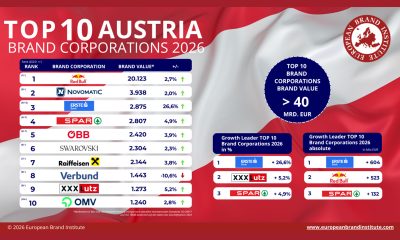
Austrian Brand Value Study: NOVOMATIC Defends Top Ranking
-
Canada7 days ago
St8 expands Octoplay aggregation deal to Ontario and the UK