Latest News
Global Online Gambling Market to Reign in Huge Profits till 2025 with Registering a CAGR of 13.2%

2020 was a game-changing year online gambling market, mainly due to the online gaming & gambling legalization in the US. Ballot initiatives in the U.S. presidential election from November 2020 added new states to the growing list of U.S. states where online casino betting is legalized, allowing the online gambling market to garner significant revenues. The newly elected government signaled support for opening up the online gambling industry and reducing federal restrictions.
More legal breakthroughs expected in 2021 would become a huge momentum driver in the online gambling industry. Players like Bragg Gaming Group, MGM Resorts International, Wynn Resorts, Flutter Entertainment, and Caesars Entertainment are seeing new opportunities to increase their online footprint into major gaming markets in Europe, North America, and APAC markets that could mean big things in 2021 and beyond.
This also means that online gambling markets worldwide would garner significant traction. According to Market Research Future (MRFR), the global online gambling market size is projected to grow at a 13.2% CAGR during the forecast period (2019–2025). The market was valued at USD 117.99 billion in 2018. Besides, advances in connectivity and other related technologies are expected to foster the global online gambling market size.
COVID-19 Impact
The COVID-19 outbreak has positively impacted the already booming online gambling market, increasing public interest in online gaming by almost 52%. The pandemic and subsequent lockdowns worldwide allowed people with more free time to involve in gaming and leisure activities.
Besides, safe distancing mandates are increasing the uptake of online gambling, allowing access to all the games, slots, and sport betting facilities from home comfort. With the increased uses of various cloud gaming services, the online gambling market share is witnessing a constant uptick over the past few months.
Also, increasing investments are seen by the service providers to foster R&D activities to allow slot developers and online casino sites to exploit the online gambling market opportunities, making entertaining gambling programs & games from side project to the next global sensation.
Industry Trends:
Rapid developments in Internet technologies and mobile apps are projected to increase the online gambling market size, registering a significant growth in terms of revenues and the amount of time users spend on such gambling activities. Online poker and casinos are some of the widely played games in the overall online gambling market. With the improving Internet connectivity, online gambling platforms enable gamblers to play with anyone at a time.
Online gambling platforms offer various benefits compared to traditional gambling, such as support with numerous languages and multiple currencies depending upon the gambler’s location. Also, the online gambling platforms use real money, and they’re not required to exchange chips for money, the key feature that is not available in traditional casino games. These are some of the factors significantly boosting the online gambling market growth.
On the other hand, regulatory norms such as The Information Technology Act in India that have certain provisions to ban foreign websites in the country restrict online gambling market growth. Also, in some countries, the governments have invoked the ban on playing on certain foreign betting sites, which can pose challenges to the growth of the online gambling market.
Segmentation:
The online gambling market is segmented into game type, device type, end users, and regions. The game type segment is sub-segmented into betting, casino, poker, lottery, online bingo, and others. The device type segment is sub-segmented into desktop and mobile. The end-user segment is sub-segmented into gambling enthusiasts, social exuberant, and dabbles.
Regional Segmentation:
By region, the market is bifurcated into the Americas (US, Canada, Mexico, Rest-of-North America) and South America, Europe (the UK, Germany, France, Italy, and Rest-of-Europe), Asia Pacific (China, Japan, India, South Korea, and Rest-of-the-APAC), and Rest-of-the-World.
Europe is projected to dominate the global online gambling market. The presence of a large number of online gambling service providers that offer secured gambling platforms, such as Kindred Group PLC, Bet365, and 888 Holdings, drives the growth of the market in the region.
Besides, increased demand for online gambling services and improved Internet connectivity with high reliability in this region boost the market growth. Furthermore, advanced technologies and favorable government rules and regulations across various countries influence the region’s online gambling market share.
North America is expected to acquire the second position in the global online gambling market. The market rise is predicted to be driven by the rising numbers of gamblers, and gambling platforms in the region contribute to the regional market growth. Current regulatory reforms in the United States are projected to create vast opportunities for new and established companies across the US gaming industry to move into the online space and serve a wider market of customers.
The Asia Pacific region is anticipated to emerge as a profitable market for online gambling globally. Increasing focus on improving internet connectivity and high R&D investment are the major factors projected to influence market growth in the region. Furthermore, technical expertise and the proliferation of smartphones foster the growth of the market. Online gambling platforms in emerging countries such as Indian and China are likely to boost the region’s market share during the assessment period.
Competitive Analysis:
The online gambling market is expected to witness significant product launches and implementations of several strategic approaches, such as expansion, collaboration, mergers & acquisitions, and product launches. Mature industry players are making strategic investments in research and development activities and fostering their expansion plans.
For instance, recently, on Jan. 29, 2021, FOX Bet, along with Pokerstars and Stars Casino, launched its sports betting and online gambling products in Michigan following a major sports-betting app that was approved in the state earlier in January 2021.
In another instance, an online gambling company – Golden Nugget Online Gaming (GNOG), in December 2020, announced the launch of services in New Jersey and is poised for additional expansion with significant investments.
Key players involved in the online gambling market are:
- The Stars Group (Canada)
- International Game Technology PLC (US)
- Betsson AB (Sweden)
- Net Entertainment (Sweden)
- Kindred Group Plc (Malta)
- Paddy Power Betfair PLC (Ireland)
- Ladbrokes Betting & Gaming Ltd. (UK)
- 888 Holdings PLC (UK)
- Bet-at-home.com (UK)
- Betfair Group plc. (UK)
- Bwin. Party Digital Entertainment (Austria)
- William Hill Plc (UK)
- bet365 (UK)
- Scientific Games (US)
- VGC Holdings PLC (Isle of Man)
- Betway (Europe)
- Spin Inc. (US)
- Royal Panda (Europe)
Powered by WPeMatico



Sponsorship covers the Premiership, Championship and Women’s Premiership and is NIFL’s first deal valued above £1m, per the league.
BOYLE Sports has signed a three-year agreement to become Title Partner of the Northern Ireland Football League (NIFL), expanding its existing relationship with the competition. The sponsorship spans the BOYLE Sports Premiership, BOYLE Sports Championship and BOYLE Sports Women’s Premiership.
The operator had been the League’s Official Betting Partner since December 2025. Under the expanded deal, BOYLE Sports retains existing rights including title sponsorship of the BOYLE Sports Women’s Cup.
NIFL said the agreement is its first partnership valued at more than £1 million. The league also pointed to what it described as a record-breaking season, citing over 100 million digital views last season alongside its strongest performance for viewership and commercial revenue.
Activation will include branding across clubs’ playing kit, matchday environments, broadcast highlights, scoreboards, player of the match activations and league content across social channels. BOYLE Sports will also launch a responsible gambling awareness initiative across NIFL clubs, using matchday and digital platforms to promote safer betting information and conversations.
Vlad Kaltenieks, CEO of BOYLE Sports, said: “Football in Northern Ireland has real momentum and we’re proud to deepen our partnership with the Northern Ireland Football League at such an important time for the League.
“Becoming Title Partner across the Premiership, Championship and Women’s Premiership reflects our belief in the clubs, supporters and communities that make the game so strong. This partnership gives us the opportunity to support that growth, enhance fan experience and use our platform to positively engage with fans and the wider football community.”
Gerard Lawlor, Chief Executive Officer of the Northern Ireland Football League, added: “We are delighted to extend our relationship with BOYLE Sports through this landmark title partnership. This is a major commercial moment for NIFL and reflects the growing strength and ambition of our competitions. BOYLE Sports has already shown real commitment to football in Northern Ireland, and this agreement will deliver meaningful value across our clubs, competitions and communities.”
The post BOYLE Sports signs as Northern Ireland Football League title partner in three-year deal appeared first on EE Gaming | Global iGaming & Tech Intelligence Hub.

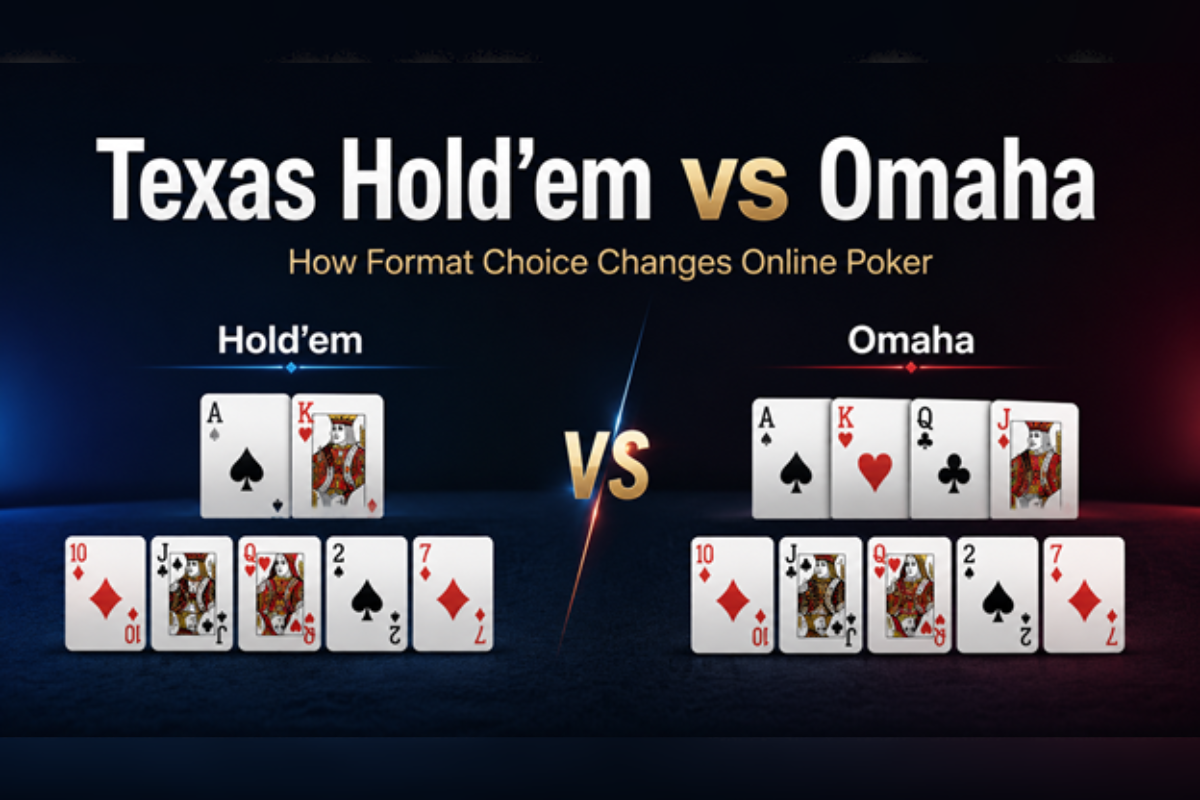
Poker formats share a surface: private cards, community cards, betting rounds, and a final five-card hand. The difference between variants, however, is not cosmetic. Texas Hold’em gives players 2 private cards, so the first decision is narrow and readable. Omaha gives 4, then forces exactly 2 of them into the final hand. That single rule changes the way every board is read.
Adding variety to your poker playing routine can be great fun, but it’s crucial to understand the formats before you do – or you may find yourself struggling at the table!
The Format Is the First Practical Filter
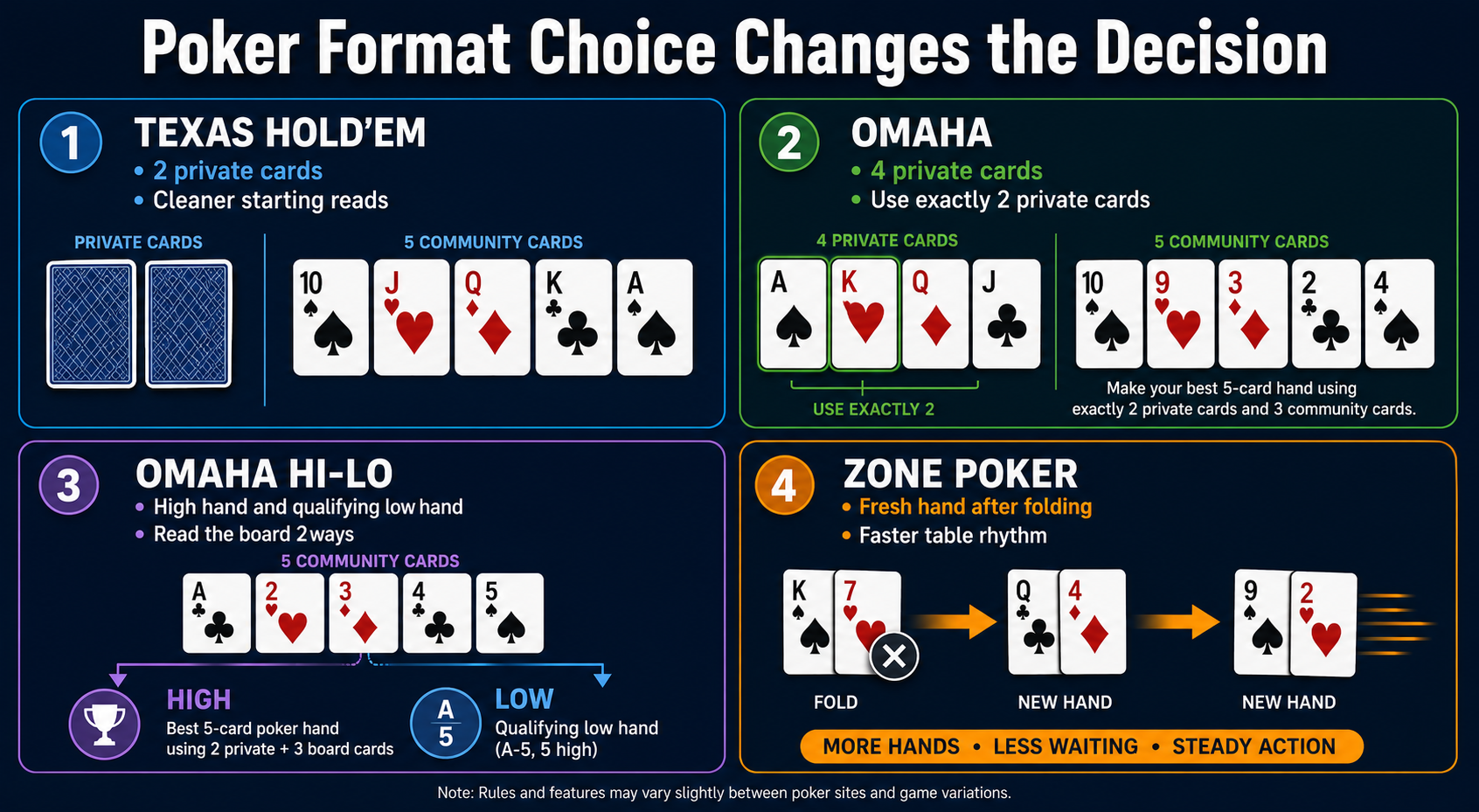
Once the basic rules are familiar, format choice becomes easier to understand when the games are seen side by side. A player comparing Hold’em with Omaha is not only comparing two sets of rules. They are comparing the amount of private information available before the flop, how many possible hand combinations need to be tracked, and how quickly each decision starts to feel comfortable.
That is where an Australian online poker setting gives the comparison more practical shape. A page focused on online poker Australia places Texas Hold’em, Omaha, Omaha Hi-Lo, and Zone Poker in the same playing context, which makes the differences clearer without treating poker as one generic format.
Hold’em starts with 2 hole cards and 5 community cards, giving players a cleaner starting point. Omaha starts with 4 hole cards but still requires exactly 2 private cards and 3 community cards for the final hand. Omaha Hi-Lo keeps that same construction while asking players to think about high and qualifying low hands. Zone Poker changes the rhythm by moving a folded player to a new table and a fresh deal. Seen together, these formats show that poker choice is not only about hand rankings. It is about the kind of attention each version asks from the player.
A recent Ignition Australia post makes the same point in cultural terms, noting that poker in Australia has changed over the years while the heart of the game has stayed intact. The format conversation is not only technical. The same game can move from a physical room to a phone screen, from Hold’em to Omaha, or from a standard table to a faster online format, while still centering on timing, reading, and the next card.
https://www.instagram.com/p/DVM_bPlErLf/
Hold’em Gives Cleaner Reading
Texas Hold’em is often easier to explain because the relationship between private cards and the board is direct. A pair in the hand, a suited ace, or two connected cards creates a clear starting point. After the flop, the player can ask a simple question: did the community cards improve the hand, threaten it, or create a draw worth following?
That clarity does not make Hold’em shallow. It makes the decision tree easier to see. Position, bet size, board texture, and opponent behavior still matter, but the player is not juggling as many private-card combinations. This is why Hold’em has become the main reference point for casual poker viewers and newer online players. The game gives them enough structure to follow the action, while leaving room for deeper judgment as experience grows.
Omaha Creates More Temptation
Omaha can look generous at first because 4 private cards seem to create more routes to a strong hand. That impression is where many Hold’em habits become unreliable. More starting combinations also mean opponents can connect with the board in stronger ways. A hand that feels powerful in Hold’em may be ordinary in Omaha if the board is coordinated.
The exact 2-card rule is the point beginners must absorb early. If the board shows 4 hearts and a player holds only 1 heart, that player does not have a flush. If the board shows pairs, a full house still depends on the required combination of private and community cards. Omaha asks players to slow down the first instinct and rebuild the hand under the format’s rule.
Omaha Hi-Lo adds another reading layer. A player may be looking for a strong high hand while also watching whether a qualifying low hand is available. The board can divide attention, and the clearest decision may depend on whether the hand has a path to one side of the pot or both.
Pace Changes the Same Cards
Zone Poker shows that format choice can also be about rhythm. In a standard table format, folded hands create waiting time. That delay lets players watch other hands finish, notice tendencies, and settle into the table’s pace, but it can feel slow and under-engaging. In a fast-fold format, folding moves the player quickly into a new hand, which makes the session feel sharper and less observational. The cards stay familiar, but the table observation window changes.
Poker formats are easiest to understand when the reader stops treating them as labels and starts treating them as different ways of processing incomplete information. Two private cards, four private cards, a split-pot rule, or a faster table rhythm can all change how a hand feels before the river arrives. The social layer also remains part of online play, as described in 2025 open-access work on multiplayer online games and social connection.
The post Texas Hold’em vs Omaha for Players Comparing Poker Formats appeared first on Americas iGaming & Sports Betting News.
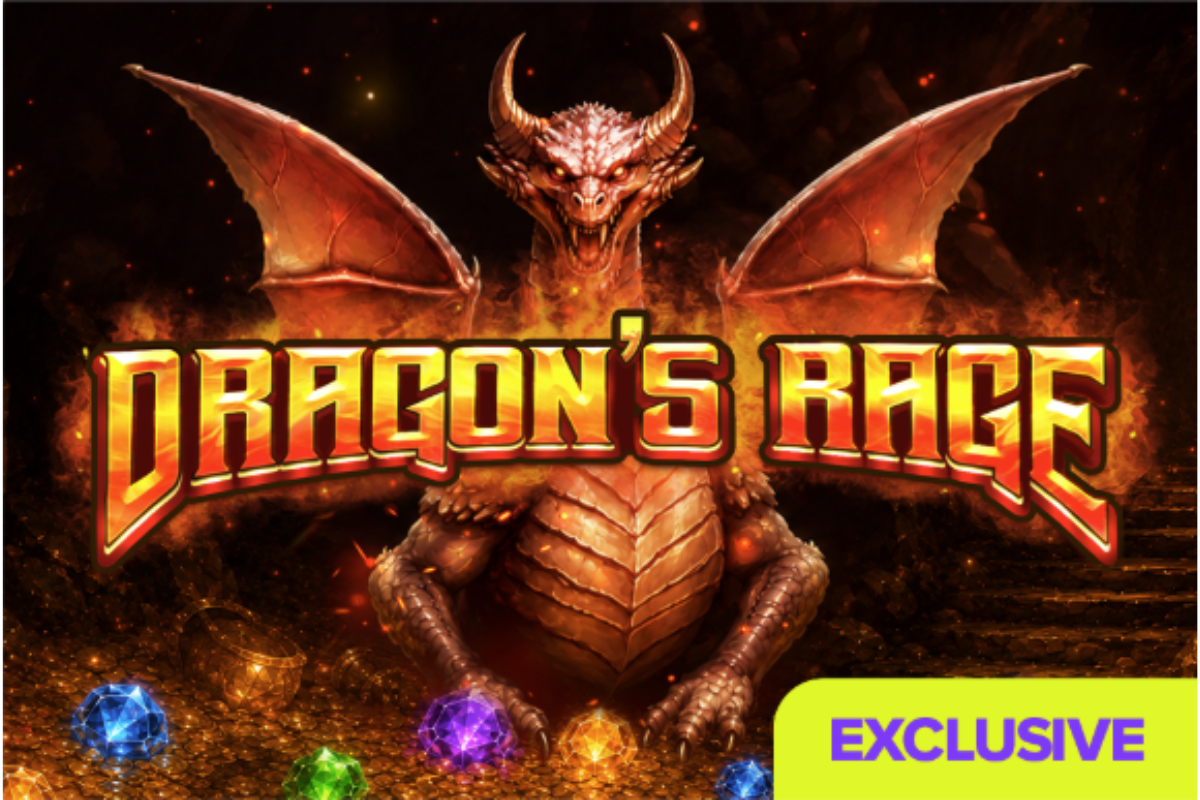
Lottomart has launched Dragon’s Rage, a new S Gaming slot available as a permanent exclusive to Lottomart players in the UK.
The release follows the partnership’s previous exclusive title, Fisherman’s Fortune, and adds another game to Lottomart’s exclusive-content portfolio.
Set in a dragon’s treasure lair, Dragon’s Rage uses a 1,024-ways-to-win format. Features include the Coil Collect mechanic, choice-led Free Spins, and Rage Spins. The game also includes three fixed-level jackpots: Inferno, Flame and Ember.
Chris Ruddock, Commercial Director at Lottomart, commented: “We’re delighted to launch Dragon’s Rage as a permanent UK exclusive. Developed in close collaboration with S Gaming, the game combines a strong fantasy theme with engaging features designed with our players in mind. We’re looking forward to seeing how our customers respond to the launch.”
Charles Mott, CEO of S Gaming, added: “Dragon’s Rage is the latest title developed through our close collaboration with Lottomart. It has been a pleasure working together on the concept and development of the game, and we’re proud to bring this new fantasy adventure exclusively to Lottomart players in the UK.”
The post Lottomart launches S Gaming slot Dragon’s Rage as permanent UK exclusive appeared first on EE Gaming | Global iGaming & Tech Intelligence Hub.

-

 Baltics7 days ago
Digitain Named Best Sportsbook Provider at HIPTHER Baltic & Nordics Gaming Awards 2026
-
DBET6 days ago
HockeyAllsvenskan names DBET main partner in three-year deal from 2026/27
-
Asia6 days ago
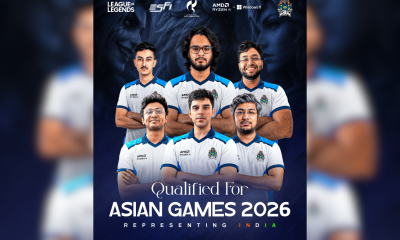
S8UL’s League of Legends roster qualifies to represent India at Asian Games 2026
-
Blazing Flower7 days ago
CT Interactive Strengthens its Presence in Romania with Newly Certified Games
-
Australia4 days ago
Former Star Entertainment Executives Mathias Bekier and Paula Martin Disqualified and Ordered to Pay Penalties
-
CFTC5 days ago
Novig Secures CFTC Designation, Bringing the First Prediction Market Built for Sports Fans Nationwide
-
LatAm6 days ago
Innovative payment solutions provider teams up with leading LATAM fintech platform to expand digital wallet access for online betting customers in Mexico
-
Alberta6 days ago
Why Alberta Represents the Next Major Growth Opportunity for Gaming Operators