Latest News
Epoxy.ai interview: Bringing AI-based betting to Europe

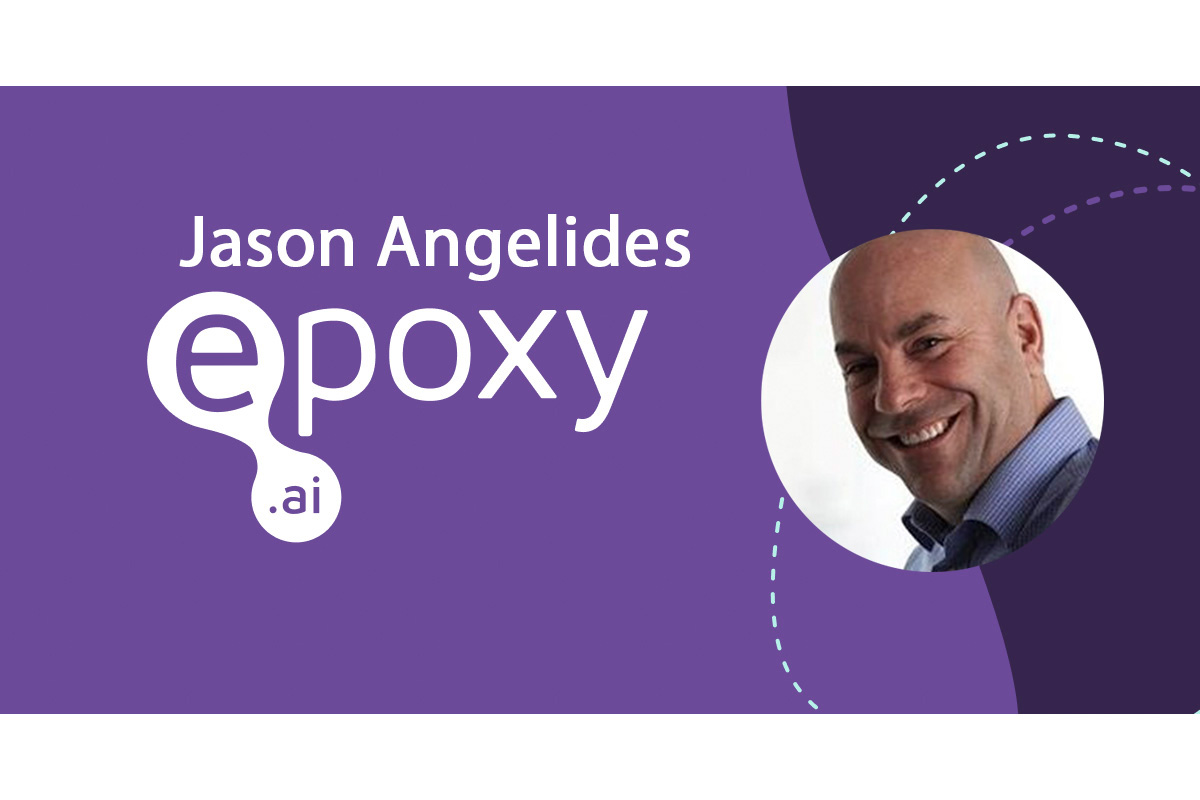
Epoxy.ai has already firmly established itself as North America’s most exciting AI-personalised betting providers – with major deals signed with the likes of Playtech, AWS, Kambi and Nascar, as well as multi-million dollar investment from some of the biggest funds in the industry, including SeventySix Capital.
With exciting plans to cross the Atlantic and bring the AI betting revolution to Europe, we caught up with Epoxy.ai’s Co-Founder and President Jason Angelides, to talk through the tech behind providing individual personalised betting offers for each player.
For our European readers who might not yet know about Epoxy.ai’s success stateside – can you talk us through your company and what you bring to the market?
Sure. Thank you for your interest in our business. Our business really is all about the end user and making the betting experience easier, more engaging, and most importantly – driving retention. I understand that that claim is somewhat cliche, but in the case of Epoxy.ai, it’s completely true. We do this by harnessing the power of our proprietary AI – providing technology that personalises the end-user experience and takes into account the specific preferences of each individual player to give them a unique and fully tailored betting experience based on their preferences.
I use this analogy a lot – think of us as the technology behind what powers the way Spotify helps listeners find and discover new music via automatic suggestions. Or how Netflix, or any other leading video service, puts the content you want directly in front of you without being prompted. Of course, this personalisation really streamlines and improves the user experience with navigation, discovery and selection.
Just like with Spotify and Netflix, we provide what can broadly be termed an AI-driven personalisation platform, and it’s a true gamechanger for operators when it comes to creating a
much more personalised experience for their end users. It is a proven method of driving engagement, retention, and customer lifetime value – and in my view, the technology that will transform betting and iGaming in the years to come.
How much of a game-changer do you see AI being for the European market? How essential is it to improving the European UX and what are the real benefits in terms of engagement and incremental revenue?
We see AI and personalisation being a game-changer globally – and Europe’s certainly no exception. Being one of the world’s most advanced markets when it comes to the end-user experience, we’ve already seen how much of a difference-maker personalisation has been for leader companies in other verticals such as Search, Advertising, Social, E-Commerce, Video, Music and Retail.
Winners in all of these industries have mastered delivery (ease of consumption) and delivering an individually tailored UX for each customer. For example, Netflix and Amazon first made it easier to consume their offerings, and then via the extensive use of data, they then honed personalisation to the point that it has become synonymous with their product.
We’ve already covered how Spotify’s hyper-personalisation AI keeps customers engaged by consistently suggesting new music that aligns with their listening preferences. The number of resources they’ve channelled into AI-driven personalisation has ensured that it has become the dominant music streaming platform with little or no competitors to take them on. And, nearly 35% of Amazon’s sales come directly from personalisation efforts while 56% of these shoppers are more likely to be repeat buyers. We see the gaming industry as being no different. It’s really just the next tech sector where personalisation will create meaningful revenue benefits. Thus far, no one has emerged as the winner in iGaming, and we’re here to change that.
In terms of adoption – are you one of the first to be offering AI-based personalisation for sportsbook and casino? Do you see Europe as being slower to adopt than the US?
Yes, we are certainly one of the first, if not the only company taking a different approach to addressing the problem. There are some legacy providers that utilise different methodologies, but we are certainly breaking new ground in the space. We actually have received over 30 claims of our Omnibus patent (which is part of our proprietary AI) – so I guess we are doing something unique!
I believe the major advantage we have here is how long we have been doing this as a business.
The last company we founded built personalised fan engagement experiences for viewers across North America. That company, largely because of its personalisation platform, was bought for millions by Comcast and now powers some of the largest personalised sports video portals across Sky TV, NBC, and Comcast Xfinity.
In terms of the adoption of personalisation in the EU, I think the interest and pace of adoption are going to be equally as aggressive as it is in the US right now. The EU is a mature market with established players that can meaningfully impact their businesses with AI and ML.
While the US is innovating more with personalisation, the US is still a growing market so there are many other things happening at the same time such as new market rollouts and platform migrations that can get in the way. Europe on the other hand, is an established and mature market – where tech solutions to give operators an edge over the competition are already in hot demand.
You recently launched Personalised Same Game Parlays in time for the US football season, can you see products like these being easily adapted for European betting habits – such as pre-match accumulators for soccer?
Absolutely. It’s all about making things easier and more entertaining for the end user – regardless of the market or sport. In the case of our Personalised Parlay generator (or accumulators, as we would call them in Europe), instead of the user having to bounce from screen to screen to create a Parlay / Accumulator, our system automatically generates the parlays for the end user based on their preferences. This helps the gaming operators as well since many of them use manual processes for putting specialised offers in front of their customers. Now this can be customised around user preferences automatically, which is real gamechanger for engagement and retention.
Last but not least – looking at the European market, what’s your take on the current state of play here in comparison to the growth of sportsbook in the US over the last 5 years?
That’s hard to answer in just a few words but certainly, the adoption of iGaming in the US is nothing but astounding.
While not without its hiccups, iGaming will no doubt continue to expand as a form of entertainment in the US markets as more and more states begin issuing licences for online casino.
I think what is really notable about the US in comparison to the EU (and indeed the rest of the world), is how AI and personalisation are at the forefront of the US growth strategy.US operators clearly understand that they cannot compete without product differentiation and multiple ways to monetise their customers.
We can see this with the shift into entertainment. So many more brands are now taking this to the next level by providing an ecosystem that is so much more than just a place to make a bet or play a casino game.
Fanatics, for example, who really are a major online retailer of licensed sports merchandise, is now going full bore into the iGaming space, and at the forefront of its strategy is personalisation. To put this into perspective – this is like Amazon when it was just selling books. So much more now lies ahead. In the future, just like Amazon, you can expect Fanatics to offer a lot more, whether it’s shirts, merchandise, NFTs -you name it. Of course, AI and machine learning driven personalization are going to be at the forefront of their strategy. The same goes for the other leading companies in the US.
Of course, given we’re leading the AI adoption charge, we see this a very good for iGaming as competition, and the search for differentiated will always lead to innovation. For companies like us at Epoxy.ai – we’ll be here to provide that technology and truly power the next era of innovation.











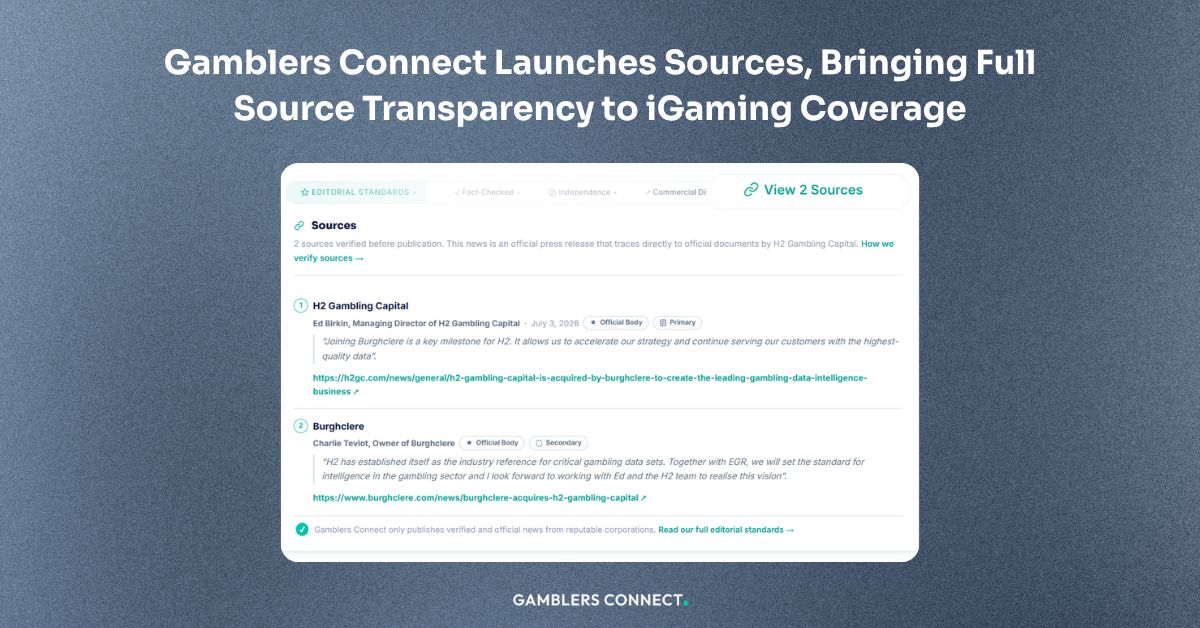
Gamblers Connect, the independent B2B iGaming media platform, has introduced a Verified Sources panel that appears at the bottom of every article, linking each factual claim directly to named primary documents hosted on the original source’s own domain.
The panel lists the specific sources consulted, identifies the issuing authority, and includes editorial notes explaining what has been verified and where the limits of the available evidence exist. Positioned immediately beneath the article body, each source is presented in the order it was consulted and includes the responsible individual or office where applicable.
Each entry also includes relevant disclosure tags drawn from the newsroom’s editorial taxonomy, and a direct hyperlink to the original document on the source’s own domain, allowing readers to verify the reporting in a single click.
The initiative responds to widespread practices in online publishing where sources are hidden, paraphrased or omitted altogether, leaving readers to rely on trust rather than independently verifiable evidence.
Luka Dimitrijevic, Partnerships & Operations Lead at Gamblers Connect, said: “Trust is not something a media outlet can declare. It is something the reader gives, and only once they can see the documents the story was built from. The Verified Sources panel exists so that verification is never more than one click away. If a claim in a story is worth making, the source behind it is worth linking to.”
The post Gamblers Connect Strengthens Trust with Launch of Verified Sources Panel appeared first on EE Gaming | Global iGaming & Tech Intelligence Hub.
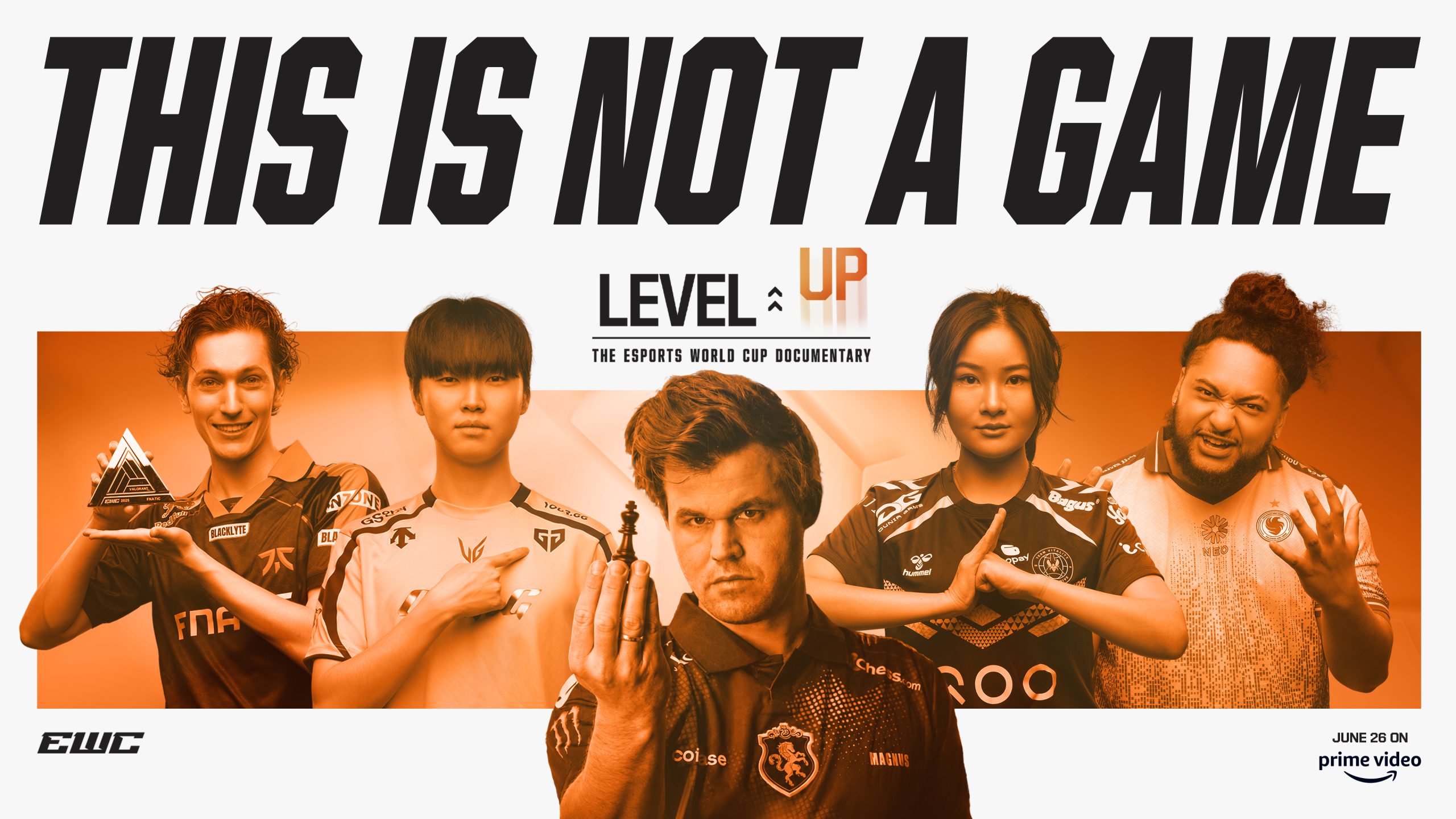
Esports World Cup: Level Upreturns for its second season on June 26, with all five episodes dropping that day exclusively on Prime Video. Directed by Emmy-winning filmmaker R.J. Cutler (Martha (Netflix), Billie Eilish: The World’s A Little Blurry (Apple TV)), the five-part docuseries goes inside the human stories behind the world’s largest esports competition, following players, Clubs and families through the pressure and ambition of the 2025 Esports World Cup.
Set in Riyadh, Saudi Arabia, during the seven-week event, the new season follows the chase for the $70 million prize pool and the EWC Club Championship, while showing the personal journeys at the heart of the competition. The series captures what it takes to compete on a global stage where one match can change a career, a season can define a Club, and a single moment can turn a player into a star.
Produced by This Machine (a part of Sony Pictures Television), with director R.J. Cutler, showrunner John Dorsey and executive producers Jane Cha Cutler, Trevor Smith, Elise Pearlstein and Mark Blatty all returning for the second season, Esports World Cup: Level Up takes a vérité-style approach to esports, capturing the sacrifice, stakes, and rising fame of the world’s top competitive gamers.
Featured players include Jake “Boaster” Howlett (Fnatic; VALORANT), Vivi “Vivian” Indrawaty (Team Vitality; MLBB), Kasimili “Soka” Tongamoa (Team Falcons; Call of Duty: Warzone), Xiao Hai (KuaiShou Gaming; Fatal Fury: City of the Wolves) and Garidmagnai “bLitz” Byambasuren (Mongolz; Counter-Strike). To bring the players’ personal stories to the forefront, the film’s crew was on set in Riyadh for seven weeks and also traveled to locations across the U.K., U.S. and Indonesia for rare at-home visits.
Standout storylines woven throughout the series include:
-
Magnus Carlsen (Team Liquid, Chess) – Widely considered the greatest chess player ever, Carlsen faces the isolation of dominance, with no traditional peaks left to conquer. His story follows his shift into esports, where a new generation of challengers awaits.
-
Boaster (Fnatic, Valorant) – As Valorant debuts at the event, the British competitor’s journey from aspiring actor to title contender shows there’s no single path to success, shaped by resilience through personal and professional setbacks.
-
Xiao Hai (KSG, Street Fighter) – A reigning champion shaped by strict discipline, Xiao Hai was competing against adults by age six. Now a father, he balances global competition with family life.
-
Vivian (Team Vitality, Mobile Legends: Bang Bang) – Competing for a life-changing prize, Vivian’s story centers on overcoming recent setbacks and confronting childhood trauma.
-
The Mongolz & bLitz (Counter-Strike 2) – Led by their star player bLitz, this grassroots Mongolian team has risen from obscurity to national prominence, becoming symbols of pride and perseverance.
-
Soka (Team Falcons, Call of Duty: Warzone) – The reigning champion faces pressure on multiple fronts, dealing with rivalries from former teammates while navigating a turbulent home life.
- Coach ArSy (Team Liquid, Mobile Legends: Bang Bang) – Offering a rare coaching perspective, ArSy draws on a difficult upbringing to lead and inspire his team’s pursuit of redemption.
“Level Up captures the human side of what we are building with the Esports World Cup,” said Ralf Reichert, CEO, Esports Foundation. “EWC creates the stage: the best games, the best Clubs, the best players, life-changing stakes and moments that bring together a global gaming community of billions. The documentary takes you closer to the people inside those moments: their pressure, their ambition, their families and the stories that make esports meaningful to a new generation.”
“This next chapter deepens our exploration of a global phenomenon that is as much about human ambition and identity as it is about competition,” said Cutler. “Esports is one of the most dynamic cultural movements of our time. In season two, we continue to chronicle not just the competition, but the lives, dreams, and sacrifices of the players at the center of it, revealing a world that is both intensely personal and globally resonant.”
Around those player journeys, the series also captures the wider cultural energy of the Esports World Cup, where sport, music, entertainment and gaming meet. In addition to elite competition, Level Up showcases moments from a star-studded lineup of musical artists and athletes, including opening headliner Post Malone, who shows off his gaming skills backstage; grandmaster Magnus Carlsen, who triumphs in his first chess esports event; and football icon Cristiano Ronaldo, who ushers the Club Championship trophy to the stage in a dramatic closing ceremony.
The magnitude of the Esports World Cup is also seen through the reactions of some of the world’s biggest sports and entertainment figures, including reigning F1 champion Lando Norris; Brazilian football legends Ronaldo Nazario and Kaká, who go one-on-one in an EA FC showmatch; professional footballer Alisha Lehmann; skateboarder Tony Hawk; and tennis star Nick Kyrgios, who stated: “The crowd, the atmosphere, is literally better than Wimbledon or any Grand Slam.”
The Esports World Cup 2025 marked a defining moment in competitive gaming. In its second year, EWC reached 750 million viewers worldwide and generated 350 million hours watched, with peak concurrent viewership of nearly 8 million during the League of Legends at EWC ’25 tournament. Coverage was delivered across 28 platforms through 97 broadcast partners and more than 800 channels in 35 languages. Twenty-five tournaments spanning 24 games featured more than 2,000 players representing approximately 200 Clubs from over 100 countries.
The 2026 edition of the Esports World Cup will be held in Paris, France from July 6 through August 23, as the top Clubs in the world compete for $75 million and the 2026 EWC Club Championship trophy.
The post Esports World Cup: Level Up Returns to Prime Video June 26 with Season Two appeared first on EE Gaming | Global iGaming & Tech Intelligence Hub.
Tonybet, an international iGaming operator already licensed in Ontario and Kahnawake, today announced that it has received an iGaming license from the Alberta Gaming, Liquor and Cannabis Commission (AGLC), clearing the company to operate in Alberta’s regulated online gaming market.
The license allows Tonybet to enter Alberta, Canada’s second province to introduce a competitive, multi-operator iGaming market following Ontario’s launch in 2022. It also extends Tonybet’s Canadian footprint, reinforcing the company’s position as one of the most broadly licensed operators in the country.
Alberta’s regulated market represents a significant opportunity. The province has an estimated population of nearly 5 million, a strong sports culture, and a regulatory framework designed to channel existing online gaming activity into a licensed, player-protected environment. Tonybet intends to bring the same localized approach that has driven its growth in Ontario – combining regionally relevant sports betting markets, responsible gaming tools, and dedicated customer support – to Alberta from day one.
“Alberta is taking the right approach – building a regulated market that puts player protection and operational standards at the center from the start. That’s exactly the kind of environment we want to operate in. We’ve spent years proving in Ontario that you can grow a business and maintain the highest compliance standards at the same time – registrations and gross gaming revenue in the province both grew by 52% in 2025, with responsible gaming embedded in that success rather than working against it. Securing this license means we can bring the same commitment to Alberta, and we plan to be fully operational in the market,” said Dmitry Arabuli, CEO of Tonybet.
Tonybet has already begun preparations for its Alberta launch, including platform localization, integration with the province’s centralized self-exclusion system, and commercial onboarding with the Alberta iGaming Corporation (AiGC).
The post Tonybet Secures Alberta iGaming License as Regulated Market Opens appeared first on EE Gaming | Global iGaming & Tech Intelligence Hub.

-

 Latest News6 days ago
Eeze opens 1,200 sqm Bucharest hub for technical teams
-
Latest News6 days ago
Play’n GO strengthens Latin American presence with Betano Colombia launch
-
Latest News5 days ago
BetMakers Technology Group Selected to Distribute ATG Horse Racing Content Across Australia and New Zealand
-
Latest News6 days ago
Belatra signs cooperation deal to distribute slots via VeliGames
-
Compliance Updates6 days ago
Kasinohai Audit: Most Slots Could Be Affected by Finland’s Draft Gambling Rules
-
Compliance Updates6 days ago
Pernambuco court revokes Spribe’s interim relief in Aviator trademark dispute
-
Latest News6 days ago
R. Franco Digital releases fighting game-themed slot Spin Fighters
-
Compliance Updates5 days ago
ACMA Warns MMA Fighter Jamie Mullarkey for Breaches of Online Gambling Laws