Compliance Updates
Brace Yourselves: Curaçao’s New Gambling Law Is at the Door!

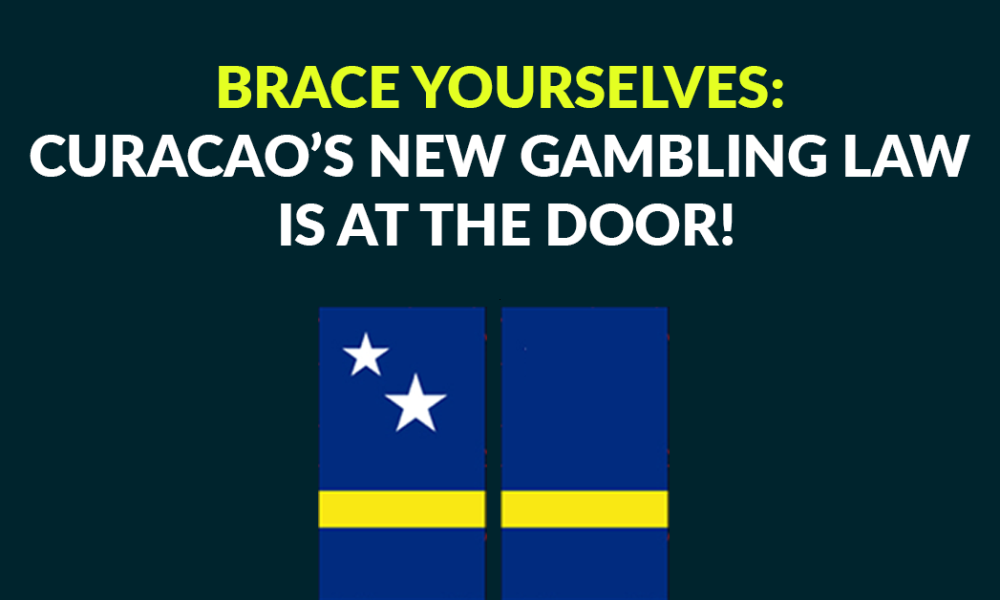
Curaçao is approaching the finishing line of their online gambling reform, with the new law being sent to the parliament. Markus Björk at Slotsoo has been in touch with both the Ministry of Finance and several Curaçao operators to find out how they feel about this big change. Do European license providers have a reason to feel threatened by Curaçao casinos 2.0?
LOK Now Just Waiting for Parliament Approval
On December 19th, Curaçao’s Ministry of Finance informed that the new law has been officially submitted to the parliament. The National Ordinance for Games of Chance, commonly referred to as LOK (Landsverordening op de kansspelen), is expected to come into effect in the first half of 2024.
Finance Minister Javier Silvania, the front figure of the reform, shares his excitement about this historical moment:
“We are very happy to reach this final stage. The submission of the LOK to Parliament is not just a procedural step, but a leap towards transformative progress.”
No More Master Licenses or Middle Men
The current setup of the Curaçao casino license is very unique, with four master license holders being in charge of giving licenses to individual casino operators and ensuring their compliance to the regulations.
This has resulted in big quality differences, and if you were to ask ten EU players how they feel about Curaçao casinos you would get very varied replies. Another critique with the current system is that most of the financial gain goes to the four master license holders, while the island of Curaçao is left with light pockets.
LOK will put an end to master licenses and middle men and require all licenses to be applied directly from Curaçao’s Gaming Control Board. This means more uniformed quality and better control. The new law will also require gambling companies to have physical presence on the island, creating new job opportunities for the locals.
The Curaçao casinos we interviewed all welcome the new setup. Spinwise (Tsars Casino) sees some hurdles, but says it will be worth it in the long run:
“The prohibition of sublicensing by master licensees introduces a new financial dynamic for individual companies, albeit with associated fees. While adaptation to the new framework may pose short-term challenges, the long-term benefits are expected to outweigh these initial obstacles.”
The Curaçao License Will Remain Tax Free
- No tax on winnings
- No restrictions on player nationality
- Strong regulatory framework
Keeping the Balance Is Crucial for Success
Finance Minister Javier Silvania shares that they had a very inclusive approach when drafting the new law. They consulted all the stakeholders to make sure LOK will consider different perspectives and not just serve one group. The country of Curaçao, its citizens, the gambling industry, and the players should all benefit from the reform.
Many license jurisdictions that go through a re-regulation fall into the trap of legislating too much, without the government listening to the industry or the players enough. This leads to fewer license holders and lower channelization rates, as both the operators and the players search for more attractive solutions from other countries.
We wish Curaçao good luck with their new start in 2024!












The European Gaming and Betting Association (EGBA) has provided evidence to the European Commission’s recent call for evidence on its upcoming EU Action Plan on Fighting Online Fraud – an initiative to reduce online fraud across different economic sectors in the EU through strengthened coordination and cross-border cooperation. The submission urges coordinated EU action to tackle fraudulent gambling sites and apps that exploit the reputation of legitimate operators.
Supported by documented evidence, the submission highlights how fraudsters systematically impersonate licensed gambling operators to deceive consumers across Europe. The evidence includes examples of fraudulent websites using domain names that mimic or closely resemble legitimate operators, illegal gambling apps distributed through Google Play and Apple App Store, phishing campaigns impersonating licensed brands and social media advertising that drives users towards real-money apps, based outside of the EU, that are disguised as games.
These types of fraud expose players to risks of identity theft, financial loss and unsafe gambling environments where well-established safeguards offered by regulated operators, like self-exclusion, do not exist. EGBA members report that across Europe fraudulent domains and applications frequently reappear shortly after takedown, creating ongoing consumer exposure despite continuous monitoring, takedown notifications and repeated enforcement actions.
Illegal operators now capture an estimated 27% (worth approximately €18 billion) of Europe’s total online gambling market gross gaming revenue in 2025. The submission addresses the risks posed by offshore operators, based outside the EU, who deliberately increase consumer risk by falsely claiming to hold gambling licenses granted by countries in the EU, misrepresenting their regulatory status and disguising gambling products as games. These fraud patterns are closely linked to the rapid expansion of unregulated illegal platforms in Europe that threaten both consumers and legitimate operators.
The Commission’s Action Plan on Fighting Online Fraud is planned for adoption in the second quarter of 2026.
Dr Ekaterina Hartmann, Director of Legal and Regulatory Affairs at EGBA, said: “The evidence we’ve gathered shows how fraudsters are systematically exploiting the trust consumers place in the licensed gambling environment, putting European consumers at risk and allowing the illegal online gambling market to grow. From fake websites and fraudulent apps to phishing campaigns and social media scams, these threats reappear as quickly as they’re taken down. Fragmented national approaches to these types of fraud are not enough – we need coordinated EU-level action to ensure consumers and legitimate operators aren’t left fighting an uphill battle against fraud.”
The post EGBA Urges EC to Tackle Rising Online Fraud in Gambling Sector appeared first on Eastern European Gaming | Global iGaming & Tech Intelligence Hub.
The Pennsylvania Gaming Control Board (Board) at its public monthly meeting approved a consent agreement presented by the Board’s Office of Enforcement Counsel (OEC) resulting in a $100,000 fine to BetMGM.
In its approval of the consent agreement, the Board agreed that BetMGM failed to have sufficient procedures to prevent fraudulent behavior on its BetMGM and Borgata wagering platforms. This includes insufficient Know-Your-Customer (KYC) protocols that allows for the creation, access and use of multiple accounts by individuals using personal identifying information of other individuals and the funding of those accounts using stolen or fraudulently obtained payment devices.
The consent agreement identified four individual fraud rings that:
1. operated for approximately 25 months until January 2024 with 1567 accounts created using personal identifying information of other individuals and $229,580 of combined wagering;
2. operated for approximately 34 months until November 2024 with 34 accounts created using personal identifying information of other individuals and over $14,598 of combined wagering;
3. operated for approximately 29 months until November 2023 with 119 accounts created using personal identifying information of other individuals and $895,092 of combined wagering
4. operated for approximately 19 months until December 2023 with 304 accounts created using personal identifying information of other individuals and $867,910 of combined wagering.
The Board also took actions to place 16 individuals on its various Involuntary Exclusion Lists. Placement on an Involuntary Exclusion List prohibits individuals from either gaming in a casino in Pennsylvania, via an online betting site regulated by the Board, or at a Video Gaming Terminal (VGT) location.
The actions by the Board include placement of four adults on the Involuntary Casino Exclusion list for leaving minors unattended at a casino property while they gambled:
• A male patron who left an 11-year-old in a vehicle in the parking lot at Hollywood Casino York for 52 minutes while he gambled at slot machines and table games;
• A male patron who left a 5-year-old in a vehicle in the parking lot at Rivers Casino Philadelphia for 17 minutes while he gambled at table games and the sportsbook;
• A male patron who left a 9-year-old in the parking lot at Rivers Casino Philadelphia for 1 hour 7 minutes while he gambled at table games and the sportsbook; and,
• A male patron who left two minors, ages 7 and 12, in a vehicle in the parking lot at Parx Casino for 32 minutes while he gambled at slot machines.
Actions such as these to deny statewide gambling privileges serve as a reminder that adults are prohibited from leaving minors unattended in the parking lot or garage, a hotel, or other venues at a casino since it creates a potentially unsafe and dangerous environment for the children. To complement the efforts by casinos to mitigate this issue, the Board created an awareness campaign, “Don’t Gamble with Kids” (DontGamblewithKids.org).
In addition to the four adults listed above, 12 others were placed on either or both of the Involuntary Casino Exclusion and Involuntary Interactive Exclusion Lists for various actions.
These matters, presented by the Board’s Office of Chief Counsel and the OEC, raise the number of individuals now on the Board’s various Involuntary Exclusion Lists to 1515.
The post PA Gaming Control Board Imposes $100,000 Fine on BetMGM appeared first on Americas iGaming & Sports Betting News.

The Swedish government has appointed Peter Knutsson as the Director General of the Swedish Gambling Authority. The appointment will run until 31 August 2032.
Peter Knutsson most recently came from the role of Advertising Ombudsman and will take up his position as Director General on 17 August 2026.
Peter Knutsson took office as Advertising Ombudsman in August 2024, and was previously Head of Unit at the Ministry of Finance. He has over 20 years of experience as a manager and leader and has a background as a lawyer, with solid knowledge of consumer issues and consumer legislation. Peter Knutsson has previously worked for the European Commission and as an advisor to the Swedish Financial Supervisory Authority.
“With the solid experience Peter Knutsson has from, among other things, the Ministry of Finance, consumer affairs and most recently the Advertising Ombudsman, this will be very good for the authority,” said Spelinspektionen’s Chairwoman Madelaine Tunudd.
“I welcome the government’s decision on a new Director General for the Swedish Gambling Authority and will ensure that Peter Knutsson receives a good introduction in my handover as acting Director General,” said Johan Röhr at the Swedish Gambling Authority.
The post Peter Knutsson Becomes New Director General of Swedish Gambling Authority appeared first on Eastern European Gaming | Global iGaming & Tech Intelligence Hub.

-

 Asia6 days ago
GLI Becomes the First Company Accredited by PAGCOR to Test and Certify iGaming Platforms in the Philippines
-
Betnacional5 days ago
Operational Leadership and the Driving Force Behind LatAm’s Largest Event
-
Asia6 days ago
Team India and Türkiye Win Gold at the Global Esports Games Mumbai
-
Compliance Updates6 days ago
Playtech Enters Connecticut iGaming Market
-
Australia5 days ago
NSW: More Than 650 Gaming Machine Exemptions Revoked to Address Gambling Harm
-
Compliance Updates5 days ago
UK Government proposals to undermine the ‘aim to permit’ of the Gambling Act 2005?
-
2026 SPiCE South Asia Awards5 days ago
QTech Games wins Innovation of the Year at the 2026 SPiCE South Asia Awards
-
Andrea Rossi6 days ago
REEVO Goes Live with Betsson in Brazil