Latest News
FUN token adds BETR technology and leadership

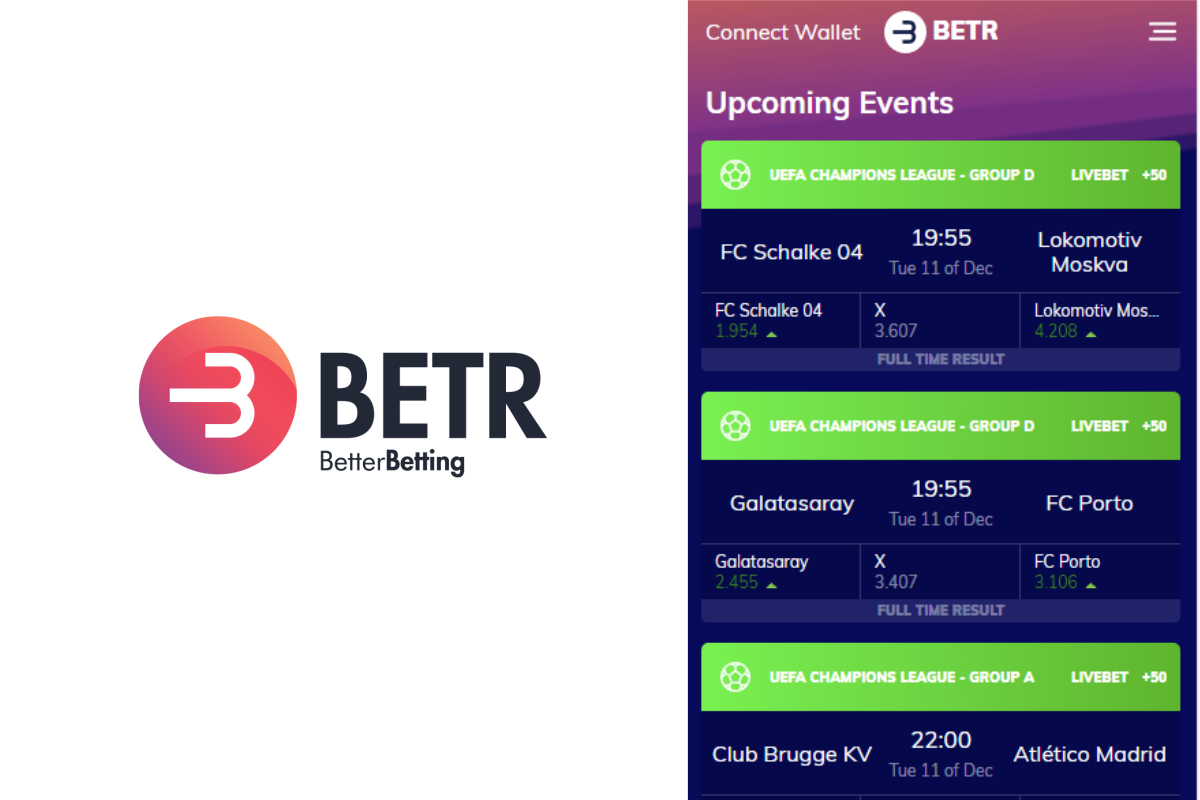
FUN token is pleased to announce that it has reached agreement with the BETR Foundation to merge both party’s interests and work together to bring decentralised and peer-to-peer gaming to its huge and growing user base.
BETR raised funds in 2017 to build a peer-to-peer betting solution and proceeded to execute, with a fully-fledged betting client launching in time for the FIFA World Cup in 2018. The technology developed included an in-game betting system with rich market coverage and peer-to-peer betting facilitated through a complex smart contract ecosystem based on the BETR ERC20 Ethereum token. More recently it extended the system to offer casino gaming.
FUN is now able to take advantage of the technology and expertise developed for BETR as part of an agreement to merge the tokens.
BETR holders will be able to switch their BETR for FUN through an automated swap system which will cause the BETR tokens to be burned in exchange for FUN. Through an automated swap system BETR tokens will be swapped for Fun at a rate of 4 BETR = 1 FUN – system details to be released within the next week on https://betr.org. BETR tokens acquired through the swap system will be burnt and BETR will be delisted from exchanges.
As part of the transaction FUN will acquire all technology developed for BETR and key personnel will join the new FUN team, building the future of decentralised gaming. BETR CEO Adriaan Brink will assume the role of CEO of the FUN token and will grow the team and spearhead the new drive to grow opportunities for FUN.
Brink has a wealth of experience in the online gaming industry, starting in 1995 with lotteries and progressing through all gaming verticals over the past 25 years. He also co-founded Earthport (now Visa Direct) in 1999 and his payments experience combined with gaming make him the ideal person to take FUN to the next level.
Brink said “I am truly excited to have this opportunity to take what we have learnt and combine BETR with the fantastic FUN community and the huge audience of Freebitco.in in order to deliver on what all of us always dreamt of – a decentralised gaming infrastructure more suited to the modern era”.
FUN will soon announce plans on how it intends to move forwards with a suite of products including side-chain and off-chain gaming engines to counter the issues of Ethereum gas prices, a new casino site with a rich suite of games, and other gaming opportunities including peer-to-peer betting.
Freebitco.in has over 40M users and significant daily traffic and will play a pivotal role in expanding the FUN token user base. The company intends to set aside a percentage of profits from activities to be burnt on a regular basis which will reduce the supply figures downwards.
3.75Bn of the cold storage FUN tokens were purchased recently by Freebitco.in. This was the culmination of an ongoing exercise to accumulate tokens for use within their loyalty program. As a consequence of this, these tokens are no longer in cold storage and the supply figures on Coinmarketcap will update shortly as follows:
Total supply : 10,999,873,621
Circulating supply : 10,298,879,189
Powered by WPeMatico


Following a landmark Supreme Court of Appeal (SCA) ruling and aggressive new directives from the National Gambling Board (NGB), the South African online gambling landscape has experienced its most dramatic shift in a decade. With local bookmakers now strictly barred from offering fixed-odds bets on casino games like roulette, a widespread regulatory “grey area” has been abruptly closed off. For thousands of South African players, this means their go-to platforms are rapidly changing, leaving a wave of confusion in their wake.
In response to this severe market disruption, SouthAfricanCasinos.co.za, the country’s leading independent casino review portal, has released a comprehensive 2026 guide. This resource is designed to help players navigate the transition, identify secure offshore platforms, and safely test new digital environments without financial risk.
The End of the Sportsbook “Grey Area”
The October 2025 SCA ruling clarified that, under provincial gambling acts, it is strictly unlawful for sports betting operators to offer casino-style games disguised as fixed-odds contingencies. The NGB has since doubled down in early 2026, issuing formal notices to Provincial Licensing Authorities to clamp down on the use of Remote Gambling Servers (RGS) for unauthorised casino games.
“The days of playing roulette or blackjack on your local sports betting app are coming to a hard stop,” a spokesperson for SouthAfricanCasinos.co.za stated. “Regulators are actively cleaning house. While this ensures operators stick to their licensed verticals, it forces casino enthusiasts to seek out dedicated, internationally licensed platforms that cater securely to the South African market. Our priority right now is ensuring players don’t end up on rogue, unregulated sites out of desperation.”
Testing Unfamiliar Platforms with a No Deposit Bonus
Because players are now migrating to completely unfamiliar platforms, SouthAfricanCasinos.co.za is advising consumers to heavily utilise operator promotions to thoroughly vet a site’s software, user interface, and overall reliability before committing a single Rand of their own funds.
The single most effective tool for navigating this transition safely is the no deposit bonus. By claiming this specific promotion, players are credited with bonus funds simply for registering and verifying a new account. This acts as a risk-free sandbox environment. It allows South Africans to fully experience the mechanics of a new casino, test the responsiveness of the platform on their mobile devices, and verify that the site seamlessly handles Rand transactions. It also provides an opportunity to interact with the customer support team to gauge their helpfulness before making a financial commitment.
Maximising Value and Exploring Game Libraries with Free Spins
While live table games were the primary target of the recent legal disputes, digital real moeny slot games remain a massive draw for the South African audience. To safely explore the thousands of slot variations available on dedicated casino platforms, SouthAfricanCasinos.co.za highlights the strategic use of free spins.
These promotional spins allow players to test out the latest titles from top-tier global software providers without dipping into their bankroll. It provides a highly effective, risk-free method to understand a specific game’s volatility, explore its bonus round mechanics, and observe its payout frequency.
Understanding Bonus Terms and Wagering Requirements
While promotional offers provide excellent testing grounds, SouthAfricanCasinos.co.za urges players to understand the mechanics behind them. A no deposit bonus or a package of free spins is rarely just “free money”; they are subject to specific terms and conditions designed to protect the casino.
The most critical factor to look for is the wagering requirement (or playthrough requirement), which dictates how many times a player must bet the bonus amount before they can withdraw any associated winnings. SouthAfricanCasinos.co.za actively screens and highlights platforms that offer transparent, realistic wagering requirements and fair maximum cash-out limits, ensuring players have a genuine chance of converting their promotional play into real-world funds.
The Importance of Localised Payment Gateways
As players move away from local bookmakers, finding international casinos that accommodate the South African banking system is paramount. Many offshore sites lack the infrastructure to process local currency seamlessly, leading to high conversion fees and delayed payouts.
SouthAfricanCasinos.co.za specifically targets and recommends platforms that not only accept the South African Rand but also integrate trusted local payment gateways. This includes support for SID Instant EFT, traditional bank transfers via major SA banks (like FNB, Standard Bank, and Capitec), and popular e-wallets. Ensuring these systems are in place guarantees that players can deposit and withdraw their funds securely, rapidly, and without hidden conversion costs.
About SouthAfricanCasinos.co.za (SAC)
As the premier destination for local online gamblers, SouthAfricanCasinos.co.za (SAC) provides an indispensable service by rigorously testing and ranking best online casinos south africa tailored specifically for the South African market. SAC offers players in-depth, unbiased reviews, exclusive promotional codes, and comprehensive guides on safe gambling practices.
Every platform recommended by SAC undergoes a strict vetting process to ensure it supports Rands, offers localised payment methods, and provides robust security measures. By partnering directly with top-tier operators, SAC secures exclusive deals that give local players the highest possible value when joining a new site.
A Commitment to Player Security in 2026
As the NGB continues to enforce strict compliance across the country, the separation between sports betting and casino gaming will only grow wider. SouthAfricanCasinos.co.za remains committed to continuously auditing the market, updating its recommended lists daily to reflect the safest, most lucrative, and most transparent platforms available to local players during this period of industry upheaval.
For more information on the shifting regulatory landscape, or to access the latest vetted platforms offering high-value promotional deals, visit SouthAfricanCasinos.co.za.


N1 Partners won Best Affiliate Program in Central and Eastern Europe at the GamingTECH Awards 2026, presented at the HIPTHER Prague Summit, marking another milestone in its growth and industry recognition.
This achievement highlights the strength of N1 Partners’ affiliate ecosystem and its consistent focus on delivering performance-driven solutions for partners across key markets.
Alexa Bond, Head of Affiliates at N1 Partners, commented:
“This award reflects the work we put into building more than just an affiliate program. We focus on creating a strong, reliable ecosystem where partners can scale with confidence, supported by transparent processes, high-performing products, and a team that understands the realities of the market. It’s great to see this approach recognized at the industry level, and we see it as motivation to keep moving forward.”
N1 Partners continues to stand out through a combination of high-converting brands, flexible partnership models, and a product-driven approach to retention and monetization. With strong Reg2Dep performance in Tier-1 GEOs, tailored offers, and a growing portfolio of casino and sportsbook brands, the company provides partners with reliable tools to scale and maximize revenue.
A key factor behind this recognition is N1 Partners’ focus on performance-driven initiatives that directly support partner growth. One of the latest examples is the N1 SEO Traffic Cup, a flagship affiliate tournament designed for SEO traffic. The campaign challenges partners to compete by driving high-quality traffic, improving their N1 Cup Score, and climbing the leaderboard to unlock premium rewards.
N1 Partners would like to extend our sincere thanks to HIPTHER for this recognition and to all our partners whose trust and collaboration continue to drive our growth. This achievement would not be possible without you.
N1 Partners is a multi-brand affiliate program and direct advertiser. The company unites 14+ casino and betting brands, operates across Tier-1 GEOs, delivers Reg2Dep rates of up to 70%, and offers competitive deals for top partners — CPA up to €700 and RevShare up to 45%. Trusted by 14,000+ partners, N1 Partners is recognized for its transparency, flexibility, and partner-first approach — where people and communication quality remain the foundation of long-term success.
The post N1 Partners Wins Best Affiliate Program at GamingTECH Awards 2026 appeared first on Eastern European Gaming | Global iGaming & Tech Intelligence Hub.
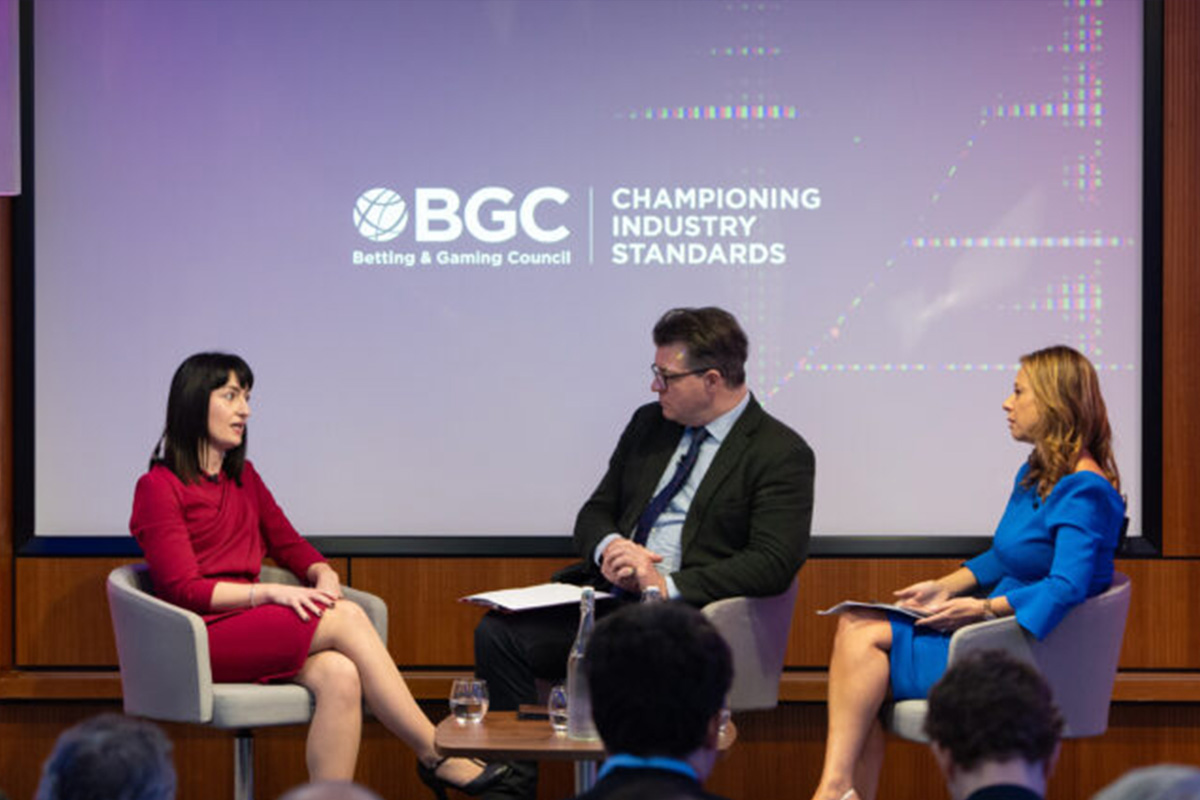
The Betting and Gaming Council AGM 2026 has discussed about the surging illegal gambling black market. As speakers repeatedly highlighted, 1.5 million people in Britain are already gambling on unlicensed sites and staking around £10bn a year outside UK regulation.
That concern is only set to intensify in the coming weeks as the Government considers further regulatory changes. In particular, Financial Risk Assessments (FRAs), which would require customers to provide detailed financial information such as bank statements and will only drive more customers towards unlicensed operators.
Chaired by broadcasters Gloria de Piero and Liam Halligan, the event began with a keynote from the Gambling Minister, followed by a discussion with BGC Chief Executive Grainne Hurst. A panel on the illegal market and the Gambling Commission’s assessment of the challenge followed, alongside research, polling and personal testimony from across the industry highlighting the scale of the problem.
Baroness Fiona Twycross, Parliamentary Under Secretary of State and Minister for Gambling, opened proceedings by addressing the tensions in current policy. She acknowledged that the gambling duty changes announced in November’s Budget were “extremely challenging for the sector, particularly for online operators,” and that they would “significantly affect business decisions and staff.” She defended the government’s position, arguing the changes were necessary to support public finances and would raise over a billion pounds a year for the Treasury.
The minister was clear: “Illegal gambling causes harm to vulnerable consumers,” she said, adding that it also damages the regulated sector. She announced an additional £26m for the Gambling Commission over the next three years and publicly confirmed the establishment of an Illegal Gambling Taskforce. This will bring together major companies including Google, Mastercard, TikTok and Visa alongside law enforcement and advertising bodies with a focus on illegal payments, advertising and cross-agency collaboration. She also announced a forthcoming consultation on the banning of unlicensed sport sponsorships, including in the Premier League. For many in the industry, this welcome action on enforcement will sit uneasily alongside tax policy that they believe is actively driving consumers towards the harmful black market.
The post BGC AGM 2026 Discussed About Surging Illegal Gambling Black Market appeared first on Eastern European Gaming | Global iGaming & Tech Intelligence Hub.

-

 Betnacional7 days ago
Operational Leadership and the Driving Force Behind LatAm’s Largest Event
-
Australia7 days ago
NSW: More Than 650 Gaming Machine Exemptions Revoked to Address Gambling Harm
-
2026 SPiCE South Asia Awards7 days ago
QTech Games wins Innovation of the Year at the 2026 SPiCE South Asia Awards
-
Compliance Updates7 days ago
UK Government proposals to undermine the ‘aim to permit’ of the Gambling Act 2005?
-
Canada6 days ago
Peter & Sons Goes Live in Ontario with Ellipse Entertainment
-
BIS SIGMA SOUTH AMERICA 20266 days ago
VeliTech makes its Brazil debut at BiS SiGMA South America 2026
-
AMUSEBOX6 days ago
Casino Iveria Tbilisi Installs Amusnet’s Type S 50 F Slot Cabinets at its Gaming Floor
-
Austria6 days ago
Wazdan strengthens European foothold with Austrian market entry via win2day