Central Europe
Germany: Sales revenues from paid online services for games rises significantly once again

• 461 million euros generated by fees from online services
• More than 5 million people in Germany pay for online services
• German games industry tops 6-billion-euro mark
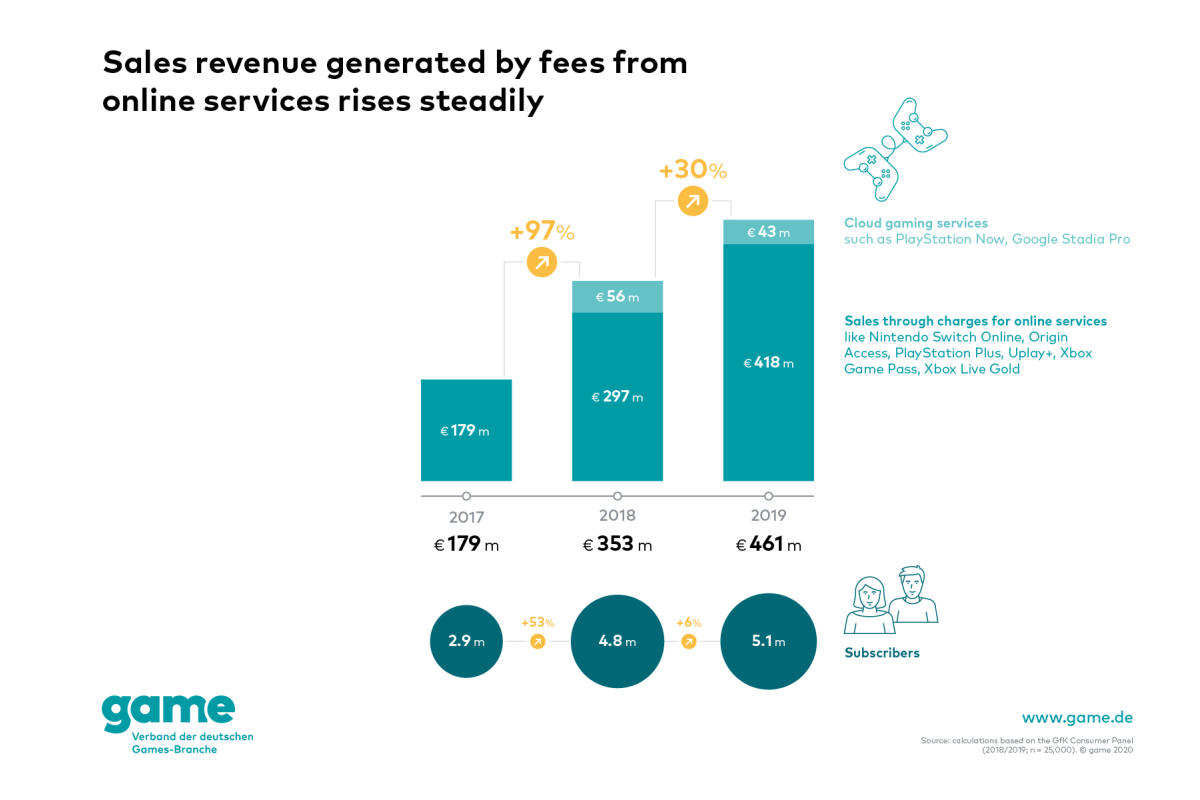
Sales revenue generated by fees from online services in Germany rose significantly once again. The segment grossed approximately 461 million euros in 2019, which is an increase of 30 per cent compared to 2018 (353 million euros) – and even that year, the segment had nearly doubled, with growth of 97 per cent. These are the figures released today by game – the German Games Industry Association, based on data collected by the market research company GfK. Fee-based online services are currently available in multiple versions and for a range of different gaming platforms. For example, services on consoles including Nintendo Switch Online, PlayStation Plus and Xbox Live Gold offer options such as playing online with and against other players, saving games in the cloud and receiving discounts on games and expansions. Subscription services for PC such as Origin Access Premier (EA) and Uplay+ (Ubisoft) allow players to pay a fixed monthly fee to access a huge rotating library of games and to play some new games before the release date. With cloud gaming services such as Google Stadia Pro and PlayStation Now, on the other hand, gamers no longer need high-performance hardware to play titles with their full range of graphics, as the computing power to run the games is provided in the cloud. Monthly fees for online services can range from 4 to 10 euros, depending on the provider. Last year, a total of approximately 5.1 million gamers paid for these fee-based services, which is around 300,000 people more than in 2018 (4.8 million).
In Germany, growing numbers of gamers are discovering fee-based online services that give them access to an enormous selection of the latest hot titles, offers and discounts for a monthly fee. The strong growth in this segment also indicates how much the games market is currently changing: long-term access and usage rights for games are becoming much more important than purchasing individual titles,’ says Felix Falk, Managing Director of game. ‘Cloud gaming services are an interesting option for many gamers, particularly if we consider future trends and blockbuster titles that require a lot of processing power. All the heavy processing takes place in data centres, so the players themselves no longer need particularly high-performance hardware. There’s a lot going on in this budding market segment at the moment, and we expect to hear much more about it in future.’
German games market grows by 6 per cent
As already reported by game, the German games market grew by 6 per cent in 2019, to around 6.2 billion euros. Sales of games hardware, including consoles, gaming PCs and accessories, dropped by 2 per cent from the previous year, to 2.4 billion euros. In contrast, the market for games software showed a gain of 11 per cent: in 2019, a total of about 3.9 billion euros was spent on computer and video games and the charges for the respective online services.
About the market data
The current data takes into account further dedicated games hardware like gaming PCs and the corresponding accessories, resulting in a larger market size than previously reported. This is true also of the adjusted data for 2018, which accordingly differs from that reported last year.
The market data is based on statistics compiled by GfK, the GfK Consumer Panel and App Annie. The methods used by GfK to collect data on Germany’s digital games market are unique in terms of both their quality and their global use. They include an ongoing survey of 25,000 consumers who are representative of the German population as a whole regarding their digital game purchasing and usage habits, as well as a retail panel. The data collection methods provide a unique insight into the German market for computer and video games.
game – the German Games Industry Association
We are the association of the German games industry. Our members include developers, publishers and many other games industry actors such as esports event organisers, educational establishments and service providers. As a joint organiser of gamescom, we are responsible for the world’s biggest event for computer and video games. We are an expert partner for media and for political and social institutions, and answer questions relating to market development, games culture and media literacy. Our mission is to make Germany the best games location.
Powered by WPeMatico

Barbie Nerz Head of Online Games at Staatliche Toto-Lotto GmbH Baden-Württemberg
Peter & Sons Partners with Staatliche Toto-Lotto GmbH Baden-Württemberg for German Market Entry

The innovative iGaming studio Peter & Sons, based in Barcelona, has enhanced its presence in Europe by entering a new partnership with erwin, the virtual slot platform of Staatliche Toto-Lotto GmbH Baden-Württemberg, a prominent and well-established gaming operator in Germany.
Established in 1948, Staatliche Toto-Lotto GmbH Baden-Württemberg has earned a solid reputation for dependability, integrity, and creativity in Germany’s regulated gaming industry. The operator is key to the nation’s lottery landscape and is enhancing its digital entertainment services with authorized online gaming products. Since 2023, Staatliche Toto-Lotto GmbH Baden-Württemberg provides virtual slot games at www.lotto-bw.de/erwin. Here, you can explore a diverse range of fun and appealing slots that are refreshed frequently.
Additionally, Staatliche Toto-Lotto GmbH Baden-Württemberg seeks to provide gambling products in its range that cater to the changing requirements of its customers. By doing so, the organization emphasizes trust and safety. Ensuring adherence to measures for the protection of youth and players is consequently a foremost concern.
Famous for its collection of art-focused games, unique characters, and captivating game environments, Peter & Sons has gained global acclaim for advancing the limits of creativity in slot design.
Yann Bautista, Founder and Commercial Director at Peter & Sons, said: “We are delighted to partner with Lotto Baden-Württemberg, an operator that has earned enormous trust within the German gaming community. Germany represents an important regulated market for us, and working with such a respected partner allows us to introduce our games to a broad audience of players who appreciate high-quality entertainment and distinctive design.”
Barbie Nerz, Head of Online Games at Staatliche Toto-Lotto GmbH Baden-Württemberg: “Peter & Sons has developed a reputation for producing visually striking and highly engaging games, and we are excited to welcome their portfolio to our platform. Our goal is always to provide players with diverse, high-quality content, and this partnership represents another step forward in expanding the entertainment experiences we offer.”
The post Peter & Sons Partners with Staatliche Toto-Lotto GmbH Baden-Württemberg for German Market Entry appeared first on Eastern European Gaming | Global iGaming & Tech Intelligence Hub.
Central Europe
Sportradar Extends its Data and Audiovisual Betting Rights Agreement with Deutscher Fussball-Bund
Sportradar Group AG announced a multi-year extension of its data and audiovisual (AV) betting rights agreement with Deutscher Fussball-Bund (DFB), the German Football Association. The rights were originally secured as part of the company’s acquisition of IMG ARENA in 2025.
Under the renewed agreement, Sportradar acquires exclusive data and streaming betting rights for Germany’s prestigious cup competition, DFB-Pokal, worldwide outside of the DACH region, in addition to non-exclusive global media data rights. For the first time in this competition, skeletal data will be introduced to fuel fan engagement products in the same way Sportradar provides for partners including UEFA, Bundesliga and the NBA.
The deal represents the first direct agreement between the parties relating to DFB’s premium cup competition. The new agreement begins at the start of 2026/2027 c and Sportradar will cover all 63 DFB-Pokal matches per season. Sportradar and DFB have previously enjoyed a longstanding partnership including content production and editorial services.
With global Gross Gaming Revenue in soccer betting expected to increase by approximately 50% over the next four years, Sportradar is uniquely positioned to support its clients capture further market share through next generation, hyper-personalized, hyper-immersive experiences.
Sportradar continues to innovate in soccer, combining deep data with proprietary AI technology to create new dynamic betting products such as micro markets and live player markets, which its sportsbook operator clients can leverage to engage customers and generate more revenue.
Moritz Gloeckler, EVP of Rights and Strategic Projects at Sportradar, said: “Our extension of the agreement with DFB is a key addition to our already strong portfolio of global soccer rights. With more than five billion soccer fans worldwide, there’s massive appetite for content. Through partnerships with FIFA, UEFA, AFC, Bundesliga, CONMEBOL and more, Sportradar is well positioned to create the next generation of tech driven products and services for clients to use to engage fans, reach new audiences and open fresh revenue opportunities.”
Kay Dammholz, Director Media Rights at DFB GmbH & Co. KG, said: “With this agreement, we are further advancing the international media rights distribution of the DFB-Pokal. Together with Sportradar, we are ensuring a professional and safe global distribution of our betting streaming rights outside the DACH region, while upholding the highest standards of integrity and unlocking additional commercial potential for our premium cup competition.”
The post Sportradar Extends its Data and Audiovisual Betting Rights Agreement with Deutscher Fussball-Bund appeared first on Eastern European Gaming | Global iGaming & Tech Intelligence Hub.

Wazdan, the results-oriented developer, has further grown its notable European presence through a partnership with Casino Interlaken, a top operator in Switzerland.
The collaboration offers players at Casino Interlaken’s StarVegas.ch online platform access to Wazdan’s dynamic slot collection, showcasing its best-selling Coins and Hot Slot series, which emphasize engaging gameplay mechanics and consistently achieve high retention rates for compliant operator partners throughout Europe.
Inaugurated in 2020 by the renowned land-based Casino Interlaken, StarVegas.ch has emerged as a prominent online provider of engaging slot games, with its collection enhanced by numerous feature-rich titles from top global suppliers.
In addition to Wazdan’s launches, players at StarVegas.ch will be presented with the studio’s engagement-enhancing features, such as Hold the Jackpot, Cash Infinity, Collect to Infinity, Sticky to Infinity and Cash Out, which consistently enhance the slot experience with innovative improvements to gameplay.
Wazdan’s newest partnership strengthens its dedication to collaborating with reputable brands in regulated markets across the globe. Players throughout Switzerland are poised to gain from an enhanced content selection by merging its top-notch portfolio with StarVegas.ch’s standing for outstanding entertainment and technical proficiency.
Radka Bacheva, Head of Sales at Wazdan, said: “StarVegas has built a strong reputation for premium entertainment, making it a fantastic platform for our vast range of titles and engagement tools. Combining the company’s strong market positioning with our rewarding experiences ensures we can deliver measurable growth and rewarding entertainment for players nationwide.”
Mayke Wolf, Chief Operating Officer at StarVegas, said: “As one of the first licensed Swiss online casinos, StarVegas offers a wide selection of games from leading international providers. Players can access the full portfolio via Starvegas.ch as well as through the StarVegas mobile apps, which are among the most popular casino apps in Switzerland. With the addition of Wazdan’s content, StarVegas further expands its portfolio with innovative titles and new gaming highlights. This step underlines StarVegas’ commitment to continuously developing its offering and providing Swiss players with a diverse and high-quality online gaming experience.”
Oliver Grimm, Chief Executive Officer at Casino Interlaken, said: “Casino Interlaken stands for personal service and Swiss quality in the heart of the Alps, values that we carry into the online space with StarVegas through a technologically advanced and trusted platform. By partnering with Wazdan, we are further enhancing our offering with innovative slot content that delivers engaging experiences for players across Switzerland.”
The post Casino Interlaken teams up with Wazdan to bolster Swiss market presence appeared first on Eastern European Gaming | Global iGaming & Tech Intelligence Hub.

-

 Conferences6 days ago
NOVOMATIC Gaming Colombia to Showcase its Latest Innovations at GAT Cartagena 2026
-
Asia6 days ago
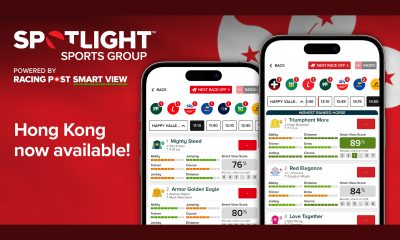
Spotlight Sports Group Expands its Smart View Global Footprint to Hong Kong
-
Conferences6 days ago
R. Franco Digital to showcase premium portfolio at GAT Expo Cartagena 2026
-
AGCO6 days ago
TitanPlay Highlights Responsible Gambling Approach in Platform Design
-
eSports6 days ago
Esports community establishes Latin-American Esports Institute (ILAE)
-
Asia3 days ago
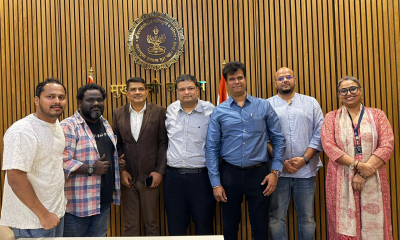
Skyesports and GodLike signs MoU with Maharashtra Cyber to promote esports and cyber hygiene in Maharashtra
-
Latest News6 days ago
Sweepedia Analysis Reveals Over 100 Active Lawsuits Against Sweepstakes Casino Operators Across the US
-
AGLC3 days ago
Bede Gaming cleared for Alberta market entry