bets
Regulatory crossroads: Anti-match-fixing bill and betting tax rejection


The Brazilian anti-match-fixing bill debate dominated headlines this week, exposing deeper political fault lines regarding how the betting sector fits into broader public policy priorities.
In a politically negotiated outcome in the Chamber of Deputies, lawmakers advanced the broader public security package while removing a proposed tax on betting operators, commonly referred to as “Cide-Bets.”
Originally introduced by the Senate, the Cide-Bets mechanism would have imposed a substantial additional levy — estimated at approximately R$30 billion annually — on sports betting revenues, earmarked to fund crime-fighting initiatives.
Its removal reflects a structural divide between public security ambitions and fiscal caution.
While there is political momentum to strengthen anti-crime legislation and integrity safeguards, there remains clear resistance to imposing heavier tax burdens on a newly regulated market that is still in a consolidation phase.
The outcome has generated contrasting interpretations.
Supporters of the original tax argued that a sector of this scale should contribute directly to public security funding.
Critics — including influential factions within the ‘Centrão’ — viewed the measure as disproportionate, warning it could constrain competition, reduce market attractiveness, and ultimately drive betting activity toward offshore or unlicensed operators.
For the industry, the message is nuanced. The regulatory pathway remains operational and politically viable; however, the fiscal dimension of betting regulation is far from settled.
Taxation is likely to reemerge as a central policy flashpoint as the 2026 electoral cycle approaches and public spending pressures intensify.
Player protection in the spotlight: Auto-exclusion and fraud dynamics
Beyond taxation, Brazil’s player protection architecture is facing heightened scrutiny — not due to regulatory absence, but because of operational friction and unintended behavioral responses.
Three months after the launch of the Federal Government’s Centralized Auto-Exclusion Platform — operational since December 10, 2025 — what was designed as a unified harm-mitigation mechanism is now encountering signs of opportunistic exploitation.
According to Ministry of Finance data, more than 217,000 auto-exclusion requests had been registered by early 2026, indicating substantial user engagement with the system.
However, licensed operators report an emerging pattern in which some bettors allegedly place high-risk wagers during the interval between submitting an exclusion request and the effective implementation of account blocking — a process that regulation allows to occur within 72 hours.
Once losses materialize, reimbursement claims are reportedly filed under the argument that access should have been suspended immediately upon registration.
Industry legal experts warn that this temporal gap is being instrumentalized as a form of regulatory arbitrage — effectively transforming a consumer protection tool into a reimbursement strategy.
The consequences include:
- Financial losses for licensed operators
- Increased complaints before consumer protection authorities (Procon)
- Rising litigation under consumer law
- Heightened legal and operational uncertainty
Gustavo Biglia, regulatory specialist at Ambiel Bonilha Belfiore Teixeira Hanna Advogados, has characterized the phenomenon as a case of moral hazard, in which a protection mechanism designed for vulnerable players is repurposed for opportunistic financial claims.
The broader structural issue lies in regulatory asymmetry.
The centralized platform applies exclusively to authorized operators integrated into Brazil’s regulated framework. Illegal offshore sites remain entirely unaffected.
As a result:
- Licensed operators absorb integration costs, compliance exposure and reputational risk
- Illegal operators continue operating without equivalent blocking obligations or enforcement pressure
This imbalance risks incentivizing migration toward unlicensed platforms — directly undermining the policy objective of channeling activity into supervised environments.
Additionally, Brazil’s regulatory framework granted a 90-day systemic adaptation period for operators to complete technical integration with the platform.
Yet reimbursement claims are reportedly being filed for transactions occurring within this transitional window, suggesting not regulatory failure, but deliberate exploitation of implementation timing.
The controversy illustrates a deeper tension:
Responsible gaming infrastructure is expanding rapidly — but without synchronized enforcement against illegal operators and real-time technical integration, well-intentioned tools can become vectors of friction and legal exposure.
The debate is no longer about whether Brazil has player protection mechanisms.
It is about whether those mechanisms are technically resilient, legally calibrated, and competitively balanced.
SBC Summit Rio 2026: market maturity and operational reality
Amid these policy debates, the SBC Summit Rio 2026 — kicking off March 3–5 at Riocentro in Rio de Janeiro — is shaping up as the definitive industry convening of the year.
Unlike early editions, which were largely about signalling opportunity, this year’s summit is positioned as a platform for operational dialogue and practical problem-solving.
SBC and partners have explicitly tied the agenda to responsible gaming governance, operational challenges such as fraud control in fast payment systems like PIX, advertising compliance, and future policy scenarios.
A strategic partnership with the Brazilian Institute for Responsible Gaming (IBJR) reinforces this orientation — aligning responsible gaming advocacy with broader industry objectives and ensuring that player protection and illegal-market combat remain central discussion themes.
Hundreds of operators, suppliers and regulators will be on the ground.
International technology and platform providers such as InPlaySoft and AI innovation showcases like BetConstruct AI are already confirming their participation, signalling that technology, data and integration strategies will be critical threads in the conference conversation.
The event’s structure — spanning leadership, payments, affiliate strategy and networking zones — reflects a market transitioning from regulatory optimism to commercial realism.
Underlying market trends and the illegal market
While the regulated sector builds infrastructure and dialogue, the illegal market remains a spectre, with enforcement efforts still evolving.
Brazil has previously invested in technological frameworks — such as cyber labs and coordinated agency action — to block unauthorized betting sites and tighten compliance networks.
That said, fraud and illegitimate operations continue to distort perceptions of safety and efficacy, and may in some cases cushion demand for offshore platforms, where rapid onboarding and lax safeguards attract certain segments of bettors.
The tension here is clear: enforcement and protection structures must outpace the fluidity of unauthorized operators, or risk ceding market share and player trust.
What this means going forward
This week’s congofluence of events — legislative flux, protection debates and a major global industry summit — presents a snapshot of a maturing but still unsettled market:
- Politically, Brazil’s regulators and legislators are protective of the regulatory framework but cautious about overtaxation and unintended market effects.
- Operationally, tools like auto-exclusion and identity protection are under pressure, revealing gaps in how safety mechanisms interact with fraud and player behaviour.
- Strategically, SBC Summit Rio offers a rare moment for stakeholders to align on practical priorities, from governance to AI-driven infrastructure, and to set a shared agenda for 2026.
In essence, Brazil’s betting market isn’t just growing — it is being stress-tested in real time, and how stakeholders respond in the coming months will shape not just revenue trajectories but the legitimacy and resilience of the entire ecosystem.
The honeymoon phase is over.
The consolidation phase has begun.
And how operators, regulators and political actors respond in the coming months will determine whether Brazil becomes a model of regulated scale — or a case study in premature acceleration.
Brazil’s Ministry of Sport publishes eSports guide
Alongside debates over taxation, integrity, and player protection, Brazil’s Ministry of Sport has formally elevated eSports within the national policy framework through the release of its new institutional guide on electronic sports.
While the document is educational in tone, its political significance should not be underestimated.
By defining eSports within an official public policy context, the government is signaling regulatory recognition and long-term sectoral legitimacy.
This matters for three reasons.
First, it reinforces the convergence between competitive gaming and regulated betting markets.
As Brazil’s sports betting ecosystem matures, eSports betting represents a structurally attractive vertical: digitally native audiences, high engagement frequency, and cross-platform monetization potential.
A clearer institutional framing reduces legal ambiguity and strengthens the case for structured oversight rather than prohibitionist reflexes.
Second, the move positions the Ministry of Sport — and particularly the Secretariat of Sports Betting and Economic Development — as an active architect of emerging digital sports verticals.
This suggests that eSports may gradually become embedded in discussions around integrity monitoring, match-fixing prevention, and betting market supervision, especially as anti-match-fixing legislation advances.
Third, the guide contributes to narrative rebalancing.
At a moment when betting debates are often framed through taxation disputes and fraud controversies, formal recognition of eSports highlights the innovation and economic development dimension of the broader gaming ecosystem.
In strategic terms, the publication does not immediately alter market mechanics.
However, it strengthens the institutional scaffolding around a sector that is likely to become increasingly relevant for operators, regulators, and investors alike — particularly as Brazil prepares for further regulatory refinements ahead of the 2026 electoral cycle.
The post Regulatory crossroads: Anti-match-fixing bill and betting tax rejection appeared first on Americas iGaming & Sports Betting News.













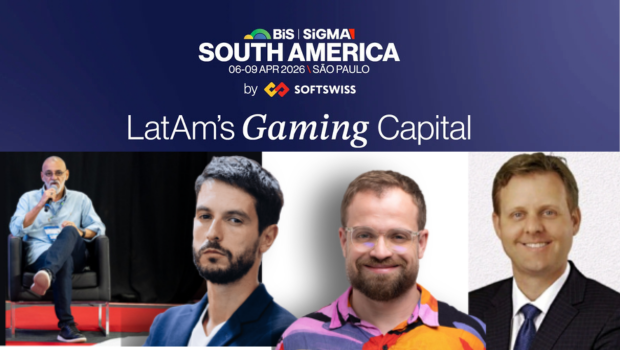
The 2026 edition of SiGMA South America kicked off today in São Paulo, bringing together some of the leading figures in the iGaming industry in Latin America.
The event takes place from April 6 to 9 at the Transamerica Expo Center, with a program spread across the Itaim, Jardins and Paulista stages.
Over three days, experts will address key topics for the current moment of the Brazilian market, such as regulation, sports integrity, responsible gambling and innovation in user experience.
Responsible gambling and mental health in focus
Among the highlights is the panel “Mental Health and Responsible Gambling: The Search for Solutions to the Invisible Challenge of the Gaming and Betting Market”, which proposes an integrated approach between regulation, mental health and public management.
Participants include Leandro Pamplona, partner and lawyer at BKP Advogados; Marcus Vinícius de Almeida, state deputy at the Legislative Assembly of Rio Grande do Sul; Cristiano Costa, CKO of EBAC – Brazilian Company for Support to Compulsivity; Daniel Romanowski, president of Lottopar; and Ana Bárbara Teixeira, Director of Government Relations and founder of ABRAJOGO/AMIG.
Pamplona states that the balance between protection and autonomy lies in “responsible freedom”.
“The operator cannot assume an absolute paternalistic position, but cannot be passive in the face of potentially problematic behaviors either”, he says.
According to him, the operator begins to exercise a delegated regulatory role, based on three pillars: clear information, mandatory preventive tools and effective monitoring.
Regarding Brazilian legislation, he believes there is already a relevant foundation, although still under consolidation.
“The integration of data between operators, regulators and the clinical field will be key to measuring the effectiveness of the rules”, he says.
“Brazil already has a relevant regulatory framework, but it is still in the process of practical consolidation. Until now, these issues were treated in isolation.
There is still no precise data to identify potential regulatory gaps.”
“Going forward, there will be integration of data between operators, regulators and the clinical or medical field. Based on this data, we will be able to verify the effectiveness or not of the current legislation.”
Sports integrity and real-time monitoring
The panel “Integrity on the Field: Preparing the Regulated Market for a World Cup of Safe Betting” brings together Felippe Marchetti, Director of Integrity Partnerships at Sportradar LATAM; André Megale, representative of SIGA Latin America; Michelle Ramalho, executive at the CBF; Carla Dualib, executive at SOFTSWISS; and Caio Porto Ferreira, representative of the Brazilian Federal Police and the STJD.
Marchetti explains that risk monitoring currently combines advanced technology and cooperation with operators.
“Tools based on artificial intelligence identify unusual betting volumes and significant deviations in odds, both in legal and illegal markets”, he says.
According to him, the detection of warning signals is based on a combination of advanced technology and cooperation with operators.
“Today we have tools such as the AI-based FDS, which monitors both legal and illegal markets and generates alerts when there is an unusual volume of bets or significant deviations between expected and actual odds”, he noted.
This type of system makes it possible to identify atypical patterns that may indicate potential manipulation risks.
Marchetti also highlighted the importance of information sharing with operators as a fundamental part of the integrity process.
“Another key indicator is when operators’ own risk teams detect suspicious behavior and share that information with us, allowing us to carry out a double verification of the markets”, he explained.
This is complemented by signals linked to the sports ecosystem itself.
“For example, when there is a concentration of athletes with a history of manipulation within the same team, this generates additional alerts and leads us to monitor the situation more closely”, he added.
Regarding collaboration between operators, sports entities and authorities, Marchetti stressed that the Brazilian scenario has evolved significantly following market regulation.
“Today Brazil is in a much more advanced position than in the pre-regulation period, starting with the legislation, which requires operators to maintain agreements with integrity entities”, he stated.
In this regard, he highlighted that Sportradar already works with dozens of regulated operators in the country, facilitating a constant flow of information on suspicious matches and atypical behavior.
This cooperation model also extends to public bodies and sports entities.
“We have agreements with regulatory authorities and work together with state federations, the CBF, CONMEBOL and other organizations, both in market monitoring and in educational initiatives”, he explained.
He also highlighted progress in building a national policy to combat match-fixing, which includes training for security forces and institutional coordination spaces.
User experience and personalization on the rise
The panel “Beyond the Screen: The Impact of the World Cup Betting Experience” will feature Natalia Nogues, CEO and founder of Control F5; and Dario Leiman, Head of Business Development LATAM at SOFTSWISS.
On the topics of the discussion, Felipe Costa Nadalini, Senior Account Executive at Optimove, points out that there is still limited understanding of the concept of real time in the sector.
“Real-time engagement does not mean responding immediately without relevance. The differentiator lies in personalization based on data and user behavior”, he says.
“Let’s imagine a scenario: you enter an e-commerce site and, as soon as you leave, you receive an email, a push notification or an SMS with an offer that has nothing to do with what you were looking for or your history. That is not effective engagement. Today, operators not only compete among themselves, but also with a huge indirect competition for the user’s attention.”
“Real-time engagement is important, but personalization is equally, or even more, relevant. We need to understand who the player is, their history with the brand and their behavior in order to deliver the right content at the right moment.”
“True real time happens in the background. It is the crossing of historical data that allows the action, when the moment comes, to be truly relevant. It is not just about sending an offer. It can also be a responsible action, such as detecting unusual behavior and offering responsible gambling content.”
“In addition, it is key to understand the channel. Some players interact more via email, others via SMS or push. Choosing the right channel is just as important as the message.”
When asked about underutilized technologies, Nadalini noted: “Data alone does not perform miracles. Many operators in Brazil still use their tools in a limited way, replicating competitors’ strategies instead of building something of their own.”
“There is no point in having a mountain of data if it is not used intelligently. The real differentiator lies in crossing that information to understand what content, in which channel and at what moment makes sense for each player.”
“If I do not personalize the experience, everything becomes white noise. And when that happens, the player simply stops paying attention.”
Convergence between physical and digital
The panel “Physical or Digital? Between Boundaries and Convergences in the Casino Industry” will feature Leonardo Benites, founding director of ANCASSINOS; Luiz Felipe Maia, partner at Maia Yoshiyasu Advogados; and Bryan Ortiz, director of Zitro Digital Brasil, in addition to Marco Pequeno, country manager at Amusnet; and Fernando Mora, Business Development Executive at Sportradar Brasil.
The discussion will address the growing convergence between physical and digital operations, driven by omnichannel strategies and the evolution of consumer behavior.
The role of the media in the regulatory debate
The panel “The Role of the Media in the Debate on the Restriction of Betting Advertising” will feature Magnho José, editor-in-chief of BNLData; Paulo Saad, vice president of Grupo Bandeirantes; and João Gallucci Rodrigues, managing partner at Poder360.
According to Magnho, Brazil is still going through a process of adaptation after decades of gambling prohibition.
“The Brazilian media, like the Judiciary, is still learning to coexist with sports betting and online gaming”, he said.
“A large part of the media that currently covers the sector does not understand it, and in many cases does not even try to understand it, which results in superficial and often biased coverage.”
The journalist and editor also warned about the impact of these narratives on regulation: “There is a real risk that misguided coverage may push for advertising restrictions and end up favoring the illegal market.”
For him, advertising plays a key role: “Bettors often cannot distinguish between what is legal and illegal, and advertising plays a fundamental role in that distinction.”
Finally, he concluded: “It is not about stricter regulation, but about misinformation. It is a lack of knowledge about the sector.”
To view the full agenda: https://sigma.world/summits/south-america/agenda/
BiS SiGMA South America 2026
BiS SiGMA South America is part of the SiGMA Group’s global event portfolio, one of the leading international platforms dedicated to the gaming, betting, and technology industry, with editions held in various regions across the globe.
Held annually in São Paulo, BiS SiGMA South America has consolidated its position as the largest and most traditional business event for the iGaming and betting sector in Latin America.
It gathers operators, technology providers, platforms, investors, government representatives, and specialized media in an environment geared toward business generation, knowledge exchange, and market development.
For the 2026 edition, the event is expected to host 18,500 participants, featuring more than 400 exhibitors and sponsors, and a content program with 250+ speakers—reinforcing the event’s scale, its international relevance, and São Paulo’s role as the region’s primary business hub for the industry.
Beyond the trade exhibition, BiS SiGMA South America offers a robust lineup of content, panels, workshops, and awards, covering topics such as innovation, operations, market trends, and industry best practices, actively contributing to the evolution and professionalization of the ecosystem.
The post SiGMA South America panels focus on key debates to Brazil appeared first on Americas iGaming & Sports Betting News.
The Brazilian fixed-odds betting market is at a pivotal moment, driven by regulatory progress and rapid sector growth. However, this development is occurring alongside the expansion of a strong illegal market, which challenges the effectiveness of current measures.
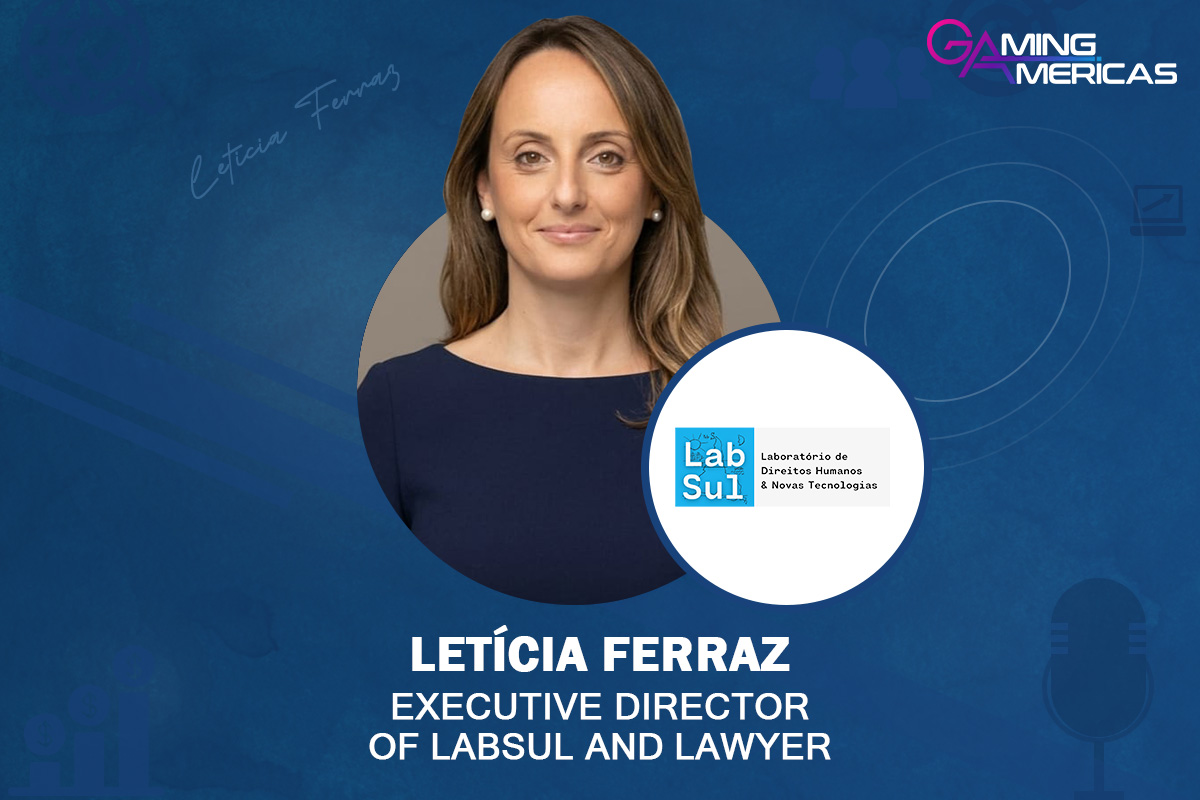
In this exclusive article, the lawyer and Executive Director of LabSul, Letícia Ferraz examines the key challenges, risks, and pathways toward building a safer, more competitive, and sustainable environment in Brazil.
Brazil is emerging as one of the most relevant jurisdictions in the global betting landscape. It has a large-scale market, a significant user base, and a recently structured regulatory framework with appropriately stringent requirements.
However, there are serious obstacles to the consolidation of this market, as a parallel economy of illegal betting is growing rapidly, already rivaling—and in some segments surpassing—the formal sector.
Understanding this duality is essential for a realistic assessment of the Brazilian case.
From a regulatory standpoint, Brazil has made significant progress. The consolidation of fixed-odds betting, particularly since 2023, has established a model that seeks to balance market openness, tax revenue generation, and consumer protection.
Authorized operators are subject to strict requirements, including identity verification, restrictions on minors, responsible gambling mechanisms, monitoring of risky behavior, and specific advertising rules.
The economic results are already tangible. In 2025, the sector generated approximately R$ 9.9 billion in tax revenue, allocated to strategic areas such as healthcare, public security, and sports.
This is the picture of the visible market: regulated, supervised, and institutionally integrated.
At the same time, however, an illegal market of equally significant proportions operates in parallel. Estimates indicate that around 51% of betting activity in Brazil takes place outside the regulated environment, generating between R$ 26 billion and R$ 40 billion annually.
Meanwhile, approximately 70% of users are unable to distinguish between legal and illegal operators, highlighting not only enforcement failures but also a structural deficit in information and transparency.
This is not a residual phenomenon, but a consolidated parallel economy.
The illegal market benefits from structural asymmetries.
By operating outside regulation, it avoids licensing costs, does not implement consumer protection mechanisms, and exploits weaknesses in financial supervision systems. In practice, a robust parallel infrastructure is formed, often connected to illicit activities, particularly money laundering.
The impacts are systemic and span multiple dimensions. For consumers, risks of fraud, financial loss, and misuse of personal data increase.
For public health, the absence of control tools exacerbates risky behaviors and intensifies problem gambling. For the State, the loss of tax revenue is significant, estimated between R$ 7 billion and R$ 10 billion annually, undermining the funding of essential public policies.
In terms of public security, there is a strengthening of criminal structures that increasingly operate in the digital environment, shifting from territorial control to technological infrastructures.
The data presented highlights the need for broad discussion and for enforcement actions and regulatory improvements, without substantially altering the structures already in place.
Proposals that seek to excessively restrict the regulated market or disproportionately increase the tax burden tend to produce adverse effects.
By reducing the competitiveness of licensed operators, such measures encourage consumers to migrate to the illegal environment, where risks are higher and consequences potentially more harmful.
Thus, the regulatory challenge lies not only in establishing rules, but in ensuring that regulation is economically viable, technically feasible, and institutionally effective.
Addressing the illegal market requires a coordinated and multisectoral approach.
This involves strengthening oversight of financial flows, integrated action between regulatory and law enforcement bodies, and expanding regulatory reach across the entire value chain, including intermediaries and service providers that, even indirectly, enable illegal operations.
In addition, there is a central component of education and transparency.
In a digital environment where interfaces and brands can easily simulate legitimacy, it is essential to develop clear mechanisms for identifying the regulated market, combined with consistent consumer awareness policies.
The country has made progress in structuring its regulatory framework. The next challenge, more complex and decisive, is to ensure that this model can compete with the illegal economy and progressively reduce, and ideally eliminate, its space.
I conclude by arguing that the consolidation of a safe and sustainable betting market in Brazil depends on coordinated action among legislators, regulators, private companies, and consumers themselves.
The continuous improvement of market practices, combined with balanced and effective regulation, requires ongoing dialogue and shared responsibility among all stakeholders.
Only through this joint effort will it be possible to strengthen the regulated environment, curb the advance of illegality, and generate concrete benefits for the State, bettors, and society as a whole.
Letícia Ferraz
Executive Director of LabSul and lawyer.
The post Overview of the Fixed-Odds Betting Market in Brazil appeared first on Americas iGaming & Sports Betting News.

“En el mercado regulado de apuestas sentí que estaba intentando nadar en un océano dominado por tiburones. En el mercado de predicciones, estamos ayudando a construir el propio océano.” (C.S)
El mercado de predicciones comienza a ganar espacio en Brasil en un momento de transformación para la industria del gaming y los productos digitales basados en probabilidades.
Aunque todavía es un concepto incipiente en el país, y contradictorio en países vecinos, este modelo, que combina elementos de mercados financieros, tecnología y comportamiento del usuario, ya ha demostrado su potencial en otras regiones al ofrecer estimaciones colectivas sobre eventos futuros.
Sin embargo, su avance ha sido conflictivo en América Latina.
En mercados como Argentina, por ejemplo, está enfrentado restricciones e incluso prohibiciones, en medio de debates regulatorios sobre su naturaleza y su posible similitud con las apuestas tradicionales.
En este contexto, Brasil aparece como un terreno aún en definición, donde la reciente regulación de las apuestas deportivas abre espacio para discutir nuevos formatos digitales basados en probabilidades.
Es en este escenario donde surge la figura de Carlos Santos, CEO y uno de los impulsores de este segmento en el mercado brasileño con el lanzamiento de Previlabel.
Con experiencia previa en el ecosistema de apuestas, Santos decidió dar un paso más allá del modelo tradicional para apostar por la construcción de una nueva categoría en el país: los mercados de predicción.
A través de su visión y su proyecto, el ejecutivo busca no solo introducir este concepto en Brasil, sino también desarrollar la infraestructura tecnológica necesaria para que nuevos operadores y empresas puedan formar parte de este ecosistema emergente.
En esta entrevista, Carlos Santos analiza el potencial del mercado de predicciones en Brasil, los desafíos de su desarrollo y las oportunidades que pueden definir el futuro de este segmento en la región.
¿El mercado de predicciones aún es poco conocido en Brasil. ¿Cómo explicaría este concepto a alguien que nunca ha oído hablar de él?
Los mercados de predicción son plataformas donde las personas negocian probabilidades sobre eventos futuros.
En lugar de simplemente apostar por un resultado, los usuarios compran o venden posiciones basadas en la probabilidad de que algo ocurra.
El precio de estas posiciones termina reflejando lo que el mercado cree que es la probabilidad de ese evento.
Por eso, muchos describen este modelo como una especie de bolsa de valores de probabilidades, donde la información, la opinión y el dinero se combinan para formar una estimación colectiva del futuro.
¿Por qué cree que Brasil puede convertirse en un mercado relevante para plataformas de predicción?
Brasil tiene varios factores que favorecen este tipo de mercado. En primer lugar, es un país altamente conectado digitalmente y con una gran adopción de nuevas tecnologías financieras.
En segundo lugar, existe una cultura muy fuerte en torno a los deportes y a los eventos públicos, lo que genera naturalmente interés por las predicciones.
Además, la reciente regulación de las apuestas deportivas ha abierto espacio para nuevas discusiones sobre productos relacionados con probabilidades y mercados digitales.
El país acaba de regular las apuestas deportivas. ¿Los mercados de predicción son una evolución natural de esto o una industria diferente?
Están relacionados, pero no son exactamente lo mismo.
En las apuestas deportivas tradicionales, las probabilidades son definidas por la casa de apuestas.
En los mercados de predicción, en cambio, son los propios usuarios quienes forman esas probabilidades al negociar posiciones entre sí.
Esto crea una dinámica más cercana a un mercado financiero, donde el precio cambia a medida que surgen nuevas informaciones y las personas ajustan sus expectativas.
¿Cuáles son los principales tipos de eventos que podrían volverse populares en este mercado en Brasil?
El deporte probablemente será el punto de entrada más natural, ya que existe una gran base de usuarios interesados en este tipo de eventos.
Pero con el tiempo, estos mercados pueden expandirse hacia áreas como política, economía, entretenimiento e incluso tecnología.
En otros países ya existen mercados de predicción sobre elecciones, indicadores económicos y grandes eventos globales.
Esto demuestra que el modelo tiene potencial para ir más allá del entretenimiento.
¿Existe el riesgo de que el mercado de predicciones sea confundido con las apuestas tradicionales?
Sí, especialmente al inicio.
Como ambos involucran dinero y probabilidades, es natural que exista cierta confusión. Sin embargo, la diferencia está en la dinámica del mercado.
En las plataformas de predicción, los usuarios pueden negociar probabilidades y reaccionar ante nueva información, lo que hace que el sistema sea más parecido a un mercado financiero que a una apuesta tradicional.
Con el tiempo, a medida que el público entienda mejor el funcionamiento, esta distinción tenderá a ser más clara.
En el exterior, las plataformas de predicción ya existen desde hace tiempo. ¿Qué puede aprender Brasil de estas experiencias?
La principal lección es que estos mercados funcionan mejor cuando hay transparencia, liquidez y reglas claras de operación.
Las experiencias internacionales muestran que, cuando están bien estructurados, los mercados de predicción pueden generar estimaciones bastante precisas sobre eventos futuros. Sin embargo, también ha quedado claro que es fundamental contar con mecanismos de integridad y un entorno regulatorio que acompañe la innovación.
Brasil tiene la ventaja de poder observar estos ejemplos y adaptar las mejores prácticas a su propio contexto.
¿Qué le hizo mirar hacia los mercados de predicción en lugar de continuar únicamente en el mercado tradicional de apuestas?
Durante el último SBC en Lisboa tuve un momento muy claro de reflexión sobre el mercado. Me di cuenta de que estaba intentando competir en un entorno extremadamente difícil para empresas nuevas: enfrentar directamente a gigantes ya consolidados en el sector de apuestas.
El mercado regulado de apuestas en Brasil es altamente competitivo y está dominado por empresas con gran capital. Es como intentar nadar junto a tiburones en un océano que ya les pertenece.
Fue entonces cuando entendí que tal vez la oportunidad no era competir en ese mercado de la forma tradicional, sino participar en la construcción de una nueva categoría dentro del sector. El mercado de predicciones aún está en sus inicios en Brasil, lo que abre espacio para la innovación, la tecnología y el liderazgo.
Percibí que podía aprovechar toda la experiencia adquirida en el sector de apuestas para ayudar a estructurar este nuevo momento del mercado en el país.
¿Cuál fue el momento en que decidió convertir esto en un negocio?
Cuando regresé a Brasil después del SBC Lisboa, mi visión de negocio cambió completamente.
Comencé a estudiar más profundamente el mercado de predicciones y entendí que no era solo una tendencia global, sino también una oportunidad real para construir infraestructura en este sector en Brasil.
A partir de esta visión, iniciamos una asociación con Brasil Bitcoin, aprovechando toda su experiencia en Web3 e infraestructura digital para desarrollar esta tecnología.
La idea fue combinar esa experiencia en blockchain con nuestra visión de producto y mercado, creando una base tecnológica capaz de aportar más competitividad e innovación a este nuevo segmento.
¿Cuáles fueron los mayores desafíos al comenzar en este sector?
El principal desafío fue construir la tecnología.
Los mercados de predicción requieren una infraestructura muy específica, que incluye sistemas de negociación de probabilidades, liquidez, gestión de eventos y mecanismos de integridad.
Como este mercado aún es muy nuevo en Brasil, prácticamente no existían soluciones listas adaptadas a la realidad local. Esto exigió un gran esfuerzo de desarrollo para crear una tecnología sólida capaz de sostener el crecimiento de este ecosistema.
¿El público brasileño está preparado para entender y utilizar los mercados de predicción?
Creo que sí. El brasileño ya ha demostrado una gran capacidad de adaptación a nuevos productos digitales.
Basta observar el crecimiento de las apuestas deportivas, las criptomonedas y las plataformas financieras en los últimos años.
Cuando el modelo se explica bien y la experiencia es simple, la adopción tiende a ocurrir rápidamente.
¿Qué hace exactamente Previlabel dentro de este mercado?
Previlabel es una empresa de tecnología enfocada en infraestructura para mercados de predicción.
Desarrollamos la tecnología que permite a emprendedores crear sus propias plataformas de predicción y construir negocios dentro de este nuevo segmento que está comenzando a surgir en Brasil.
Nuestro objetivo es facilitar la entrada de nuevos operadores en este mercado.
Ustedes no operan solo una plataforma — venden tecnología para quienes quieren crear la suya. ¿Cómo funciona este modelo?
Exactamente.
Previlabel funciona como un proveedor de tecnología para este mercado. En lugar de operar una única plataforma, desarrollamos la infraestructura que los operadores pueden utilizar para lanzar sus propias marcas dentro del mercado de predicciones.
Esto permite que emprendedores y empresas ingresen en este sector de forma mucho más rápida, sin necesidad de desarrollar toda la tecnología desde cero.
¿Cree que veremos muchas plataformas de predicción surgir en Brasil en los próximos años?
Creo que esto ocurrirá muy rápidamente. En los próximos meses ya deberíamos ver varias plataformas emergiendo en Brasil.
Históricamente, el país siempre ha atraído nuevos modelos de negocio digitales debido al tamaño del mercado y al alto nivel de adopción tecnológica.
Cuando surge un nuevo segmento prometedor, Brasil suele convertirse en uno de los principales mercados de experimentación.
¿Existe una especie de “carrera” para crear el primer gran mercado de predicción brasileño?
Sí, esto es algo natural en cualquier industria naciente.
Cuando un nuevo mercado comienza a formarse, siempre existe una competencia inicial entre empresas para ver quién logra posicionarse primero y convertirse en referencia.
Probablemente estamos en el inicio de este proceso en Brasil, y quien consiga construir una tecnología sólida, ganar la confianza del público y escalar primero tendrá una ventaja muy importante.
The post Los mercados de predicción ganan terreno en Brasil con la entrada de Previlabel appeared first on Americas iGaming & Sports Betting News.

-

 BNL6 days ago
Paneles SiGMA South America concentran debates claves para Brasil
-
ALL FOR ONE Studios6 days ago
Unlock the Sands’ Bounty — Games Global and ALL FOR ONE Studios introduce rewards in Queens of Ra Rising Coin Collect
-
Alea6 days ago
Alea Returns to SiGMA South America as Brazil’s iGaming Market Enters a More Demanding Stage
-
Andrew Humphreys Chief Product Engineering Officer at Bede Gaming6 days ago
OLG Launches Innovative New React Native Mobile App with Bede Gaming
-
bets6 days ago
SiGMA South America panels focus on key debates to Brazil
-
Booming Games5 days ago
Booming Games targets South American dominance with major investment, flagship partnerships and exclusive Ronaldinho content
-
Best Slot Developer6 days ago
Amusnet Named Best Slot Developer at GamingTECH Awards 2026
-
Evoplay6 days ago
Evoplay Embarks on a Heart of Africa: Lion Way