AML
UK vs Germany AML Supervisory Architecture: A Structural Mapping for Group Operators


Licensed online gambling groups operating in both the United Kingdom and Germany are subject to two distinct anti-money laundering (AML) supervisory architectures. The distinction is reflected in the allocation of statutory responsibility, the structure of reporting obligations, and the implementation of monitoring mechanisms under law.
This article presents a structural mapping of these frameworks based exclusively on statutory texts and official supervisory publications. No interpretive grading or comparative assessment is included.
Allocation of Supervisory Responsibility
In Great Britain, the Gambling Act 2005 designates the UK Gambling Commission (UKGC) as the regulator of licensed gambling activities. Casino operators are classified as “relevant persons” under the Money Laundering, Terrorist Financing and Transfer of Funds (Information on the Payer) Regulations 2017 (as amended). Accordingly, they are subject to AML obligations prescribed by law, including firm-wide risk assessment (Regulation 18), customer due diligence, enhanced due diligence where required, ongoing monitoring, and suspicious activity reporting pursuant to the Proceeds of Crime Act 2002.
Under the UK regulatory structure, AML monitoring and internal controls are implemented at operator level and supervised by the UKGC pursuant to its mandate, including licence conditions, compliance assessments, and published enforcement outcomes.
In Germany, the Glücksspielstaatsvertrag 2021 (GlüStV 2021) establishes the Gemeinsame Glücksspielbehörde der Länder (GGL) as the competent supervisory authority for licensed online gambling. In parallel, the Geldwäschegesetz (GwG) classifies operators of games of chance as obligated entities (Verpflichtete) and subjects them to AML requirements defined by statute, including institutional risk analysis, due diligence measures, ongoing monitoring, and suspicious transaction reporting to the Financial Intelligence Unit (FIU Germany).
Beyond the AML obligations under the GwG, GlüStV 2021 establishes centralized monitoring systems, including LUGAS (Länderübergreifendes Glücksspielaufsichtssystem) and OASIS (national self-exclusion system). Licensed operators are required to integrate with these systems in accordance with legal provisions.
The allocation of supervisory responsibility in each jurisdiction determines how AML controls are implemented and which authority reviews compliance.
Reporting Architecture
In the United Kingdom, suspicious activity reports (SARs) are submitted to the National Crime Agency (NCA) under the Proceeds of Crime Act 2002 and associated regulations. The reporting obligation arises where an operator knows or suspects, or has reasonable grounds for knowing or suspecting, that a person is engaged in money laundering, as defined by law.
Under German law, obligated entities must submit suspicious transaction reports to the Financial Intelligence Unit pursuant to the Geldwäschegesetz. The reporting obligation is triggered in accordance with the GwG.
For operators active in both jurisdictions, this results in reporting relationships with distinct competent authorities operating under separate legal mandates.
Group-Level Compliance Governance
For corporate groups holding licences in both jurisdictions, the allocation of AML responsibility differs in structure.
Within the UK system, AML supervision of licensed gambling operators is integrated into the mandate of the UK Gambling Commission, while suspicious activity reporting is directed to the National Crime Agency.
Within the German system, AML obligations arise under the Geldwäschegesetz, while gambling supervision is exercised by the GGL pursuant to GlüStV 2021, alongside the operation of centralized monitoring systems established by law.
Accordingly, compliance governance at group level must align with jurisdiction-specific legal structures. Internal control systems, documentation standards, reporting procedures, and monitoring integrations must reflect the supervisory architecture applicable to each licensed entity.
These structural distinctions do not alter the requirement to comply fully with the law in each jurisdiction. However, they determine how compliance responsibilities are distributed and supervised within a multi-license corporate structure.
Concluding Observation
A structural comparison of the United Kingdom and Germany confirms that AML supervision within the licensed online gambling sector is implemented through nationally defined legal and supervisory frameworks.
For multi-jurisdictional operators, effective compliance governance requires alignment with each jurisdiction’s defined legal structure rather than reliance on procedural uniformity across entities.
This mapping is derived exclusively from statutory texts and official supervisory publications. Detailed jurisdictional records are maintained within the GamingMarkets Regulatory Matrix.
Oren Dalal is the Founder & Publisher of GamingMarkets.com, an independent regulatory intelligence platform mapping statutory and supervisory frameworks across licensed online gambling jurisdictions. His work is grounded in primary-source legislative analysis, focusing on AML supervisory architecture and compliance governance in multi-jurisdictional groups.
The post UK vs Germany AML Supervisory Architecture: A Structural Mapping for Group Operators appeared first on Eastern European Gaming | Global iGaming & Tech Intelligence Hub.










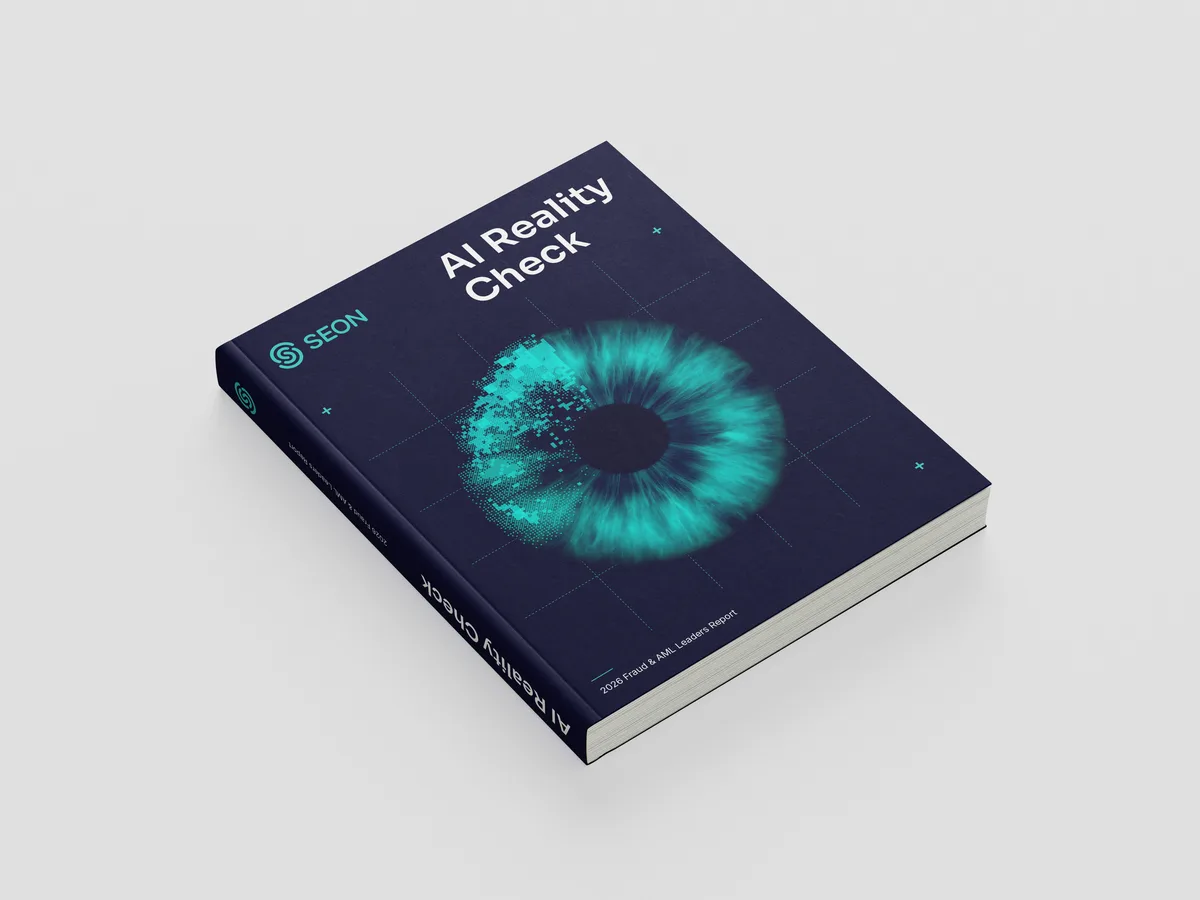
SEON, the command centre for immediate Fraud Prevention and AML Compliance, has unveiled AI Reality Check: 2026 Fraud & AML Leaders Report, the second iteration of its sector research, derived from a worldwide survey of 1,010 leaders in fraud, risk, and compliance spanning payments, fintech, financial services, retail, eCommerce, and gaming.
The figures reveal an unforeseen narrative: AI is ubiquitous, yet operations are not becoming easier to manage. Currently, 98% of organizations utilize AI in fraud and AML processes, with 95% expressing confidence in its effectiveness; meanwhile, headcount plans rose from 88% to 94% year-over-year, and 83% anticipate budget increases in 2026.
Complexity Is Surpassing Automation
AI has not lessened the workload — it has revealed the extent of work that has always existed. Fraud losses are increasingly approaching revenue growth, threats are advancing more rapidly, and disjointed systems restrict the true potential of AI at scale. Key year-over-year shift:
Leadership’s confidence in their teams’ performance is lagging. The number of leaders who disagreed with the statement, “fraud losses are growing faster than revenue,” dropped by almost 40% from the previous year
Inside the Numbers:
AI is baseline, not experimental
- 98% already integrate AI into daily workflows (only 2% still planning)
- 95% are confident AI can detect and prevent fraud (52% very confident)
- Top use case: AI/ML for transaction monitoring (30%)
Fraud and AML investment keeps climbing
- 83% expect fraud/AML budgets to increase in 2026
- 94% plan to add at least one full-time hire (up from 88% in 2025)
- 85% plan to add a vendor, 49% plan to replace one
Fragmentation is the bottleneck
- 95% claim “some integration” between fraud and AML systems
- Only 47% run fully integrated workflows; the rest rely on partial connections
- 80% say getting a unified view of data is challenging
For many, time-to-value remains slow
Only 10% go live in under two weeks
38% take 1–3 months, 24% take 4+ months
When implementations run long, top impacts include increased costs (52%) and prolonged fraud exposure (47%)
Teams are growing, not shrinking
94% plan to increase headcount despite automation gains
85% see AI agents as support/augmentation, not replacement (only 12% see eventual replacement)
Top fraud threats reported:
- Account takeovers: 26%
- Promo/discount abuse: 18%
- Return fraud: 18%
“Fraud and financial crime were supposed to become more manageable as AI matured,” said Tamas Kadar, CEO and co-founder, SEON. “Instead, 2026 is the year leaders are confronting a more complicated reality. AI adoption is real, confidence is high, but the scale and pace of fraud — compounded by fragmented systems — continue to drive increased investment rather than reduced overhead. The bottleneck is no longer whether AI works. It’s everything around it: disconnected data, siloed teams, slow implementations. The organisations that pull ahead will be the ones that unify fraud and AML intelligence, shorten the distance between threats and controls, and treat integration as strategy, not plumbing.”
Fast-Growing Companies Invest in Integration Early
Organisations growing 51%+ are nearly twice as likely as slower peers to report that achieving unified visibility is “not very challenging.” They treat integration as infrastructure, not an IT project.
What’s Next: From “Does AI Work?” to “Can We Trust It?”
With adoption near-universal, the conversation is shifting to governance, explainability and accountability:
- 78% say decentralised digital identity will become central to fraud/AML
- 33% cite data privacy regulations (GDPR, CCPA) as the biggest external force shaping AML
- 25% point to criminals’ advancing use of AI and obfuscation techniques
The post Despite AI’s Rise, Fraud Teams Keep Growing — SEON 2026 Report appeared first on Eastern European Gaming | Global iGaming & Tech Intelligence Hub.


Reading Time: 4 minutes
Online gambling continues to thrive in Poland, despite the country’s strict regulatory framework. Virtual casinos and betting platforms still attract players with the promise of easy access and quick winnings. Yet, their operations would not be possible without the involvement of payment institutions that process transactions for entities operating outside the boundaries of the law. Behind the scenes lie not only questions about compliance with Poland’s Gambling Act, but also serious concerns about money laundering and the potential financing of criminal activity.
PSPs Legal Responsibility
The key question remains the legality of actions taken by payment institutions that handle transactions linked to illegal online gambling. Do they, even unintentionally, help such operations thrive? Under Polish law, payment service providers are required to monitor and limit high-risk transactions. In practice, this means that every deposit or withdrawal connected to unlicensed gambling activity should be treated as a red flag. Special attention is also given to transactions made through popular mobile payment systems such as BLIK. While BLIK itself is not a payment institution under Polish law, the banks and financial operators using it are and it is they who bear responsibility for preventing the flow of funds that may support illegal gambling activities.
Clear Legal Framework, Limited Excuses
Polish law leaves little room for speculation here. The register of domains used to offer illegal gambling, the ban on processing payments for unlicensed operators, and the penalties outlined in the Fiscal Penal Code and Criminal Code set clear boundaries of responsibility.
The Anti-Money Laundering Act (AML) and the EU Regulation 2023/1113 require payment institutions to actively monitor transactions, block suspicious transfers, and cut off risky relationships. Guidance issued by the Polish Financial Supervision Authority (KNF/UKNF) and the National Risk Assessment, along with its sectoral annex, describes typical abuse schemes and makes it clear that payments directed toward online gambling should be treated as a major warning signal. In practice, this means that financial channels supporting illegal gambling must be identified and shut down before the funds return to players as so-called “winnings.”
And this principle is now being actively enforced. Recently, the Financial Supervision Authority (UKNF) went a step further, issuing a sector-wide warning urging payment service providers to block financial flows to unlicensed operators. In response, Polish payment providers have begun withdrawing support for illegal gambling sites and removing payment options such as BLIK from unlicensed platforms.
The Hardest to Detect: The Intermediary Role
The flow of funds into illegal online gambling can take many forms, depending on the relationships between the parties involved in the transaction. The most difficult to detect, however, is the scenario in which a payment institution acts only as an intermediary within a larger payment chain transferring money between other financial service providers without directly serving the payer or the recipient. Even in such cases, the institution is not exempt from its obligation to continuously monitor and analyse all transactions.
Depending on the type of payment, it should apply different verification methods, all aimed at determining whether executing a transfer on behalf of another provider could, in practice, end up funding entities that organize illegal online gambling. The institution must obtain information from the ordering provider about the recipient, determine whether it is engaged in gambling related activity, and verify its legal status. If red flags arise during the analysis such as missing data in the payment chain, a domain listed in the official register, or the absence of the website from the list of legal operators the transaction should be paused or rejected and properly escalated. This includes raising the risk level, notifying the relevant authorities, or even terminating cooperation. When dealing with correspondent relationships involving other institutions, including those based within the European Union, heightened caution is essential.
Grey Market Fuelled by Inaction
Illegal online gambling would not exist without the support of the payment system. Although the law clearly defines the obligations of financial institutions, in practice it is often these very institutions that knowingly or not enable the flow of money into illegal online gambling. This is why effective identification and blocking of such transactions is crucial, especially within complex payment chains where tracing the connections can be most difficult. Every transfer made in support of illegal online gambling represents not only a legal risk but also real support for the shadow economy that thrives on the lack of vigilance within the financial sector.
This article was supplied by:
 Marek Plota
 Marek Plota
Marek is a founder and a head of the legal team at RM Legal Law Firm and Gaming In Poland, jointly providing multidisciplinary and multijurisdictional support for leading international gambling operators in the Polish, European Union, and African markets. His gambling practice includes regulatory support at the pre and post-licensing stage, IT, and taxation services, as well as the unique service of performing a function of a gambling representative. RM Legal is the only law firm in Poland representing offshore companies operating legally in the Polish gambling market. Apart from gambling Marek specializes in corporate commercial law and international investment projects.
The post Payments Under Scrutiny: Polish Example appeared first on European Gaming Industry News.
AML
RG24seven Opens Training to Spanish & Portuguese speakers with FREE Responsible Gambling and Anti-Money Laundering Courses

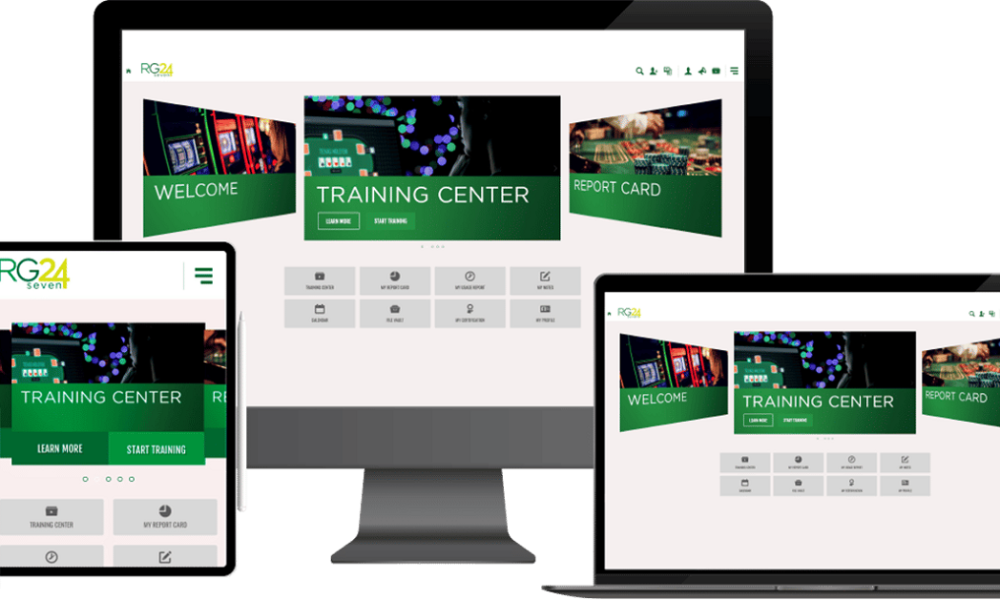
RG24seven Virtual Training, the responsible, effective, and free video-based virtual training system for gaming employees, is pleased to announce the addition of Spanish and Portuguese subtitles to its U.S.-based Responsible Gambling and Anti Money-Laundering courses. The courses are offered as part of the RG24seven free virtual training program for Tribal and commercial gaming employees.
The decision to incorporate subtitles into the Responsible Gambling course aligns with RG24seven’s dedication to ensuring that vital training resources are accessible to all, including individuals who prefer to consume content in different languages.
Wendy Anderson, Chief Executive Officer of RG24seven Virtual Training stated, “With the onset of legal gambling in Brazil through the country’s newly established national regulatory framework for betting systems, live gaming studios, and online games, offering our compliance-grade course in Portuguese is more important than ever.”
Anderson added, “Accessibility should be a cornerstone of any educational initiative, especially when it comes to promoting responsible gambling practices. RG24seven is the industry’s most accessible and valuable training for gaming company employees.”
RG24seven’s virtual training program is available to all gambling establishments in the U.S., U.K., Europe, Central and South America.

-

 bingo6 days ago
 -
Compliance Updates6 days ago
EGBA Urges EC to Tackle Rising Online Fraud in Gambling Sector
-
Greentube6 days ago
Greentube hauls in big wins with Rumble Riches™ Haulin’ Gold™
-
DEGEN Studios6 days ago
DEGEN Studios ignites a brutal blood feud with Vendetta Fury
-
Baroness Fiona Twycross4 days ago
BGC AGM 2026 Discussed About Surging Illegal Gambling Black Market
-
Bonus Rush5 days ago
RAW iGaming launches BONUS RUSH® – a new family of feature-focused games
-
Adam Pentecost Chief Revenue Officer at Gaming Corps6 days ago
Gaming Corps Taps Betty to Boost Content Options for Ontario Players
-
BetConstruct AI6 days ago
BetConstruct AI Showcases Full Platform at SiGMA South America 2026