iGaming
Qzino Affiliate Program: Daily Profit Sharing, Tokenized Rewards, and Lifetime Revenue

The Crypto iGaming Affiliate Model Is Evolving — and Qzino Is Ahead of the Curve
The crypto iGaming affiliate space is undergoing a major transformation. Short-term commission deals and volume-only incentives are being replaced by long-term, ownership-driven partnerships.
Affiliates today want more than fast payouts. They’re looking for transparency, sustainability, and a direct stake in the platforms they help grow.
The Qzino Affiliate Program is built for this new era — combining daily profit sharing, tokenized rewards, and lifetime revenue participation inside a fully Web3-native ecosystem.
What Is Qzino?
Qzino is a next-generation crypto iGaming platform designed around decentralized ownership, transparent economics, and long-term ecosystem growth.
The platform offers:
-
10,000+ casino, sports, and esports games
-
AI-powered analytics for sports and esports betting
-
Provably fair gameplay with on-chain verification
-
A native utility token, $QZI, used for rewards, governance, and profit participation
-
A daily profit-sharing model allocating up to 50% of platform revenue to token holders
The team behind Qzino includes 100+ industry professionals with experience building and scaling crypto casinos ranked among the top 10 globally.
Qzino operates under an official Anjouan Gambling License, combining regulatory compliance with the flexibility of Web3 infrastructure.
The Core Innovation: Daily Profit Sharing
At the center of Qzino’s ecosystem is its profit-sharing mechanism.
Instead of retaining the majority of platform revenue, Qzino distributes up to 50% of profits through token-based rewards — affiliates included.
This means:
-
Affiliate earnings are directly tied to platform performance
-
Income grows as the ecosystem scales
-
Rewards continue long after the initial referral
Rather than chasing short-term traffic spikes, affiliates are incentivized to build quality communities, long-term engagement, and sustainable growth.
In Qzino’s model, affiliates aren’t just marketers — they’re economic participants.
Inside the Qzino Affiliate Program: A Multi-Stage, Live Ecosystem
The Qzino Affiliate Program isn’t a fixed commission plan. It’s a dynamic system that evolves alongside the platform.
Stage 1 — Platform Launch & Farming Season (Live)
With Qzino already live, affiliates earn through a dual-reward structure:
-
Revenue Share from Player Activity
Affiliates earn a percentage of revenue generated by referred players from day one. -
Farming Points
Every bet placed by referred users generates farming points. These points accumulate and are later converted into Qzino tokens during the airdrop phase.
This gamified approach rewards engagement, not just acquisition — encouraging affiliates to remain active and invested.
Stage 2 — Token Generation Event & Scaling
After the Token Generation Event (TGE), the affiliate economy becomes fully tokenized.
Affiliates gain access to:
-
Daily profit sharing paid in Qzino tokens
-
Lifetime revenue share on all referred users
-
Sub-affiliate commissions, enabling network-based income
-
Asset growth potential, tied to token performance
This layered earning structure compounds over time, making it one of the most advanced affiliate systems in crypto iGaming.
How Affiliates Earn with Qzino
The Qzino Affiliate Program is built for long-term sustainability, not short-lived campaigns.
Affiliates benefit from multiple revenue streams:
-
Up to 50% Lifetime Revenue Share
Earn up to half of the revenue generated by referred players — with no expiration. -
Tokenized Airdrop Rewards
Player activity generates points that convert into $QZI tokens, unlocking profit participation. -
Daily Profit Sharing
Receive a share of platform profits every single day, directly tied to ecosystem growth. -
Sub-Affiliate Network Earnings
Invite other affiliates and earn from their performance, creating scalable passive income.
Every action inside the Qzino ecosystem contributes to long-term value.
Why Qzino Is More Than a Traditional Affiliate Program
Traditional affiliate systems reward promotion.
Qzino rewards participation and ownership.
From early MiniApp engagement to token-based profit sharing, every stage of the affiliate journey aligns partner incentives with platform success.
Affiliates don’t just promote Qzino —
they grow with it,
earn with it,
and own a part of it.
Join the Qzino Affiliate Program
Earn from platform growth — not just referrals.
 Website: https://qzino.com
 Affiliate Inquiries: [email protected]
The post Qzino Affiliate Program: Daily Profit Sharing, Tokenized Rewards, and Lifetime Revenue appeared first on Eastern European Gaming | Global iGaming & Tech Intelligence Hub.








April reflects changes that began taking shape in iGaming back in the first quarter, but are only now becoming systemic. The market is gradually shifting away from short-term optimization toward more complex strategies, where performance sustainability, GEO diversification, and a reassessment of affiliate model efficiency play a key role.
In this issue of N1 Insights, N1 Partners experts analyze how traffic structures are evolving and which scaling approaches continue to deliver results amid increasing competition.
Part 1
1. Traffic and performance
1.1 Traffic sources most likely to show the highest volatility in April
The highest volatility is expected from Facebook, TikTok, and PPC channels, as they are directly affected by changes in moderation, algorithms, and competitive activity. Additional fluctuations are anticipated in Google UAC, where auction costs traditionally increase in April due to intensified brand activity following the end of the first quarter.
1.2 Will brands shift their priorities between traffic volume and quality in April?
In April, many brands will begin shifting their focus toward traffic quality, based on first-quarter performance insights. Priority will be given to deeper metrics – from FTD to deposits and LTV – rather than simply chasing registration volume and initial conversions.
At the same time, in certain high-growth GEOs, there will still be a willingness to invest in volume in order to capture market share more quickly, even at the expense of short-term efficiency.
1.3 What will be more challenging in April: finding new scalable setups or maintaining current volumes?
Most likely, maintaining current volumes will become more challenging, especially in highly competitive GEOs. After an active first quarter, many proven setups are already overheated, while traffic costs continue to rise.
Finding new setups remains possible; however, scaling them will take more time due to increased competition and higher requirements for traffic quality.
1.4 Changes in testing strategies for new GEOs and traffic sources in April
Affiliates are likely to shift toward shorter testing cycles and reduce test budget volumes in order to adapt more quickly to changing market conditions.
“At the same time, interest in traffic source diversification will increase: beyond the classic Facebook and Google channels, we expect a growing number of tests in alternative social platforms,” comments Vlad Chernov, Deputy Head of Affiliates at N1 Partners.
1.5 Key metrics for scaling up or cutting caps
Key metrics will continue to include CR, ROAS, ARPU, retention, and player LTV, but their role in decision-making will become even more significant. Teams will increasingly shift from evaluating “input” metrics to analyzing audience quality and long-term value.
In particular, scaling decisions will be based on early LTV signals and user behavior patterns, rather than solely on FTD volume. This will allow teams to identify underperforming setups earlier and reallocate budgets toward more sustainable traffic sources.
2. GEO priorities
2.1 GEOs that may see the highest traffic growth in April
In April, several Tier-1 countries are expected to show the strongest growth, primarily Canada, Germany, and Australia, where demand for online gambling remains stable and major brands continue to increase their marketing budgets. Growth may also be observed in Latin America (Brazil, Peru, Chile).
At the same time, some affiliates will continue scaling in Eastern Europe and CIS countries, where competition is lower than in Tier-1 markets and it is easier to test new setups.
2.2 Will the approach to Tier-1 markets change compared to Q1 2026?
The approach to GEO selection will become more selective and pragmatic. Many teams will maintain their focus on Tier-1 markets, but with stricter ROI control amid rising traffic costs and decreasing predictability of results.
At the same time, a partial budget reallocation is expected in favor of GEOs with more favorable scaling conditions – lower competition and more affordable auction dynamics. As a result, strategies will increasingly balance between the stability of Tier-1 markets and growth opportunities in less saturated regions.
2.3 Regions where the cost of player acquisition is expected to change the most
The most noticeable increase in CPA is expected in Tier-1 markets – primarily Canada, Germany, and Australia. In these GEOs, player acquisition costs are likely to continue rising amid intense competition and increasing pressure from large media buying teams.
“An additional factor will be the concentration of budgets after the first quarter: major players are scaling more aggressively, which overheats the auction and reduces the effectiveness of standard traffic acquisition approaches,” notes Vlad Chernov, Deputy Head of Affiliates at N1 Partners.
As a result, the entry threshold for new campaigns is rising, and achieving target metrics will require more precise optimization and stronger setups.
2.4 Key GEOs for growth at the beginning of Q2
Key GEOs may include several Tier-1 markets such as Canada, Germany, and Australia, as well as a number of Tier-2 and Tier-3 countries, including Brazil, India, Turkey, Kazakhstan, and Chile.
These countries remain a priority for many brands due to strong purchasing power, higher player LTV, and stable demand for licensed products. Despite high competition and traffic costs, Tier-1 markets continue to attract large affiliate teams, as with proper optimization they offer the most sustainable long-term profitability.
3. Affiliate Marketing Dynamics
3.1 How will the balance between new partners and established affiliate teams change in April?
The market will continue to consolidate around large and experienced teams that have the resources for scaling, optimization, and rapid budget reallocation. Their advantage will strengthen due to accumulated expertise, access to data, and more stable traffic acquisition processes.
At the same time, new teams will continue to emerge; however, the barrier to entry will keep rising. Without access to unique traffic sources, technological advantages, or niche expertise, it will become increasingly difficult for them to compete with established players and reach comparable volumes.
3.2 Changes in affiliates’ approach to selecting partner brands
Affiliates are increasingly shifting their focus toward non-financial factors when choosing partners – primarily brand reputation, payment reliability, and transparency of statistics. These criteria are becoming critical amid rising risks and the instability of certain offers.
As a result, the trend toward long-term partnerships is strengthening: more teams are favoring sustainable collaboration models over short-term offers with potentially high but unpredictable payouts.
“This approach reduces operational risks and enables building a more stable long-term unit economics,” says Vlad Chernov, Deputy Head of Affiliates at N1 Partners.
3.3 Types of partners that will see the most active growth in April
Media buying teams working with paid traffic will continue to grow most actively, along with content affiliates and SEO-driven projects focused on long-term organic traffic acquisition. These models remain key due to their scalability and more predictable long-term economics.
At the same time, growth in alternative sources is accelerating – particularly influencer and Telegram traffic, which attract affiliates with help of flexibility, a lower barrier to entry, and the ability to test hypotheses more quickly.
3.4 What changes in partner behavior are likely to be most noticeable in April?
Partners will increasingly diversify their traffic sources and GEOs to reduce dependence on any single channel. More cautious scaling and deeper analysis of unit economics can also be expected, especially in light of first-quarter results.
Part 2
1. PR trends
1.1 Top PR trends in April 2026
In the second quarter, PR activity noticeably picks up: after revisiting strategies at the beginning of the year, brands start engaging more actively with media and building more structured communication. Against the backdrop of increasing competition, having a strong offer alone is no longer enough – what matters is how the brand presents itself and what it communicates.
“At the same time, formats are also evolving: traditional press releases are gradually taking a back seat, giving way to case studies, interviews, and more ‘authentic’ content,” says Maria Bobrovskaya, Team Lead PR, Event, Production at N1 Partners.
The market is saturated, so those who deliver real value and communicate with their audience not in abstract terms, but through experience and concrete results, are the ones who win.
2. Brand marketing strategy
2.1 Which aspects of marketing strategy should brands focus on in April amid increasing competition?
The key focus should be on differentiation through brand positioning, not just through offer terms. In a market saturated with similar propositions, partners begin to make decisions based not only on numbers, but also on trust and stability.
This is reflected in affiliate behavior: strong partners are more likely to work with brands that have a clear reputation and predictable processes.
2.2 What changes in marketing strategy should brands consider in April to maintain a competitive advantage?
Companies are gradually shifting their focus from short-term acquisition to long-term partner retention, strengthening efforts in content, PR, loyalty programs, and community development. This approach not only reduces dependence on a constant influx of new affiliates but also improves the quality of engagement with existing partners.
This shift is largely driven by market saturation: acquisition costs continue to rise, while competition for active affiliates intensifies.
“In such conditions, retaining and developing the existing partner base becomes strategically more effective than aggressively acquiring new partners, especially given the increasing demands for transparency, support, and level of service,” notes Maria Bobrovskaya, Team Lead PR, Event, Production at N1 Partners.
2.3 How can marketers find the right balance between short-term results and long-term brand development?
The balance is achieved through a combined strategy: performance drives immediate results, while brand communications ensure long-term stability. If a brand focuses only on short-term gains, it becomes vulnerable in a highly competitive environment.
2.4 The most effective approaches to marketing budget allocation in Q2
In the second quarter, many companies begin reallocating budgets toward a more diversified strategy. In addition to performance channels, there is increased investment in PR activities, content marketing, and event participation.
This shift is driven by the fact that relying solely on paid traffic is becoming less stable, prompting brands to seek ways to strengthen their organic presence and build trust.
- Marketing challenges
3.1 What new challenges may marketing teams face at the beginning of Q2?
The key challenge remains the growing competition for partner attention, making it increasingly difficult for brands to differentiate themselves amid similar terms and offers. In an oversaturated market, standard acquisition tools are no longer delivering consistent results.
As a result, marketing teams are forced to shift their focus from purely commercial terms to building reputation, improving communication quality, and shaping overall brand perception. This includes more systematic work with content, greater transparency in interactions, and the development of long-term relationships with partners.
3.2 Which marketing strategies may become less effective in April?
Approaches based solely on financial terms are gradually losing effectiveness. When many programs offer similar payouts, partners begin to pay attention to other factors – such as brand reputation, quality of support, and operational stability.
3.3 Will it become more difficult to attract strong partners amid the large number of affiliate programs on the market?
This is largely due to the fact that strong affiliates have already formed a stable pool of partners and have become significantly more selective when choosing new brands. Decisions are increasingly made not only based on terms, but also considering reputation, stability, and quality of interaction.
In practice, this results in a longer onboarding cycle: new programs require more time to pass the evaluation stage and build trust. As a result, partnership launches slow down, and affiliate expectations become more demanding.
3.4 What signals in April may indicate that brands should reconsider their marketing strategy?
A decline in partner engagement, weak response to new products, and lack of brand visibility in the media are key signals.
“This is due to the fact that in a highly competitive environment, even a slight drop in activity quickly impacts a brand’s position,” says Maria Bobrovskaya, Team Lead PR, Event, Production at N1 Partners.
April confirms a key shift in the iGaming market: increasing competition and rising traffic costs are driving higher demands for quality, sustainability, and a more strategic approach to marketing. Quick tactics and short-term solutions are gradually giving way to more systematic efforts – with a focus on LTV, partner retention, and traffic source diversification.
Join the first tournament of the N1 Traffic Cups 2026 series – the N1 SEO Traffic Cup by N1 Partners!
Period: March 1 – April 30, 2026
Results: by May 10
Entry: from 20 FTD per brand
Why N1 Partners:
- 14+ casino and sportsbook brands with Reg2Dep up to 70%
- 10+ Tier-1 GEOs
- CPA up to €700 and RevShare up to 45% + NNCO for top partners + hybrid models
Be number one with N1!
The post N1 Insights April’s iGaming Trends You Shouldn’t Miss appeared first on Eastern European Gaming | Global iGaming & Tech Intelligence Hub.

April reflects changes that began taking shape in iGaming back in the first quarter, but are only now becoming systemic. The market is gradually shifting away from short-term optimization toward more complex strategies, where performance sustainability, GEO diversification, and a reassessment of affiliate model efficiency play a key role.
In this issue of N1 Insights, N1 Partners experts analyze how traffic structures are evolving and which scaling approaches continue to deliver results amid increasing competition.
Part 1
1. Traffic and performance
1.1 Traffic sources most likely to show the highest volatility in April
The highest volatility is expected from Facebook, TikTok, and PPC channels, as they are directly affected by changes in moderation, algorithms, and competitive activity. Additional fluctuations are anticipated in Google UAC, where auction costs traditionally increase in April due to intensified brand activity following the end of the first quarter.
1.2 Will brands shift their priorities between traffic volume and quality in April?
In April, many brands will begin shifting their focus toward traffic quality, based on first-quarter performance insights. Priority will be given to deeper metrics – from FTD to deposits and LTV – rather than simply chasing registration volume and initial conversions.
At the same time, in certain high-growth GEOs, there will still be a willingness to invest in volume in order to capture market share more quickly, even at the expense of short-term efficiency.
1.3 What will be more challenging in April: finding new scalable setups or maintaining current volumes?
Most likely, maintaining current volumes will become more challenging, especially in highly competitive GEOs. After an active first quarter, many proven setups are already overheated, while traffic costs continue to rise.
Finding new setups remains possible; however, scaling them will take more time due to increased competition and higher requirements for traffic quality.
1.4 Changes in testing strategies for new GEOs and traffic sources in April
Affiliates are likely to shift toward shorter testing cycles and reduce test budget volumes in order to adapt more quickly to changing market conditions.
“At the same time, interest in traffic source diversification will increase: beyond the classic Facebook and Google channels, we expect a growing number of tests in alternative social platforms,” comments Vlad Chernov, Deputy Head of Affiliates at N1 Partners.
1.5 Key metrics for scaling up or cutting caps
Key metrics will continue to include CR, ROAS, ARPU, retention, and player LTV, but their role in decision-making will become even more significant. Teams will increasingly shift from evaluating “input” metrics to analyzing audience quality and long-term value.
In particular, scaling decisions will be based on early LTV signals and user behavior patterns, rather than solely on FTD volume. This will allow teams to identify underperforming setups earlier and reallocate budgets toward more sustainable traffic sources.
2. GEO priorities
2.1 GEOs that may see the highest traffic growth in April
In April, several Tier-1 countries are expected to show the strongest growth, primarily Canada, Germany, and Australia, where demand for online gambling remains stable and major brands continue to increase their marketing budgets. Growth may also be observed in Latin America (Brazil, Peru, Chile).
At the same time, some affiliates will continue scaling in Eastern Europe and CIS countries, where competition is lower than in Tier-1 markets and it is easier to test new setups.
2.2 Will the approach to Tier-1 markets change compared to Q1 2026?
The approach to GEO selection will become more selective and pragmatic. Many teams will maintain their focus on Tier-1 markets, but with stricter ROI control amid rising traffic costs and decreasing predictability of results.
At the same time, a partial budget reallocation is expected in favor of GEOs with more favorable scaling conditions – lower competition and more affordable auction dynamics. As a result, strategies will increasingly balance between the stability of Tier-1 markets and growth opportunities in less saturated regions.
2.3 Regions where the cost of player acquisition is expected to change the most
The most noticeable increase in CPA is expected in Tier-1 markets – primarily Canada, Germany, and Australia. In these GEOs, player acquisition costs are likely to continue rising amid intense competition and increasing pressure from large media buying teams.
“An additional factor will be the concentration of budgets after the first quarter: major players are scaling more aggressively, which overheats the auction and reduces the effectiveness of standard traffic acquisition approaches,” notes Vlad Chernov, Deputy Head of Affiliates at N1 Partners.
As a result, the entry threshold for new campaigns is rising, and achieving target metrics will require more precise optimization and stronger setups.
2.4 Key GEOs for growth at the beginning of Q2
Key GEOs may include several Tier-1 markets such as Canada, Germany, and Australia, as well as a number of Tier-2 and Tier-3 countries, including Brazil, India, Turkey, Kazakhstan, and Chile.
These countries remain a priority for many brands due to strong purchasing power, higher player LTV, and stable demand for licensed products. Despite high competition and traffic costs, Tier-1 markets continue to attract large affiliate teams, as with proper optimization they offer the most sustainable long-term profitability.
3. Affiliate Marketing Dynamics
3.1 How will the balance between new partners and established affiliate teams change in April?
The market will continue to consolidate around large and experienced teams that have the resources for scaling, optimization, and rapid budget reallocation. Their advantage will strengthen due to accumulated expertise, access to data, and more stable traffic acquisition processes.
At the same time, new teams will continue to emerge; however, the barrier to entry will keep rising. Without access to unique traffic sources, technological advantages, or niche expertise, it will become increasingly difficult for them to compete with established players and reach comparable volumes.
3.2 Changes in affiliates’ approach to selecting partner brands
Affiliates are increasingly shifting their focus toward non-financial factors when choosing partners – primarily brand reputation, payment reliability, and transparency of statistics. These criteria are becoming critical amid rising risks and the instability of certain offers.
As a result, the trend toward long-term partnerships is strengthening: more teams are favoring sustainable collaboration models over short-term offers with potentially high but unpredictable payouts.
“This approach reduces operational risks and enables building a more stable long-term unit economics,” says Vlad Chernov, Deputy Head of Affiliates at N1 Partners.
3.3 Types of partners that will see the most active growth in April
Media buying teams working with paid traffic will continue to grow most actively, along with content affiliates and SEO-driven projects focused on long-term organic traffic acquisition. These models remain key due to their scalability and more predictable long-term economics.
At the same time, growth in alternative sources is accelerating – particularly influencer and Telegram traffic, which attract affiliates with help of flexibility, a lower barrier to entry, and the ability to test hypotheses more quickly.
3.4 What changes in partner behavior are likely to be most noticeable in April?
Partners will increasingly diversify their traffic sources and GEOs to reduce dependence on any single channel. More cautious scaling and deeper analysis of unit economics can also be expected, especially in light of first-quarter results.
Part 2
1. PR trends
1.1 Top PR trends in April 2026
In the second quarter, PR activity noticeably picks up: after revisiting strategies at the beginning of the year, brands start engaging more actively with media and building more structured communication. Against the backdrop of increasing competition, having a strong offer alone is no longer enough – what matters is how the brand presents itself and what it communicates.
“At the same time, formats are also evolving: traditional press releases are gradually taking a back seat, giving way to case studies, interviews, and more ‘authentic’ content,” says Maria Bobrovskaya, Team Lead PR, Event, Production at N1 Partners.
The market is saturated, so those who deliver real value and communicate with their audience not in abstract terms, but through experience and concrete results, are the ones who win.
2. Brand marketing strategy
2.1 Which aspects of marketing strategy should brands focus on in April amid increasing competition?
The key focus should be on differentiation through brand positioning, not just through offer terms. In a market saturated with similar propositions, partners begin to make decisions based not only on numbers, but also on trust and stability.
This is reflected in affiliate behavior: strong partners are more likely to work with brands that have a clear reputation and predictable processes.
2.2 What changes in marketing strategy should brands consider in April to maintain a competitive advantage?
Companies are gradually shifting their focus from short-term acquisition to long-term partner retention, strengthening efforts in content, PR, loyalty programs, and community development. This approach not only reduces dependence on a constant influx of new affiliates but also improves the quality of engagement with existing partners.
This shift is largely driven by market saturation: acquisition costs continue to rise, while competition for active affiliates intensifies.
“In such conditions, retaining and developing the existing partner base becomes strategically more effective than aggressively acquiring new partners, especially given the increasing demands for transparency, support, and level of service,” notes Maria Bobrovskaya, Team Lead PR, Event, Production at N1 Partners.
2.3 How can marketers find the right balance between short-term results and long-term brand development?
The balance is achieved through a combined strategy: performance drives immediate results, while brand communications ensure long-term stability. If a brand focuses only on short-term gains, it becomes vulnerable in a highly competitive environment.
2.4 The most effective approaches to marketing budget allocation in Q2
In the second quarter, many companies begin reallocating budgets toward a more diversified strategy. In addition to performance channels, there is increased investment in PR activities, content marketing, and event participation.
This shift is driven by the fact that relying solely on paid traffic is becoming less stable, prompting brands to seek ways to strengthen their organic presence and build trust.
- Marketing challenges
3.1 What new challenges may marketing teams face at the beginning of Q2?
The key challenge remains the growing competition for partner attention, making it increasingly difficult for brands to differentiate themselves amid similar terms and offers. In an oversaturated market, standard acquisition tools are no longer delivering consistent results.
As a result, marketing teams are forced to shift their focus from purely commercial terms to building reputation, improving communication quality, and shaping overall brand perception. This includes more systematic work with content, greater transparency in interactions, and the development of long-term relationships with partners.
3.2 Which marketing strategies may become less effective in April?
Approaches based solely on financial terms are gradually losing effectiveness. When many programs offer similar payouts, partners begin to pay attention to other factors – such as brand reputation, quality of support, and operational stability.
3.3 Will it become more difficult to attract strong partners amid the large number of affiliate programs on the market?
This is largely due to the fact that strong affiliates have already formed a stable pool of partners and have become significantly more selective when choosing new brands. Decisions are increasingly made not only based on terms, but also considering reputation, stability, and quality of interaction.
In practice, this results in a longer onboarding cycle: new programs require more time to pass the evaluation stage and build trust. As a result, partnership launches slow down, and affiliate expectations become more demanding.
3.4 What signals in April may indicate that brands should reconsider their marketing strategy?
A decline in partner engagement, weak response to new products, and lack of brand visibility in the media are key signals.
“This is due to the fact that in a highly competitive environment, even a slight drop in activity quickly impacts a brand’s position,” says Maria Bobrovskaya, Team Lead PR, Event, Production at N1 Partners.
April confirms a key shift in the iGaming market: increasing competition and rising traffic costs are driving higher demands for quality, sustainability, and a more strategic approach to marketing. Quick tactics and short-term solutions are gradually giving way to more systematic efforts – with a focus on LTV, partner retention, and traffic source diversification.
Join the first tournament of the N1 Traffic Cups 2026 series – the N1 SEO Traffic Cup by N1 Partners!
Period: March 1 – April 30, 2026
Results: by May 10
Entry: from 20 FTD per brand
Why N1 Partners:
- 14+ casino and sportsbook brands with Reg2Dep up to 70%
- 10+ Tier-1 GEOs
- CPA up to €700 and RevShare up to 45% + NNCO for top partners + hybrid models
Be number one with N1!
The post N1 Insights April’s iGaming Trends You Shouldn’t Miss appeared first on Americas iGaming & Sports Betting News.
Crypto
Tequity joins Hub88 aggregator platform to accelerate operator access to Originals and Crypto Trading games
Tequity, the rising iGaming software innovator, has successfully integrated its content portfolio into Hub88’s gaming aggregation platform, providing operator partners worldwide with a streamlined route to market.
The partnership enables Hub88’s network of operators to enrich their lobbies with Tequity’s high-performance titles via a single API, allowing rapid deployment and seamless content delivery.
Hub88 clients now have access to Tequity’s Originals portfolio, featuring 17 fast-paced, streamer-friendly, and fully customisable in-house games, as well as the new Crypto Trading games series, which brings crypto market-inspired gameplay directly into the casino environment.
The integration also includes Tequity’s Publishing vertical, with Mirror Image Gaming’s Royal Drop as the first third-party title available through Hub88 distribution.
Operators benefit from a broader content mix with strong advantages in brand control and operational confidence. Extensive customisation options allow partners to tailor game look, feel, and UI, all supported by a robust, engineering-led infrastructure designed for global scale and performance.
Dominic Sawyer, VP of Growth at Tequity, said:
“Hub88 is an ideal distribution partner for studios and operators building for scale. This onboarding makes Tequity content more accessible across Originals, Crypto Trading games, and Publishing, with a focus on fast rollout and full brand control. We have several operator partners scheduled to go live in the coming weeks.”
Ollie Castleman, Managing Director of Hub88, added:
“We are excited to onboard Tequity to our platform. Their Originals, Crypto Trading, and Publishing content provide our operator partners with a diverse, differentiated game offering and a simple, efficient path to launch.”
The post Tequity joins Hub88 aggregator platform to accelerate operator access to Originals and Crypto Trading games appeared first on Eastern European Gaming | Global iGaming & Tech Intelligence Hub.

-

 Canada7 days ago
Soft2Bet Evaluates Alberta Market Entry to Strengthen its Canadian Footprint
-
AiGC7 days ago
Soft2Bet Eyes Alberta iGaming Market Expansion in Canada
-
Edvardas Sadovskis CPO at ICONIC216 days ago
Patrick’s Lucky Fortune by ICONIC21 Rolls Out to Power Operator Growth and Seasonal Offers
-
Games Global6 days ago
Games Global and Stormcraft Studios dive into aquatic adventure with Mermaid’s Millions Cashingo™
-
Alex Fonseca CEO Superbet Brazil6 days ago
Fluminense and Superbet Renew Their Partnership
-
Africa5 days ago
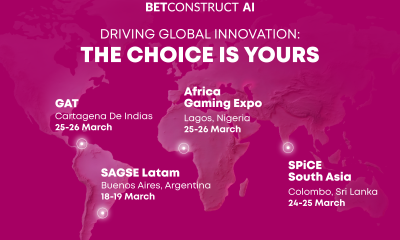
BetConstruct AI to Drive Global Innovation and Strategic Growth AcrossKey Markets in LatAm, Asia, and Africa
-
APOSTAR S.A.7 days ago
GoldenRace Partners with CPT to Launch Virtual Betting in Colombia
-
Bet Builder feature7 days ago
DATA.BET Showcases Advanced Sportsbook Solutions at SiGMA South America 2026