Latest News
Playing Across the Divide: Lessons that iGaming Can Learn from the Video Game Industry

In the rapidly evolving world of iGaming, the industry finds itself at a fascinating crossroads. Gameplay mechanics, social gaming options, player-to-player competitions, and bonus features have become increasingly complex, and player demand continues to grow.
The days of creating slot games with the same old themes and gameplay features are long gone. Players want a more engaging experience, and one place the industry can find this is by looking across the virtual divide into the world of video games.
A Source of Inspiration
Video games are, in many ways, the defining entertainment medium of this generation, and there are a lot of lessons that iGaming can learn from them.
One thing that has become clear in recent years is that players want a more enriching and engaging iGaming experience. There are several ways to do this; one is through incorporating engaging characters, themes, and narratives into gameplay, and the other is through social features, rewards and interactions.
Video games have succeeded in both areas, with the online gaming boom of the last decade or so highlighting how effective community building and player competition can be. Leaderboards, multiplayer options, tournaments, and social interactions drive player engagement and have been effectively utilised.
A More Personalised and Social Experience
iGaming has, for years, been a solitary experience. Players log in to their online casino accounts, hit spin and play alone. The invention of crash games and more enhanced live-casino games has begun to change this, but there is still much room for growth. Developers can take their game offerings to the next level by incorporating these social, interactive elements.
To make these social experiences feel all the more personal, games and casinos can offer players the chance to customise avatars, profiles, and themes. We have seen this be a massive success in many free-to-play battle royale-style games that have dominated the online gaming world for the last decade.
Adding a personalised touch or striving towards more unlockable content keeps players engaged and returning for more. The latter point is something that is easy to imagine entering the world of iGaming, with players tracking progress and unlocking bonuses/features as games progress.
Developers do not need to wait to make these changes regarding compelling themes and narratives. More intriguing characters or stories in gaming can be an incredibly effective way of gaining traction. Story-based game progression, such as what we offer in our Gates of Hellfire slot, can significantly impact the gaming experience.
A Shift in Mindset
These changes must be implemented from the beginning of the creative process. Slot developers, to truly get the most out of their games, must be looking at their games as a form of entertainment right from the very beginning.
If you look at your slot game as a standard slot, that is all it will be. By approaching the creative process differently, developers can find new ways to entertain their audiences and stand out in an incredibly crowded marketplace.
Of course, pretending there are no obstacles to overcome would be foolish. The gaming industry has vast budgets and many more resources than your standard iGaming company. There is also a much stronger demand for regular content in the iGaming space, with many studios streamlining their creative processes and being able to churn out games regularly. These are all obstacles that developers will need to work around, with advancements in technology no doubt playing their part.
Players’ expectations will continue to rise in the coming years, and iGaming companies must be prepared to adapt. The video game industry is an obvious source of inspiration, not just in terms of gameplay and narrative but also for player retention and marketing. Online slots and games must now be able to offer a more complete experience than ever before, and at Gaming Corps, we aim to be a part of that movement.
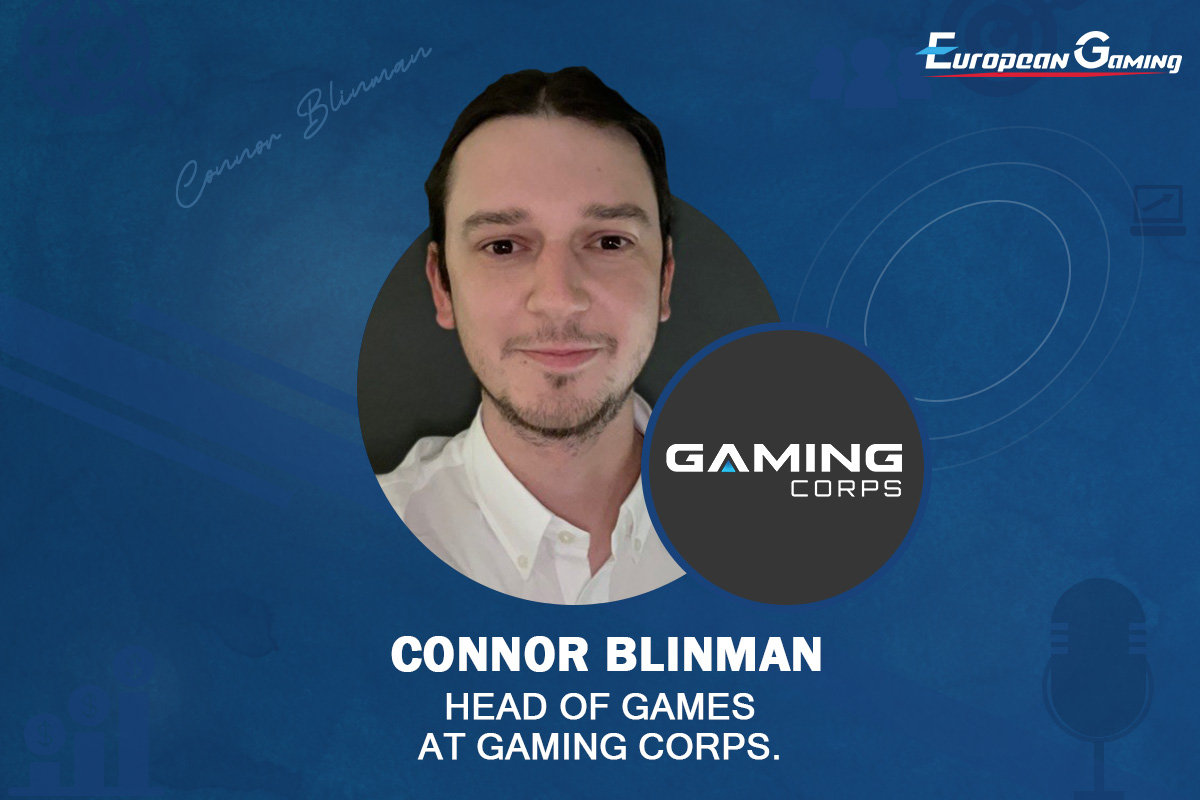
Author: Connor Blinman, Head of Games at Gaming Corps
The post Playing Across the Divide: Lessons that iGaming Can Learn from the Video Game Industry appeared first on European Gaming Industry News.







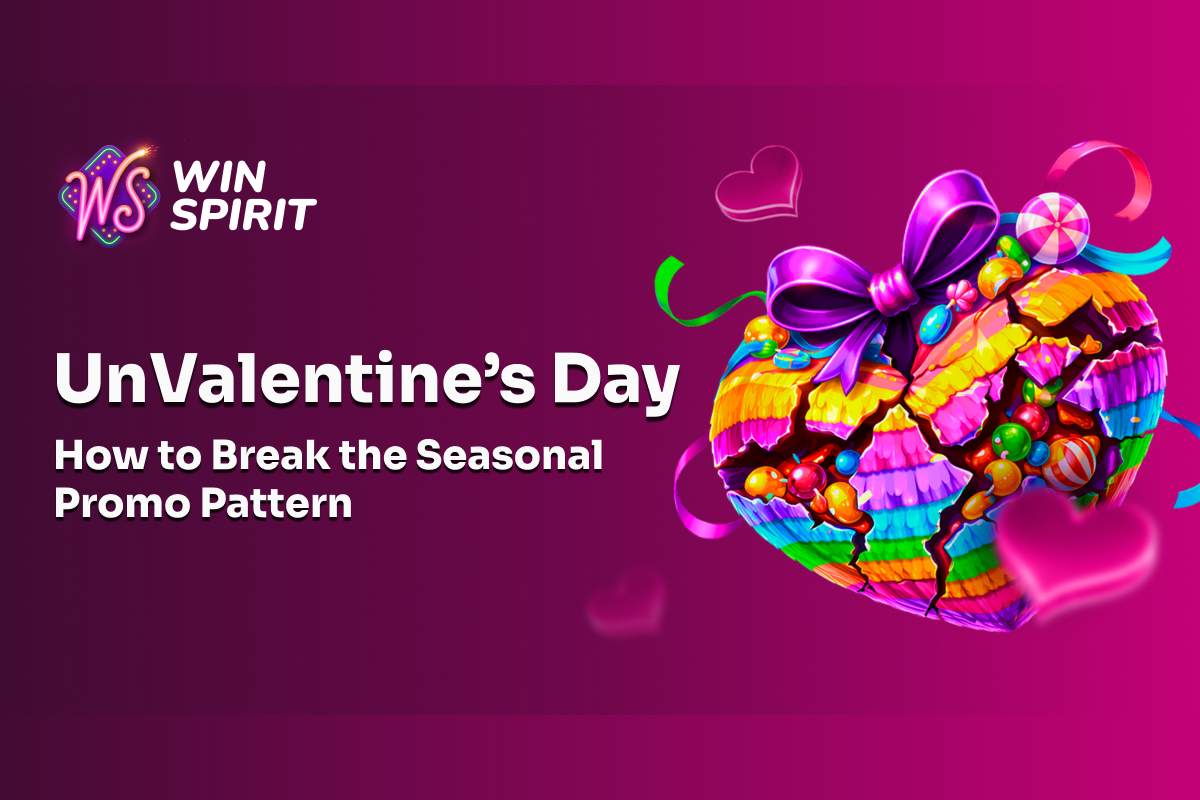
Every February, online gaming platforms look remarkably similar: red-dominated palettes, heart-shaped motifs, and the same “Love is in the Air” promotions. The formula is predictable, the competition intense, and for many players, the seasonal narrative itself has begun to feel hollow.
WinSpirit Casino took a different route. Instead of competing in the same tired Valentine’s language, the brand launched a campaign that embraced a rare player sentiment: a playful eye-roll at clichés. The result — UnValentine’s Day — demonstrates how emotionally intelligent campaigns can drive measurable growth without relying on heavy bonus mechanics.
The Idea
The campaign featured a dedicated landing page with a single interactive mechanic: a poll asking players to vote for the Valentine’s cliché that annoyed them most. Options were framed with gaming metaphors for natural crossover:
-
“Booking a table like catching a Jackpot”
-
“Heart-shaped pizza? Just give me a Wild”
-
“Love songs instead of coin drop sounds”
-
“Love letters without promo codes”
Every participant received 20 Free Spins, positioned as a lighthearted gesture rather than a transactional reward. No complex flows, no heavy mechanics — just a simple, relevant touchpoint.
What the Players Said
Over 5,000 players participated. Key takeaways include:
-
28% voted for “Booking a table like catching a Jackpot”, revealing that for many, Valentine’s Day feels more like a logistical challenge than romance.
-
22% chose “Heart-shaped pizza? Just give me a Wild”, reflecting the gaming audience’s preference for practical rewards over aesthetic gestures.
-
17% picked “Overthinking a spin like it’s a first date”, showing appreciation for humor and acknowledgement of the real player experience.
The remaining 33% were distributed across other options, emphasizing that the dominant sentiments were clear and actionable.
The Impact
During the one-week campaign:
-
+8% player activation frequency
-
+7% overall engagement
-
+5% growth in deposits
-
+4% increase in average bets per player
For a campaign built around a single, simple engagement mechanic with minimal investment, these results highlight a critical insight: emotional relevance can outperform financial incentives. Reactivated players returned for reasons beyond transactional value, and deposit and betting growth suggest emotional engagement can translate into real product behavior.
Part of a Bigger Picture
UnValentine’s Day reflects WinSpirit’s broader strategy of prioritizing emotional resonance over purely promotional tactics. Earlier, the Wish Express holiday campaign invited players, streamers, and partners to write letters to Santa. Over 2,000 wishes were submitted, social reach grew by 169%, and engagement rose 76%. The most memorable moment: WinSpirit covered round-trip flights for a player to reunite with family after eleven years.
Both campaigns — Wish Express and UnValentine’s Day — share a principle: meet players where they actually are. One campaign responded to nostalgic wishes, the other to playful skepticism. Both were rooted in empathy, and both delivered measurable results.
Why the Industry Is Watching
Seasonal, bonus-heavy campaigns are hitting diminishing returns. Acquisition costs are rising, and differentiation in February is structurally challenging. WinSpirit has shown that emotional differentiation is achievable, scalable, and measurable.
The secret isn’t complexity or oversized budgets — it’s insight. Find the emotional undercurrent your audience feels, create a simple way for them to express it, and let the interaction drive brand connection.
Players don’t want more mechanics. They want to feel heard. UnValentine’s Day proves that a single, well-timed question can outperform elaborate campaign architectures.
The post When Everyone Sends Hearts, WinSpirit Asked a Different Question appeared first on Eastern European Gaming | Global iGaming & Tech Intelligence Hub.

Every February, online gaming platforms look remarkably similar: red palettes, heart-shaped imagery, “Love is in the Air” promotions. The formula is familiar, the competition intense — and for a growing share of the audience, the seasonal narrative itself has begun to lose emotional relevance.
WinSpirit Casino chose a different path. Instead of competing within the same seasonal language as everyone else, the brand built a campaign around something players rarely get to express publicly: a lighthearted eye-roll at Valentine’s Day clichés. The result — UnValentine’s Day — is a case study in how emotionally intelligent campaigns can generate measurable product growth without structural dependence on bonus-driven mechanics.
The Idea
The campaign launched a dedicated landing page with a single interactive mechanic: a poll asking players to vote for the Valentine’s cliché that annoyed them most. The options were framed using familiar gaming metaphors, making the crossover feel natural:
“Booking a table like catching a Jackpot” “Heart-shaped pizza? Just give me a Wild” “Love songs instead of coin drop sounds” “Love letters without promo codes”
Participation was acknowledged with 20 Free Spins, framed as a lightweight reward mechanic positioned as a gesture of engagement rather than a transactional incentive. No complex mechanics, no lengthy flows. Just a low-friction touchpoint that felt genuinely relevant to the moment.
What the Players Said?
Over 5,000 players participated. The results reveal more than just a ranking — they offer insight into how players emotionally interpret seasonal rituals.
28% voted for “Booking a table like catching a Jackpot” — the clear winner, confirming that for a significant share of players, Valentine’s Day reads more like a logistics challenge than a romantic occasion.
22% chose “Heart-shaped pizza? Just give me a Wild” — a result that speaks directly to the gaming audience’s core values: practical rewards over aesthetic gestures.
17% picked “Overthinking a spin like it’s a first date” — proof that players appreciate when a brand acknowledges the real texture of their experience, even through humor.
The remaining 33% was distributed across the remaining options — reinforcing the dominance of the leading choice rather than diluting it. For the industry, that’s a useful reminder: the gaming audience is diverse, personal, and pays attention when a brand actually listens.
The Impact
All metrics reflect growth within the one-week campaign period:
+8% frequency of player activation
+7% overall engagement
+5% growth in deposits
+4% growth in average bets per player
For a campaign built around a single, simple engagement mechanic and a low-cost incentive model, the results clearly demonstrate a key insight: emotional relevance can outperform financial motivation in driving short-term audience engagement. The engagement lift reflects reactivated players returning for reasons beyond transactional value. The deposit and betting growth further suggest that an emotional entry point can translate into measurable product behavior.
Part of a Bigger Picture
UnValentine’s Day didn’t emerge in isolation. It reflects a deliberate strategic direction: emotional resonance, rather than promotional mechanics, as the primary driver of engagement.
Earlier this season, WinSpirit’s Wish Express holiday campaign invited players, streamers, and industry partners to write a literal letter to Santa — a gesture of nostalgia in an industry that tends toward hard metrics. Over 2,000 wishes were submitted. Social reach grew by 169%, engagement by 76%. The campaign’s most memorable moment came when WinSpirit covered the cost of round-trip flights so one player could reunite with family members they hadn’t seen in eleven years.
What connects Wish Express and UnValentine’s Day isn’t a tactic — it’s a consistent belief that the most effective brand interactions are the ones that meet people where they actually are. One campaign said: we believe in the power of sincere wishes. The other said: we see you rolling your eyes at the heart-shaped pizza, and so do we. Both are forms of empathy. Both worked.
Why the Industry Is Watching
For operators and marketers tracking the evolution of seasonal engagement, WinSpirit’s approach offers a model worth studying. Bonus-heavy campaigns face diminishing returns. Acquisition costs rise. And in a landscape where every February looks identical, differentiation becomes structurally difficult.
What WinSpirit has demonstrated — in two consecutive seasons — is that emotional differentiation is achievable, scalable, and measurable. The campaign architecture is not complex. The investment is not outsized. What makes it work is the quality of the insight driving it: find the emotional undercurrent your audience is already feeling, create a simple format for them to express it, and let the interaction itself do the brand-building work.
Players don’t want more mechanics. They want to feel that someone is listening. UnValentine’s Day proved that a single well-aimed question — asked at exactly the right moment — can outperform complex campaign architectures.
The post When Everyone Sends Hearts, WinSpirit Asked a Different Question appeared first on Americas iGaming & Sports Betting News.

Every February, online gaming platforms look remarkably similar: red palettes, heart-shaped imagery, “Love is in the Air” promotions. The formula is familiar, the competition intense — and for a growing share of the audience, the seasonal narrative itself has begun to lose emotional relevance.
WinSpirit Casino chose a different path. Instead of competing within the same seasonal language as everyone else, the brand built a campaign around something players rarely get to express publicly: a lighthearted eye-roll at Valentine’s Day clichés. The result — UnValentine’s Day — is a case study in how emotionally intelligent campaigns can generate measurable product growth without structural dependence on bonus-driven mechanics.
The Idea
The campaign launched a dedicated landing page with a single interactive mechanic: a poll asking players to vote for the Valentine’s cliché that annoyed them most. The options were framed using familiar gaming metaphors, making the crossover feel natural:
“Booking a table like catching a Jackpot” “Heart-shaped pizza? Just give me a Wild” “Love songs instead of coin drop sounds” “Love letters without promo codes”
Participation was acknowledged with 20 Free Spins, framed as a lightweight reward mechanic positioned as a gesture of engagement rather than a transactional incentive. No complex mechanics, no lengthy flows. Just a low-friction touchpoint that felt genuinely relevant to the moment.
What the Players Said?
Over 5,000 players participated. The results reveal more than just a ranking — they offer insight into how players emotionally interpret seasonal rituals.
28% voted for “Booking a table like catching a Jackpot” — the clear winner, confirming that for a significant share of players, Valentine’s Day reads more like a logistics challenge than a romantic occasion.
22% chose “Heart-shaped pizza? Just give me a Wild” — a result that speaks directly to the gaming audience’s core values: practical rewards over aesthetic gestures.
17% picked “Overthinking a spin like it’s a first date” — proof that players appreciate when a brand acknowledges the real texture of their experience, even through humor.
The remaining 33% was distributed across the remaining options — reinforcing the dominance of the leading choice rather than diluting it. For the industry, that’s a useful reminder: the gaming audience is diverse, personal, and pays attention when a brand actually listens.
The Impact
All metrics reflect growth within the one-week campaign period:
+8% frequency of player activation
+7% overall engagement
+5% growth in deposits
+4% growth in average bets per player
For a campaign built around a single, simple engagement mechanic and a low-cost incentive model, the results clearly demonstrate a key insight: emotional relevance can outperform financial motivation in driving short-term audience engagement. The engagement lift reflects reactivated players returning for reasons beyond transactional value. The deposit and betting growth further suggest that an emotional entry point can translate into measurable product behavior.
Part of a Bigger Picture
UnValentine’s Day didn’t emerge in isolation. It reflects a deliberate strategic direction: emotional resonance, rather than promotional mechanics, as the primary driver of engagement.
Earlier this season, WinSpirit’s Wish Express holiday campaign invited players, streamers, and industry partners to write a literal letter to Santa — a gesture of nostalgia in an industry that tends toward hard metrics. Over 2,000 wishes were submitted. Social reach grew by 169%, engagement by 76%. The campaign’s most memorable moment came when WinSpirit covered the cost of round-trip flights so one player could reunite with family members they hadn’t seen in eleven years.
What connects Wish Express and UnValentine’s Day isn’t a tactic — it’s a consistent belief that the most effective brand interactions are the ones that meet people where they actually are. One campaign said: we believe in the power of sincere wishes. The other said: we see you rolling your eyes at the heart-shaped pizza, and so do we. Both are forms of empathy. Both worked.
Why the Industry Is Watching
For operators and marketers tracking the evolution of seasonal engagement, WinSpirit’s approach offers a model worth studying. Bonus-heavy campaigns face diminishing returns. Acquisition costs rise. And in a landscape where every February looks identical, differentiation becomes structurally difficult.
What WinSpirit has demonstrated — in two consecutive seasons — is that emotional differentiation is achievable, scalable, and measurable. The campaign architecture is not complex. The investment is not outsized. What makes it work is the quality of the insight driving it: find the emotional undercurrent your audience is already feeling, create a simple format for them to express it, and let the interaction itself do the brand-building work.
Players don’t want more mechanics. They want to feel that someone is listening. UnValentine’s Day proved that a single well-aimed question — asked at exactly the right moment — can outperform complex campaign architectures.

-

 Latest News6 days ago
TRUEiGTECH Unveils Enterprise-Grade Prediction Market Platform for Operators
-
Canada6 days ago
Rivalry Corp. Announces Significant Reduction in Operations and Evaluation of Strategic Alternatives
-
Acquisitions/Merger6 days ago
Boonuspart Acquires Kasiino-boonus to Strengthen its Position in the Estonian iGaming Market
-
Firecracker Frenzy™ Money Toad™6 days ago
Ancient fortune explodes to life in Greentube’s Firecracker Frenzy™: Money Toad™
-
Blueprint Gaming4 days ago
Blueprint Gaming unleashes Frankenstein’s Fortune blending dynamic modifiers with multi-path bonus offering
-
Big Daddy Gaming5 days ago
Big Daddy Gaming® Expands European Footprint After MGA Licence Approval
-
Africa6 days ago
Meridianbet Marks 17 Years in Tanzania with Over 500 Community Initiatives
-
Africa6 days ago
EveryMatrix gains South Africa licence with customer launch pipeline on the rise