Latest News
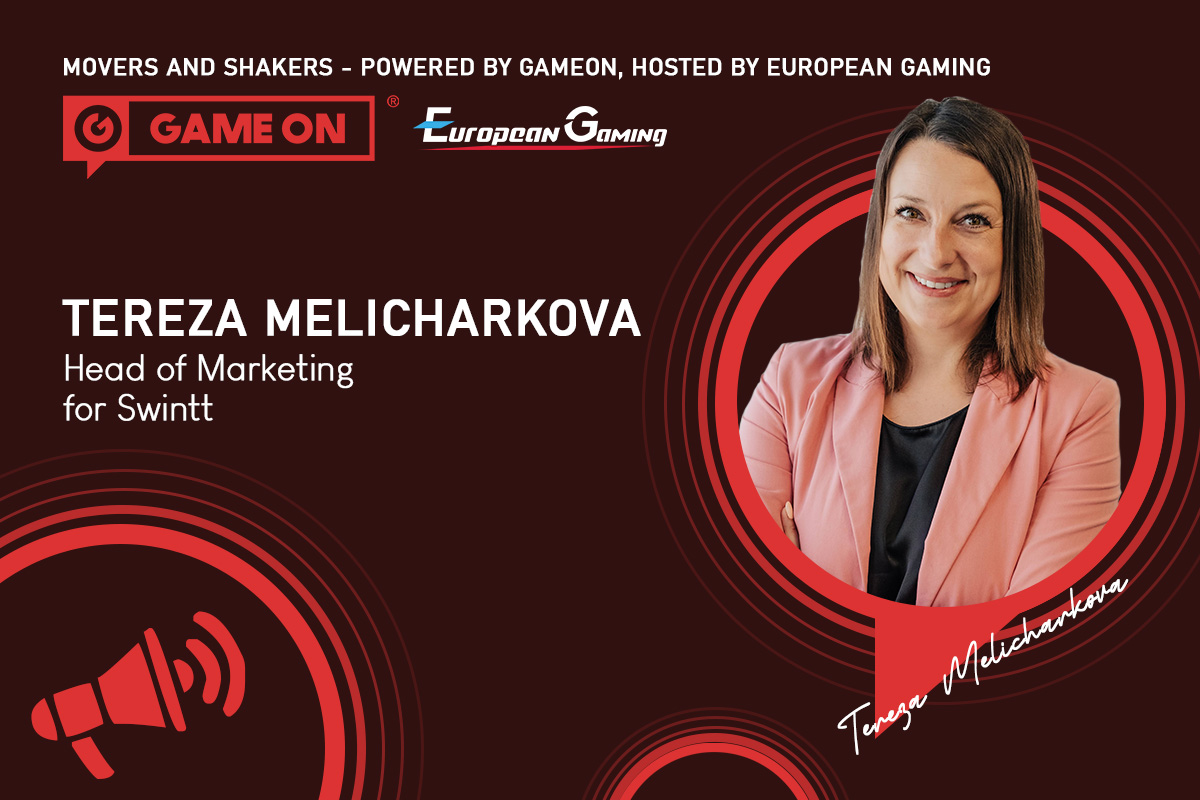
Movers and Shakers: Tereza Melicharkova: There’s no one-size-fits-all solution for creating sustained engagement

“Movers and Shakers” is a dynamic monthly column dedicated to exploring the latest trends, developments, and influential voices in the iGaming industry. Powered by GameOn and supported by HIPTHER, this op-ed series delves into the key players, emerging technologies, and regulatory changes shaping the future of online gaming. Each month, industry experts offer their insights and perspectives, providing readers with in-depth analysis and thought-provoking commentary on what’s driving the iGaming world forward. Whether you’re a seasoned professional or new to the scene, “Movers and Shakers” is your go-to source for staying ahead in the rapidly evolving iGaming landscape.
Writing for European Gaming, Tereza Melicharkova, Head of Marketing for Swintt, discusses the importance of knowing each individual target audience when creating a software portfolio that caters for the widest cross-section of players possible.
In an industry as dynamic as iGaming where new trends come and go, player preferences are constantly evolving and what constitutes the blueprint for a successful release can differ wildly from one market to the next, Swintt has always believed that the key to long-term success lies in creating a content portfolio that can appeal to as broad a cross-section of customers as possible.
While it’s true that there’s no one-size-fits-all solution for creating casino games that consistently hit the mark with players and create sustained engagement for the operators that host them, there’s definitely something to be said for diversifying your offering so that you always have the opportunity to tailor the content provided via your partnerships to account for all local audiences.
In doing so, you’ll ensure that you’re not effectively placing all your eggs in one basket by sticking to a single tried and tested formula, but are instead building a library that is capable of tapping into regional differences while still retaining the hallmarks of your brand. It’s precisely this line of thinking that led us to developing the multiple product lines that exist within the Swintt portfolio.
Balancing Legacy and Innovation
For those who are unfamiliar with how Swintt operates, we always sort our releases into one of three main categories. The two founding product lines in our software portfolio are SwinttPremium and SwinttSelect, but we’ve also diversified our offering further with Elysium Studios – Driven by Swintt titles that have arrived following our acquisition of the developer earlier this year.
Going through the different product categories one-by-one, the Swintt Premium range was developed with a view to appealing to audiences who have a fondness for the kind of slot you’d normally find in a land-based gaming venue. Typically combining classic casino-style graphics and sound with familiar fruit-based symbols, each Premium release offers a recognisable, easy-to-trigger feature such as our signature “Book” Free Spins or the popular “Pearl Respins” bonus.
Successful examples of SwinttPremium slots include releases in the aforementioned “Book” series like Seven Books Unlimited as well as games like Big Max Pots and Pearls – and what we’ve seen from these titles is that they generally perform well in markets like Germany and the Netherlands, where the average player is a little older and more traditional tastes typically prevail.
Of course, while it’s obviously important to cater for these “legacy” players, doing so should not come at the cost of innovation and supplying a more immersive slot experience to the newer generation – and this is where our SwinttSelect line-up comes in. Known for their state-of-the-art designs and pioneering bonus features, our Select games push the boundaries of what’s possible from a slot and have proved incredibly popular in tech-savvy markets like the UK and Scandinavia.
In particular, our XtraSeriesTM games – including our most successful release to date, Aloha Spirit XtraLockTM – have really helped showcase what a talented team of developers we have by providing a range of unique and engaging themes as well as bonus features players won’t find from any other provider. By offering these titles, we ensure Swintt is capable of catering to the needs of a wide range of players while also reflecting the demands of each market we operate in.
Having A Mobile-First Mindset
As I referenced earlier, Swintt’s acquisition of Elysium Studios in January this year really was a major step forward for the company, as it enabled us to not only further diversify the portfolio of content that we offer to partners, but also to double down on all of the things that have made our Select line-up such a success by introducing even more ambitious designs and thrilling features.
As a provider that has carved out a fairly specialist niche in the industry for creating game mechanics that draw on a variety of social, video and casino gaming factors, Elysium Studios was always going to be a key part of how Swintt looks to engage with the next generation of casino customer. Featuring cutting-edge designs, quirky themes and a huge variety of features in every release, the Elysium Studios – Driven by Swintt range really has taken our offering to new heights.
What is perhaps particularly notable about Elysium Studios is their mobile-first approach to game design – and while this has always been a big priority at Swintt, by working together with them, we’ve definitely taken things to the next level. With mobile now accounting for the majority of all online casino play, having immersive bonus features that utilise tap and swipe touch-screen functionality has been an incredibly powerful tool in helping us connect with modern audiences.
We’ve already seen from the success of games like Law of Gilgamesh and Fox Tale that there’s a real demand among newer players for titles that replicate the user experience of the popular mobile games that they’ve grown up with – and if the buzz around our upcoming release, I Hate Fairytales is anything to go by, we’ll have many more success stories with the studio in the future.
It’s All About Entertainment
Of course, while having several strings to our bow has been a key component of Swintt’s success in penetrating multiple regulated markets, it’s equally important that for all our different product lines, we’ve never lost sight of who we are and what we stand for. We see online casino gaming primarily as a form of entertainment – and whether they’re playing Premium, Select or Elysium Studios releases, our players can always be sure they’ll be getting a fun and exciting experience.
We pride ourselves on providing top quality titles with a real flair for the creative, and this definitely extends to the way that we market ourselves to partners. From our stand at SBC Lisbon that promoted I Hate Fairytales with a free-to-enter hammer strength competition to the Swinttopia board game we created to celebrate our five year anniversary, we’ve always tried to find inventive ways to promote our products and this has been a major factor in how we’ve grown.
By retaining this key creative strand across our entire portfolio, we’ve put together a product line-up that is varied enough to tap into the unique demands of each individual market without ever compromising the principles that have enabled Swintt to truly stand out as a brand – and in an industry as competitive as iGaming, that’s a really powerful thing to have working in your favour!
The post Movers and Shakers: Tereza Melicharkova: There’s no one-size-fits-all solution for creating sustained engagement appeared first on European Gaming Industry News.







REEVO has announced that it is now live with Betsson in the Brazil market, marking another important milestone in the companies’ expanding global partnership. This launch represents the next step in REEVO’s rollout across Betsson’s international markets and reinforces the company’s growing presence across Latin America.
As part of the launch, Betsson Brazil now features both REEVO’s aggregation platform and REEVO’s in-house games, delivering a powerful combination of premium third-party content alongside REEVO’s original titles through a single, seamless integration.
Brazil represents one of the most dynamic and fast-growing gaming markets in the region. By going live with Betsson in this market, REEVO continues to strengthen its international distribution network while supporting leading operators with scalable technology, engaging content, and efficient integration.
Karl Grech, Head of Business Development at REEVO, said: “Going live with Betsson in Brazil is a fantastic milestone for REEVO and an important step forward in our expanding partnership. Brazil is one of the most exciting markets in the region, and we are proud to bring both our aggregation platform and our in-house games to Betsson’s players. This launch reflects our commitment to supporting operators with high-quality content, reliable technology, and scalable solutions that help them grow.”
Andrea Rossi, Commercial Director for LatAm at Betsson, said: “The launch of REEVO’s content on our Brazilian platform expands the range of entertainment available to our players in one of the fastest growing markets in the region. Brazil is an important market for Betsson, and partnerships like this allow us to continue strengthening our offering with high quality content that reflects local player preferences. We look forward to working with REEVO as we continue to grow in the newly regulated Brazilian market.”
The post REEVO Goes Live with Betsson in Brazil appeared first on Americas iGaming & Sports Betting News.
Quick Custom Intelligence (QCI), a leading provider of AI-driven operations software for tribal gaming resorts, announced it will showcase its evolving QCI Agentic Platform at the Indian Gaming Association (IGA) Tradeshow & Convention, March 31–April 2, 2026, at the San Diego Convention Center (Booth #2735).
The QCI Agentic Platform reflects the continued advancement of the company’s enterprise system, enabling operators to move from real-time insight to real-time action across gaming, marketing, player development, and hotel operations. Designed for on-premise and hybrid environments, the platform supports secure, property-level AI deployment while maintaining full operational control.
Rather than introducing a new system, QCI’s approach extends the capabilities operators already use—bringing analysis and execution closer together within a unified operational environment.
“This is a continuation of the platform our customers already rely on. We’re building on what works and extending it, so operators can act on information faster, without changing the way their business runs,” said Dr. Ralph Thomas, Co-Founder and CEO of QCI.
The QCI Agentic Platform builds on QCI’s established product suite, including:
• AGI56.1, a major platform release featuring more than 1000 enhancements across operations
• Chatalytics, QCI’s conversational analytics interface for real-time data access
• QCI Dispatch, a new core operational tool supporting real-time coordination and execution
Together, these capabilities enable operators to unify data, streamline workflows, and respond more quickly to changing conditions across the property.
Attendees will experience how QCI connects data, decision-making, and execution within a single operational system.
“We’re focused on practical improvements that help teams do their jobs more effectively. This is about making systems more responsive, more connected, and easier to use in day-to-day operations,” added Thomas.
The post QCI to Showcase Agentic Platform Capabilities at IGA 2026 appeared first on Americas iGaming & Sports Betting News.

Eeze, the next-generation casino supplier, has announced a comprehensive global distribution agreement with EveryMatrix, extending the reach of its live dealer and upcoming slots portfolio to EveryMatrix’s worldwide partner network.
Under the partnership, Eeze’s full range of live dealer titles, including its recently launched Fusion Roulette, alongside forthcoming slot releases, will be made available across EveryMatrix’s Game Aggregator Network. The deal covers EveryMatrix’s active markets globally, marking a key milestone for the supplier’s international expansion.
Mikko Hoglund, Partnership Manager at Eeze, said:
“Partnering with EveryMatrix is an important moment for us as we look to push our games to a wider network of players than ever before. We have a lot of exciting product releases to come in the next few months, and know that these games, as well as our existing portfolio, will be well received across EveryMatrix’s customer base.”
Bjorn Sjoberg, Chief Commercial Officer at EveryMatrix, added:
“We are very pleased to be adding Eeze’s full product suite to our aggregation offering. With best-in-class live products and an exciting array of RNG games on the roadmap, we’re confident that our customers will enjoy the differentiation these titles bring to market.”
With this partnership, Eeze strengthens its footprint in regulated markets and positions its Fusion Roulette and slot titles for maximum visibility, giving operators a compelling mix of content to offer players worldwide.
The post Eeze signs global partnership with EveryMatrix appeared first on Eastern European Gaming | Global iGaming & Tech Intelligence Hub.

-

 Centurion Winner Grand Chance™6 days ago
New from Inspired: Luck It Up™ and Centurion Winner Grand Chance™ available online & on mobile
-
Blazin' Bonus6 days ago
Booming Games releases Blazin’ Bonus
-
Australasian Hospitality and Gaming Expo7 days ago
IGT Showcases Integrated Gaming, Systems, and FinTech Innovations Designed to Drive Growth at Australasian Hospitality and Gaming Expo 2026
-
Cristiano Blanco CEO of SpinCore Group6 days ago
SpinCore Group Enters Finnish Market via Finnplay Partnership
-
Conferences6 days ago
NOVOMATIC Gaming Colombia to Showcase its Latest Innovations at GAT Cartagena 2026
-
Alberta market7 days ago
Soft2Bet Evaluates Alberta Market Entry to Strengthen its Canadian Footprint
-
Enjoy6 days ago
ENJOY Unveils Hotfire Diamonds XXL to Elevate an Iconic Franchise
-
Aristocrat Gaming7 days ago
Aristocrat Gaming to Participate in Australian Hospitality & Gaming Expo