Compliance Updates
How payments can drive iGaming operators’ growth as they navigate an evolving regulatory landscape

With iGaming regulation changing in multiple European and Latin American markets, Paysafe’s Rory Howard considers the invaluable role of payments
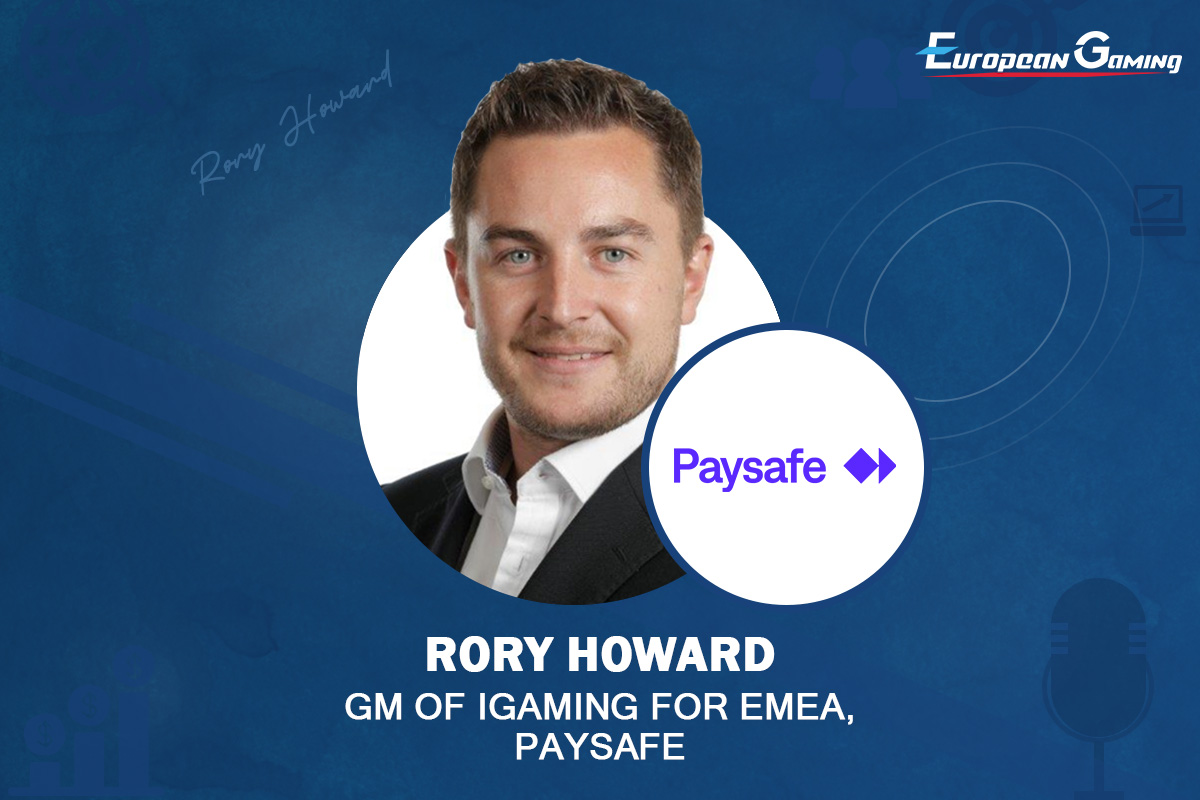
By Rory Howard, GM of iGaming for EMEA, Paysafe
After enacting new gambling legislation at end-2023, Brazil is expected to launch its iGaming market on January 1st. With 215m people, Latin America’s most populated country is almost certain to rapidly become a major global jurisdiction. Annual gaming revenue is forecast to grow to $4.9bn within five years, according to Vixio.
While the new Brazilian market offers an important opportunity for operators, licensing includes significant regulations to negotiate, including around payments. With other markets also enacting or considering more robust iGaming regulation, the operators that successfully navigate this new space can make change pay.
From Sao Paulo to Sweden via the UK
In April, Brazil published an Ordinance on operators’ payment requirements, preventing players from depositing using credit cards, cash, cheques, pay slips, bank slips and cryptocurrencies. Withdrawals of winnings will only be possible via electronic transfer between the operator and the player’s bank account, which must be a financial institution authorized by the Brazilian Central Bank.
Such restrictions, especially around credit cards, are part of a broader global trend to promote responsible gambling. In neighbouring Argentina, the Buenos Aires legislature is currently considering a bill to ban credit cards and social assistance debit cards for online betting in the capital region’s regulated market.
Over in the UK, operators have not been able to offer credit card deposits since the Gambling Commission restricted this in April 2020. More recently, the UK government’s Gambling Act Review white paper, which was released in April 2023, has resulted in more robust know your customer (KYC) checks for operators, including on affordability. From August all UK bettors depositing a net £500 needed to be checked, lowered to net deposits of £125 from February.
And UK operators are also facing marketing restrictions. From summer 2026, front-of-shirt Premier League football club sponsorships will no longer be an option following the association’s voluntary ban. In addition, the government is currently considering whether bonuses should be tightened, though it appears unlikely that the UK will go as far as Brazil’s complete ban on bonusing and free bets.
The UK isn’t the only European country strengthening its iGaming regulatory framework, with Sweden only allowing operators to offer players a single sign-up bonus following the Scandinavian country’s re-regulation of the market in 2019. More recently, the Swedish gambling regulator has come out in favour of the government’s proposed ban on credit cards for iGaming from April 2025.
Playing and paying it forward
With Sweden’s eastern neighbour, Finland, looking to liberalize its government monopoly with a licensing system for private operators by early 2027, the only constant when it comes to iGaming regulation is change. While regulatory change providers operators with opportunity, they need to have a solid strategy in place.
The global regulatory space is highly complex and diverse, so it’s essential for operators to develop a robust compliance framework that covers all the different legal requirements for each global market. Against the backdrop of the responsible gambling shift, KYC protocols have never needed to be more granular, requiring automation and specialised software for the highest accuracy and efficiency.
Payments are an indispensable element in negotiating the new regulatory landscape. Every market is unique, including when it comes to payments. If a jurisdiction restricts credit cards or other payment methods, operators’ cashiers need to include alternatives such as digital wallets, eCash or even pay-by-bank options to ensure players don’t abandon a brand before they become a customer.
With markets restricting bonuses and other marketing channels like sponsorships, operators need to ensure they are getting payments right. Payments – including quick payouts and deposits and the availability of preferred payment methods – are much more important factors in players’ selection of online sportsbooks than sign-up offers and sports sponsorships, according to Paysafe’s 2024 research.
More broadly, it’s also vital for operators to choose the right payment provider. Partnering with a payments company with global experience and which offers a comprehensive range of its own and third-party payment solutions, including local payment methods (LPMs) like Brazil’s Pix, will enable operators to effortlessly tailor their cashiers to a particular market.
Whether in Brazil, Argentina, the UK, Sweden or Finland, the global iGaming market is diversifying from a regulatory perspective. While the changing space poses significant challenges, it gives savvy operators an opportunity to ensure their brands and cashiers are not only compliant but have a completive edge that will ultimately pay out.
Rory Howard
As General Manager for iGaming in the EMEA region at Paysafe, Rory oversees the company’s online gambling business in the U.K. and continental Europe as well as neighbouring regional markets. He has close to 20 years’ experience in payments and fraud analysis, with a strong focus on the iGaming space. Rory’s previous roles include payment leadership positions at The Rank Group, Racing Stars, Gamesys, and Eyas Gaming.
The post How payments can drive iGaming operators’ growth as they navigate an evolving regulatory landscape appeared first on European Gaming Industry News.













Asia
KONAMI GROUP’s Konami Gaming Inc. First to Submit Manufacturer License Application in Japan’s Emerging IR Market


KONAMI GROUP CORPORATION’s long-established gaming & systems group company Konami Gaming Inc. announced it has become the first manufacturer to submit license applications with the Japan Casino Regulatory Commission (JCRC), government regulatory agency set forth by The Cabinet of Japan. Additionally, Konami is the first manufacturer to file across all applicable license categories. These filings represent milestone events for the nation’s regulatory framework, as Japan’s emerging integrated resort (IR) market progresses in responsible development. As a leading manufacturer of casino games and technology in 400+ regulated markets worldwide, Konami is taking proactive measures in support of the Japan IR market, highly relevant to the organisation’s rich heritage as a Japanese company.
“Konami’s early filing demonstrates our commitment and readiness to engage constructively with Japan’s regulatory framework from the outset. We have approached this process with a focus on transparency, preparation, and alignment with the stringent standards established by the JCRC,” said Lori Olk, senior vice president & chief compliance officer at Konami Gaming Inc.
Construction is currently underway for the first integrated resort in Japan—an expansive development planned for 2030 opening by one of the world’s largest casino and entertainment operators. Against this backdrop, Konami’s early submission positions the company to participate during the formative stages of this emerging regulated market. Committed to the long-term health of Japan’s IR market, Konami has invested significant resources in localisation, documentation and operational planning to ensure alignment with the nation’s legal, regulatory and cultural expectations. The supplier has leveraged its longstanding compliance infrastructure, governance processes and global licensing experience to fulfill detailed requirements of the Japanese regulatory framework.
“This milestone in Konami’s application process with the JCRC represents a significant, coordinated effort across multiple business units and jurisdictions, supported by decades of experience operating in highly regulated gaming markets worldwide. As Japan continues to expand its IR framework, Konami remains focused on supporting regulatory objectives and partnering with stakeholders to deliver compliant, high-quality gaming solutions tailored to the needs of the Japanese market,” said Tom Jingoli, president & chief operating officer at Konami Gaming.
The post KONAMI GROUP’s Konami Gaming Inc. First to Submit Manufacturer License Application in Japan’s Emerging IR Market appeared first on EE Gaming | Global iGaming & Tech Intelligence Hub.

The Danish Gambling Authority has published its annual report describing the authority’s work on illegal gambling. In the 2025 report, you can among other things read more about the Authority’s partnerships, website blocking efforts and visits to upper‑secondary education institutions.
Each year, the Danish Gambling Authority publishes a report explaining the rules that determine when gambling is legal in Denmark, and reviewing the initiatives carried out in the past year to combat illegal gambling.
One of the initiatives conducted annually as part of the fight against illegal gambling is the blocking of illegal gambling websites. In 2025, the DGA obtained district court orders to block 334 websites offering illegal gambling. The Authority has entered into a new cooperation agreement with the Danish Telecommunications Industry (Teleindustrien), which provides the basis for blocking mirror sites without a prior court order when the court has already ruled that the content of the original site is illegal.
The DGA also participates in several national and international partnerships focused on combating illegal gambling. For example, through a collaboration with Google, the DGA can report illegal gambling apps in Google Play, after which Google may remove the illegal content. Anders Dorph, Director of the Danish Gambling Authority, also serves as Chair of GREF (Gaming Regulators European Forum), where the focus is on supporting each other in combating illegal gambling and keeping one another updated on trends observed across the illegal gambling market in Europe.
2025 was also the year in which the DGA was once again invited to visit upper‑secondary education institutions across the country. There was an increasing number of inquiries from sports clubs in 2025 requesting gambling‑related presentations for both amateur and elite clubs, and the DGA’s team of presenters delivered 100 classroom presentations last year.
The post Spillemyndigheden Publishes Report on Illegal Gambling appeared first on EE Gaming | Global iGaming & Tech Intelligence Hub.

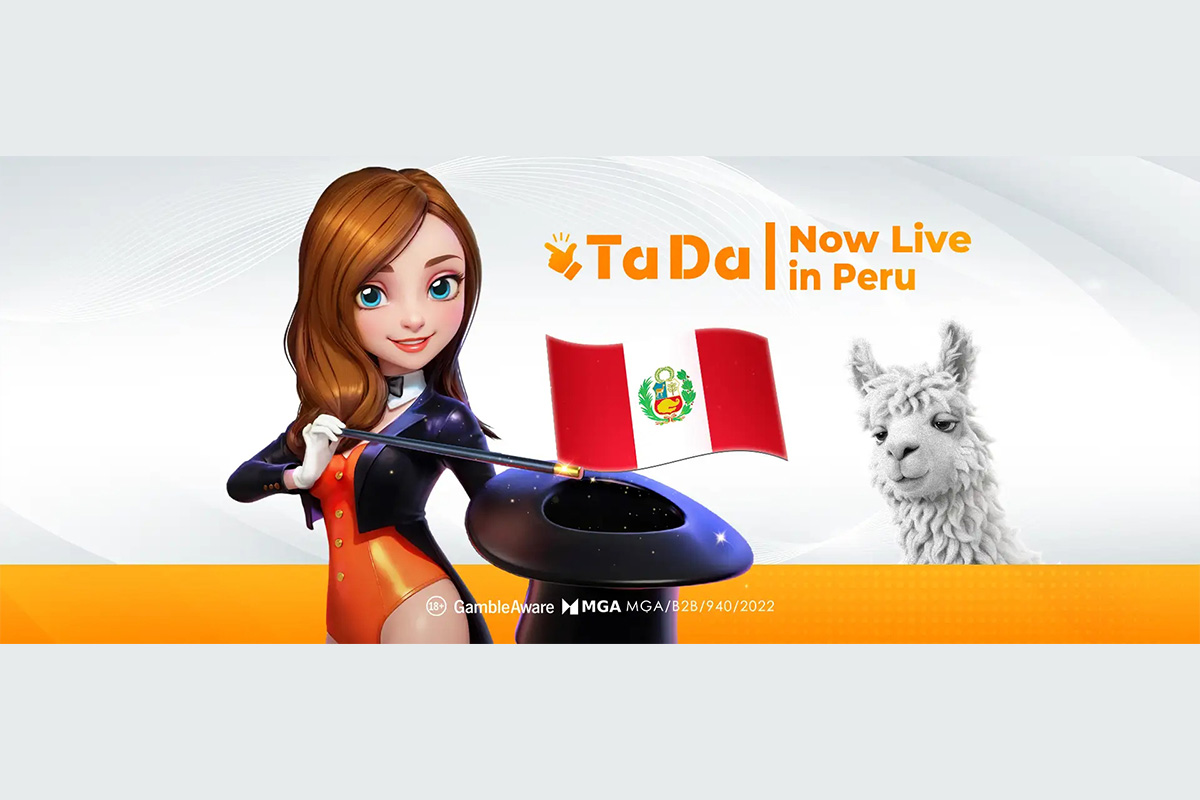
TaDa Gaming has officially secured an online gaming licence from Peru’s Ministry of Foreign Trade and Tourism (MINCETUR),
This marks another milestone in the company’s strategic expansion across Latin America’s regulated iGaming markets and reinforces its reputation as a trusted and responsible global content provider.
Peru has rapidly emerged as one of Latin America’s fastest growing and regulated online gaming markets following the implementation of its licencing framework. With regulatory certainty creating new opportunities for operators and suppliers alike, TaDa has focused on Peru as a key destination within its long-term Latin American growth strategy.
MINCETUR approval was received prior to TaDa’s successful debut at the Peru Gaming Show (PGS) 2026 in Lima, where the company announced its launch with Peru’s leading operator, Apuesta Total, through long-standing distribution partner Bragg Gaming.
15 certified TaDa titles are currently available in Peru, with additional games scheduled for release as the company continues to expand its local offering.
TaDa’s proven success in regulated jurisdictions across Africa, Europe, North America and the UK, as well as Argentina, Brazil, Chile and Mexico, has been built on its highly effective glocalisation strategy.
This combines internationally successful core game mechanics with expertly localised content designed to meet the cultural preferences and playing habits of individual markets.
Alongside its award-winning slot portfolio, TaDa’s distinctive fishing-shooting games continue to attract new audiences through their social, skill-based gameplay and broad demographic appeal, especially to younger and new to iGaming audiences.
Its growing gamification ecosystem is designed to enhance player engagement while supporting responsible gaming. GiftCode, WIN CARD, Hot Hand, Highlights, Daily Rewards and Missions provide operators with powerful retention mechanics that deliver measurable value throughout the player lifecycle.
TaDa’s continued investment in regulated markets reflects the company’s broader strategy of sustainable growth. By working closely with regulators, operators and aggregation partners, the supplier continues to deliver compliant entertainment expertly tailored to local player demands.
Ray Lee, Director of Business Development at TaDa Gaming, said: “Securing the MINCETUR licence was another major achievement in our global strategy to be present in all regulated markets.
“There is strong demand for differentiated and expertly localised content in Peru. We are confident that our brand for safe and trustworthy gaming experiences alongside our reputation for working as growth partners with our clients will enable us to succeed.”
The post TaDa Gaming Accelerates LatAm Growth with Peru Licence Approval appeared first on Americas iGaming & Sports Betting News.

-

 Austria7 days ago
Austrian Brand Value Study: NOVOMATIC Defends Top Ranking
-
Affiliate Industry7 days ago
Hub Affiliations Triumphs at the iGB Affiliate Awards 2026: Winner of Programme/Network Campaign of the Year
-
Latest News7 days ago
N1 Partners at iGB L!VE 2026: Bringing Together Affiliates, Art and Innovation
-
Amusnet7 days ago
Amusnet Releases its Latest Video Slot “Golden Snake”
-
Azerbaijani Parliament7 days ago
Azerbaijan to Impose Tougher Penalties for Illegal Online Gambling
-
Amusnet7 days ago
Weekend Reels | Week 27: Slot Drops & Trends
-
Betsson7 days ago
REEVO Goes Live with Betsson in Paraguay
-
affiliate marketing7 days ago
Hub Affiliations wins iGB Affiliate Awards 2026 campaign prize