eSports
R&D rethink needed for sportsbooks to harness esports’ power


 Esports betting is still grappling with a perception problem amongst operators. Despite the leaps and bounds in product development made by suppliers – particularly in the last two years – esports hasn’t shaken off the image built in the late 2010s.
Our good friend, Oliver Niner, Head of Sales at PandaScore, has been kind to share the below article with us.
There’s scepticism around esports betting’s value, how well it can actually perform and what’s needed to make it appeal to bettors. A big part of that comes down to perception, which shapes the research and development (R&D) choices made by each operator.
Self-fulfilling prophecy?
Operators who have put the research and development (R&D) resources into esports are seeing excellent growth, while others are still treating it like part of a long tail. The lack of a uniform approach to esports often translates into hesitancy to be bullish and invest in esports.
Whereas in the United States, post-PASPA sports betting has exploded and operators are seeking to capture as much territory and market share as possible because in most cases, you switch the lights on and the money comes in. It’s, of course, good business sense to take opportunities like this – you can apply the same templates used elsewhere on an incredibly lucrative market.
This kind of approach has been attempted for esports and hasn’t found the same success. Granted, the legislation for betting on esports has been somewhat slower than that of sports betting and iGaming.
However, bullish operators have acknowledged the fact that esports hasn’t found the same success in regulated states and asked what can be done differently, while for others, esports has been thrown into the too-hard basket or relegated to the bargain bucket.
For the latter, the fate of the esports vertical becomes a self-fulfilling prophecy – especially if an operator already using a budget esports product that throttles its very growth.
It takes two to tango
When esports is discussed in broader betting circles, you’ll often hear different versions of the same talking point: the problem with esports is no one is doing it well, it doesn’t innovate.
This argument is a case of the pot calling the kettle black. Esports is a driver of innovation, and it is sportsbook R&D that is holding it back.
Multiple suppliers on the market are investing significant resources into R&D, and bullish operators are leveraging these product innovations to acquire new customers and create engagements made for the internet age.
There are understandable reasons why sports betting doesn’t innovate. It’s largely because operators focus on acquisition, entering new territories and spending money on data rights. But the actual R&D on sportsbook products is left lacking, with ever-increasing cost-per-acquisition (CPA) numbers a clear symptom of this.
It means that if an operator does decide to use or acquire an esports specialist supplier but does little to cater its product and attempts to just lay the sports betting template over the top, of course performance will be throttled.
It’s like putting a Ferrari engine in a Prius – no offence to Toyota or Prius owners.
The same problem exists on the platform supplier front. Platforms are understandably focused on compliance and getting customers live, not necessarily improving models or their products.
Even the idea that if you just acquire an innovative company the problem is solved or you have found the solution, doesn’t hold water. In many cases, the company is acquired and plenty of noise is made about it, but there’s little organisational investment in R&D afterwards.
It’s not just in esports
These problems extend to customer acquisition and marketing for most emerging markets, not just esports. There’s a rush to use the same old playbook in newer sectors because it’s easy.
The fantasy vs. house sector in the US is already experiencing an acquisition arms race. As analyst Dustin Gouker points out, deposit match bonuses for new users on fantasy vs house products have jumped from $100 to as high as $500 in some places.
This is the same race that played out in sports betting and despite the costs, there’s little effort from most operators to try something different. There’s less work when you just put the same acquisition template on an emerging sector and call it a day. This seems to be an accepted practice in the industry, for better or for worse.
Esports betting success requires ongoing dialogue
Rather than attempting to wedge esports into hegemonic sportsbook approaches, sportsbooks need to take a completely unique approach.
The fact is the betting sector has barely scratched the surface – communities of esports fans are still dormant. Canadian operator Rivalry has built a successful, esports-first business by embracing the ever-changing internet culture that esports inhabits. French esports organisation Karmine Corp recently sold out a 30,000-person stadium for an event with no prize money up for grabs.
Innovative products developed on the supplier side like microbetting and betbuilders are only half of the equation.
Maximising esports revenues requires institutional investment, ongoing R&D and collaboration between suppliers and operators to create products and experiences. This includes having staff on the operator side that can drive and push the product further, and crucially, rethinking current sportsbook strategies and practices.
Building experiences for betting’s greatest emerging market – one that caters to your future core audience – takes investment, innovation and a willingness to experiment. If the industry wants to make the most of the Millennial and Gen Z audience that will become its primary customers, investment into R&D and close collaboration between suppliers and operators is needed. Many hands makes light work.












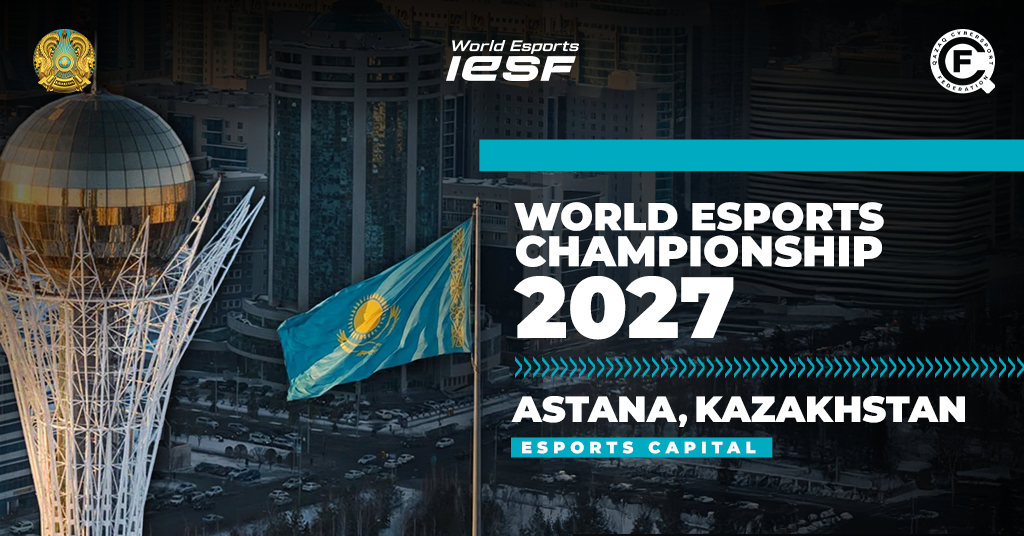
IESF signs host agreement with Kazakhstan’s Ministry of Tourism and Sports and the Qazaq Cybersport Federation in Astana.
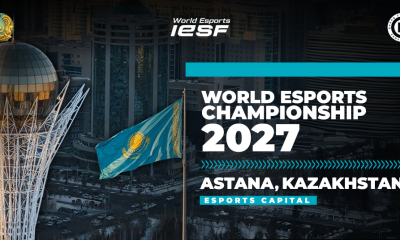
Astana has been confirmed as the host city for the IESF World Esports Championship 2027 (WEC27), following a host agreement signing ceremony involving the International Esports Federation (IESF), the Ministry of Tourism and Sports of the Republic of Kazakhstan, and the Qazaq Cybersport Federation.
IESF said the event is expected to draw participation across more than 150 IESF Member Federations through the qualifiers, with national teams competing via IESF-recognized national member structures.
“WEC27 will be more than a championship. It will be a global celebration of nations, athletes, and the future of esports,” said Vlad Marinescu, President of IESF. “For every player, there is no greater honor than competing under their national flag and officially representing their nation on the world stage. That is what makes the World Esports Championship so powerful and so unique. In 2027, Astana will welcome the world and proudly stand as the Esports Capital in the World of Esports, uniting our Member Federations, athletes, fans, and communities. Kazakhstan has shown remarkable vision, ambition, and commitment, and we are confident that WEC27 will deliver an unforgettable championship and a lasting legacy for the global esports family.”
Yerbol Myrzabosynov, Minister of Tourism and Sports of the Republic of Kazakhstan, said: “We are honored that the International Esports Federation has entrusted Kazakhstan with hosting the World Esports Championship 2027. This reflects the confidence in our country’s ability to deliver an event of the highest international standard. Hosting WEC27 reinforces our commitment to advancing esports and creating new opportunities for young people through sport, technology, education, and international cooperation. We look forward to welcoming the World of Esports to Astana and showcasing Kazakhstan as a destination capable of delivering world-class international events.”
Kuanyshbek Yessekeyev, Chairman of the Board of Trustees of the Qazaq Cybersport Federation, added: “We sincerely thank the International Esports Federation for the trust and confidence placed in Kazakhstan to host the World Esports Championship 2027. This is a historic milestone for our esports community and a testament to the progress we have achieved together with our partners. Alongside IESF, the Ministry of Tourism and Sports, and our national stakeholders, we are committed to delivering an outstanding championship for athletes, fans, and the World of Esports. WEC27 will inspire future generations, accelerate the growth of esports in Kazakhstan, and strengthen our country’s position as a leading esports and digital innovation hub.”
IESF said more details, including schedule, qualification pathway, venues, official titles, ticketing, and the event program, will be announced in the coming months via its official channels.
The post Astana to host IESF World Esports Championship 2027 appeared first on EE Gaming | Global iGaming & Tech Intelligence Hub.

Esports and live events operator says it stayed profitable in 2025 and plans 15 arena events across 13 cities in 2026.
BLAST has opened a New York City headquarters in Brooklyn as the company reported record growth and profitability in 2025, including more than $133 million in revenue and over 40% year-over-year growth.
The new U.S. headquarters is located at 45 Main Street in Brooklyn within a shared 55,000-square-foot office space. BLAST said the hub will support partnerships, live events and commercial growth across North America as it expands its U.S. operations.
The North American push is being led by Chief Business Officer Leo Matlock, who has relocated to New York, alongside Steve Rossi, who joined earlier this year as SVP of Brand Partnerships. BLAST said its U.S. team has grown to eight full-time employees.
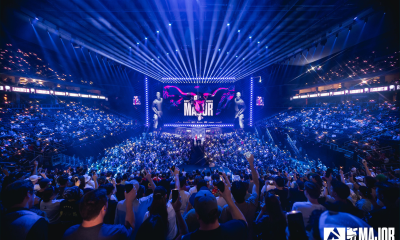
BLAST said it has staged seven tier-one esports events in North America over the past 16 months, across Austin, Fort Worth, Boston, Raleigh, Los Angeles and Salt Lake City. The company cited “more than $102 million” in economic impact from the 2025 BLAST.tv Austin Major alone, including more than $9 million in hotel expenditures. It also recently announced the Rocket League World Championship will return to Fort Worth in September 2026.
In 2025, BLAST said its broadcasts delivered more than 2 billion live views globally and 300 million hours watched, spanning live events in 22 cities worldwide. The company also said it distributes content via 29 broadcast partners, including SuperSport, France TV and RTBF, reaching audiences in more than 150 territories and 30+ languages.
“Competitive entertainment has become one of the fastest-growing sectors in global media because it combines community, technology and live experiences in entirely new ways,” said Robbie Douek, CEO of BLAST. “The next generation of fans want entertainment that feels participatory, social and global by default. That shift is creating enormous opportunities for brands, publishers, creators and host cities, and we believe BLAST is uniquely positioned to help lead that evolution after a landmark year in 2025.” BLAST said it plans to host 15 arena events across 13 cities and three continents in 2026.
The post BLAST opens New York HQ as 2025 revenue tops $133m on 40%+ growth appeared first on EE Gaming | Global iGaming & Tech Intelligence Hub.
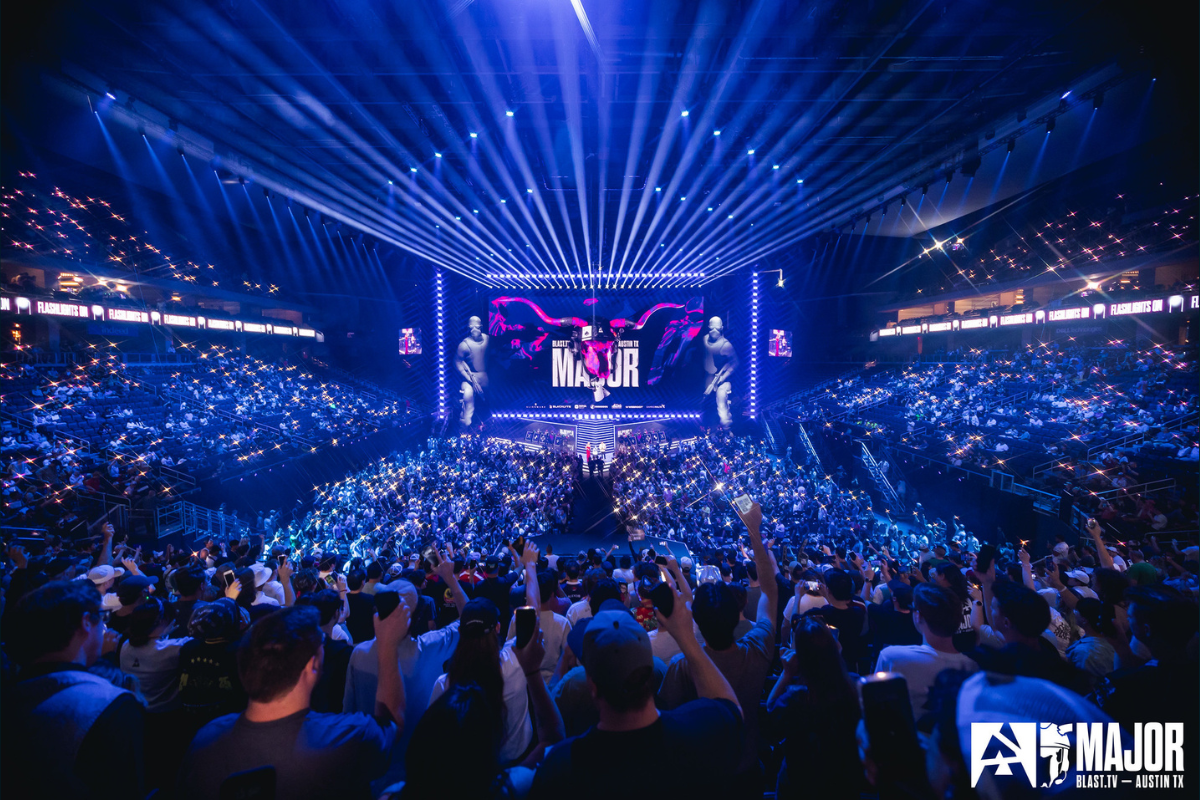
BLAST, the Denmark-founded competitive entertainment and esports events company, reported record growth and continued profitability in 2025 and said it has opened a New York headquarters as it expands across North America.
The company said it delivered more than 40% year-over-year growth and generated more than $133 million in revenue in 2025, while remaining profitable and continuing to invest in global expansion. BLAST said its U.S. headquarters at 45 Main Street in Brooklyn sits within a shared 55,000-square-foot office space and will serve as its central base for partnerships, live events and commercial growth across North America.
The expansion is being led by Chief Business Officer Leo Matlock, who has relocated to New York, and Steve Rossi, who joined earlier this year as SVP of Brand Partnerships. BLAST said its U.S. team has grown to eight full-time employees.
BLAST pointed to recent North American activity, saying it has hosted seven tier-one esports events across Austin, Fort Worth, Boston, Raleigh, Los Angeles and Salt Lake City over the past 16 months. The company said these events have generated economic impact for host destinations, including more than $102 million from the 2025 BLAST.tv Austin Major alone, including more than $9 million in hotel expenditures. BLAST also said the Rocket League World Championship will return to Fort Worth in September 2026.
On content reach, BLAST said its 2025 broadcasts delivered more than 2 billion live views globally and 300 million hours watched across live events in 22 cities, distributed through 29 broadcast partners across online platforms and linear broadcasters. “We’re seeing tremendous momentum globally and all across North America, not just in esports fandom, but in how brands, game publishers, cities and entertainment companies are thinking about gaming culture, engaging competitions and digital-first audiences,” said Leo Matlock, Chief Business Officer at BLAST. The company said it plans to host 15 arena events across 13 cities and three continents in 2026.
The post BLAST reports 40% revenue growth in 2025, opens New York headquarters appeared first on Americas iGaming & Sports Betting News.

-

 AGCO6 days ago
AGCO Fines Great Canadian Entertainment $120,000 for Using Unauthorised Gaming System Software at Four Casinos
-
Affiliate Industry5 days ago
Hub Affiliations Triumphs at the iGB Affiliate Awards 2026: Winner of Programme/Network Campaign of the Year
-
certification7 days ago
PopOK Gaming secures certification for Portugal iGaming market
-
Latest News5 days ago
N1 Partners at iGB L!VE 2026: Bringing Together Affiliates, Art and Innovation
-
Asia6 days ago
The UAE Lottery joins SAGIP outreach with Philippine Consulate and Infinite Communities
-
Canada6 days ago
St8 expands Octoplay aggregation deal to Ontario and the UK
-
Latest News6 days ago
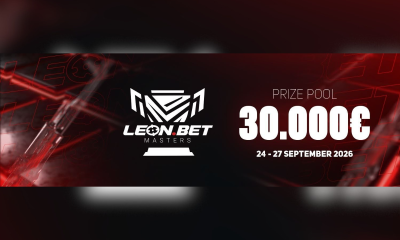
LEON announces LEON.bet Masters, a new CS2 tournament in Portugal
-
0006 days ago
Booming Games launches Booming Buffalo Hold and Win Extreme 25,000