Interviews
Scaling With Purpose: RedCore’s Tech Vision Explained


Reading Time: 7 minutes
At SiGMA Central Europe in Rome, European Gaming Media sat down with Yevhenii Yankovyi, Vice President of Technology and Deputy CTO at RedCore, for a deep look into what truly powers RedCore’s large-scale engineering operations.
RedCore is known for innovating at enterprise level, yet moving with the agility of a fast-growing tech company. In this conversation, Yevhenii breaks down how the organization manages that balance: how engineering teams maintain both speed and reliability, how automation empowers creativity, and why culture must remain a daily practice rather than a one-time achievement.
Can you introduce yourself and RedCore’s approach to engineering at scale?
Sure. My name is Yevhenii, I’m the Vice President of Technology at RedCore and Deputy CTO. RedCore is a large company with many products and projects, so everything we do operates at a significant scale. And when people hear “enterprise-level engineering,” the usual assumption is that scale automatically means slowness: slow decision-making, slow implementation, slow testing, slow time to market.
That’s the mindset we challenge. We don’t believe speed and stability are opposites. In our experience, at this level of complexity, the two actually reinforce each other. When you build the right processes, the right technical foundations, and the right organizational structure, speed becomes a natural result of stability – not something that contradicts it.
We plan for scaling from day one. For us, that’s a fundamental requirement. We build products with the expectation that they will grow, and growth means scale. So we design with that in mind from the very first line of architecture.
But that doesn’t mean disappearing for six or ten months to design the “perfect” system. That’s the common mistake people make when they hear “design for scale.” Our approach is different: we keep the long-term vision in mind, but we move fast, iterate, and make sure the product can evolve without slowing the team down. Stability and speed working together – that’s the engineering culture we build at RedCore.
How does RedCore balance speed and stability in daily engineering?
I will explain this with a simple metaphor: think about a car. Everyone talks about acceleration and top speed, but none of that matters if you can’t take a corner. Speed alone is not the winning formula – you also need control.
That’s exactly how we look at engineering at RedCore. We want to accelerate, make decisions quickly, and develop fast. But we also need the ability to slow down at the right moment, change direction, and stay agile. Balancing speed with stability is the only way to move at scale.
There are many layers to this – it’s a topic I could talk about for days – but in a nutshell:
at a big scale, you must have strong standards, clear policies, and a high level of automation. We rely heavily on automation: infrastructure as code, CI/CD pipelines, automated testing, and all the tools that remove repetitive, routine work from engineers’ daily lives. When the routine disappears, people can focus on what humans actually do best: creativity, problem-solving, and innovation.
However, automation doesn’t build the software for you. It creates a safety net. It catches mistakes, guards quality, and supports engineers when their creativity pushes boundaries. In other words: tools give freedom, and also protect that freedom.
And of course, this includes AI and many other modern tools. We use whatever helps us keep the balance: give people space to think, create, and experiment, while ensuring the system stays stable, predictable, and high-quality.
How does RedCore’s management keep teams aligned yet fast?
First of all, we provide clear goals. As I mentioned earlier, we always design for scale from day zero – but you can only do that if you know exactly what you’re building, for whom, and why. We have a very strong business team that understands the market and what needs to be delivered. The technology team works side by side with them, reinforcing them.
Once the goals are clear, we begin small. If you try to build a huge system from the beginning and get it wrong, you create a nightmare: something no one can support, change, or grow. Complexity grows exponentially, and humans don’t think exponentially; we think linearly. That’s where companies often get lost.
So we avoid that by validating early and validating often. We start with small steps, keep a close eye on every direction we take, and confirm that what we’re building is truly needed by the market. When we see that the direction is right, then we scale – and by that point, the foundation is already in place. It’s like preparing a launchpad so that when the time comes, the team can accelerate immediately.
We build block by block and work in iterations. We take a small team – one, two, maybe three people – and let them experiment for a week. We test the idea fast, get quick feedback, and bring it to the business side: “Do you like it?” If the answer is yes, then we continue, still following all the proper engineering practices before anything goes into production.
This constant loop between business and technology keeps everyone aligned. We give feedback, we receive feedback, and we move together. That’s how we stay both fast and coordinated, always ready to scale when the direction is confirmed.
How does automation empower engineers without slowing them down?
When we talk about automation, we’re really talking about optimization at scale. It doesn’t make sense to over-engineer small things, but at the scale we operate, the cost efficiency and speed gains are enormous. And people often assume that big systems and automation automatically slow everything down. For us, it’s the opposite.
The tools we introduce are not meant to tie engineers’ hands with bureaucracy. We don’t force strict guidelines or heavy processes that kill creativity. Our tools exist to help: to prevent mistakes, to collect feedback quickly, and to give teams the shortest possible path from idea to validation.
Here’s a simple example: we start experimenting with a small feature. We build a tiny prototype to see if the idea works. If it’s promising, the next step is testing, pipelines, deployment – all the things that normally take time. In many companies, engineers would try to do all of this manually because “building the tools will take too long.” But with us, the tools are already there. The infrastructure, the CI/CD, the automation – everything is ready to use. Our engineers are essentially customers of this internal platform that supports fast, safe delivery.
We have many different teams that have different great ideas. If one team tries something new and it works better, great – we learn from it. If another team has a different approach because of product specifics or release schedules, that’s fine too. We give freedom to the teams to work, share their experiences, and then scale.
Of course, there are non-negotiables. When it comes to security and data privacy there is zero tolerance. These are areas where strict rules are absolutely necessary. I always tell the security people: everyone should be a little afraid of you, because these things must be perfect. But outside those critical areas, we don’t impose rules that slow teams down. We experiment, gather feedback, adjust, and keep improving.
We’re constantly researching, experimenting, and customizing our automation depending on the product and the market. But when it comes to system design, we don’t reinvent the wheel. We choose globally recognized tools and industry-validated technologies. So yes, we empower engineers with automation and the right tools, built on a solid, modern foundation.
How does culture work for you – is it an achievement, or part of your routine?
Culture is a critical element in balancing speed and stability. Tools and processes matter, but culture is what truly empowers a team and keeps everything together at scale.
For us, culture starts with giving people freedom: the freedom to experiment, the freedom to make mistakes, and the freedom to challenge ideas. We don’t want engineers to be afraid of trying something new. We build a culture where mistakes are acceptable and manageable. If we try something and it doesn’t work, great – now we know better. We learn, adjust, and move on.
We encourage ideas from every level. Some of our most interesting insights come from developers who notice something while working on a small task. They can come directly to me or to the CTO and say, “I see a problem here.” It’s completely okay. A small detail in one corner of the system can become a huge issue at scale, so we listen. That’s how we avoid blind spots.
We also give teams autonomy. Small teams can make their own decisions and experiment in their own ways. If different teams want to do things differently, that’s fine – as long as they validate everything and share their findings. We want people to help each other and to understand that even top engineers have ups and downs. Even senior management makes mistakes. I constantly ask my team: “If I make a wrong decision, tell me.” It’s not about transparency as a buzzword – it’s about behavior. People observe how you respond, and they learn from that.
The biggest mistake any leader can make is demotivating people. We work with intelligent, educated, passionate professionals. They want to contribute. You just need to give them the space to do it. That’s when you see people shine and bring forward brilliant ideas.
As for the question of whether culture is an achievement or a routine – for us, it’s definitely a routine. People often talk about “building a strong engineering culture” as if it’s a success. We treat it as a routine as a process. Culture is the daily interactions between people in an organization. Those interactions change: people come and go, someone has a bad day, someone disagrees with a decision. Culture is shaped every day by how we communicate, how we argue, how we respect each other, and how we resolve differences.
Going to a colleague in the kitchen and asking, “Hey, what do you think about this?” – that’s culture. Anyone can talk to anyone, openly. And when engineers realize they can make a real impact, that they are heard, that they can influence the product — that motivates them. That’s what keeps the culture alive.
How do you balance standards with creative freedom?
The first thing is that we don’t pressure people. We set strict standards only where they are truly critical for the business. Security, data privacy, stability at scale – those areas demand clear rules. But everywhere else, we try not to push people. And when we do introduce a standard or guideline, we listen carefully to feedback. If the team tells us we made the wrong call, that’s okay – we rethink it and look for better approaches.
The second thing is that as the projects grow, the teams scale as well. Even in the design phase, we don’t start with a huge team. I prefer a small group: one key person who leads the design initiative, plus two or three contributors who constantly review, test, question, and give feedback. If three or four people align in one direction, that’s a good signal we’re on the right track. Then we take that proposal to a larger group – people who might use it or need it.. We refine it again based on their input. The idea evolves, but we don’t need to start from the beginning.
Finally, when we have a strong direction, we present it to the entire tech team. And even then – even if top management already supports the decision – it’s completely acceptable for a mid-level developer to raise concerns. Maybe they’ve seen something before, maybe they read an article, maybe they faced a similar issue. We listen, because at scale, one overlooked detail can cost millions.
So once again, balancing standards with creative freedom is about scaling the processes step by step: we start with a small group, validate in small cycles, and then scale the decision up gradually. This approach protects creativity, ensures high quality, and keeps us aligned. And combined with our culture, it makes the process both fast and safe.
The post Scaling With Purpose: RedCore’s Tech Vision Explained appeared first on European Gaming Industry News.

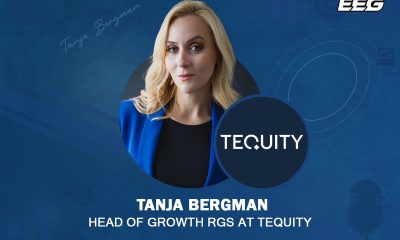










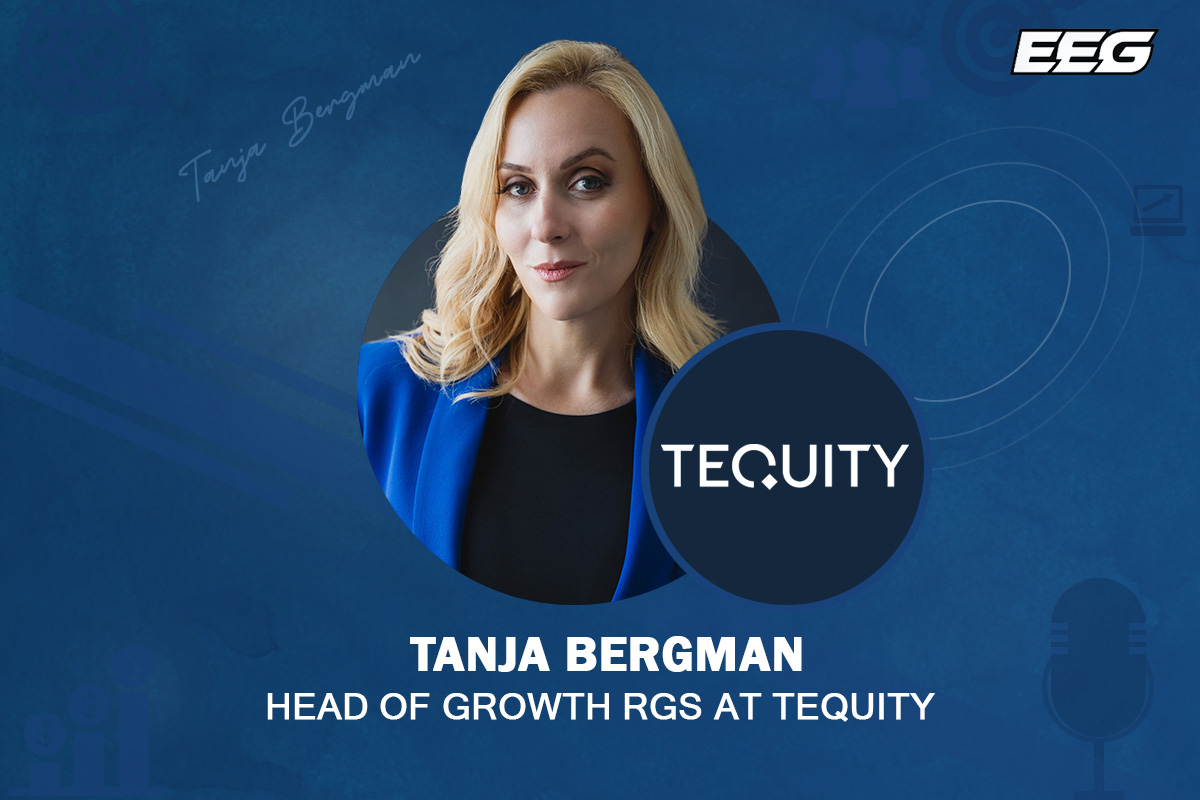
Following the announcement of its new publishing vertical and the successful debut of Royal Drop, we sat down with Tanja Bergman, Head of Growth RGS at Tequity, to discuss how this new arm is set to dismantle technical barriers for ambitious studios and why scalability is the new frontier for the ‘Burst Games’ genre.
Tequity has just officially launched its Publishing vertical. What was the primary catalyst behind this move?
The industry is currently in a fascinating place. There is no shortage of creative talent among studios, but there is a massive technical bottleneck. We have seen so many ambitious studios with incredible concepts – especially those moving beyond traditional slots – who have been getting bogged down in terms of getting those concepts out into the marketplace.
The catalyst for Tequity Publishing was simple. We wanted to break down those technical barriers. By handling the infrastructure, distribution, and compliance frameworks, we allow studios to do what they do best, which is build outstanding games. It’s about speed-to-market without compromising on the quality or the vision of their content.
The launch coincides with the release of Royal Drop. How does this game, and the partnership with Mirror Image Gaming and The Fortune Engine, showcase what Tequity Publishing is all about?
Royal Drop is the perfect proof of concept. It’s a collaboration that highlights three important pillars of modern game delivery. You have Mirror Image Gaming bringing that fresh, video-game-influenced Burst Games energy, The Fortune Engine provide the math tools and templates, and Tequity Publishing offers the global scale and distribution pathway.

It shows that when you remove operational friction, you can create a game-first experience that appeals to a new generation of players who want something more interactive than a standard 5×3 reel.
Tequity Publishing offers two models: RGSaaS and RGS-to-RGS. Can you walk us through the strategic benefits of each?
Flexibility is key, because no two studios are at the same stage of their journey. The RGSaaS model is our full-service offering. It’s designed for studios that want to focus 100% on the creative side. We provide the entire infrastructure and publishing framework and it is essentially a business-in-a-box for game creators.
The RGS-to-RGS model is a more streamlined, tech-first approach for studios that already have their own RGS but lack the distribution muscle. It allows them to plug into our growing operator and aggregator network instantly. Both models are built on the same philosophy: helping studios reach parts of the market they otherwise couldn’t access on their own.
You mentioned reaching new generations of players. How does this vertical specifically empower studios to innovate in ways they couldn’t before?
When a studio is concerned about how they are going to integrate with a multitude of different operators or how to navigate complex jurisdictional requirements, they tend to play it safe. They stick to what they know.
By taking that weight off their shoulders, we give them the opportunity to be brave. Studios like Mirror Image Gaming are pushing the boundaries of modern iGaming, taking influences from the video game world. This is exactly what the new generation of players is looking for. We provide the scalability so that these niche, innovative ideas can achieve mass-market impact.
It’s been a busy period for Tequity, following the success of your Originals series and the iBankroll partnership. How does the Publishing vertical fit into the broader Tequity roadmap for 2026?
It’s all part of becoming the ultimate technology partner for the gaming industry. Whether it’s our streamer-friendly Originals or our Bankroll-as-a-Service offering, the goal is to provide scalable, customisable solutions. Tequity Publishing is the natural evolution of that mission. We aren’t only providing the tools anymore, but also the pathway to the player. Looking ahead, you can expect a series of further launches through our three-way collaborations. We’re proving that the barrier to entry for innovation has never been lower.
Finally, for studios looking to scale quickly, what is your main message to them?
Don’t let technical noise drown out your creative signal. If you have a game concept that breaks the mould, you shouldn’t have to spend years building the distribution architecture to get it seen. That’s what we’re here for. We want to help you launch at a speed and scale that matches your ambition, so that you can make a significant splash in the industry.
The post Scaling innovation through the launch of Tequity Publishing appeared first on Eastern European Gaming | Global iGaming & Tech Intelligence Hub.

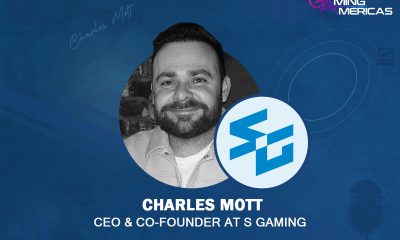
We speak to Charles Mott, CEO & Co-Founder at S Gaming, about the provider’s move into the US market with BetMGM and why more casual gameplay hits the mark with players stateside
Congratulations on your deal with BetMGM in the USA. Why is this such a milestone market launch for S Gaming?
The deal with BetMGM marks our hotly-anticipated launch in the US market, and sees our games go live to players in core regulated states such as New Jersey, Pennsylvania, West Virginia and Michigan. We see huge potential for our content in the North American market, and to make our debut with such a high-calibre operator is a testament to this. The US is still just finding its feet as a regulated online casino market, and our games, with their focus on sustainability and high entertainment, are the perfect fit for audiences who are used to land-based slots and are increasingly moving online. They are simple, easy to understand and play, and ultimately deliver tons of fun over longer playing sessions – just like the slot machines found on the floors of casinos in Las Vegas and beyond.
Just how important was it to go live with a tier-one operator like BetMGM? And how will the deal allow you to quickly build momentum in the US?
It’s mission critical. Going live with BetMGM allows us to build immediate trust with players, tap into a large and loyal playerbase, and simultaneously enter multiple regulated iCasino states at the same time. Now that we are up and running with BetMGM, we are turning our attention to striking partnerships with other operators active in the market. It’s pretty much the same blueprint that we’ve followed in our home market of the UK where we are now live with all but a handful of brands – something we have been able to achieve in a little over two years. We know the US is a slightly different market, but we are confident in our approach to game development and, as we gather more data on how US players interact with our games, will use this feedback loop to guide our product roadmap going forwards so that each title is better than the last and more suited to the preferences of US players.
You mentioned that your games are aimed at more casual players. How does this align with the preferences of US consumers?
If you walk onto the gaming floor of any Las Vegas casino, you’ll see row after row of slot machines. Increasingly, these machines are designed to keep players entertained for longer through gripping gameplay and regular wins. A lot of online slot content delivers high risk/high reward gameplay, where players can quickly clear through their balance as they hunt down big wins – wins that don’t land all that often. In a market where operators care deeply about retention and lifetime value, games that keep players spinning for longer really matter. Our approach to producing sustainable, fun games for players in the UK and Europe has allowed us to not only stand out but to engage players at scale, and we are confident players in the US, especially those who enjoy land-based slotting, will also be drawn to them at scale.
Has launching in the US been a major undertaking for S Gaming, or did it prove to be plain sailing for the most part?
When planning our move into the US market we identified two routes. We have our own remote game server, so we could build on that, secure licences in each state we wanted to enter, and then deploy our content directly with operators. The other option would be to work with a third-party RGS provider that already has the licences and integrations we needed. While the first option might sound like the best, in reality, especially for a smaller studio, the cost of and resources required for securing individual state licences can be prohibitive. So instead, we joined forces with Gaming Realms as they have the cutting-edge RGS and licences (in both the US and Europe) we were looking for. This means we simply need to build a US version of each game on the Gaming Realms RGS and can then deploy content with the wide range of operator partners they are connected with in regulated iCasino states across the US.
Tell us more about the initial run of games you’ve launched with BetMGM.
We’ve launched the partnership with Barnyard Bash Chicken Chase which will be followed by Triple 7 Jackpot in February and Cat and Mouse Collect in March – with one new game a month to follow as we build out our US portfolio. If players were to try just one of our games, it would be Barnyard Bash Chicken Chase. It gets players clucking as they spin the reels, collect Eggs and add them to the growing Nest – the more eggs collected, the bigger the Nest Egg becomes. Not only that, Eggs can randomly activate the matching colour-coded Nest Egg and award entry to the Chicken Trail feature, drop Egg-stra Free Spins or lay an Instant Prize.
But once they’ve tried it, they’ll definitely want to take Triple 7 Jackpot for a spin. This classic slot is dripping in neon action – the Triple 7 feature is always on screen but is locked until a spin lands three Bonus 777 symbols. This unlocks the feature with on spin awarded, giving players a shot at the 500x Jackpot prize. Free Spins are also up for grabs with seven Free Games awarded when three Scatters land in the base game.
Finally, Cat and Mouse Collect is a playful, feature-rich slot built around a simple but engaging Collect mechanic. Players pin the reels, collect up the cheeses and feed the hungry mice until they’re fit to burst. Green plates will serve up an instant prize, Blue will start the wild and wacky Cheese Chase and Red dishes out some feisty Free Spins. With regular feature triggers and plenty of on-reel interaction, it’s designed to keep players engaged from spin to spin without relying on extreme volatility.
What does success in the US look like for S Gaming over the next 12-18 months?
Success for us isn’t about one big hit, it’s about becoming a trusted, widely-distributed supplier in regulated iCasino states. Over the next year we want to significantly expand beyond BetMGM, roll out a steady pipeline of US-optimised titles and build the kind of player data and
operator relationships that let us grow sustainably. If players in New Jersey, Pennsylvania and Michigan are regularly choosing S Gaming titles as part of their core rotation, then we’ll know we’re really breaking into the market.
The post Breaking America with BetMGM appeared first on Americas iGaming & Sports Betting News.
What innovation consists of within the slots industry is often debated. While there are often calls for more groundbreaking features to be introduced, the reality is that the progression of trusted and popular concepts is what drives the industry forward with new releases.
We caught up with the Kendoo’s Commercial Director, Kate Romanenko, to understand more on how long-term retention is often underpinned by controlled evolution of proven concepts, as shown in the company’s success over the past year.
In an industry driven by novelty, why do you think long-term consistency is becoming just as valuable as innovation?
In the competitive iGaming market, everyone is obsessed with “what’s next,” long-term consistency has become a signal of trust. Operators are increasingly cautious: they want games that perform predictably over time, not just those who grow only on launch. Controlled evolution, like we showed with 3 Pots and 4 Pots games, such as 3 Fortune Trees, 3 Gates of Pyramid, 4 Egypt Scarabs etc., proves that you can refresh mechanics and visuals without breaking what already works. Innovation still matters, but when it’s backed by performance data and retention, it becomes scalable, sustainable value rather than short-lived hype.
How does Kendoo ensure technical and gameplay stability across its growing portfolio, especially as it scales into new markets?
At Kendoo, we build on a select set of well-tested core mechanics, evolving them thoughtfully rather than introducing unproven systems. Each game reflects our research, experience, and deep understanding of player needs. This approach lets us expand into new markets without compromising reliability, delivering operators consistent performance and players a smooth, familiar experience they can trust.
What role does reliability play in building strong partnerships with aggregators and platforms?
Reliability is the foundation of trust with aggregators and platforms. When integrations are stable, launches are predictable, and games perform consistently, partners can scale with confidence. For Kendoo, reliability reduces operational friction on their side, fewer incidents, faster rollouts, and clearer performance expectations. Over time, this turns a supplier relationship into a long-term partnership, where growth is planned together rather than driven by constant risk around new releases.
Do you think players are beginning to value dependable, well-balanced games over constant experimentation?
Players enjoy novelty, but they return to games that feel fair, familiar, and well-balanced. Constant experimentation can create friction, while dependable mechanics build confidence and habit. That’s why evolved formats with proven performance tend to retain better: players know what to expect, and that reliability turns curiosity into long-term engagement. For example, taking mechanics like Pots, which originated in land-based casinos, and successfully adapting them for online play.
Can you point to a Kendoo title that’s become a steady performer over time and what that tells you about what players really value?
A clear example is 3 Fortune Trees. Since launch, it has consistently driven strong retention and engagement across markets, with an average of 500 bets per player, which is excellent. The game demonstrates that players value Pots mechanics and reliable, well-balanced gameplay over flashy, one-off features. Its engaging mechanics, popular theme, and premium art and animation all come together to create a game that players love to play.
The post Kendoo interview: Can stability be the new innovation? appeared first on Eastern European Gaming | Global iGaming & Tech Intelligence Hub.

-

 Games Global5 days ago
Games Global and Stormcraft Studios extend the supernatural franchise with Immortal Romance: Sarah’s Secret Power Combo
-
Latest News5 days ago
N1 Partners Hosts the N1 Puzzle Promo Grand Final and Reveals the Helicopter Winner at iGB Affiliate 2026 in Barcelona
-
Amusnet5 days ago
Week 4/2026 slot games releases
-
ADG6 days ago
Arizona Department of Gaming Names Juan Carlos Estrada as Boxing and Mixed Martial Arts Executive Director
-
Anthony Dalla-Giacoma Chief Commercial Officer at Swintt6 days ago
Swintt Cruises the River of Fortune in Sun Wind Cash Boat
-
Anton Ivannikov CPO at Playson6 days ago
Playson’s Vegas Glitz Shines with Dual Bonus Features
-
Battle Royale6 days ago
Prime Rush Goes Live in Early Access, Bringing a Brazil-First Mobile Battle Royale to Players
-
Attorney General Andrea Joy Campbell6 days ago
AG Campbell Secures Court Order That Will Block Kalshi from Offering Unlawful Sports Wagers in Massachusetts