Interviews
How level five AI can help operators superscale efficiency and profitability in 2023

With Markor Technology recently partnering with Ibex.ai to strengthen the range of solutions it can supply to partners, we sat down with Thomas Aigner and Melissa Summerfield to discuss the benefits the tool offers CRM teams and the impacts of AI and machine learning in the wider iGaming industry
Before we get into how Markor will utilise Ibex.ai to strengthen its client offering, can you tell us a bit more about the company’s core concept and how it differs from other rule-based AI systems?
TA: When Ibex was started, our core focus was to really look at each player individually and come up with ways to maximise their lifetime value. We weren’t happy with the level of personalisation and automation that existing technology could deliver, so we set about re-thinking the process of a CRM campaign from the bottom up. With the machine learning models that Ibex utilises, it’s able to create a full profit/loss calculation for individual players that takes into account everything from the payment method they use to the costs of sending a bonus via SMS or email. From these calculations, the system is able to implement the action that has the highest impact for each player while also learning and optimising its models based on the previous outcomes. In this respect, Ibex differs from some of the more traditional, rule-based systems – where CRM teams usually still have to build a customer journey to trigger their desired action – as it provides a true level of automation by constantly A/B testing its approaches and evaluating their performance without the need for manual prompting from the user.
Last year, Ibex.ai was involved in a ground-breaking trial where it was pitted against a human CRM team and delivered some pretty convincing results – what factors helped contribute to its success?
TA: Over the course of that study, Ibex delivered a 20% increase in NGR and a 17% decrease in bonus spend when tested against what a human CRM team was doing. One of the keys to this success was the fact that our technology doesn’t need to create and target customer segments in the way that a traditional CRM team does. Instead, we looked to fundamentally overhaul the approach taken by CRM teams and place a greater emphasis on targeting each individual player, meaning that the bonuses Ibex offers are 100% personalised. Additionally, Ibex can look at how each player reacts to its offers and use this data to automatically decide and trigger the next best action specifically for them. This is known as level five automation and means it can build optimal models by itself, with CRM teams then being able to look at its choices, understand the actions and use them to come up with new campaigns.
Another perk of Ibex’s approach is that the system is able to quickly identify bonus abusers, who obviously have a big impact on a CRM team’s overall profit/loss figures during each campaign. Whereas manually rooting out bonus abusers and segmenting them accordingly is a costly and time-consuming process, Ibex’s personalised, player-by-player approach means the technology can easily spot signs of bonus abuse and decide that the best action in these cases is often not to issue any offer.
The increased use of AI in traditionally human operations is something of a hot topic at the moment – is Ibex.ai intended to replace CRM teams entirely or merely supplement what they currently do?
TA: This is a really important question and one we get asked a lot because of the high level of automation Ibex can deliver. Our AI is not at all intended to replace CRM teams or take away human jobs, but rather to enhance their current capabilities by removing some of the day-to-day legwork. This gives them more time to focus on building creative campaigns and optimising their overall strategy, which can in turn help them increase profits without taking on further costs. With this in mind, CRM teams shouldn’t be fearful about AI replacing them, but should instead be experimenting with it and learning its capabilities so they can better understand how to work alongside it in future.
How will automated technology such as Ibex.ai enable online operators to better structure their CRM teams going forward and will it allow for a more efficient distribution of resources in future?
TA: We’re already starting to see this with our current partners. By using an AI like Ibex, it’s possible to take some of the manual legwork out of the CRM process – i.e. defining a target group and then scheduling/executing a campaign – which in turn gives executives more time to focus on the creative side of things and how they refine their top-level strategy. One of the important things to remember about Ibex is that it’s not a content generating AI, but rather one takes all of the templates and bonuses that are already in place and combines them to get the most optimal results. As such, removing a lot of the manual admin can give CRM more freedom to focus on creating better content.
From Markor Technology’s point of view, how does partnering with highly-specialised companies such as Ibex.ai enable you to enhance the service that you’re currently able to offer your partners?
MS: Markor has always been focused on providing innovative solutions for our clients – and one of the value propositions that we pride ourselves on is that our iGaming technology is powered by AI and machine learning. The role of this technology is to make people’s lives easier, so by onboarding specialised partners such as Ibex, we can automate more, decrease human error and track data so it can drive informed, real-time business decisions. By streamlining operations in this way, we save our clients’ time so they can focus more on high level topics such as branding and business development.
Can you tell us a little bit about some of the advantages that Ibex.ai gives to your online casino partners and how the technology has been incorporated into your current PAM platform offering?
MS: One of the main benefits that Ibex has delivered for us is that it intelligently targets customers and increases their lifetime value – two things that have already been backed up by the company’s reports. By constantly A/B testing its actions and learning from the results, Ibex is able to consistently choose the optimal offer or reward based on the projected value of each player, meaning once a network of campaigns has been set up, CRM teams will be free to focus on their overall user strategy.
Powered by WPeMatico


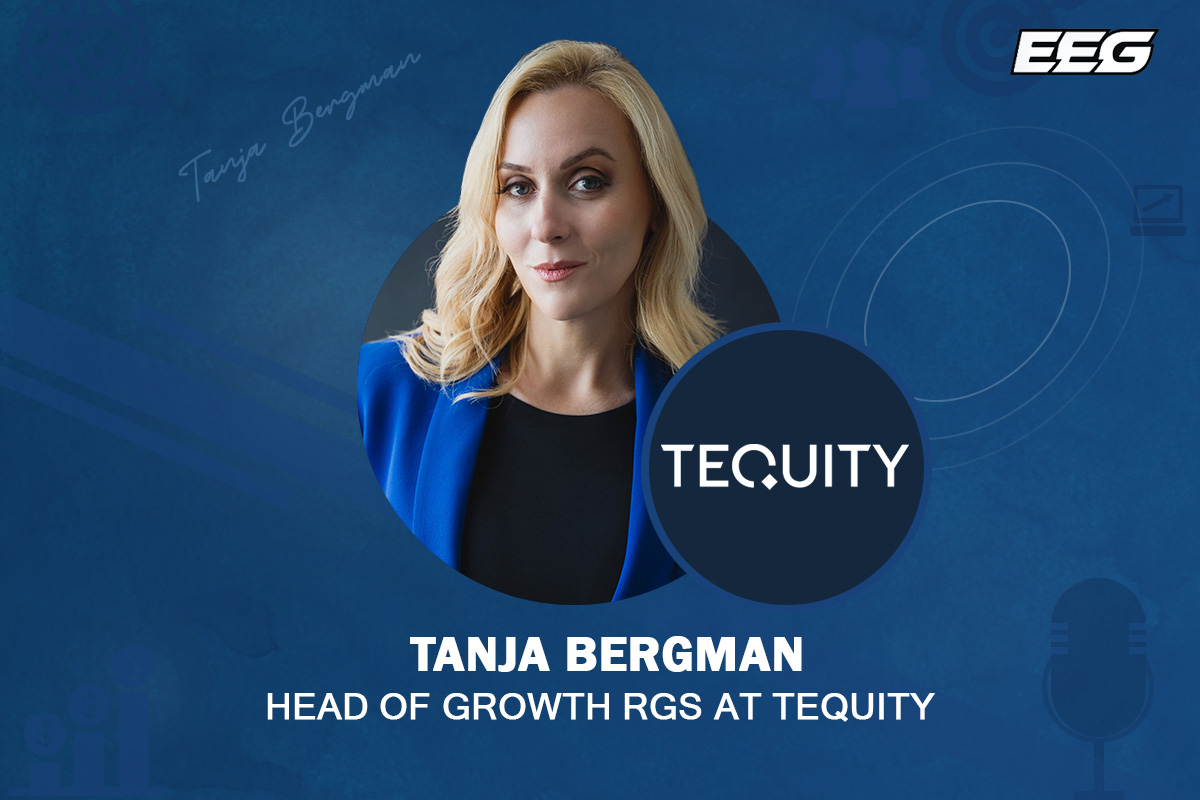
Following the announcement of its new publishing vertical and the successful debut of Royal Drop, we sat down with Tanja Bergman, Head of Growth RGS at Tequity, to discuss how this new arm is set to dismantle technical barriers for ambitious studios and why scalability is the new frontier for the ‘Burst Games’ genre.
Tequity has just officially launched its Publishing vertical. What was the primary catalyst behind this move?
The industry is currently in a fascinating place. There is no shortage of creative talent among studios, but there is a massive technical bottleneck. We have seen so many ambitious studios with incredible concepts – especially those moving beyond traditional slots – who have been getting bogged down in terms of getting those concepts out into the marketplace.
The catalyst for Tequity Publishing was simple. We wanted to break down those technical barriers. By handling the infrastructure, distribution, and compliance frameworks, we allow studios to do what they do best, which is build outstanding games. It’s about speed-to-market without compromising on the quality or the vision of their content.
The launch coincides with the release of Royal Drop. How does this game, and the partnership with Mirror Image Gaming and The Fortune Engine, showcase what Tequity Publishing is all about?
Royal Drop is the perfect proof of concept. It’s a collaboration that highlights three important pillars of modern game delivery. You have Mirror Image Gaming bringing that fresh, video-game-influenced Burst Games energy, The Fortune Engine provide the math tools and templates, and Tequity Publishing offers the global scale and distribution pathway.

It shows that when you remove operational friction, you can create a game-first experience that appeals to a new generation of players who want something more interactive than a standard 5×3 reel.
Tequity Publishing offers two models: RGSaaS and RGS-to-RGS. Can you walk us through the strategic benefits of each?
Flexibility is key, because no two studios are at the same stage of their journey. The RGSaaS model is our full-service offering. It’s designed for studios that want to focus 100% on the creative side. We provide the entire infrastructure and publishing framework and it is essentially a business-in-a-box for game creators.
The RGS-to-RGS model is a more streamlined, tech-first approach for studios that already have their own RGS but lack the distribution muscle. It allows them to plug into our growing operator and aggregator network instantly. Both models are built on the same philosophy: helping studios reach parts of the market they otherwise couldn’t access on their own.
You mentioned reaching new generations of players. How does this vertical specifically empower studios to innovate in ways they couldn’t before?
When a studio is concerned about how they are going to integrate with a multitude of different operators or how to navigate complex jurisdictional requirements, they tend to play it safe. They stick to what they know.
By taking that weight off their shoulders, we give them the opportunity to be brave. Studios like Mirror Image Gaming are pushing the boundaries of modern iGaming, taking influences from the video game world. This is exactly what the new generation of players is looking for. We provide the scalability so that these niche, innovative ideas can achieve mass-market impact.
It’s been a busy period for Tequity, following the success of your Originals series and the iBankroll partnership. How does the Publishing vertical fit into the broader Tequity roadmap for 2026?
It’s all part of becoming the ultimate technology partner for the gaming industry. Whether it’s our streamer-friendly Originals or our Bankroll-as-a-Service offering, the goal is to provide scalable, customisable solutions. Tequity Publishing is the natural evolution of that mission. We aren’t only providing the tools anymore, but also the pathway to the player. Looking ahead, you can expect a series of further launches through our three-way collaborations. We’re proving that the barrier to entry for innovation has never been lower.
Finally, for studios looking to scale quickly, what is your main message to them?
Don’t let technical noise drown out your creative signal. If you have a game concept that breaks the mould, you shouldn’t have to spend years building the distribution architecture to get it seen. That’s what we’re here for. We want to help you launch at a speed and scale that matches your ambition, so that you can make a significant splash in the industry.
The post Scaling innovation through the launch of Tequity Publishing appeared first on Eastern European Gaming | Global iGaming & Tech Intelligence Hub.

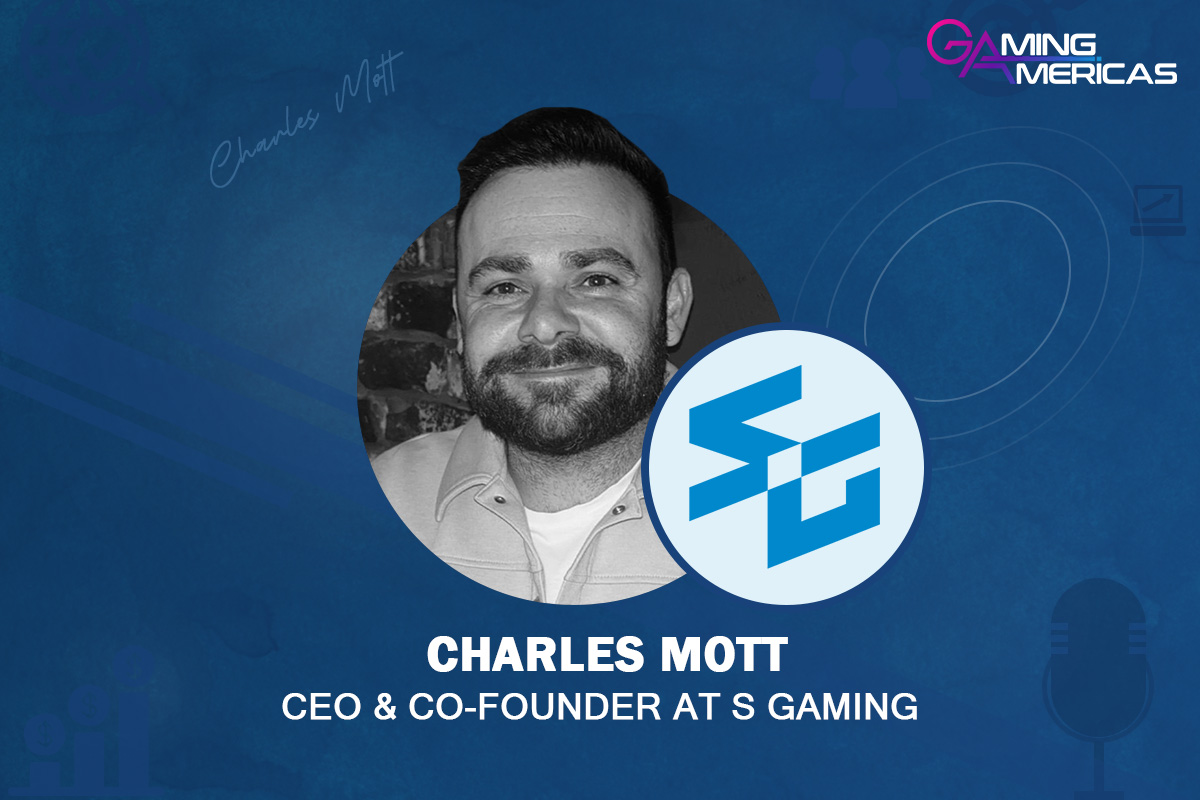
We speak to Charles Mott, CEO & Co-Founder at S Gaming, about the provider’s move into the US market with BetMGM and why more casual gameplay hits the mark with players stateside
Congratulations on your deal with BetMGM in the USA. Why is this such a milestone market launch for S Gaming?
The deal with BetMGM marks our hotly-anticipated launch in the US market, and sees our games go live to players in core regulated states such as New Jersey, Pennsylvania, West Virginia and Michigan. We see huge potential for our content in the North American market, and to make our debut with such a high-calibre operator is a testament to this. The US is still just finding its feet as a regulated online casino market, and our games, with their focus on sustainability and high entertainment, are the perfect fit for audiences who are used to land-based slots and are increasingly moving online. They are simple, easy to understand and play, and ultimately deliver tons of fun over longer playing sessions – just like the slot machines found on the floors of casinos in Las Vegas and beyond.
Just how important was it to go live with a tier-one operator like BetMGM? And how will the deal allow you to quickly build momentum in the US?
It’s mission critical. Going live with BetMGM allows us to build immediate trust with players, tap into a large and loyal playerbase, and simultaneously enter multiple regulated iCasino states at the same time. Now that we are up and running with BetMGM, we are turning our attention to striking partnerships with other operators active in the market. It’s pretty much the same blueprint that we’ve followed in our home market of the UK where we are now live with all but a handful of brands – something we have been able to achieve in a little over two years. We know the US is a slightly different market, but we are confident in our approach to game development and, as we gather more data on how US players interact with our games, will use this feedback loop to guide our product roadmap going forwards so that each title is better than the last and more suited to the preferences of US players.
You mentioned that your games are aimed at more casual players. How does this align with the preferences of US consumers?
If you walk onto the gaming floor of any Las Vegas casino, you’ll see row after row of slot machines. Increasingly, these machines are designed to keep players entertained for longer through gripping gameplay and regular wins. A lot of online slot content delivers high risk/high reward gameplay, where players can quickly clear through their balance as they hunt down big wins – wins that don’t land all that often. In a market where operators care deeply about retention and lifetime value, games that keep players spinning for longer really matter. Our approach to producing sustainable, fun games for players in the UK and Europe has allowed us to not only stand out but to engage players at scale, and we are confident players in the US, especially those who enjoy land-based slotting, will also be drawn to them at scale.
Has launching in the US been a major undertaking for S Gaming, or did it prove to be plain sailing for the most part?
When planning our move into the US market we identified two routes. We have our own remote game server, so we could build on that, secure licences in each state we wanted to enter, and then deploy our content directly with operators. The other option would be to work with a third-party RGS provider that already has the licences and integrations we needed. While the first option might sound like the best, in reality, especially for a smaller studio, the cost of and resources required for securing individual state licences can be prohibitive. So instead, we joined forces with Gaming Realms as they have the cutting-edge RGS and licences (in both the US and Europe) we were looking for. This means we simply need to build a US version of each game on the Gaming Realms RGS and can then deploy content with the wide range of operator partners they are connected with in regulated iCasino states across the US.
Tell us more about the initial run of games you’ve launched with BetMGM.
We’ve launched the partnership with Barnyard Bash Chicken Chase which will be followed by Triple 7 Jackpot in February and Cat and Mouse Collect in March – with one new game a month to follow as we build out our US portfolio. If players were to try just one of our games, it would be Barnyard Bash Chicken Chase. It gets players clucking as they spin the reels, collect Eggs and add them to the growing Nest – the more eggs collected, the bigger the Nest Egg becomes. Not only that, Eggs can randomly activate the matching colour-coded Nest Egg and award entry to the Chicken Trail feature, drop Egg-stra Free Spins or lay an Instant Prize.
But once they’ve tried it, they’ll definitely want to take Triple 7 Jackpot for a spin. This classic slot is dripping in neon action – the Triple 7 feature is always on screen but is locked until a spin lands three Bonus 777 symbols. This unlocks the feature with on spin awarded, giving players a shot at the 500x Jackpot prize. Free Spins are also up for grabs with seven Free Games awarded when three Scatters land in the base game.
Finally, Cat and Mouse Collect is a playful, feature-rich slot built around a simple but engaging Collect mechanic. Players pin the reels, collect up the cheeses and feed the hungry mice until they’re fit to burst. Green plates will serve up an instant prize, Blue will start the wild and wacky Cheese Chase and Red dishes out some feisty Free Spins. With regular feature triggers and plenty of on-reel interaction, it’s designed to keep players engaged from spin to spin without relying on extreme volatility.
What does success in the US look like for S Gaming over the next 12-18 months?
Success for us isn’t about one big hit, it’s about becoming a trusted, widely-distributed supplier in regulated iCasino states. Over the next year we want to significantly expand beyond BetMGM, roll out a steady pipeline of US-optimised titles and build the kind of player data and
operator relationships that let us grow sustainably. If players in New Jersey, Pennsylvania and Michigan are regularly choosing S Gaming titles as part of their core rotation, then we’ll know we’re really breaking into the market.
The post Breaking America with BetMGM appeared first on Americas iGaming & Sports Betting News.
What innovation consists of within the slots industry is often debated. While there are often calls for more groundbreaking features to be introduced, the reality is that the progression of trusted and popular concepts is what drives the industry forward with new releases.
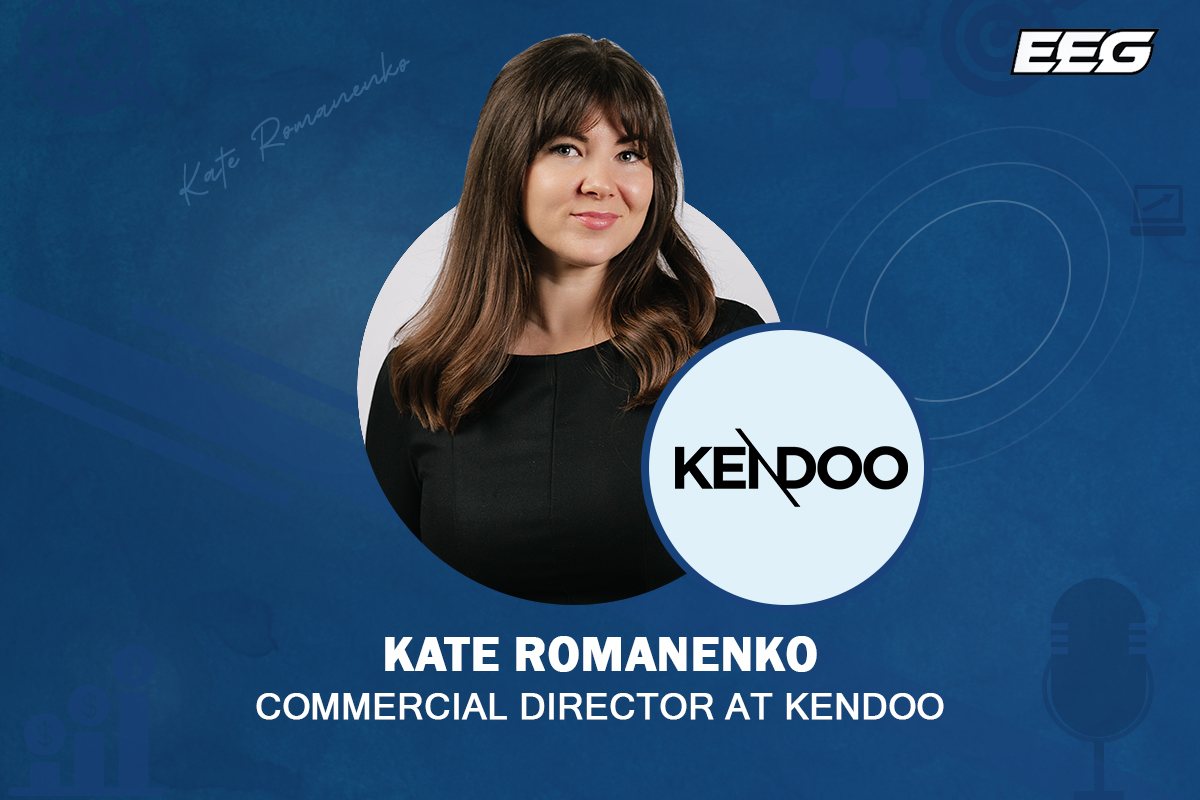
We caught up with the Kendoo’s Commercial Director, Kate Romanenko, to understand more on how long-term retention is often underpinned by controlled evolution of proven concepts, as shown in the company’s success over the past year.
In an industry driven by novelty, why do you think long-term consistency is becoming just as valuable as innovation?
In the competitive iGaming market, everyone is obsessed with “what’s next,” long-term consistency has become a signal of trust. Operators are increasingly cautious: they want games that perform predictably over time, not just those who grow only on launch. Controlled evolution, like we showed with 3 Pots and 4 Pots games, such as 3 Fortune Trees, 3 Gates of Pyramid, 4 Egypt Scarabs etc., proves that you can refresh mechanics and visuals without breaking what already works. Innovation still matters, but when it’s backed by performance data and retention, it becomes scalable, sustainable value rather than short-lived hype.
How does Kendoo ensure technical and gameplay stability across its growing portfolio, especially as it scales into new markets?
At Kendoo, we build on a select set of well-tested core mechanics, evolving them thoughtfully rather than introducing unproven systems. Each game reflects our research, experience, and deep understanding of player needs. This approach lets us expand into new markets without compromising reliability, delivering operators consistent performance and players a smooth, familiar experience they can trust.
What role does reliability play in building strong partnerships with aggregators and platforms?
Reliability is the foundation of trust with aggregators and platforms. When integrations are stable, launches are predictable, and games perform consistently, partners can scale with confidence. For Kendoo, reliability reduces operational friction on their side, fewer incidents, faster rollouts, and clearer performance expectations. Over time, this turns a supplier relationship into a long-term partnership, where growth is planned together rather than driven by constant risk around new releases.
Do you think players are beginning to value dependable, well-balanced games over constant experimentation?
Players enjoy novelty, but they return to games that feel fair, familiar, and well-balanced. Constant experimentation can create friction, while dependable mechanics build confidence and habit. That’s why evolved formats with proven performance tend to retain better: players know what to expect, and that reliability turns curiosity into long-term engagement. For example, taking mechanics like Pots, which originated in land-based casinos, and successfully adapting them for online play.
Can you point to a Kendoo title that’s become a steady performer over time and what that tells you about what players really value?
A clear example is 3 Fortune Trees. Since launch, it has consistently driven strong retention and engagement across markets, with an average of 500 bets per player, which is excellent. The game demonstrates that players value Pots mechanics and reliable, well-balanced gameplay over flashy, one-off features. Its engaging mechanics, popular theme, and premium art and animation all come together to create a game that players love to play.
The post Kendoo interview: Can stability be the new innovation? appeared first on Eastern European Gaming | Global iGaming & Tech Intelligence Hub.

-

 BetPlay6 days ago
Blask Awards 2025: Betano, Caliente, BetPlay, Betsson and others define Latin America’s iGaming landscape
-
Canada6 days ago
ComeOn Launches New Marketing Campaign in Ontario
-
DEGEN Studios6 days ago
DEGEN Studios brings Wild West chaos to the reels with Sunset Showdown
-
iGaming6 days ago
Majestic Claws Hold & Hit leaps into Spinomenal’s slots portfolio
-
Latest News6 days ago
ThrillTech partners with Nordplay Group to launch ThrillPots across Nordic-facing casino brands
-
bingo halls5 days ago
Bingo Halls and Casinos in Colombia Increased Their Contributions to Healthcare System by 9.3% in 2025
-
Brightstar Lottery PLC5 days ago
Brightstar Lottery Delivers Industry-Leading Sales Force Automation Solution to Ontario Lottery and Gaming Corporation
-
Compliance Updates4 days ago
Finland Govt Looks at Whether Scratchcards can be Gifted Again