Latest News
Movers and Shakers: Building Resilience – The Importance of Agility in the iGaming Industry

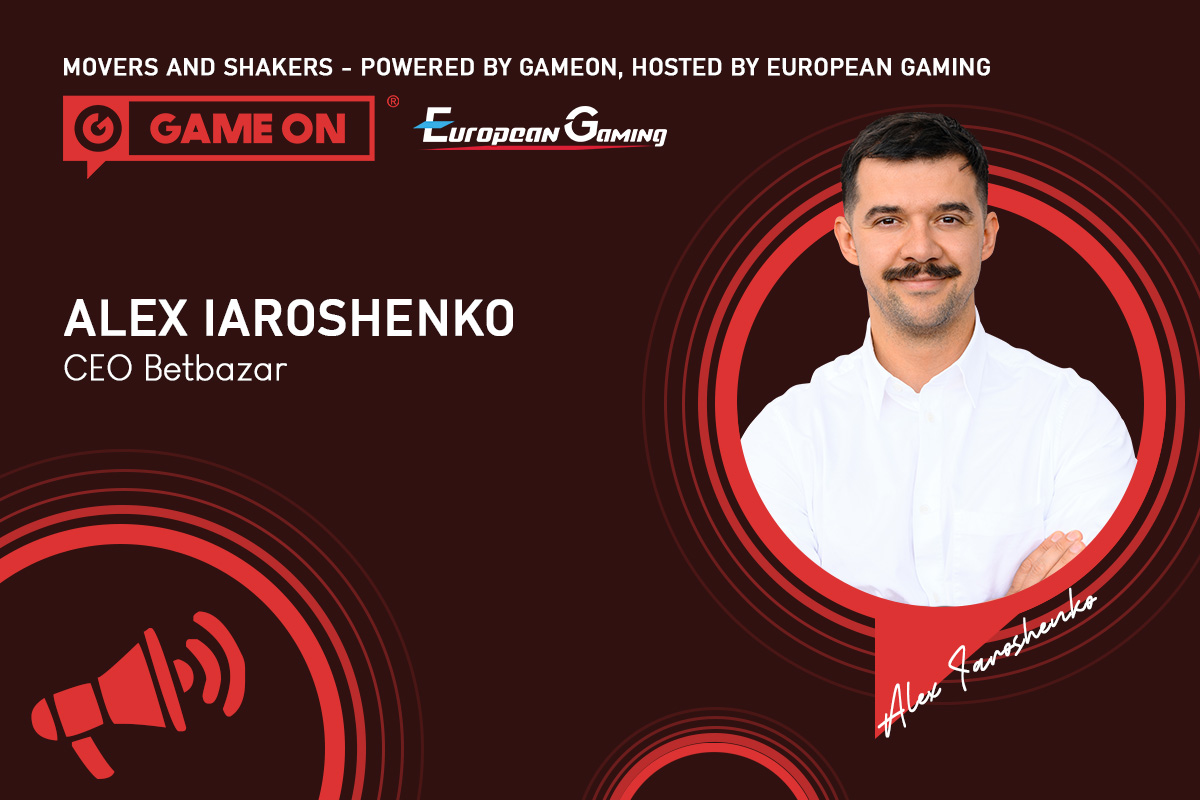
“Movers and Shakers” is a dynamic monthly column dedicated to exploring the latest trends, developments, and influential voices in the iGaming industry. Powered by GameOn and supported by HIPTHER, this op-ed series delves into the key players, emerging technologies, and regulatory changes shaping the future of online gaming. Each month, industry experts offer their insights and perspectives, providing readers with in-depth analysis and thought-provoking commentary on what’s driving the iGaming world forward. Whether you’re a seasoned professional or new to the scene, “Movers and Shakers” is your go-to source for staying ahead in the rapidly evolving iGaming landscape.
With global B2B iGaming marketplace gurus, Betbazar, having had to deal with their fair share of challenges over the past few of years, we sat down with the company’s CEO, Alex Iaroshenko to learn how an agile approach to business has helped them foster both resilience and adaptability.
What challenges do you see as the biggest tests for iGaming companies today?
The iGaming industry is currently facing several critical challenges – and in my opinion, regulation and compliance is right at the top of that list. As governments around the world continue to tighten their legislation to ensure fair play and responsible gaming, iGaming businesses have little choice but to adapt in order to remain compliant across multiple jurisdictions. Of course, for global companies like Betbazar that work in various regions with vastly differing rules, this adds an extra layer of complexity to operations, so our job is becoming increasingly difficult as well.
In addition to ongoing regulatory changes, another big challenge for iGaming companies is the current level of competition within the market. Over the past few years, the iGaming sector has become increasingly crowded and standing out from your competitors requires you to have strong branding, innovation and the agility to consistently deliver value to customers and their clients. In order to do this effectively, I believe companies generally need to invest in technology like AI and machine learning to personalise player experiences and improve user engagement.
The last test that I think is worth mentioning here is that online security and data privacy remain ongoing concerns – particularly with the rise of cyber threats that we’ve witnessed in recent months. Given the vast amount of personal data that is now being managed by companies, it’s imperative that they implement robust cyber security measures in order to protect sensitive player information, build trust and comply with all applicable privacy regulations in their regions.
How can companies in the iGaming space cultivate resilience and adaptability?
For me, the real key is to foster a culture that is open to change and encourages continuous learning and innovation. One of the most important steps in that process is to build an agile organisation where teams are empowered to make decisions quickly and feedback loops from customers and the market are integrated into product development and operations swiftly and efficiently without needing to go through multiple rounds of approval. At Betbazar, we focus on creating a mindset of flexibility that embraces new technologies and adjusts them to the business models of our clients so that we can meet their specific demands in the best conceivable way.
Being able to constantly change in this manner is what separates a good business that actually performs from one that struggles – especially in an industry where customer preferences, technology and regulations change so rapidly. I honestly believe that if the culture at Betbazar was not as adaptable and resilient as it is, we wouldn’t still be here today. As a company, we’ve had to work through some very challenging periods and have always come out stronger on the other side, mainly because we use these situations as a chance to improve the ways we operate.
Of course, investing in professional development and cross-functional collaboration also plays a big role in making your business adaptable and resilient, as you always want teams to hone their technical and strategic skills so that they can navigate challenges efficiently. On top of that, you need strong leadership that promotes a proactive, solution-based approach to tackling adversity.
What role does leadership play in driving an agile culture within an organisation?
I believe that a company is always made by a team, and though teams are led by leaders, it’s impossible to build your entire business philosophy on one person’s shoulders. Instead, an agile culture should be built on clear communication and trust between leadership and employees, as when people feel empowered to make decisions and know that their contributions are valued, it fosters a sense of ownership and accountability. It’s for this reason that we encourage a collaborative approach at Betbazar where teams are given the autonomy to experiment, test new ideas and iterate quickly without fear of failure – and this is what trusting your team is truly about.
Speaking as a CEO, I feel it’s my responsibility to not only set the strategic direction of the company, but also create an environment where all employees have space to grow. For me, it’s very important to look into each person’s individual goals and understand their ideas for how they’d like to develop in their role, as only then can you adjust the company’s strategic path to better accommodate each employee’s personal ambitions. This in turn empowers you to create a culture where people want the company to reach its goals so that they can also reach their own, meaning everyone shares the success in equal measure and deals with any setbacks as a team.
Could you share an example of a time when Betbazar had to pivot quickly to respond to an industry change?
I think when you’re part of an industry that shifts and evolves as quickly as iGaming, you pretty much have to pivot all the time in order to stay ahead of emerging trends and customer demands. One of the things that Betbazar is very good at is that when we see that the popularity of a product is skyrocketing and we don’t have an existing connection to it, we’re fast to rectify the situation and fill any gaps that we have in our marketplace. A good example of this would be crash games, as when these became popular and we realised that we didn’t have a product that met the demands of the market, we very quickly found a partner who could help us expand our portfolio.
Generally speaking, once we have a product available in our line-up, it becomes competitive within the market quite quickly, so the onus is then on us to pivot again and find something new, rather than to simply stand still and be happy with what we’ve got. In this way, Betbazar is constantly changing and adjusting to the demands of the industry, and we always make sure we keep an eye on the competition to understand what others are doing. This is ultimately our goal and our way of being flexible so that we’re constantly primed to pivot into newer, better products.
About Betbazar
Betbazar is a B2B worldwide iGaming marketplace which has set a new sales standard, sourcing specialist iGaming products and advising on their role within existing strategies to deliver growth to our partners. The company’s ambition is building a digital iGaming marketplace that connects creators with operators to accelerate growth powered by best-in-class products.
Website: https://betbazar.com
LinkedIn: https://www.linkedin.com/company/betbazar
The post Movers and Shakers: Building Resilience – The Importance of Agility in the iGaming Industry appeared first on European Gaming Industry News.










London is a city built on institutions that never needed to announce themselves. The law firms on Chancery Lane, the private clubs in St. James’s they endure not through attention, but through trust accumulated over decades. Quietly. Consistently. Without a rebrand every two years. Which makes London an interesting backdrop for the affiliate industry’s annual conversation with itself. Because iGaming, by contrast, has mastered the art of attention.Conference floors are fluent in volume: oversized visuals, stacked merchandise, account managers with pitch decks and a practiced sense of urgency. Every programme is premium. Every stand is exclusive. What it rarely produces is what the spreadsheet actually needs: long-term ROI, partner retention, relationships worth more in year three than month one.
The Market Learned to Perform Premium. It Forgot to Practice It.
When an entire market adopts the same vocabulary premium, VIP, exclusive, top-tier the signal stops carrying information. The gifting mechanics follow the same logic: items chosen for the photograph rather than the relationship. With this approach the partner is the audience, not the counterpart.
The structural problem is this: markets that compete on noise attract partners who respond to noise, and lose them the moment a louder offer comes along. Attention is not loyalty. Activation is not retention.
High-performing affiliate partnerships share a different architecture: predictability over promises, honest communication over promotional language, consistency whether a relationship is new or years old. Strong partners don’t leave for marginal CPA improvements when the relationship itself has value they’d be giving up. That dynamic reduces churn, extends LTV, and compounds over time in ways no single activation can replicate.
Manor as Model: The Economics of Restraint
PlayamoPartners’ presence at iGB London stand H-60, 1–2 July operates on this logic. The Manor concept takes the British manor as its central metaphor: not a venue, but a model of relationships. There is an etiquette, a code, standards that everyone inside understands. Membership implies alignment.
The aesthetic is restraint. The underlying logic is economic. Trust, in this industry, has a measurable ROI that most programmes never stop to calculate because they’re too busy announcing it.
The Code of Honor: Giving the Industry Its Memory Back
At the centre of the Manor experience is a physical book not a lookbook or catalogue, but a Code of Honor: partner feedback, written by partners themselves, accumulated across events and years. A physical record implies that what partners say is worth keeping in a form that persists that the relationship has a history worth preserving.
The iGaming industry has become extremely efficient at forgetting. Campaigns replace campaigns. Account managers cycle through. Programmes pivot quarterly. The Code of Honor is a deliberate counter to that tendency. It treats reputation not as a marketing asset but as something that grows through repeated honest interaction. An archive of trust, built over time.
Recognition Over Raffle
Partners who contribute to the Code of Honor become eligible for recognition items including a MacBook Neo 13, iPhone Air, and iPad Air. Come by on 02.07 at 14 o’clock and collect your prize.
The framing matters. These are not raffle prizes. Recognition is relational: you are who you are, and that is acknowledged. One is a CPA model applied to gifting. The other is how relationships between people who respect each other actually function.
The partners the Manor is designed for are not the ones who show up for a giveaway they’re the ones who show up to engage, to leave something of their own behind, to participate in the ongoing record of what this programme is.
Continuity of Standards
This approach isn’t new for PlayamoPartners. Past recognition has included Samsonite, Hugo Boss, TAG Heuer, Cartier, YSL. At iGB London, partners at H-60 will find Cartier wallets and MacBooks among the acknowledgements.
Premium gifting delivered consistently, to partners aligned with programme standards, across multiple years and conferences, reads differently from a one-time budget line. It signals a stable set of values with no particular need for an audience.
What Remains After the Conference Floor Clears
Rates, tools, tracking platforms are table stakes. Any serious programme can match them within a quarter. What cannot be quickly replicated is culture: honest communication, payments that arrive without chasing, account managers who know your business well enough to have an opinion about it.
Manor of PlayamoPartners arrives at iGB London not as an activation, but as a position. Behind it: a system, a reputation, a code of conduct that predates this event and will outlast it.
Stand H-60 | 1–2 July | iGB London
Contact the team:
- Edgar @Nertevics — CEO, PlayamoPartners
- Slava @AMOSLAVA — Affiliate Manager Team Lead
- Anna @anna20bet — Affiliate Manager
- Andrey @Andrey_playamo — Affiliate Manager
- Barbara @BarbaraPlayamoPartners — Affiliate Manager
The post Loud Launches, Quiet Exits Why Partner Culture Outlasts Partner Acquisition appeared first on Eastern European Gaming | Global iGaming & Tech Intelligence Hub.
PhilWeb Corporation has reinforced its position as a technology-driven company at SiGMA Asia 2026, highlighting its continuing transformation through digital innovation, scalable platform solutions and strategic technology investments aligned with the rapidly evolving digital economy in Asia.
As one of the Philippines’ established technology and platform providers, PhilWeb participated in SiGMA Asia 2026 to showcase its long-term vision centered on digital infrastructure, operational scalability, customer engagement technologies and future-ready platform development. The company’s presence at the international event reflects its broader strategy of strengthening its role within the growing technology, digital entertainment and fintech ecosystem in the region.
With more than 25 years of operational experience, PhilWeb continues to evolve alongside changing market demands and technological advancements. Over the years, the company has steadily expanded its capabilities through investments in platform modernization, integrated digital systems, payment technologies and data-driven operational tools designed to support scalable and efficient business operations.
As industries across Asia continue to undergo digital transformation, PhilWeb sees increasing opportunities in technology-enabled ecosystems where connectivity, automation, customer experience and operational efficiency play increasingly important roles in long-term business growth.
At SiGMA Asia 2026, the company highlighted initiatives focused on strengthening its digital ecosystem through improved platform capabilities, enhanced payment integration infrastructure and technology solutions designed to support seamless experiences across both physical and digital customer environments.
PhilWeb also emphasised the growing importance of integrated platforms and scalable digital operations as consumer behaviour continues to shift toward more connected and technology-driven experiences. The company continues to adapt to these evolving trends by exploring innovations that improve accessibility, operational flexibility and customer engagement.
Participation at SiGMA Asia 2026 also provided PhilWeb with opportunities to engage with international technology firms, fintech companies, digital infrastructure providers, payment solutions companies and regional business partners as it continues to strengthen its long-term growth strategy.
Beyond technology expansion, PhilWeb continues to prioritise governance, compliance-driven systems, operational transparency and sustainable business.
The post PhilWeb Showcases Technology-Driven Growth Vision at SiGMA Asia 2026 appeared first on Eastern European Gaming | Global iGaming & Tech Intelligence Hub.
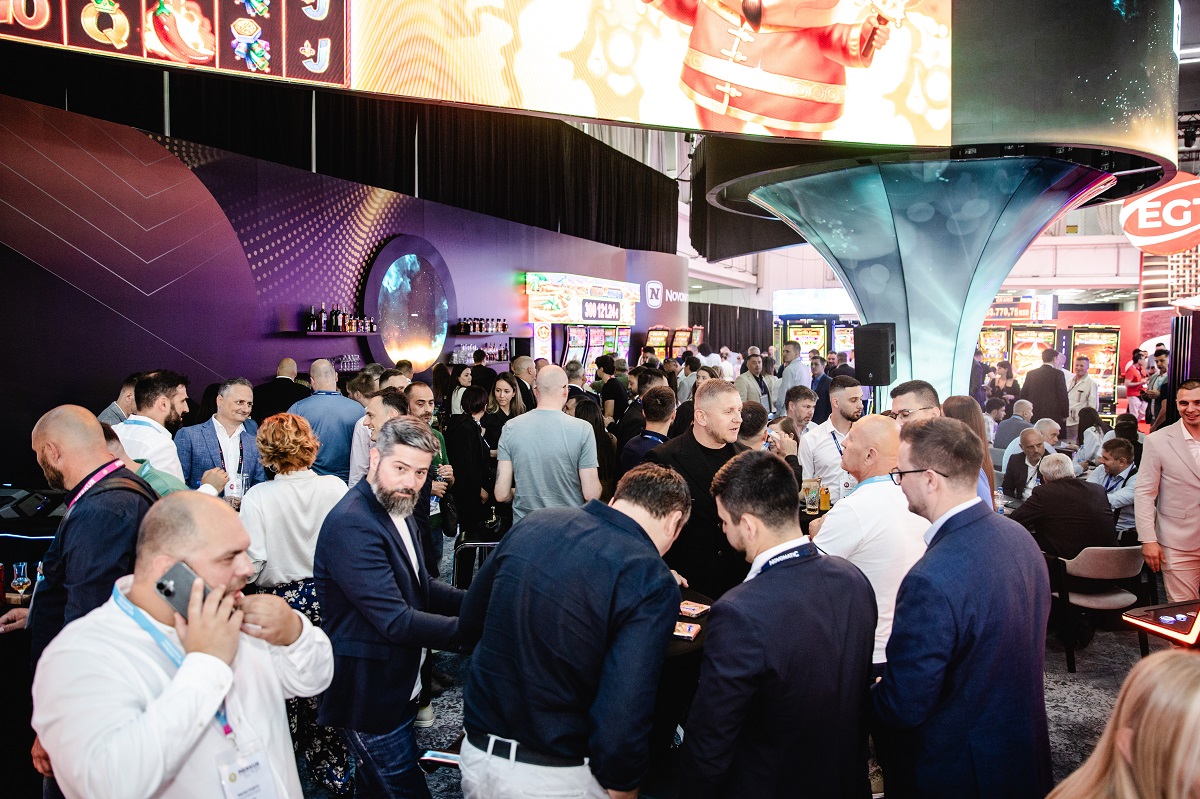
NOVOMATIC concluded a highly successful participation at Belgrade Future Gaming 2026, further reinforcing its strong presence in the Southeast European market. Throughout the exhibition, the company welcomed a steady stream of visitors to its stand, providing an excellent platform for strengthening existing partnerships, establishing new business contacts and discussing future opportunities with customers from across the region.
The comprehensive product showcase featured a broad selection of NOVOMATIC’s latest gaming innovations. Among the highlights were Impera PROLINK 2 and the internationally successful XTENSION LINK series, including Volumes 2, 3, 4 and 5 as well as XTENSION LINK Ultimate, all of which attracted strong interest from visitors thanks to their proven performance and engaging feature mechanics. Visitors also explored VISION LINK, NOVOMATIC’s latest multi-feature linked progressive concept, alongside the versatile GAMINATOR X5, renowned for its flexible game mix and customization options.
A particular highlight for the regional market was the Impera Line HD Edition 10 – Balkan Special, which generated significant interest thanks to its carefully selected game mix tailored specifically to local player preferences.
Taking center stage was the award-winning DIAMOND X QUATTRO 1.55J, whose striking design and immersive player experience made it a standout attraction on the show floor. The portfolio was further complemented by a premium V.I.P. X setup, including the V.I.P. X Royal 1.85 and, for the first time at a Balkan trade show, the V.I.P. X Galaxy 2.65, both showcasing NOVOMATIC’s commitment to delivering high-end gaming experiences for modern casino environments.
As in previous years, NOVOMATIC’s successful cooperation with long-standing partner FAZI contributed to a strong exhibition presence, while the popular ADMIRAL Bet Pub catering concept once again provided a welcoming atmosphere that encouraged networking and business discussions in a relaxed setting.
“The positive response we received throughout the show was truly outstanding. Belgrade Future Gaming remains one of the most important industry events in Southeast Europe and provides an excellent opportunity to engage directly with our customers and partners. We were delighted by the strong interest in our product portfolio, particularly the Impera Line HD Edition 10 – Balkan Special and the first presentation of the V.I.P. X Galaxy 2.65 in the region. The many valuable conversations and promising business opportunities generated during the event once again demonstrated the strength of the Balkan market and the value of close collaboration with our customers. I would like to sincerely thank all visitors, customers, partners, and our dedicated team for contributing to another successful edition of Belgrade Future Gaming,” said Miloš Pejić, Regional Manager SEE at NOVOMATIC.
With a comprehensive portfolio of internationally proven products, regionally tailored solutions and premium gaming innovations, NOVOMATIC once again demonstrated its ability to meet the diverse requirements of the Balkan market. The successful outcome of Belgrade Future Gaming 2026 further highlighted the company’s strong momentum across Southeast Europe and created a solid basis for future growth and collaboration with customers and partners throughout the region.
The post Strong Customer Response Marks Successful Belgrade Future Gaming 2026 for NOVOMATIC appeared first on Eastern European Gaming | Global iGaming & Tech Intelligence Hub.

-

 Andréa Curral7 days ago
“No iGaming, marcas sólidas dependem de consistência, experiência e relacionamento de longo prazo”
-
eSports7 days ago
G2’s Otis Lawrence wins 2026 F1 Sim Racing World Championship
-
Asia3 days ago
EGT Brings High-Impact Asian-Themed Portfolio to SiGMA Asia 2026
-
Africa3 days ago
Greentube partners with World Sports Betting to expand in South Africa
-
Conference3 days ago
Danish regulator to speak at Gaming in the Nordics launch event
-
Africa3 days ago
Gaming Realms expands into three African markets via SportyBet partnership
-
affiliate marketing3 days ago
CasinoCanada partners with LolaJack Casino to expand Canadian visibility
-
BETER3 days ago
BETER expands US footprint with Illinois approval