American Gaming Association
Reg-tech – Easing the burden on compliance teams

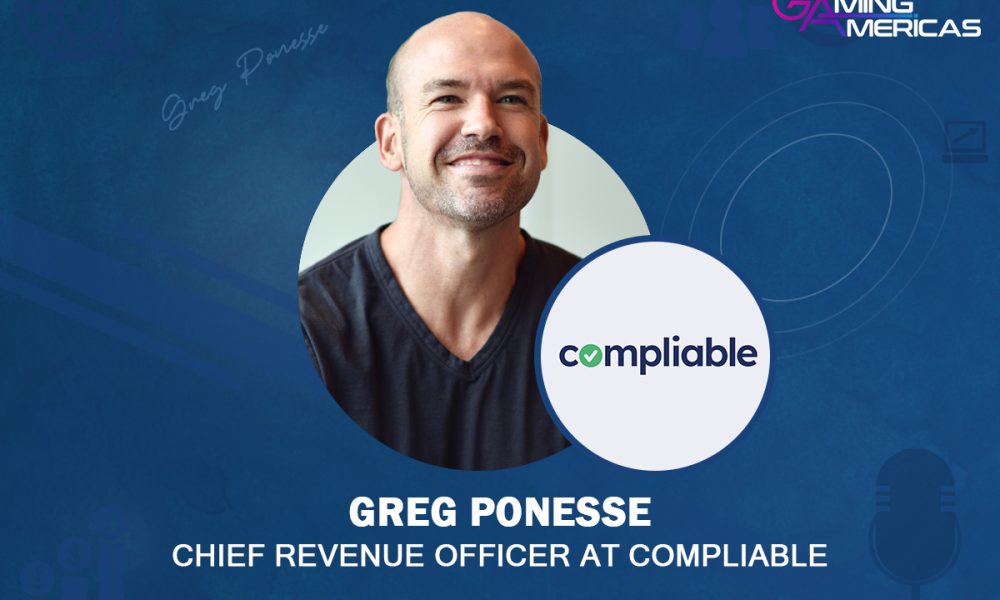
Greg Ponesse, Chief Revenue Officer at Compliable
The year is coming to an end, and we can look back at an interesting 12 months that have seen the US betting and gaming landscape further expand into three new states, Vermont, North Carolina and Kentucky.
The American Gaming Association (AGA) recently released numbers that showed commercial gaming revenue was boosted in Q2 of 2023, hitting a record of $16.07bn. The impressive results marked the 10th consecutive quarter of growth for the industry.
Yet, some operators have had to navigate through choppy waters, with news stories from the last 18 months including Churchill Downs, MaximBet, PlayUp, Fubo, FOX Bet and WynnBet closing or pulling out of states as they struggle with profitability.
Sports betting, the main legalized vertical in the US, is such a low margin business that the ability to save money anywhere in operations is so important. Competition is extremely high, and the sports betting markets in the majority of legalized states have been dominated by a handful of behemoths such as DraftKings and FanDuel.
While these operators have large compliance teams to cope with the fragmented regulatory landscape that exists across states in the US, smaller to medium-sized companies have fewer resources to handle ever-changing regulations while also preparing for new states opening up.
Historically, if not handled by an internal team of compliance staff, regulatory issues were simply given to outside counsel with their associated high legal fees. Furthermore, overstressed smaller compliance teams leave room for mistakes as a result of human error which can lead to large regulatory fines.
The number of reg tech solutions now available in the gambling space can be hugely beneficial and can drive down costs in a number of ways, with one of the major advantages being that companies can benefit from compliance work that is being done in one market across similar jurisdictions.
Despite a lack of common regulatory approaches in legalized US states, there are still many similar obligations, and with technology, the process to complete these tasks can be automated. Licensing of employees and reporting of revenues or other data are common compliance duties that most regulators require. This type of requirement can easily be handled by technology rather than employees, significantly increasing efficiency, and freeing the team to focus on higher level problems which can be critically important when launching in new jurisdictions.
Simply put, reg tech allows a smaller team to operate with the same skills and efficiency as a much larger team and can help cut costs while still maintaining operational compliance.
Even if fewer US markets are currently opening up compared with a few years ago, successful gambling operators and suppliers are targeting multiple states at a minimum. We have passed the point where any one person can be an expert on every gambling jurisdiction’s requirements and tech is a necessary component to help manage the processes.
As 2024 is approaching, we will see further regulatory developments in the US betting and gaming space and more consolidation cannot be ruled out as operators grapple with being profitable in a hyper competitive sector.
Reg tech can play an important part, cutting costs while streamlining and simplifying processes and procedures, helping operators to succeed in the exciting US market.














Registration is now open for G2E 2026, presented by the American Gaming Association (AGA) and organized by RX. Global Gaming Expo returns to The Venetian Resort Las Vegas from Sept. 28 – Oct. 1, convening gaming leaders, innovators and decision-makers from around the world for the industry’s premier event. Exhibitors, media, and attendees can find more information and register now by visiting www.globalgamingexpo.com.
Supported by the Association of Gaming Equipment Manufacturers (AGEM), top highlights of the show include the debut of the Business Solutions & Tech Zone, showcasing the technologies and enterprise solutions powering today’s integrated resorts on and off the casino floor. The highly-anticipated G2E Dealer Championship will return, expanding to include dealers from Canada and Mexico to compete for the best dealer in North America.
“Gaming is always evolving, and G2E remains the industry’s premier destination for global collaboration, business growth and innovation. By convening operators, suppliers, regulators and industry leaders from around the world, G2E creates opportunities to explore emerging technologies, exchange ideas and explore the trends taking place across gaming. We look forward to welcoming the industry back this September,” said Korbi Carrison, RX’s Event Vice President for G2E.
For more than 25 years, G2E has been the most influential trade event for the legal, state, tribal and globally regulated gaming industry, driving advancements across casinos, hospitality, technology, iGaming, sports betting and more. The event will welcome over 25,000 industry professionals from more than 120 countries, regions and territories and nearly 400 exhibitors showcasing the latest global gaming technologies.
“What has always set G2E apart is the show’s ability to bring together people from across the gaming ecosystem for meaningful conversations that shape the future of the industry. From emerging technologies to evolving regulations, G2E provides a forum for the conversations that matter most. The continued growth and momentum across the industry are reflected in the strength of the event itself, and we expect another impactful year in 2026,” said Maureen Beddis, AGA’s Senior Vice President of Membership and Events.
G2E 2026 will reflect the dynamic gaming industry with a diverse range of offerings and experiences:
• The G2E Main Stage will feature timely discussions with industry leaders and leading gaming operators to converse on what is shaping the future of legal gaming.
• The G2E Dealer Championship makes its grand return after the success of its inaugural appearance in 2025. This competition brings together the most skilled casino dealers to compete for recognition as the best gaming professional in North America, now expanding to include dealers across Canada and Mexico.
• The all-new Business Solutions & Tech Zone is a dedicated showcase for innovative tools and services like AI, data analytics, cybersecurity, payments, CRM and MarTech that help integrated resorts improve efficiency, personalization and revenue growth.
• The New Exhibitor Zone is a dedicated area for first and second time G2E exhibitors. This is the perfect area to connect with G2E’s newest exhibitors.
• In the iGaming Hub, attendees can explore the innovations shaping the future of online gaming. Through dedicated sessions and built-in networking opportunities, attendees can gain insights and discover what’s next in this rapidly evolving space.
• The G2E Networking Lounge and Media Zone returns in 2026, providing dedicated spaces for industry networking and media engagement directly on the expo floor.
• The 2026 education program features over 100 sessions and 330 speakers, offering insights from leading voices across gaming.
Education sessions will run from Sept. 28 – Oct. 1, and the expo hall will be open from Sept. 29 – Oct. 1.
The post Registration Now Open for Global Gaming Expo 2026 appeared first on Americas iGaming & Sports Betting News.
AGA Gaming Industry Outlook
AGA: Gaming Executives Remain Optimistic as Industry Growth Continues; Sports Event Contracts Drive Rising Industry Concern
Gaming executives report a positive outlook on future industry conditions as key performance indicators continue to improve. At the same time, emerging risks – particularly from prediction market platforms offering sports event contracts – are increasingly shaping industry concerns, according to the American Gaming Association (AGA) Gaming Industry Outlook.
The Gaming Conditions Index (GCI) shows real economic activity – measured across gaming revenue, employment, wages, executive sentiment, and casino hotel event activity – grew 1.5 percent year-over-year, reflecting sustained confidence and momentum in the industry.
“The legal state- and tribal-regulated gaming industry continues to demonstrate resilience and adaptability in a dynamic economic environment. Operators are focused on investing in innovation and delivering world-class entertainment, while also navigating an evolving competitive and regulatory landscape,” said AGA President and CEO Bill Miller.
Key Findings Include:
• More than 60 percent of executives expect increased capital investment, higher revenues, and stronger balance sheets over the next six to 12 months.
• Executive sentiment reached its highest level since Q3 2022, with a 21.4 percent net positive outlook across key business indicators.
• 62 percent of executives plan to increase capital investments over the next six to 12 months, while promotional activity is expected to decline for the second consecutive survey.
Emerging Threats
Despite strong fundamentals, prediction markets offering sports event contracts have emerged as a leading concern, with 81 percent of executives identifying them as a “very significant” risk to the regulated gaming industry.
“Illegal sports betting through sports event contracts is increasingly encroaching on legal, state-and tribal-regulated operators. It’s clear the legal, regulated industry views this is a threat, and will continue to fight back and protect the integrity of our industry,” said Miller.
Executives also cited several additional evolving risks impacting operations:
• Inflation, tariffs, and geopolitical risk continue to be major factors limiting operations, while federal regulatory concerns increased sharply.
• 54 percent of respondents cite employee wages as the top expense pressure, followed by tax and regulatory policy changes.
• 42 percent pointed to competition from new forms of gaming (up from 25 percent in Q3 2025).
Methodology
The AGA Gaming Industry Outlook is prepared biannually by Oxford Economics. It provides a timely measure of recent industry growth and future expectations based on executive sentiment, gaming activity, and economic indicators. The Q1 2026 survey was conducted between March 23 and April 8, 2026. A total of 26 executives participated, representing senior level AGA member executives from major international and domestic gaming companies, gaming equipment suppliers, and iGaming and sports betting operators.
The post AGA: Gaming Executives Remain Optimistic as Industry Growth Continues; Sports Event Contracts Drive Rising Industry Concern appeared first on Americas iGaming & Sports Betting News.
The U.S. commercial gaming industry reached a record high in 2025, generating $78.72 billion in gross gaming revenue (GGR), a 9.2% increase over the previous year, according to the American Gaming Association’s (AGA) Commercial Gaming Revenue Tracker. In 2025, legal, state-regulated gaming generated $18.09 billion in gaming tax revenue, supporting state and local education, infrastructure, and other services across the country, up 15.1% over last year.
“For another year, legal commercial gaming in the United States has delivered exceptional results for consumers, operators, and the communities we serve. These record revenues and tax contributions demonstrate the broad appeal of regulated gaming markets and why strong state oversight remains essential as our industry evolves,” said Bill Miller, President and CEO of the American Gaming Association.
Growth Across the Industry in 2025:
• Traditional Gaming generated $50.94 billion in revenue, up 2.3%, while contributing $11.33 billion in taxes, a 7.2% increase.
• Sports Betting revenue rose to $16.96 billion, a 22.8% increase, on a total handle of $166.94 billion (+11.0%). State-regulated sportsbooks generated $3.71 billion in taxes, up 32.4% year-over-year.
• iGaming reached $10.74 billion in revenue (+27.6%) and delivered $2.59 billion in taxes, a 36.9% increase.
All 38 commercial gaming markets saw annual revenue increases in 2025. These figures reinforce strong consumer enthusiasm for legal, regulated gaming and highlight the expanding economic impact of state-regulated markets.
Protecting State- and Tribal-Regulated Gaming
Industry leaders and lawmakers continue to take a stand against prediction markets offering sports contracts outside state and tribal regulatory frameworks. These platforms operate without state oversight, are not subject to the same consumer protection and responsible gaming standards, and do not contribute tax revenue.
Even with a record state-regulated gaming tax impact in 2025, the AGA estimates that prediction markets offering sports event contracts have diverted more than $500 million in potential sports betting tax revenue to date.
“With 2025 marking another record year, the industry’s performance reinforces a clear principle. Sports betting belongs under state and tribal regulation. That’s how consumers are protected and how communities share in the benefits,” added Miller.
The post U.S. Commercial Gaming Revenue Hits $78.7 Billion in 2025 appeared first on Americas iGaming & Sports Betting News.

-

 content-supply6 days ago
Million Games launches Skull King’s Treasure with partner studio Arcane Pixel
-
Alberta6 days ago
Octoplay secures conditional Alberta iGaming supplier approval from AGLC
-
Canada6 days ago
What Canadian Slot Players Are Really Comparing in 2026: Payout Speed, Interac and RTP Transparency
-
Africa5 days ago
Booming Games renews Hollywoodbets Durban July activation partnership
-
Africa5 days ago
SpringbokCasino ties July free spins to ‘Minions in the Wild’ campaign
-
Casino Content6 days ago
SkillOnNet adds ODDSworks casino content across Ontario sites
-
Evoplay5 days ago
Evoplay launches Safari Coins slot with fixed jackpots and collector mechanic
-
game launches5 days ago
Habanero launches Happy Hatchlings slot with screen-wide Wild transforms