2026 World Cup
Bet St George survey: 40% of England fans tip World Cup win

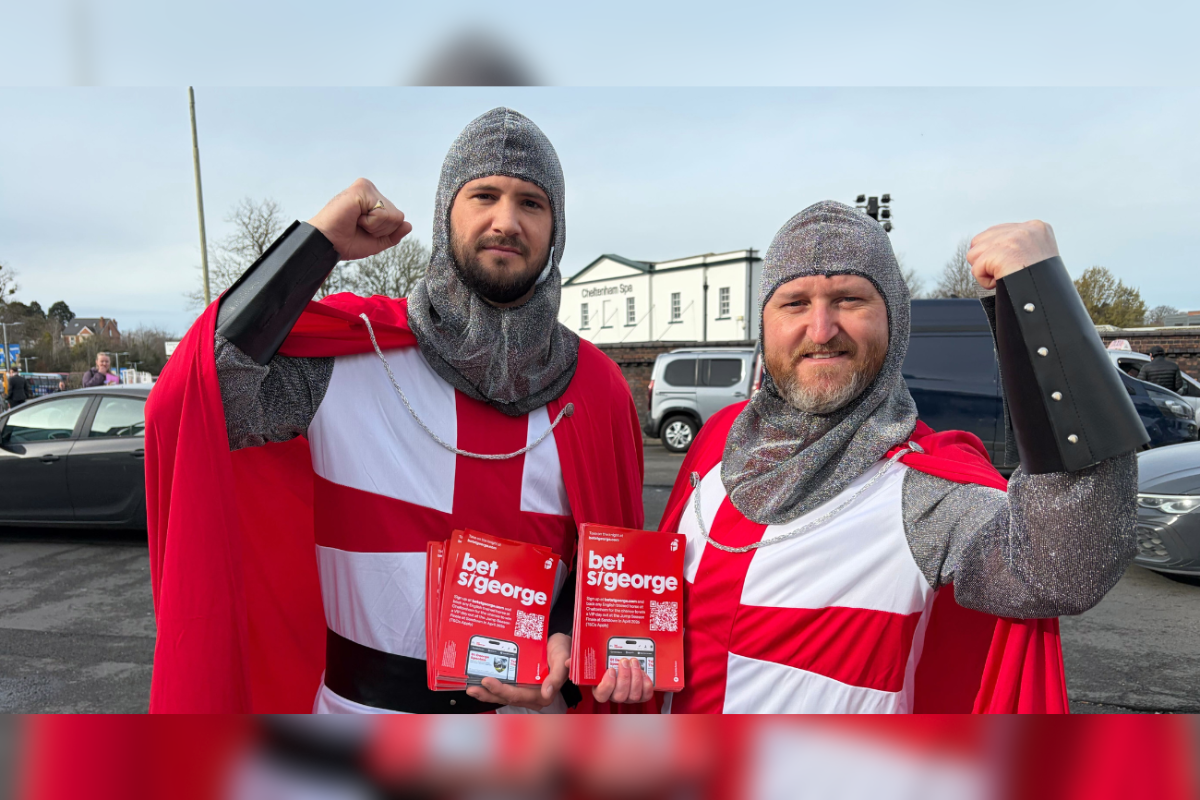
Bet St George has published new research claiming four in ten England fans expect the Three Lions to win the 2026 FIFA World Cup. The betting brand said the poll of 1,000 England sports fans was conducted between 15 and 18 May 2026, with the tournament set to start on Thursday.
In the survey, 40% of respondents said they expect England to lift the trophy in North America this summer. Optimism is highest among 25 to 34 year olds, where 67% backed England to win.
The research also points to a broader national narrative around the team. Nearly three-quarters (72%) of fans agreed that the England team brings the nation together. Separately, 26% said a World Cup win would rank among their top three most important life events, rising to 31% among men.
Regionally, Bet St George said England sports fans living in Scotland were the most confident cohort in the dataset, with 77% backing England to win and 96% agreeing the team brings the nation together. Greater London also skewed optimistic (53% backing England; 36% placing a win among their most important life events), while Yorkshire and the Humber was more cautious (31% backing England; 19% ranking a win as a top life moment).
Andre Au, Marketing Director at Bet St George, said: “England has one of the most passionate sporting audiences in the world, but for a long time, it was the only nation in the UK without a sportsbook built around its own identity.
“We created Bet St George because supporting England is different. World Cup fever hits massively once the squad is announced. For England, it is the expectation. It’s all about the previous hurt, penalty shoot-outs, the build-up, the predictions, and the debates with your mates. The whole nation feels that this tournament might finally be the one.”
The post Bet St George survey: 40% of England fans tip World Cup win appeared first on EE Gaming | Global iGaming & Tech Intelligence Hub.









Robinhood has expanded its 2026 World Cup prediction market offering by featuring additional event contracts on the tournament through its derivatives exchange Rothera.
Robinhood and Susquehanna International Group acquired a majority stake in Rothera last year. Both companies announced the exchange will handle a large share of the 2026 World Cup tournament contracts, including match outcomes, the overall tournament winner and total goals markets.
The move marks a shift away from Robinhood’s long-standing reliance on prediction market platform Kalshi.
Robinhood said that decisions on where contracts are routed will be made throughout the competition, based on factors including market liquidity and clarity of game outcomes. The company added that some player-related contracts and certain combination contracts will remain available through the Kalshi platform.
The World Cup, which is set to accelerate sports betting growth, will be a major test for Rothera as Robinhood aims to broaden the number of providers supporting its prediction markets business.
“The World Cup is a global phenomenon and is the perfect event to launch Rothera. We’re now delivering even more value for customers as we continue on our mission to make Robinhood the best place to trade prediction markets,” said JB Mackenzie, VP and GM of Futures and Prediction Markets at Robinhood.
“This is a foundational milestone for us to launch a purpose-built exchange and clearinghouse for the fast-growing prediction markets. While still early days, our goal is to provide the technology, regulatory certainty, and risk management framework needed to support broad participation from both retail and institutional participants. The World Cup marks the first step in that journey, and we look forward to helping shape the future of prediction markets as an asset class,” said Thomas Chippas, CEO of Rothera.
The post The World Cup is Now Trading on Robinhood and Rothera appeared first on Americas iGaming & Sports Betting News.
2026 sports betting
For Sportradar, the 2026 World Cup is set to reshape acquisition and engagement in sports betting


With expectations of generating approximately US$ 50 billion in bets worldwide, the 2026 World Cup is already seen by the industry as the largest commercial event in the recent history of sports betting.
In an expanded tournament with 48 teams, 104 matches and a duration of 39 days across three different countries, Latin American operators are preparing to compete for attention, retention and conversion in an increasingly competitive environment driven by real-time data.
More than media volume or massive campaigns, experts point out that the competitive differentiator in the next World Cup will be the ability for personalization, automation and dynamic activation during the micro moments of the match.
Technologies based on artificial intelligence, live data and micro betting are already transforming the way operators approach acquisition and engagement in major international tournaments.
At the same time, regulatory advancement in Latin America and the maturation of bettor behavior are increasing pressure for more efficient, contextual campaigns aligned with local compliance requirements.
In this interview, Sportradar, represented by Rodrigo Cambiaghi, Senior Digital Advertising Sales Executive for Latin America, analyzes how operators can prepare for the 2026 World Cup, which strategies performed best in the Euro Cup and Copa América, the impact of real-time personalization and the challenges of executing regional campaigns in a fragmented regulatory landscape.
The estimated global betting volume for the 2026 World Cup is US$ 50 billion. What does this number represent in terms of real opportunity for Latin American operators, and what are the main risks for those who do not prepare?
Sportradar – The estimated US$ 50 billion betting volume during the 2026 World Cup shows the scale of the opportunity the tournament represents for Latin American operators.
We are talking about the largest attention and engagement event in the industry, in an edition that will feature 48 teams and 104 matches, creating more moments of connection with fans and more acquisition opportunities over 39 days of competition.
But the competitive differentiator will not lie solely in the size of media investment. The most prepared operators will be those capable of using data, technology and personalization to activate real-time campaigns aligned with the emotional context of the match.
Today, consumers expect more relevant experiences connected to what is happening on the field at that exact moment, whether it is a goal, a comeback or an outstanding individual performance.
At the same time, there is a significant risk for those who fail to prepare properly. Generic campaigns, relying only on bonuses or media volume, tend to lose efficiency in an extremely competitive environment.
Without robust real-time data infrastructure and continuous optimization capabilities, it becomes much more difficult to capture moments of highest betting intent and transform increased tournament traffic into sustainable long-term growth.
In the end, the 2026 World Cup should consolidate an important shift in the industry, where scale remains relevant, but technology, personalization and real-time execution become the true competitive differentiators.
You mention a “generalized sameness” in the market. What did the most successful operators at Euro 2024 and Copa América do differently in terms of advertising technology?
What we saw in Euro 2024 and Copa América was an important shift in approach.
The most successful operators moved away from broad and generic campaigns to adopt strategies much more driven by data, context and real-time fan behavior.
Instead of treating every minute of a match the same way, they began activating campaigns at moments of highest emotion and betting intent.
Advertising technology played a central role in this. Campaigns started using live data, automation and artificial intelligence to adjust messages, offers and creatives according to what was happening on the field.
A goal, a period of attacking pressure, an outstanding individual performance or even changes in match dynamics became triggers for dynamic campaign activation across multiple channels, including social, video, audio and programmatic.
The result was much more relevant and efficient communication. During Euro 2024 and Copa América, operators that combined branding, performance and moment-driven campaigns saw significant growth in deposits and a reduction in CPA, even in a highly competitive environment.
How do dynamic creative ads triggered by match moments actually work in practice — a goal, a corner, a shift in pace? Can you give a concrete example of a campaign?
Today, dynamic creative ads operate in a way that is closely connected to the logic of micro betting, which is precisely betting on fast and specific events within the match.
Instead of waiting for the final result of the game, fans interact with micro moments in real time, such as the next corner, the next shot on goal or whether a specific player will hit the target in the next play.
In practice, the technology monitors live match data and identifies moments of increased intensity or betting intent.
If a team starts applying heavy pressure, for example, the system can automatically activate campaigns related to the next corner, next shot on goal or other relevant offensive actions.
All of this happens within seconds, with personalized creatives being distributed across digital channels while the emotion of the play is still unfolding.
This model makes the experience much more contextual and relevant for the user. Instead of generic campaigns, fans receive messages aligned with the exact moment of the game and their own consumer behavior. It is precisely this combination of real-time data, automation and micro betting that is reshaping how operators approach acquisition and engagement during major sporting events.
The concept of “always on” is central to your approach. How do operators maintain relevance in the minutes between goals, when betting intent still exists but the peak moment has passed?
The “always on” concept is based on the understanding that fan engagement does not disappear between major match events.
Even when the game enters a period without goals, attention still exists in live statistics, anticipation of the next play, individual player performance and social media conversations. It is precisely in this interval that the most prepared operators are able to maintain relevance using real-time data and personalization.
In practice, this means activating campaigns and betting suggestions aligned with the current context of the game. If a team is applying more pressure, for example, users may receive offers related to the next corner, next shot on goal or other micro betting markets.
The focus shifts away from only the major event, such as a goal, and expands to include the entire dynamics of the match.
The key difference lies in the ability to transform live data into more relevant and continuous experiences. With automation, AI and behavior-driven campaigns, operators are able to keep users engaged throughout the entire match journey, not only during peak emotional moments.
The 2026 World Cup lasts 39 days and takes place across three countries. How should an operator structure its marketing budget to be agile enough to capitalize on unexpected outcomes without losing brand consistency?
In a tournament like the 2026 World Cup, flexibility becomes just as important as budget size. The most efficient operators do not work with a rigid plan from start to finish.
They structure campaigns capable of redistributing investment in real time, based on performance, audience behavior and narratives that emerge throughout the tournament.
This is especially important in a World Cup with 104 matches, multiple time zones and different markets involved.
Unexpected stories always emerge, such as surprise teams, viral players or matches that generate much higher-than-expected spikes. Prepared operators are able to react quickly to these moments, increasing presence in channels and campaigns that are performing best in that specific context.
At the same time, brand consistency remains fundamental. A common mistake is concentrating almost all investment solely on acquisition and immediate performance.
The strongest brands are able to balance awareness, acquisition and retention throughout the 39 days of competition, maintaining a clear identity while adjusting messaging, formats and campaign intensity as fan behavior evolves during the tournament.
What are the main differences between Latin American markets in terms of bettor behavior during major tournaments, and how does this affect campaign strategy?
Although football is a shared cultural element across Latin America, the region’s markets present very different levels of maturity, regulation and digital behavior.
In more mature markets, users already hold multiple accounts and have greater familiarity with live betting, making personalization, retention and user experience key factors. In newer markets, there is still a very strong focus on acquisition and awareness building.
We also see important differences in emotional fan behavior. During major tournaments, engagement tends to grow strongly as local teams progress in the competition.
This makes highly localized campaigns much more impactful than generic regional strategies. User behavior changes rapidly according to narrative, team performance and social media momentum at that moment.
For this reason, campaign strategy must be flexible and driven by real-time data. There is no single approach for the entire region.
The most efficient operators are able to adapt creatives, messaging, channels and even investment intensity based on the specific behavior of each market, maintaining cultural relevance and higher acquisition and retention efficiency.
The regulatory landscape in Latin America is fragmented. How can operators working across multiple markets run efficient campaigns without compromising local compliance?
Regulatory fragmentation is one of the main challenges in the industry today in Latin America, especially for operators working across multiple markets at the same time.
Each country has different rules regarding advertising, targeting, permitted channels and responsible communication, which requires campaigns to be much more adaptable and compliance-driven from the very beginning of planning.
In this scenario, technology and automation play a fundamental role. The most prepared operators work with platforms capable of applying market-specific restrictions in real time, adjusting targeting, formats, frequency and messaging according to local regulation. This allows operational efficiency without compromising compliance or regulatory safety.
At the same time, it is important to find a balance between standardization and local relevance. Regional strategy can be centralized in terms of brand, technology and data intelligence, but activation must respect the cultural and regulatory context of each country.
The most efficient campaigns today are precisely those that manage to combine regional scale with highly localized execution.
The post For Sportradar, the 2026 World Cup is set to reshape acquisition and engagement in sports betting appeared first on Americas iGaming & Sports Betting News.
2026 FIFA World Cup
Canada’s Provincial Betting Divide Will Be Exposed During the 2026 World Cup, New Analysis Finds
Canada’s fragmented provincial gambling system will face its biggest stress test during the 2026 FIFA World Cup, according to new research published by CasinoCanada.com, which finds stark disparities in how players across the country will be able to engage with the tournament.
The analysis draws on provincial regulatory reporting, iGaming Ontario’s annual figures and data from Blask’s 2025 iGaming Landscape Report to examine whether Canada’s betting infrastructure is ready for a tournament it is co-hosting.
The research highlights a sharp divide between Ontario and the rest of Canada. Ontario’s open, competitive market – home to nearly 50 licensed operators – has achieved a channelisation rate of 83.7%, meaning more than four in five Ontario bettors are choosing regulated platforms over unregulated alternatives.
Outside the province, the picture is notably different, with Saskatchewan carrying an estimated offshore leakage rate of 93%, Alberta and Manitoba sitting at 88%, and British Columbia – where a provincial platform has operated for years – retaining only around 49% of its online market.
CasinoCanada’s report also identifies a significant timing problem with Alberta’s competitive market. The AGLC’s registration deadline for operators falls on 13 July 2026, after the World Cup reaches the quarter-final stage. With Alberta’s significant offshore leakage rate, the analysis warns the province is likely to see record betting volumes flow through unregulated channels during the peak of the tournament.
Canada’s co-hosting status is expected to amplify betting appetite considerably. Data from the 2022 FIFA World Cup showed that 99% of bets placed on BCLC’s PlayNow platform backed Canada to advance from the group stage. With Canada co-hosting in 2026 and playing all three group-stage games on home soil, that appetite is expected to be significantly higher – arriving into a regulatory infrastructure that, outside Ontario, is not built to absorb it.
Eugene Ravdin, Head of PR for CasinoCanada, said: “The 2026 World Cup is not just a commercial opportunity for the Canadian market – it’s a live stress test for how the country regulates gambling. Ontario has built something that works, and the numbers show it. However, for most Canadians outside that market, the tournament is going to arrive at a system that was never designed for this level of demand.
“The offshore leakage figures are not abstract. They represent real bettors choosing unregulated platforms because the regulated alternative isn’t competitive enough. The World Cup will make that gap very visible, very quickly.”
The post Canada’s Provincial Betting Divide Will Be Exposed During the 2026 World Cup, New Analysis Finds appeared first on Americas iGaming & Sports Betting News.

-

 Compliance Updates7 days ago
KingMidas Games Secures Peru Certification
-
Ben Scobie-Trumper Head of Sales at mkodo7 days ago
GGPoker selects GeoLocs geolocation service for regulated Ontario market
-
Canada7 days ago
XSOLLA STRENGTHENS COMMITMENT TO ATLANTIC CANADA’S GROWING GAME INDUSTRY WITH EXPANDED EVENT PRESENCE
-
Business Development7 days ago
Xsolla expands Atlantic Canada event push with Game Invest East and XP Game Connect
-
2026 FIFA World Cup5 days ago
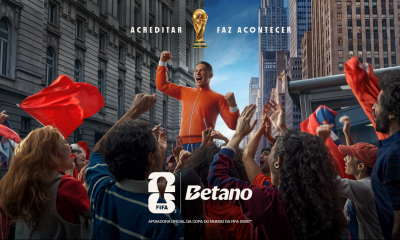
Betano Sends a Video Game Character into the Real World to Capture the Emotion of the World Cup
-
Balkans6 days ago
Expanse Studios Signs Content Distribution Agreement with MaxBet
-
Latest News7 days ago
Crypto Platform 1win Welcomes Ilia Topuria as the 1win VIP Community Member
-
Amusnet5 days ago
Weekend Reels | Week 23: Slot Drops & Trends