Compliance Updates
Spillemyndigheden: More Than 30,000 Danes Self-excluded from Gambling Since 2012

The Danish gambling regulator Spillemyndigheden has reported that as of the end of 2021, 30,451 people were registered with ROFUS, the country’s register of voluntarily excluded players.
The increase from 26,115 registrations at the end of 2020 is in line with previous years. Spillemyndigheden says an average of 4000 people per year have signed up since the self-exclusion scheme was launched in 2012.
The largest proportion of people registered is in the 20-29 age group, which makes up 30% of the total, ahead of the 30-39 age group (28%). Over 60s represent just 8% of those registered, with 6% in the 60-69 age group and 2% aged 70-79.
Three-quarters of those registered were men, although the split was more even in the older age groups. A quarter of all those using the scheme were men aged 20-29, and 22% were men aged 30-39. Some 4% were men aged under 20.
Spillemyndigheden launched a television and social media campaign for the ROFUS self-exclusion scheme in September, informing players about their right to ask operators to let them “take-a-break” and self-exclude from all gambling promotions.
It became a requirement for all licensed operators to refer self-excluded players to the central ROFUS database under reforms to the Danish Gambling Act implemented in 2018.
Powered by WPeMatico

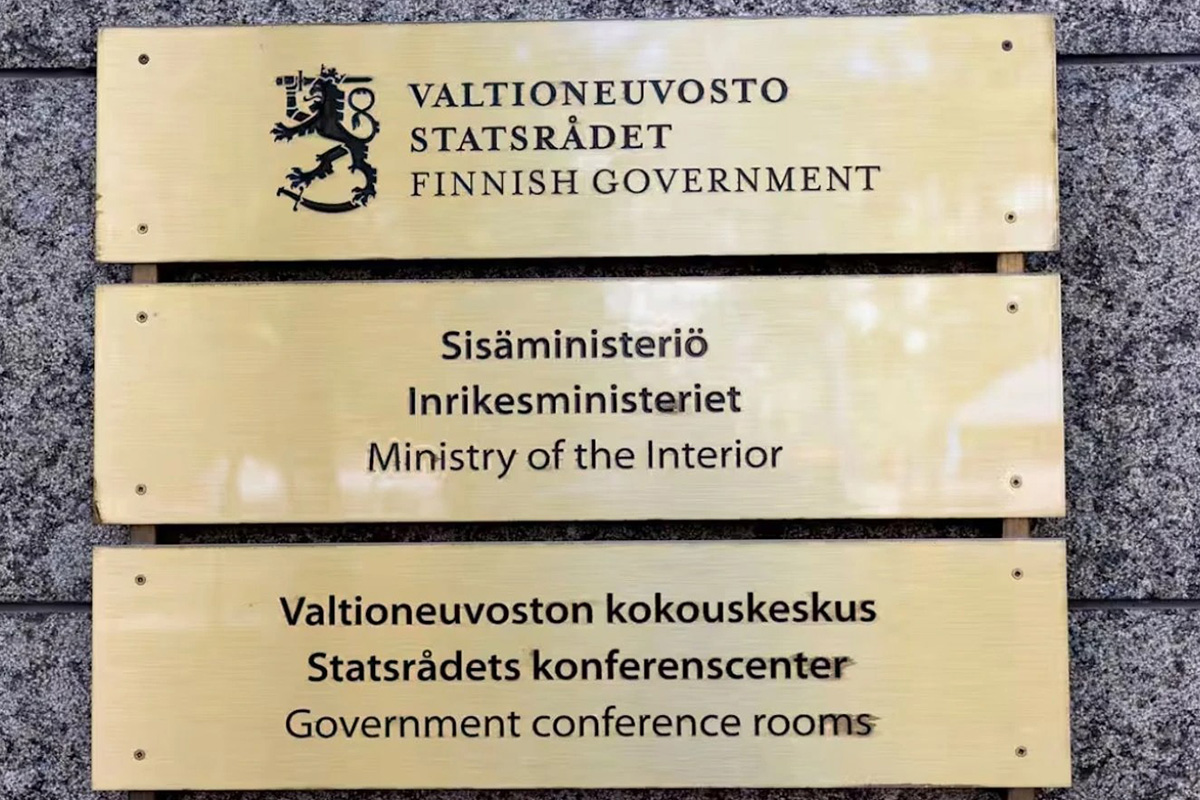
Finland’s Interior Ministry is examining whether scratchcards might once again be allowed as gifts.
The investigation will consider whether winnings from a scratchcard could be claimed by someone other than the person who purchased the card.
At the start of 2024, scratchcards were brought under mandatory identification rules. Since then, recipients of gifted cards have been unable to redeem any prizes they potentially offer.
Parliament approved a new Lotteries Act in December. At the same time, legislators included a statement urging the government to explore ways to permit scratchcards to be given as gifts.
Christmastime is traditionally the biggest season for lottery scratch card sales in Finland.
The post Finland Govt Looks at Whether Scratchcards can be Gifted Again appeared first on Eastern European Gaming | Global iGaming & Tech Intelligence Hub.
Compliance Updates
VNLOK Report: Over 95% of Gambling Ads on Meta Platforms are from Illegal Providers


Illegal gambling providers continue to reach Dutch consumers on a large scale via Meta platforms. An analysis by VNLOK’s Ads Library for October, November and December 2025 shows that in each month, more than 95% of the gambling promotions found—both Facebook pages and advertisements—come from illegal providers. At the same time, only a small portion is removed by Meta, which calls for faster and more robust measures.
Illegal gambling advertisements are widely visible
Recent analyses show that illegal gambling advertising via meta-platforms remains widely visible to Dutch consumers. Of the Facebook pages and gambling ads promoting gambling, over 95% originated from illegal gambling providers in all three months.
Fast rotation with a wide reach
It’s striking that ads from illegal providers are rolled out and replaced at breakneck speed: on average, they were visible for one and a half days in October (79% for less than a day), two days in November (69% for less than a day), and two days in December, with 87% of illegal ads being visible for less than a day. Illegal gambling ads also have a wide reach, peaking at 50 million impressions in November.
Enforcement is lagging behind
The regulated Dutch gambling market is designed to protect consumers through strict duty of care, affordability guarantees and advertising regulations. Illegal providers fall outside this system, yet still manage to reach Dutch target groups on a large scale through social advertising. The share of illegal ads removed by Meta remains limited: 3% in October, 5.2% in November and 4.7% in December.
“These figures are alarming. The enormous flood of illegal gambling advertisements on Meta platforms undermines player protection and also erodes trust in the legal market. This problem is unfortunately growing. The promotion of illegal gambling websites on social media is expanding from social advertising to social content. Meta and other platforms are being flooded with viral videos featuring the brands of illegal gambling websites. This content is attracting targeted minors and young adults to illegal gambling offerings, where the risk of gambling harm is very high,” Björn Fuchs, Chairman of VNLOK.
Call from VNLOK
The findings show that the current approach by platforms and regulators is insufficiently aligned with the scale and speed of illegal gambling advertising on social media. To better protect consumers and safeguard the regulated system, additional and targeted actions are necessary:
Meta must strengthen proactive detection, advertiser verification, and rapid takedown processes for illegal gambling promotions targeting the Netherlands.
The Netherlands Gambling Authority must take even more enforcement action, within existing legal frameworks, against marketing companies and platforms that facilitate advertisements and/or content that direct Dutch consumers to illegal gambling websites.
The visibility and attractiveness of legal online gambling are crucial to prevent even more Dutch players from turning to illegal providers. Policymakers and regulators must ensure that additional rules and restrictions for legal providers do not compromise the visibility and attractiveness of legal online gambling. This will lead to a decrease in the net protection of Dutch consumers. A sufficiently visible and attractive legal offering is crucial to prevent even more Dutch players from turning to illegal providers.
The post VNLOK Report: Over 95% of Gambling Ads on Meta Platforms are from Illegal Providers appeared first on Eastern European Gaming | Global iGaming & Tech Intelligence Hub.
Compliance Updates
eGaming Integrity launches Voluntary Code Advisory Service for prize draw operators

eGaming Integrity – a leading compliance and internal audit advisory firm – has launched a Voluntary Code Advisory Service to support online prize draw and competition operators as regulatory scrutiny of the sector increases and a new compliance deadline approaches.
The service was launched following the introduction of the Department for Culture, Media and Sport’s Voluntary Code of Good Practice for online prize draws and competitions in November 2025. The Code sets a deadline of 20 May 2026. By that point, operators are expected to be more transparent, strengthen consumer protections and show active oversight of their operations. Failure to demonstrate effective voluntary compliance may increase the likelihood of statutory licensing and subsequent tighter regulation.
Prize draws are not regulated as gambling under the Gambling Act 2005. Despite this, the sector has grown rapidly and attracted attention in Westminster. The UK online prize draw market is now estimated to be worth around £1.3bn, with more than 7 million players. That scale has brought closer attention from policymakers.
The Voluntary Code shifts the focus from policy language to demonstrable practice. Operators now have to show what they actually do, and prove it.
eGaming Integrity’s new service is designed to help operators understand the requirements of the Code, assess current practices and prepare clear, practical evidence of compliance. Support covers areas including free entry routes, transparency of terms and odds, responsible marketing practices, internal monitoring processes and public disclosure of consumer protection measures.
Emma Shilling, Director at eGaming Integrity, said: “The Voluntary Code changes the conversation for prize draw operators. It is no longer enough to point to a policy and say the right words are there. Operators are being asked to show what happens in practice. Our job is to help businesses work that through properly, spot issues early and evidence what they are doing.”
eGaming Integrity’s audit and risk specialists lead the work. The focus is on practical rather than theoretical matters. Findings are clearly set out, with recommendations that operators can act on as regulatory expectations tighten.
Robert Penfold, Head of Internal Audit at eGaming Integrity, said:
“The writing is on the wall. This is voluntary for now, but that could change quickly. Operators who build real oversight systems today won’t be scrambling if this becomes statutory tomorrow.”
The Voluntary Code Advisory Service is available immediately to UK prize draw and competition operators.
The post eGaming Integrity launches Voluntary Code Advisory Service for prize draw operators appeared first on Eastern European Gaming | Global iGaming & Tech Intelligence Hub.

-

 Games Global7 days ago
Games Global and Stormcraft Studios extend the supernatural franchise with Immortal Romance: Sarah’s Secret Power Combo
-
Latest News6 days ago
N1 Partners Hosts the N1 Puzzle Promo Grand Final and Reveals the Helicopter Winner at iGB Affiliate 2026 in Barcelona
-
Amusnet7 days ago
Week 4/2026 slot games releases
-
Asia7 days ago
World Esports Summit Celebrates Its 10th Edition in Busan
-
affiliate marketing6 days ago
N1 Partners Hosts the N1 Puzzle Promo Grand Final and Reveals the Helicopter Winner at iGB Affiliate 2026 in Barcelona
-
Compliance Updates7 days ago
Dutch Regulator Outlines 5 Key Supervisory Priorities for 2026 Agenda
-
BetPlay3 days ago
Blask Awards 2025: Betano, Caliente, BetPlay, Betsson and others define Latin America’s iGaming landscape
-
Latest News7 days ago
ALL THE ACTION, ALL THE DATES, POKERSTARS OPEN PHILADELPHIA SCHEDULE RELEASED