Compliance Updates
Paf Supports Call for Regulatory Overhaul in Finland

Paf, the Åland Islands-based gaming operator, has announced its support for an overhaul of gambling regulation in Finland, urging the authorities to introduce a new igaming licensing system to help clamp down on illegal operators.
Currently, the state-owned Veikkuas holds a monopoly in Finland’s online gambling market, with no other operators legally permitted to offer igaming in the country. However, authorities have faced calls to end the Veikkaus monopoly in order to open up the market and allow other operators to legally access the country.
Paf chief executive Christer Fahlstedt has now spoken out in support of an end to the monopoly, pointing out that all countries in the European Union have a gambling licensing system in place, with the exception of Finland.
“Finland could build a regulated licensing system that serves Finnish society and enables gamblers to exclude games and gambling ads. With a licensing system for online gaming, Veikkaus would have an equal competitive position in online gaming as other foreign competitors, who would be subject to the strict regulation in Finland,” Fahlstedt said.
Fahlstedt acknowledged a number of regulatory changes that are already set to come into effect, including mandatory identification requirements that will see players have to identify themselves before being permitted to gambling at retail venues from 2023.
However, Fahlstedt noted that with the measures set to cut Veikkaus’ revenues by around €150m per year, this will have an impact on the organisations that the monopoly supports, such as social, sports and youth bodies.
Instead, Fahlstedt said that introducing a licensing system would allow authorities to impose new social responsibility requirements on operators.
“It would be possible to include a loss limit for all gaming operators within the licensing system. The system could also restrict advertising in media as well as outdoors and at different events, in particular, to protect minors. This would be a significant improvement for gambling addicts compared to the current situation, where it is impossible to avoid gaming advertising in everyday life,” Fahlstedt said.
Powered by WPeMatico

Central Register for Exclusion from Gambling
KSA Publishes Studies and Provides Guidance on the Duty of Care

The Dutch Gambling Regulator (KSA) has published two studies and provided additional guidance on the fulfillment of the duty of care by online gambling licensees. The documents provide insight into practice and offer clarification on personal interviews and the submission of notifications for registration in the Central Register for Exclusion from Gambling (Cruks).
The KSA conducted research into these topics in 2025. The results were discussed in December 2025 during a roundtable discussion with license holders. During this discussion, practical experiences and bottlenecks were gathered. Based on this, the KSA has drawn up guidelines to provide more clarity regarding implementation.
Personal maintenance
The personal interview is a far-reaching intervention that license holders are required to implement when there is a suspicion of excessive gambling behaviour or gambling addiction. Research shows that license holders implement this differently and encounter bottlenecks, such as a low response rate from players. The guidance explains, among other things, the timing of the intervention, the form of contact and the content of the conversation. In doing so, room remains for customisation and professional judgment.
Notices
If a license holder observes serious signs of problematic gambling behaviour or suspects a gambling addiction, the player must be advised to register with Cruks. If the player does not follow this advice, the license holder must report this to the KSA (a notification). The KSA may subsequently decide to involuntarily register the player in Cruks.
The research shows that license holders apply this measure differently and that there are questions in practice regarding its implementation. For example, it is difficult for the license holder to verify whether a player has actually registered, and it is not always clear when a notification must be submitted.
The guidance provides practical explanation regarding this, including the timing of reporting and the information required.
Guidelines
The guidelines do not contain new rules, but provide further explanation regarding the application of existing obligations. This gives permit holders more clarity regarding the fulfillment of their duty of care.
The post KSA Publishes Studies and Provides Guidance on the Duty of Care appeared first on Eastern European Gaming | Global iGaming & Tech Intelligence Hub.
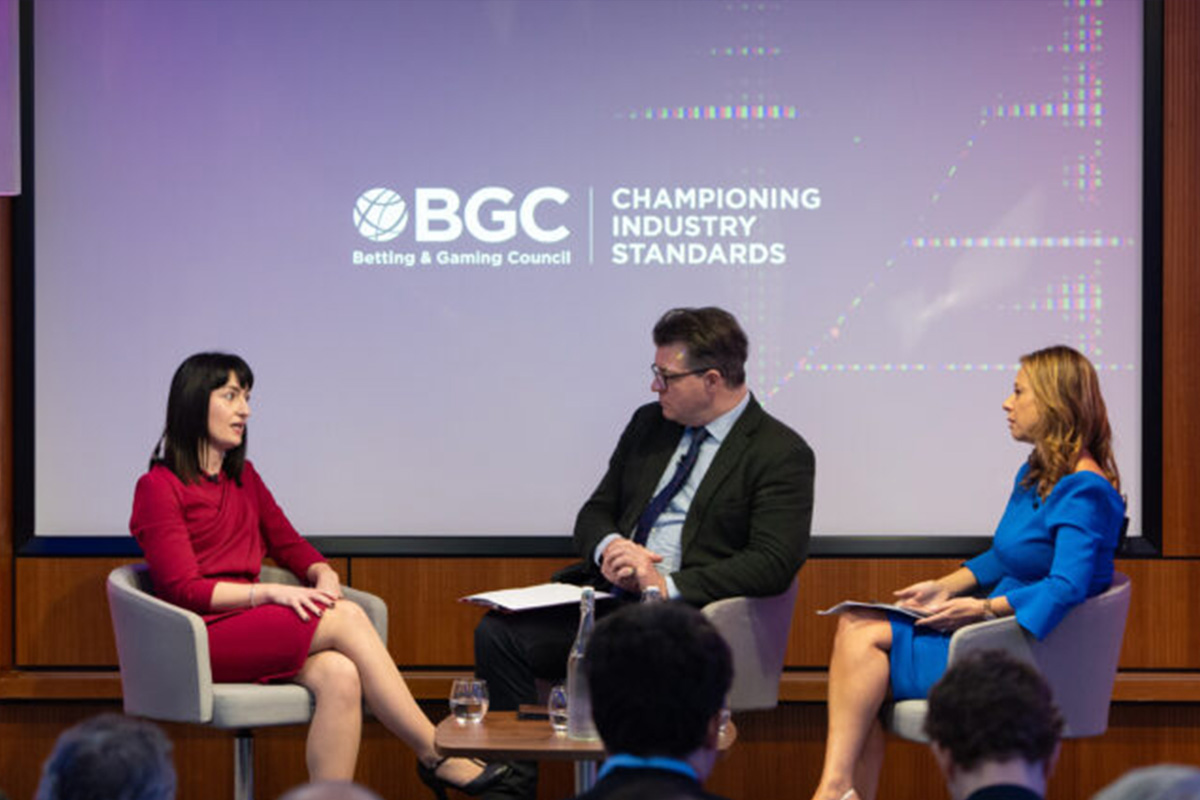
The Betting and Gaming Council AGM 2026 has discussed about the surging illegal gambling black market. As speakers repeatedly highlighted, 1.5 million people in Britain are already gambling on unlicensed sites and staking around £10bn a year outside UK regulation.
That concern is only set to intensify in the coming weeks as the Government considers further regulatory changes. In particular, Financial Risk Assessments (FRAs), which would require customers to provide detailed financial information such as bank statements and will only drive more customers towards unlicensed operators.
Chaired by broadcasters Gloria de Piero and Liam Halligan, the event began with a keynote from the Gambling Minister, followed by a discussion with BGC Chief Executive Grainne Hurst. A panel on the illegal market and the Gambling Commission’s assessment of the challenge followed, alongside research, polling and personal testimony from across the industry highlighting the scale of the problem.
Baroness Fiona Twycross, Parliamentary Under Secretary of State and Minister for Gambling, opened proceedings by addressing the tensions in current policy. She acknowledged that the gambling duty changes announced in November’s Budget were “extremely challenging for the sector, particularly for online operators,” and that they would “significantly affect business decisions and staff.” She defended the government’s position, arguing the changes were necessary to support public finances and would raise over a billion pounds a year for the Treasury.
The minister was clear: “Illegal gambling causes harm to vulnerable consumers,” she said, adding that it also damages the regulated sector. She announced an additional £26m for the Gambling Commission over the next three years and publicly confirmed the establishment of an Illegal Gambling Taskforce. This will bring together major companies including Google, Mastercard, TikTok and Visa alongside law enforcement and advertising bodies with a focus on illegal payments, advertising and cross-agency collaboration. She also announced a forthcoming consultation on the banning of unlicensed sport sponsorships, including in the Premier League. For many in the industry, this welcome action on enforcement will sit uneasily alongside tax policy that they believe is actively driving consumers towards the harmful black market.
The post BGC AGM 2026 Discussed About Surging Illegal Gambling Black Market appeared first on Eastern European Gaming | Global iGaming & Tech Intelligence Hub.

New approvals in U.S. states and applications in Canadian provinces drive Catalist Sports’ latest expansion across regulated North American markets
Catalist Sports, a leading licensed supplier of sports betting content to the regulated U.S. marketplace, has continued to expand its regulated market footprint with new supplier licenses secured in Arkansas and Nebraska, alongside recently submitted Canadian applications in Ontario and Alberta.
Arkansas’ regulated sports betting market is set for significant growth, with major operators including DraftKings and FanDuel entering the state in March 2026. In addition to Arkansas, Catalist Sports has successfully obtained a supplier license in Nebraska.
Following the approval of its supplier license in Missouri, the latest state to regulate online gambling, in December, Catalist Sports is now licensed in 30 U.S. jurisdictions, with two Canadian provinces expected to follow.
These license updates reinforce Catalist Sports’ commitment to serving both U.S. and Canadian regulated betting markets with compliant, high-quality content and services.
“Securing licenses in new jurisdictions and strengthening our regulatory standing is fundamental to serving as a trusted, key supplier to our operator partners,” said James Monk, Vice President & General Manager of Catalist Sports.
“Arkansas represents an exciting next step for us, particularly as major brands prepare to enter the market. At the same time, our licenses in Nebraska, along with applications in Ontario and Alberta, and ongoing license upgrades, position Catalist to continue delivering scalable, compliant, and differentiated services to our partners.”
Catalist Sports’ expanding North American footprint supports the company’s broader strategy to provide licensed operators with premium data, live streaming, and advanced trading capabilities, helping partners maximize in-play engagement, product innovation, and long-term growth in regulated markets.
Catalist Sports distributes official data and live streaming rights from a vast portfolio of events to licensed U.S. sportsbooks. This includes top-tier tennis properties such as the Australian Open, ITF World Tour, Davis Cup, and Billie Jean King Cup, as well as events across soccer, basketball, and ice hockey, which power year-round engagement for sportsbooks seeking continuous, high-frequency, high-quality live betting content.
The post CATALIST SPORTS SECURES NEW SUPPLIER LICENSES IN ARKANSAS AND NEBRASKA appeared first on Americas iGaming & Sports Betting News.

-

 Betnacional7 days ago
Operational Leadership and the Driving Force Behind LatAm’s Largest Event
-
Australia7 days ago
NSW: More Than 650 Gaming Machine Exemptions Revoked to Address Gambling Harm
-
2026 SPiCE South Asia Awards7 days ago
QTech Games wins Innovation of the Year at the 2026 SPiCE South Asia Awards
-
Compliance Updates7 days ago
UK Government proposals to undermine the ‘aim to permit’ of the Gambling Act 2005?
-
Canada6 days ago
Peter & Sons Goes Live in Ontario with Ellipse Entertainment
-
BIS SIGMA SOUTH AMERICA 20266 days ago
VeliTech makes its Brazil debut at BiS SiGMA South America 2026
-
AMUSEBOX6 days ago
Casino Iveria Tbilisi Installs Amusnet’s Type S 50 F Slot Cabinets at its Gaming Floor
-
Austria6 days ago
Wazdan strengthens European foothold with Austrian market entry via win2day