Latest News
Week 18/2022 slot games releases


Here are this weeks latest slots releases!
Yggdrasil and ReelPlay have once again teamed up to create a thrilling new hit, Megapearl Gigablox™. The six-reel title incorporates Yggdrasil’s hugely popular Games Engagement Mechanic (GEM) Gigablox™, and boasts a distinct Chinese theme, with dragons curled around ornate pillars that support the temple housing the reels. The 40 payline slot, which guarantees at least one giant symbol on every spin, sees a fearsome dragon act as a wild, while shimmering pearls are needed to trigger the bonus respins.
BGaming presents its new slot Foxy Wild Heart, inspired by famous fairy tales about a fox and a rabbit. The synergy of excellent features, HD graphics, and charm of newly-interpreted characters makes the Foxy Wild Heart an up-and-coming game. The new BGaming slot Foxy Wild Heart has a main hero – a cunning red fox in a black coat inspired by famous fairy tales about a fox and a rabbit. Sometimes cruel, sometimes charming! What we particularly love about this new character is the energetic manner.
Gamzix provider announces the launch of a new video slot – Rich Granny. The main character is dangerous, cute and hot-tempered. Granny came to the Post Office with her doggy and she is ready to rock! The slot is filled with 10 fixed lines, 8 common Symbols and 3 Bonus Games: classic, with one or two extra rows. Granny’s letters are the Random Wilds which she throws on the board on random spin.
ESA Gaming, the innovative games provider, has added a retro-style hit to its EasySwipe™ portfolio with latest release Fruitz & Spinz. The fast-paced swipe-in game features classic symbols in a 3×3, 5-payline format, while also offering a max win of 2,100x. In base play, Lucky 7s act as wilds and can have big multipliers attached to them of up to 5x, while a bonus wheel of fortune can be triggered on any spin.
Relax Gaming, is continuing the epic adventure of its top-performing Temple Tumble release with Temple Tumble 2 Dream Drop, which sees a duo of characters traverse an exciting Egyptian landscape. The game is the first of Relax’s titles to incorporate the highly anticipated Dream Drop Jackpots mechanic, a progressive jackpot activated by landing six Dream Drop symbols in the randomly trigged jackpot entry spin.
R. Franco Digital has launched Wako, its latest online slot that recreates the magical world of Japanese pirates in the 14th century. The latest title from Spain’s biggest name contains 25 winning lines set across 5×3 reels. These are filled with symbols mirroring the unique Japanese pirate theme from treasure chests to the ship’s wheel and more. Players are aided in creating winning lines of these symbols by the game’s Wild symbol, this substitutes all other in-game symbols except the scatter and bonus round symbols.
Wizard Games is inviting players on an epic adventure to an enchanted forest in their latest title Dogwood Magic. The game’s leading characters, Ourik and Shizri, are searching for their lost brother Gal in this latest hit, with Magic Flowers helping on the journey by lighting up the path and generously rewarding players. The 5×4 title incorporates Wizard Games’ new and exclusive mechanic LayerWays, which sees symbols splitting up to six times to create a maximum 40,000 ways to win when the Magic Flower lands in the game’s locked positions on the bottom reel.
Tom Horn Gaming has launched a new slot inspired by the Asian mythology named Dragon vs Phoenix. As the title suggests, the game’s story is built around the two mighty creatures, which when working in unison might shower players with whopping wins of up to x5684 their total bet. The medium volatility game sets players on fire right from the outset. The Dragon vs Phoenix Pick can decide their luck in the game and they have to choose carefully which beast they will activate to play the wild feature.
Play’n GO release the next edition in their popular Greek Mythology series, Rise of Gods: Reckoning. In another reality the Greek Gods Zeus, Poseidon and Hades spent a time living amongst the mortals on Earth. After defeating their father, the merciless titan Kronos and imprisoning him in chains, the brothers chose to make Earth their new home. But chains aren’t enough to hold a mighty titan. With vengeance in his heart, Kronos sets his sights on Earth. Can the brothers entrap their father for good, before it’s too late?
Stakelogic & NetGame Entertainment portray the mythical power of the phoenix in their latest release, Phoenix Queen Hold ‘n’ Link. This 5 star volatility game was designed to remind the world of the powerful being that is the phoenix. The game’s design focuses heavily on myths and the allure of the former which truly brings magic into every spin.
Players must embark on a wild ride down the River Nile if they are to discover the Egyptian riches that await in the latest slot to set sail from Live 5. Gems of the Nile is a 5×10 reel, 100 payline game that is packed full of bonus features that will leave players holding on for dear life as they flood across the reels. That is certainly the case when the River Wild Bonus triggers at random during the base game. When it does, the reels become flooded while also delivering extra Wilds.
Swintt – the hit software studio behind recent smash hits The Crown and Aloha Spirit XtraLock – is inviting players to join them on an unforgettable journey to the ancient Aztec Empire in the brand new Premium release, Montezuma. Set to an awe-inspiring backdrop of crumbling temple walls and lush jungle foliage, Montezuma sees players travel back in time to the late 14th century when the legendary Tenochtitlan emperor first ascended to the throne. Alongside the letter symbols, unique symbols to feature on the reels include precious stones of the old world including emeralds, rubies, sapphires and diamonds.
Pragmatic Play, is back with a fiery modern take on a classic slot experience in new release, Fire Strike 2™. Accompanied by a high tempo techno soundtrack and crisp visuals, players will be engaged by the title’s easy-to-understand mechanics and fast pace, along with a smouldering theme that really cranks up the excitement. Like its predecessor, Fire Strike 2™ features burning dice, playing cards, chips, banknotes and bells as the low paying symbols to match the fruity theme, while the Fire Strike symbol and different coloured lucky sevens make up the high values.
Powered by WPeMatico



Traffy, a performance marketing agency specializing in in-app traffic, has seen a clear shift in how iGaming campaigns scale today.
The era of “launch and forget” in iGaming is over. The market has become more competitive, and users are more demanding than ever. Scaling campaigns is no longer just about volume — success now depends on the depth of analytics, the speed of response to user behavior, and traffic quality.
Market Transformation
In the past, scaling followed a simple logic: more traffic meant more conversions. Today, that approach no longer works. Users have become more selective, and both CPA and ROI are directly tied to post-deposit behavior.
If advertisers fail to track key performance indicators within the first 72 hours — including user activity, repeat deposits, and conversion to FTD — budgets are spent without control, and scaling turns into guesswork.
New Requirements for Scaling
Scaling campaigns today requires a much more structured approach:
- Funnel analysis within the first 72 hours to quickly identify effective setups
- Traffic segmentation and strict quality control
- Continuous monitoring of user activity, repeat deposits, and FTD conversion rates
If there is no positive performance trend within the first three days, the setup is stopped immediately. This allows teams to minimize losses and reallocate budgets toward high-performing campaigns.
Common Pitfalls of Legacy Approaches
Many operators and affiliates still rely on outdated strategies that limit their ability to scale effectively:
- Focusing solely on CPA without considering unit economics and profitability
- Scaling broadly without proper traffic segmentation
- Lack of predictive analytics in the early stages of campaigns
- Underestimating traffic quality and fraud risks
These issues lead to unstable performance, rising CPI, and a loss of control over ROI.
The Traffy Approach
At Traffy, we build scalable infrastructure designed to manage in-app traffic with a performance-first mindset.
- Traffic quality control: black and white lists, ongoing audits, and integrated fraud analytics
- AI-driven optimization: algorithms that predict campaign performance and dynamically reallocate budgets toward the most efficient setups
- Performance focus: real-time analysis of the first 72 hours, deep segmentation, and continuous monitoring of key metrics and ROI
This approach allows us to scale only the traffic that is proven to be profitable, reducing risks and improving predictability at scale.
Conclusion
A performance-driven approach has become essential for scaling In-App campaigns in iGaming. The key to success lies in deep analytics, traffic segmentation, predictive modeling, and strict control within the first 72 hours.
The market has changed — and those who succeed are not the ones who scale volume, but those who scale quality traffic.
At Traffy, this approach is at the core of how we build and scale campaigns, ensuring sustainable growth and measurable performance for our partners.
The post Scaling In-App Traffic in iGaming: A Performance-Driven Approach appeared first on Eastern European Gaming | Global iGaming & Tech Intelligence Hub.


Traffy, a performance marketing agency specializing in in-app traffic, has seen a clear shift in how iGaming campaigns scale today.
The era of “launch and forget” in iGaming is over. The market has become more competitive, and users are more demanding than ever. Scaling campaigns is no longer just about volume — success now depends on the depth of analytics, the speed of response to user behavior, and traffic quality.
Market Transformation
In the past, scaling followed a simple logic: more traffic meant more conversions. Today, that approach no longer works. Users have become more selective, and both CPA and ROI are directly tied to post-deposit behavior.
If advertisers fail to track key performance indicators within the first 72 hours — including user activity, repeat deposits, and conversion to FTD — budgets are spent without control, and scaling turns into guesswork.
New Requirements for Scaling
Scaling campaigns today requires a much more structured approach:
- Funnel analysis within the first 72 hours to quickly identify effective setups
- Traffic segmentation and strict quality control
- Continuous monitoring of user activity, repeat deposits, and FTD conversion rates
If there is no positive performance trend within the first three days, the setup is stopped immediately. This allows teams to minimize losses and reallocate budgets toward high-performing campaigns.
Common Pitfalls of Legacy Approaches
Many operators and affiliates still rely on outdated strategies that limit their ability to scale effectively:
- Focusing solely on CPA without considering unit economics and profitability
- Scaling broadly without proper traffic segmentation
- Lack of predictive analytics in the early stages of campaigns
- Underestimating traffic quality and fraud risks
These issues lead to unstable performance, rising CPI, and a loss of control over ROI.
The Traffy Approach
At Traffy, we build scalable infrastructure designed to manage in-app traffic with a performance-first mindset.
- Traffic quality control: black and white lists, ongoing audits, and integrated fraud analytics
- AI-driven optimization: algorithms that predict campaign performance and dynamically reallocate budgets toward the most efficient setups
- Performance focus: real-time analysis of the first 72 hours, deep segmentation, and continuous monitoring of key metrics and ROI
This approach allows us to scale only the traffic that is proven to be profitable, reducing risks and improving predictability at scale.
Conclusion
A performance-driven approach has become essential for scaling In-App campaigns in iGaming. The key to success lies in deep analytics, traffic segmentation, predictive modeling, and strict control within the first 72 hours.
The market has changed — and those who succeed are not the ones who scale volume, but those who scale quality traffic.
At Traffy, this approach is at the core of how we build and scale campaigns, ensuring sustainable growth and measurable performance for our partners.
The post Scaling In-App Traffic in iGaming: A Performance-Driven Approach appeared first on Americas iGaming & Sports Betting News.


Traffy, a performance marketing agency specializing in in-app traffic, has seen a clear shift in how iGaming campaigns scale today.
The era of “launch and forget” in iGaming is over. The market has become more competitive, and users are more demanding than ever. Scaling campaigns is no longer just about volume — success now depends on the depth of analytics, the speed of response to user behavior, and traffic quality.
Market Transformation
In the past, scaling followed a simple logic: more traffic meant more conversions. Today, that approach no longer works. Users have become more selective, and both CPA and ROI are directly tied to post-deposit behavior.
If advertisers fail to track key performance indicators within the first 72 hours — including user activity, repeat deposits, and conversion to FTD — budgets are spent without control, and scaling turns into guesswork.
New Requirements for Scaling
Scaling campaigns today requires a much more structured approach:
- Funnel analysis within the first 72 hours to quickly identify effective setups
- Traffic segmentation and strict quality control
- Continuous monitoring of user activity, repeat deposits, and FTD conversion rates
If there is no positive performance trend within the first three days, the setup is stopped immediately. This allows teams to minimize losses and reallocate budgets toward high-performing campaigns.
Common Pitfalls of Legacy Approaches
Many operators and affiliates still rely on outdated strategies that limit their ability to scale effectively:
- Focusing solely on CPA without considering unit economics and profitability
- Scaling broadly without proper traffic segmentation
- Lack of predictive analytics in the early stages of campaigns
- Underestimating traffic quality and fraud risks
These issues lead to unstable performance, rising CPI, and a loss of control over ROI.
The Traffy Approach
At Traffy, we build scalable infrastructure designed to manage in-app traffic with a performance-first mindset.
- Traffic quality control: black and white lists, ongoing audits, and integrated fraud analytics
- AI-driven optimization: algorithms that predict campaign performance and dynamically reallocate budgets toward the most efficient setups
- Performance focus: real-time analysis of the first 72 hours, deep segmentation, and continuous monitoring of key metrics and ROI
This approach allows us to scale only the traffic that is proven to be profitable, reducing risks and improving predictability at scale.
Conclusion
A performance-driven approach has become essential for scaling In-App campaigns in iGaming. The key to success lies in deep analytics, traffic segmentation, predictive modeling, and strict control within the first 72 hours.
The market has changed — and those who succeed are not the ones who scale volume, but those who scale quality traffic.
At Traffy, this approach is at the core of how we build and scale campaigns, ensuring sustainable growth and measurable performance for our partners.

-

 Asia4 days ago
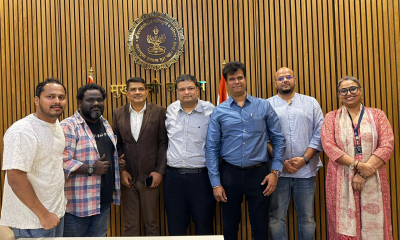
Skyesports and GodLike signs MoU with Maharashtra Cyber to promote esports and cyber hygiene in Maharashtra
-
Africa5 days ago
TaDa Gaming Officially Enters the Regulated South African Market
-
AGLC5 days ago
Bede Gaming cleared for Alberta market entry
-
Central Europe5 days ago
Casino Interlaken teams up with Wazdan to bolster Swiss market presence
-
Central Europe5 days ago
Sportradar Extends its Data and Audiovisual Betting Rights Agreement with Deutscher Fussball-Bund
-
Andrzej Hyla5 days ago
Wazdan Releases its Latest Slot “Easter Coins”
-
Australasian Hospitality & Gaming Expo5 days ago
Light & Wonder to Showcase its Latest Gaming Innovations at AHGE 2026
-
3 Oaks Gaming4 days ago
SAGSE leads while Brazil advances regulation and global positioning