AI
EveryMatrix launches Bonus Guardian to stamp out bonus abuse with AI precision


Reading Time: < 1 minute
EveryMatrix has launched Bonus Guardian, a next-generation AI-powered tool designed to help iGaming operators identify and prevent bonus abuse – one of the industry’s most damaging and rapidly-evolving fraud types.
Developed as part of EveryMatrix’s BonusEngine and EngageSuite stack, Bonus Guardian allows operators to maximise ROI on marketing spend by detecting fraudulent player behaviour before it impacts margins.
The solution uses AI and machine learning to continuously analyse player activity, adapt to new abuse tactics, and apply role-based responses such as bonus exclusion and withdrawal holds.
This ensures legitimate players continue to enjoy a seamless experience without restrictions and limitations, while abusers are stopped in their tracks.
Bonus abuse accounts for more than 63% of all detected fraud according to recent industry data. Fraudsters are increasingly using AI, automation, and synthetic identities to exploit promotional offers, while traditional, rule-based systems have struggled to keep pace.
Operators must also maintain friction-free onboarding and engaging rewards to stay competitive.
Bonus Guardian addresses this directly, offering a context-aware solution that can be integrated with operators’ systems, such as payment processing and player account. Unlike generic anti-fraud platforms, it is designed specifically for bonus abuse scenarios.
It continuously learns from real-time player data, reducing manual workload and false positives, helping operators:
- Prevent revenue loss by flagging and stopping bonus abuse early
- Improve segmentation accuracy and player lifetime value
- Reduce operational friction with intelligent, role-based fraud controls
- Futureproof operations against evolving fraud mechanisms such as deepfakes, AI-generated accounts, and coordinated abuse rings
Stian Enger, Head of Casino, EveryMatrix, said: “Everyone in iGaming knows about the battle between fraudsters and anti-fraud prevention tools. Each side wants to get ahead of the other, but with Bonus Guardian, we strongly believe we have a definite edge.
“Bonus Guardian is not just another fraud filter. It is a living shield that adapts to everything that is thrown at it thanks to the power of AI.”
The post EveryMatrix launches Bonus Guardian to stamp out bonus abuse with AI precision appeared first on European Gaming Industry News.













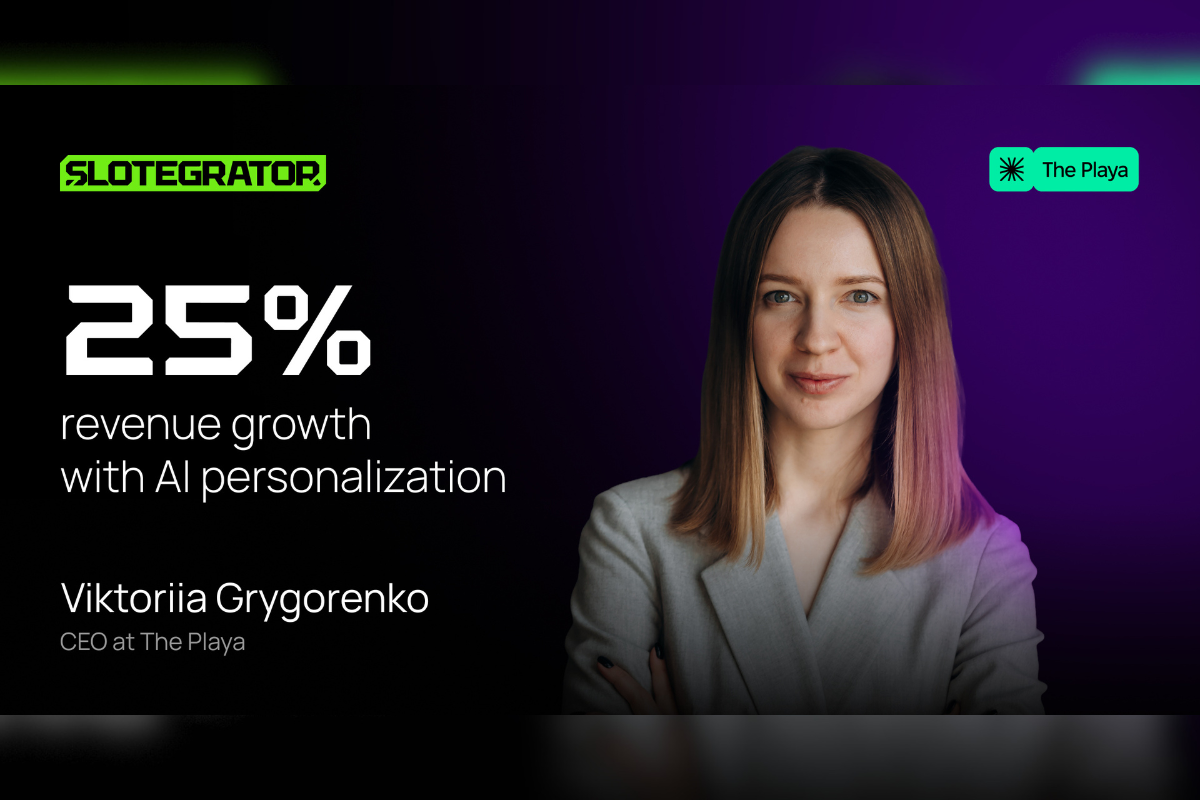
As player expectations rise, generic casino lobbies are no longer enough — AI-driven personalization is becoming essential to engage, retain, and grow audiences.
In this evolving landscape, The Playa is positioning itself at the forefront of iGaming personalization. Slotegrator spoke with Viktoriia Grygorenko, CEO, about the company’s journey, emerging industry trends, and how data-driven experiences can boost revenue by up to 25%, and often beyond.
Founded at the intersection of artificial intelligence and iGaming, The Playa started as a small experimental project and quickly grew into a full-scale platform. Today, the company delivers solutions across the entire player lifecycle — from lobby personalization and acquisition intelligence to VIP insights and retention optimization — serving operators with a monthly GGR of over $10 million.
According to Viktoriia, the industry has long underutilized one of its most valuable assets: player data. “iGaming generates enormous amounts of behavioral data — from game preferences to betting patterns — but most operators still rely on basic segmentation,” she explains. “That’s a missed opportunity.”
The gap is even more obvious compared to global entertainment platforms competing for audience attention. As Viktoriia points out, top companies invest billions in learning what their users want and delivering it instantly, while many online casinos offer identical experiences to all players. However, the industry is beginning to catch up.
Internal research by The Playa shows that 77% of iGaming companies leaders believe AI will be a key competitive advantage within the next two to three years. At the same time, major operators are rapidly expanding their data science capabilities — a clear signal of where the market is heading.
Beyond technology, player behavior itself is evolving. A new generation of users is entering the market, bringing different expectations around user experience. Behavioral data can reveal differences in preferences and risk patterns — opening the door to more effective personalization strategies.
Looking ahead to 2026, Viktoriia highlights three major trends shaping the industry: a stronger focus on retention, the rise of true one-to-one personalization, and a redefinition of loyalty. Retention, in particular, is becoming critical as rising acquisition costs and tighter regulations put pressure on margins.
Read the full interview to discover how The Playa is transforming player experiences with AI-driven personalization and why growth in iGaming depends on understanding players at every step of their journey.
Contact Slotegrator to learn how customized solutions can help grow your business.
Slotegrator
ABOUT THE COMPANY
Since 2012, Slotegrator has been one of the iGaming industry’s leading software and business solution providers for online casino and sportsbook operators.
The company’s main focus is software development and support for online casino platforms, as well as the integration of game content and payment systems.
The company works with licensed game developers and offers a vast portfolio of casino content: slots, live casino games, poker, virtual sports, table games, lotteries, casual games, and data feeds for betting.
Slotegrator also provides consulting services in gambling license acquisition and business incorporation.
ABOUT THE PLAYA
The Playa is a leading iGaming company specializing in AI-powered personalization solutions, enabling operators to deliver tailored player experiences across the full lifecycle — from lobby personalization and acquisition intelligence to VIP insights and retention optimization.
Through advanced behavioral profiling and personalized player recommendations, the company provides iGaming operators with the tools they need to grow, retain players, and maximize revenue.
The post The Playa for Slotegrator: why personalized player experiences are the future of growth appeared first on Eastern European Gaming | Global iGaming & Tech Intelligence Hub.

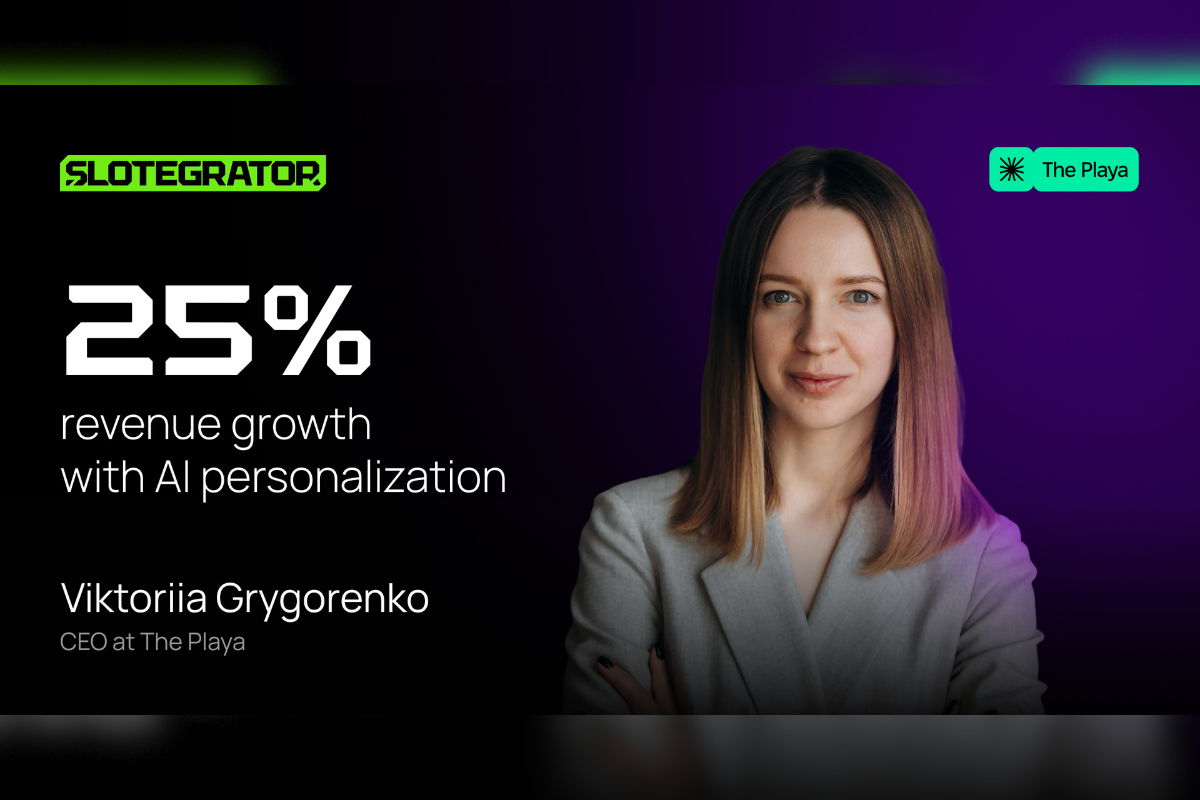
As player expectations rise, generic casino lobbies are no longer enough — AI-driven personalization is becoming essential to engage, retain, and grow audiences.
In this evolving landscape, The Playa is positioning itself at the forefront of iGaming personalization. Slotegrator spoke with Viktoriia Grygorenko, CEO, about the company’s journey, emerging industry trends, and how data-driven experiences can boost revenue by up to 25%, and often beyond.
Founded at the intersection of artificial intelligence and iGaming, The Playa started as a small experimental project and quickly grew into a full-scale platform. Today, the company delivers solutions across the entire player lifecycle — from lobby personalization and acquisition intelligence to VIP insights and retention optimization — serving operators with a monthly GGR of over $10 million.
According to Viktoriia, the industry has long underutilized one of its most valuable assets: player data. “iGaming generates enormous amounts of behavioral data — from game preferences to betting patterns — but most operators still rely on basic segmentation,” she explains. “That’s a missed opportunity.”
The gap is even more obvious compared to global entertainment platforms competing for audience attention. As Viktoriia points out, top companies invest billions in learning what their users want and delivering it instantly, while many online casinos offer identical experiences to all players. However, the industry is beginning to catch up.
Internal research by The Playa shows that 77% of iGaming companies leaders believe AI will be a key competitive advantage within the next two to three years. At the same time, major operators are rapidly expanding their data science capabilities — a clear signal of where the market is heading.
Beyond technology, player behavior itself is evolving. A new generation of users is entering the market, bringing different expectations around user experience. Behavioral data can reveal differences in preferences and risk patterns — opening the door to more effective personalization strategies.
Looking ahead to 2026, Viktoriia highlights three major trends shaping the industry: a stronger focus on retention, the rise of true one-to-one personalization, and a redefinition of loyalty. Retention, in particular, is becoming critical as rising acquisition costs and tighter regulations put pressure on margins.
Read the full interview to discover how The Playa is transforming player experiences with AI-driven personalization and why growth in iGaming depends on understanding players at every step of their journey.
Contact Slotegrator to learn how customized solutions can help grow your business.
Slotegrator
ABOUT THE COMPANY
Since 2012, Slotegrator has been one of the iGaming industry’s leading software and business solution providers for online casino and sportsbook operators.
The company’s main focus is software development and support for online casino platforms, as well as the integration of game content and payment systems.
The company works with licensed game developers and offers a vast portfolio of casino content: slots, live casino games, poker, virtual sports, table games, lotteries, casual games, and data feeds for betting.
Slotegrator also provides consulting services in gambling license acquisition and business incorporation.
ABOUT THE PLAYA
The Playa is a leading iGaming company specializing in AI-powered personalization solutions, enabling operators to deliver tailored player experiences across the full lifecycle — from lobby personalization and acquisition intelligence to VIP insights and retention optimization.
Through advanced behavioral profiling and personalized player recommendations, the company provides iGaming operators with the tools they need to grow, retain players, and maximize revenue.
The post The Playa for Slotegrator: why personalized player experiences are the future of growth appeared first on Americas iGaming & Sports Betting News.
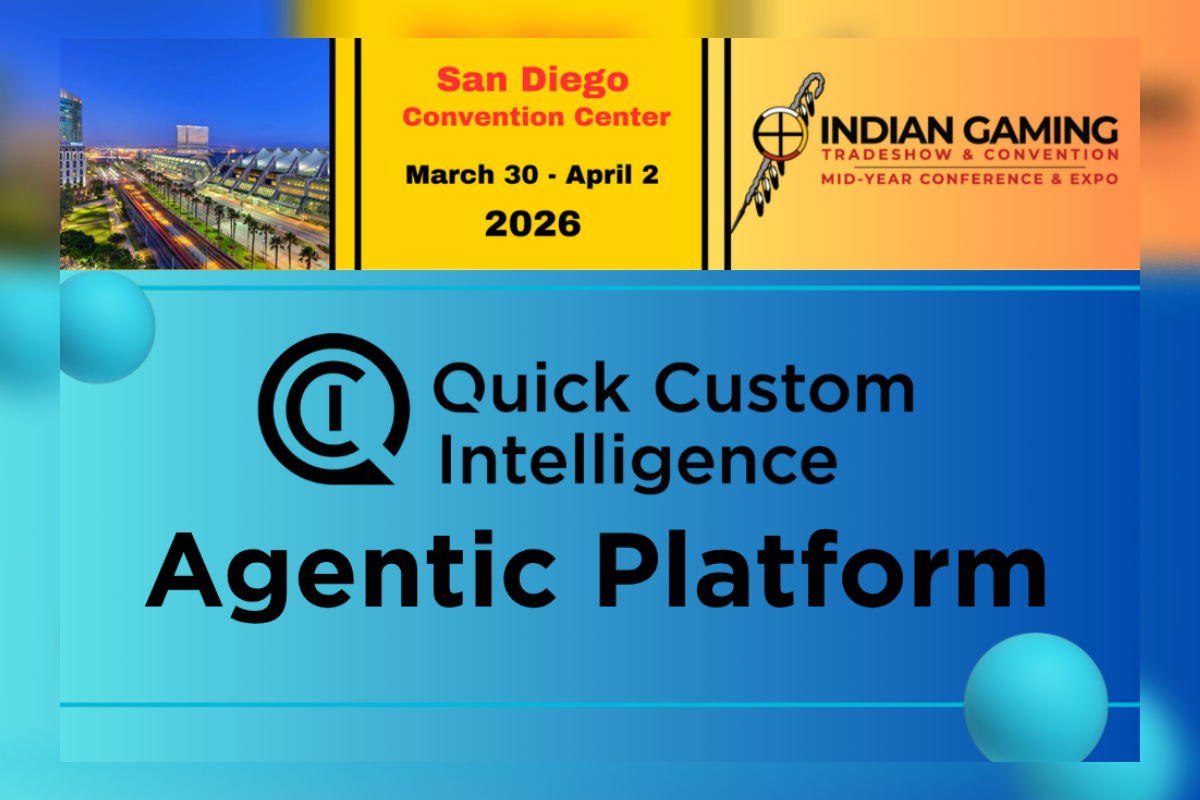
Quick Custom Intelligence (QCI), a leading provider of AI-driven operations software for tribal gaming resorts, announced it will showcase its evolving QCI Agentic Platform at the Indian Gaming Association (IGA) Tradeshow & Convention, March 31–April 2, 2026, at the San Diego Convention Center (Booth #2735).
The QCI Agentic Platform reflects the continued advancement of the company’s enterprise system, enabling operators to move from real-time insight to real-time action across gaming, marketing, player development, and hotel operations. Designed for on-premise and hybrid environments, the platform supports secure, property-level AI deployment while maintaining full operational control.
Rather than introducing a new system, QCI’s approach extends the capabilities operators already use—bringing analysis and execution closer together within a unified operational environment.
“This is a continuation of the platform our customers already rely on. We’re building on what works and extending it, so operators can act on information faster, without changing the way their business runs,” said Dr. Ralph Thomas, Co-Founder and CEO of QCI.
The QCI Agentic Platform builds on QCI’s established product suite, including:
• AGI56.1, a major platform release featuring more than 1000 enhancements across operations
• Chatalytics, QCI’s conversational analytics interface for real-time data access
• QCI Dispatch, a new core operational tool supporting real-time coordination and execution
Together, these capabilities enable operators to unify data, streamline workflows, and respond more quickly to changing conditions across the property.
Attendees will experience how QCI connects data, decision-making, and execution within a single operational system.
“We’re focused on practical improvements that help teams do their jobs more effectively. This is about making systems more responsive, more connected, and easier to use in day-to-day operations,” added Thomas.
The post QCI to Showcase Agentic Platform Capabilities at IGA 2026 appeared first on Americas iGaming & Sports Betting News.

-

 Africa4 days ago
Virgin Bet goes live in South Africa
-
bingo3 days ago
-
Charity Space Scotland4 days ago
Scottish Government Announces £7.9M Investment to Tackle Gambling Harms
-
ELA Games4 days ago
2026 SiGMA Americas Awards Features ELA Games in Two Major Categories
-
apuestas4 days ago
Brasil 2026: Bets presionan el presupuesto de los hogares y redefinen la competencia por el consumo
-
iGaming7 days ago
Scaling In-App Traffic in iGaming: A Performance-Driven Approach
-
BetMGM4 days ago
PA Gaming Control Board Imposes $100,000 Fine on BetMGM
-
iGaming7 days ago
Scaling In-App Traffic in iGaming: A Performance-Driven Approach