Latest News
Churchill Downs Incorporated Reports 2024 Fourth Quarter and Full Year Results


Churchill Downs Incorporated (Nasdaq: CHDN) (the “Company”, “CDI”, “we”) today reported business results for the quarter and full year ended December 31, 2024.
Company Highlights
- Record fourth quarter 2024 financial results compared to the prior year:
- Net revenue of $624.2 million, up $63.0 million or 11%
- Net income attributable to CDI of $71.7 million, up $14.1 million or 24%
- Adjusted EBITDA of $236.6 million, up $17.5 million or 8%
- Record 2024 financial results compared to the prior year:
- Net revenue of $2.7 billion, up $272.6 million or 11%
- Net income attributable to CDI of $426.8 million, up $9.5 million or 2%
- Adjusted EBITDA of $1.2 billion, up $135.3 million or 13%
- We successfully ran the 150th Kentucky Derby on the first Saturday of May generating all-time record all-sources handle and all-time record Derby Week Adjusted EBITDA.
- We opened the Terre Haute Casino Resort in Indiana in April 2024, and the hotel in May 2024.
- The Rose Gaming Resort opened in Dumfries, Virginia in November 2024, with 1,650 historical racing machines and a 102-room hotel as our eighth HRM entertainment venue in Virginia.
- We opened Owensboro Racing & Gaming in Owensboro, Kentucky on February 12, 2025, with 600 historical racing machines, a retail sportsbook, simulcast wagering, and food and beverage offerings.
- We ended 2024 with net bank leverage of 4.0x and returned $218.3 million of capital to shareholders through share repurchases and dividends.
| CONSOLIDATED RESULTS |
| Fourth Quarter | Years Ended December 31 | ||||||||||
| (in millions, except per share data) | 2024 | 2023 | 2024 | 2023 | |||||||
| Net revenue | $ | 624.2 | $ | 561.2 | $ | 2,734.3 | $ | 2,461.7 | |||
| Net income attributable to CDI | $ | 71.7 | $ | 57.6 | $ | 426.8 | $ | 417.3 | |||
| Diluted EPS attributable to CDI | $ | 0.95 | $ | 0.76 | $ | 5.68 | $ | 5.49 | |||
| Adjusted EBITDA(a) | $ | 236.6 | $ | 219.1 | $ | 1,159.2 | $ | 1,023.9 | |||
| (a) This is a non-GAAP measure. See explanation of non-GAAP measures below. | |||||||||||
| SEGMENT RESULTS |
The summaries below present revenue from external customers and intercompany revenue from each of our reportable segments. We have changed the name of the TwinSpires segment to Wagering Services and Solutions to better reflect the businesses that are within this segment. All comparisons are against the applicable prior year period unless otherwise noted.
Live and Historical Racing
| Fourth Quarter | Years Ended December 31, | ||||||||||
| (in millions) | 2024 | 2023 | 2024 | 2023 | |||||||
| Revenue | $ | 275.5 | $ | 235.3 | $ | 1,267.0 | $ | 1,084.6 | |||
| Adjusted EBITDA | 101.6 | 88.9 | 574.6 | 475.4 | |||||||
Fourth Quarter 2024
Fourth quarter 2024 revenue increased $40.2 million due to a $19.6 million increase primarily from the opening of The Rose Gaming Resort in Northern Virginia, a $10.4 million increase from our other Virginia HRM venues, a $4.1 million increase from our Southwestern Kentucky HRM venue, a $2.7 million increase at Churchill Downs Racetrack, a $2.1 million increase from our Northern Kentucky HRM venues, and a $1.3 million net increase from our other HRM venues.
Fourth quarter 2024 Adjusted EBITDA increased $12.7 million due to a $5.2 million increase primarily from the opening of The Rose Gaming Resort in Northern Virginia, a $7.6 million increase from our other Virginia HRM venues, a $2.1 million increase from our Southwestern Kentucky HRM venue, and a $1.5 million increase from our Northern Kentucky HRM venues. These increases were offset by a $1.8 million decrease related to an increase in government relations expense allocated to Virginia, a $1.3 million decrease at Churchill Downs Racetrack and a $0.6 million decrease at our other HRM venues.
Full Year 2024
Full year 2024 revenue increased $182.4 million due to a $57.2 million increase at Churchill Downs Racetrack due to a record-breaking 150th Derby Week, a $25.9 million increase in Northern Virginia including the opening of The Rose Gaming Resort, a $17.2 million increase from the opening of the Rosie’s Emporia HRM venue in Southern Virginia in September 2023, a $39.5 million increase from our other Virginia HRM venues, a $41.5 million increase from our Kentucky HRM venues, and a $1.1 million increase from our New Hampshire venue.
Full year 2024 Adjusted EBITDA increased $99.2 million due to a $32.6 million increase at Churchill Downs Racetrack due to a record-breaking 150th Derby Week, $9.7 million increase in Northern Virginia including the opening of The Rose Gaming Resort, a $7.1 million increase from the opening of the Rosie’s Emporia HRM venue in Southern Virginia in September 2023, a $38.3 million increase from our other Virginia HRM venues, and an $11.5 million increase primarily from our other Kentucky HRM venues.
Wagering Services and Solutions
| Fourth Quarter | Years Ended December 31, | ||||||||||
| (in millions) | 2024 | 2023 | 2024 | 2023 | |||||||
| Revenue | $ | 108.0 | $ | 110.6 | $ | 500.7 | $ | 458.4 | |||
| Adjusted EBITDA | 37.3 | 34.9 | 165.6 | 132.1 | |||||||
Fourth Quarter 2024
Fourth quarter 2024 revenue decreased $2.6 million due to a $3.5 million decrease from our sports betting business and a $1.3 million decrease in TwinSpires Horse Racing primarily due to market access and shifts in race days at other tracks. These decreases were partially offset by a $2.2 million increase from Exacta primarily from the growth of our Virginia HRM venues.
Fourth quarter 2024 Adjusted EBITDA increased $2.4 million due to a $2.1 million increase from our Exacta business primarily because of increased fees from the growth of our Virginia HRM venues, a $2.2 million increase from a one-time reduction in compensation expenses related to our Exacta business, and a $0.3 million increase in TwinSpires Horse Racing. These increases were partially offset by a $2.2 million decrease primarily from our sports betting business.
Full Year 2024
Full year 2024 revenue increased $42.3 million due to a $40.8 million increase from our Exacta business primarily from growth in our third party HRM business and from the growth of our Virginia HRM venues and a $2.0 million increase from our sports betting business, partially offset by a $0.5 million decrease from TwinSpires Horse Racing.
Full year 2024 Adjusted EBITDA increased $33.5 million due to a $29.2 million increase from our Exacta business because of increased fees from our Virginia HRM venues, a $2.2 million increase from a one-time reduction in accrued compensation expenses related to our Exacta business, and a $2.6 million increase primarily from our sports betting business, partially offset by a $0.5 million decrease from TwinSpires Horse Racing.
Gaming
| Fourth Quarter | Years Ended December 31, | ||||||||||
| (in millions) | 2024 | 2023 | 2024 | 2023 | |||||||
| Revenue | $ | 257.5 | $ | 230.2 | $ | 1,045.4 | $ | 974.6 | |||
| Adjusted EBITDA | 120.1 | 113.4 | 506.9 | 488.6 | |||||||
Fourth Quarter 2024
Fourth quarter 2024 revenue increased $27.3 million due to a $30.3 million increase from the opening of the Terre Haute Casino Resort, partially offset by a $3.0 million decrease from our other wholly owned gaming properties primarily due to regional gaming softness and increased competition.
Fourth quarter 2024 Adjusted EBITDA increased $6.7 million due to an $11.4 million increase from the opening of the Terre Haute Casino Resort and a $2.7 million increase from our equity investment in Miami Valley Gaming. These increases were partially offset by a $2.3 million decrease from our other wholly owned gaming properties and a $5.1 million decrease from our equity investment in Rivers Des Plaines primarily due to regional gaming softness, increased competition, and higher labor and benefit expense.
Full Year 2024
Full year 2024 revenue increased $70.8 million primarily due to a $96.6 million increase from the opening of the Terre Haute Casino Resort. This increase was partially offset by a $15.6 million decrease from our other wholly owned gaming properties primarily due to inclement weather in January 2024, regional gaming softness, and increased competition; and a $10.2 million decrease due to our decision not to renew the management agreement at Lady Luck at the end of June 2023.
Full year 2024 Adjusted EBITDA increased $18.3 million primarily due to a $44.5 million increase from the opening of the Terre Haute Casino Resort and a $3.0 million increase from our equity investment in Miami Valley Gaming. These increases were partially offset by a $19.5 million decrease from our wholly owned gaming properties and an $8.5 million decrease from our equity investment in Rivers Des Plaines primarily due to inclement weather in January 2024, regional gaming softness, increased competition, and higher labor and benefit expense; and a $1.2 million decrease from proceeds for business interruption insurance claims in the third quarter 2023 that did not reoccur.
All Other
| Fourth Quarter | Years Ended December 31, | ||||||||||||||
| (in millions) | 2024 | 2023 | 2024 | 2023 | |||||||||||
| Revenue | $ | 2.1 | $ | 0.2 | $ | 6.6 | $ | 0.9 | |||||||
| Adjusted EBITDA | (22.4 | ) | (18.1 | ) | (87.9 | ) | (72.2 | ) | |||||||
Fourth Quarter 2024
Fourth quarter 2024 revenue increased $1.9 million due to intercompany revenue related to the captive insurance company that was established in April 2024. All captive revenue is eliminated in consolidation.
Fourth quarter 2024 Adjusted EBITDA decreased $4.3 million driven primarily by increased corporate compensation related expenses and other corporate administrative expenses driven by enterprise growth.
Full Year 2024
Full year 2024 revenue increased $5.7 million primarily due to intercompany revenue related to the captive insurance company that was established in April 2024. All captive revenue is eliminated in consolidation.
Full year 2024 Adjusted EBITDA decreased $15.7 million driven primarily by increased corporate compensation related expenses and other corporate administrative expenses driven by enterprise growth.
| CAPITAL MANAGEMENT |
Share Repurchase Program
The Company repurchased 160,466 shares of its common stock at a total cost of $21.3 million based on trade date under its share repurchase program in the fourth quarter of 2024. The Company repurchased 506,300 shares of its common stock at a total cost of $65.3 million based on trade date under its share repurchase program in 2024. We had $149.6 million of repurchase authority remaining under this program as of December 31, 2024.
Annual Dividend
On October 22, 2024, the Company’s Board of Directors approved an annual cash dividend on the Company’s common stock of $0.409 per outstanding share, a seven percent increase over the prior year. The dividend was paid on January 3, 2025, to shareholders of record as of the close of business on December 6, 2024, with the aggregate cash dividend paid to each shareholder rounded to the nearest whole cent. This marks the fourteenth consecutive year that the Company has increased the dividend per share.
Capital Investments
We currently expect our project capital to be approximately $350 to $400 million in 2025, although this amount may vary significantly based on the timing of work completed, unanticipated delays, and timing of payments to third parties. We plan to use our operating cash flows and existing revolving credit facility to fund our capital project expenditures.
| NET INCOME ATTRIBUTABLE TO CDI |
Fourth Quarter 2024 Results
The Company’s fourth quarter 2024 net income attributable to CDI was $71.7 million compared to $57.6 million in the prior year quarter.
The following factors impacted the comparability of the Company’s fourth quarter 2024 net income to the prior year quarter:
- a $9.9 million after-tax decrease in transaction, pre-opening, and other expense primarily from the settlement of certain liabilities recorded at the time of the Company’s November 2022 acquisition of substantially all of the assets of Peninsula Pacific Entertainment LLC,
- a $1.7 million after-tax increase in other charges and recoveries, net primarily related to non-recurring insurance claim recoveries,
- a $0.2 million decrease of after-tax other charges; and
- a $0.1 million decrease in after-tax non-cash asset impairments.
This was partially offset by:
- a $1.1 million after-tax decrease primarily from legal reserves.
Excluding the items above, fourth quarter 2024 adjusted net income attributable to CDI increased $3.3 million primarily due to the following:
- a $3.9 million after-tax increase primarily driven by the results of our operations,
- partially offset by a $0.6 million after-tax increase in interest expense associated with higher outstanding debt balances and higher interest rates.
Full Year 2024 Results
The Company’s full year 2024 net income attributable to CDI was $426.8 compared to $417.3 million in the prior year.
The following factors impacted comparability of the Company’s net income for the year ended December 31, 2024 compared to the prior year:
- an $86.2 million after-tax gain on the sale of the Arlington property in the prior year; and
- a $0.7 million after-tax decrease primarily from legal reserves.
This was partially offset by:
- a $15.7 million after-tax decrease in non-cash asset impairments,
- a $12.8 million after-tax decrease in transaction, pre-opening, and other expense primarily from the settlement of certain liabilities recorded at the time of the Company’s November 2022 acquisition of substantially all of the assets of Peninsula Pacific Entertainment LLC,
- a $5.1 million after-tax increase of other charges and recoveries, net primarily related to non-recurring insurance claim recoveries; and
- a $1.6 million after-tax decrease of other charges.
Excluding these items, full year 2024 adjusted net income attributable to CDI increased $61.2 million primarily due to the following:
- a $77.0 million after-tax increase primarily driven by the results of our operations and equity income from our unconsolidated affiliates,
- partially offset by a $15.8 million after-tax increase in interest expense associated with higher outstanding debt balances and higher interest rates.
Conference Call
A conference call regarding this news release is scheduled for Thursday, February 20, 2025 at 9 a.m. ET. Investors and other interested parties may listen to the teleconference by accessing the online, real-time webcast and broadcast of the call at churchilldownsincorporated.com/events.cfm, or by registering in advance via teleconference here. Once registration is completed, participants will be provided with a dial-in number containing a personalized conference code to access the call. All participants are encouraged to dial-in 15 minutes prior to the start time. An online replay will be available by noon ET on Thursday, February 20, 2025. A copy of the Company’s news release announcing quarterly results and relevant financial and statistical information about the period will be accessible at churchilldownsincorporated.com.
Use of Non-GAAP Measures
In addition to the results provided in accordance with GAAP, the Company also uses non-GAAP measures, including adjusted net income, adjusted diluted EPS, EBITDA (earnings before interest, taxes, depreciation and amortization), and Adjusted EBITDA.
The Company uses non-GAAP measures as a key performance measure of the results of operations for purposes of evaluating performance internally. These measures facilitate comparison of operating performance between periods and help investors to better understand the operating results of the Company by excluding certain items that may not be indicative of the Company’s core business or operating results. The Company believes the use of these measures enables management and investors to evaluate and compare, from period to period, the Company’s operating performance in a meaningful and consistent manner. The non-GAAP measures are a supplemental measure of our performance that is not required by, or presented in accordance with, GAAP, and should not be considered as an alternative to, or more meaningful than, net income or diluted EPS (as determined in accordance with GAAP) as a measure of our operating results.
We use Adjusted EBITDA to evaluate segment performance, develop strategy, and allocate resources. We utilize the Adjusted EBITDA metric to provide a more accurate measure of our core operating results and enable management and investors to evaluate and compare from period to period our operating performance in a meaningful and consistent manner. Adjusted EBITDA should not be considered as an alternative to operating income as an indicator of performance, as an alternative to cash flows from operating activities as a measure of liquidity, or as an alternative to any other measure provided in accordance with GAAP. Our calculation of Adjusted EBITDA may be different from the calculation used by other companies and, therefore, comparability may be limited.
Adjusted net income and adjusted diluted EPS exclude discontinued operations net income or loss; net income or loss attributable to noncontrolling interest; changes in fair value for interest rate swaps related to Rivers Des Plaines; Rivers Des Plaines’ legal reserves and transaction costs; transaction expense, which includes acquisition and disposition related charges, as well as legal, accounting, and other deal-related expense; pre-opening expense; and certain other gains, charges, recoveries, and expenses.
Adjusted EBITDA includes our portion of EBITDA from our equity investments and the portion of EBITDA attributable to noncontrolling interest.
Adjusted EBITDA excludes:
- Transaction expense, net which includes:
- Acquisition, disposition, and property sale related charges;
- Other transaction expense, including legal, accounting, and other deal-related expense;
- Stock-based compensation expense;
- Asset impairments;
- Gain on property sales;
- Legal reserves;
- Pre-opening expense; and
- Other charges, recoveries, and expenses.
As of December 31, 2021, our property in Arlington Heights, Illinois (“Arlington”) ceased racing and simulcast operations and the property was sold on February 15, 2023 to the Chicago Bears. Arlington’s results and exit costs in 2023 are treated as an adjustment.
For segment reporting, Adjusted EBITDA includes intercompany revenue and expense totals that are eliminated in the Consolidated Statements of Comprehensive Income. See the Reconciliation of Net Income to Adjusted EBITDA included herewith for additional information.
The post Churchill Downs Incorporated Reports 2024 Fourth Quarter and Full Year Results appeared first on Gaming and Gambling Industry in the Americas.

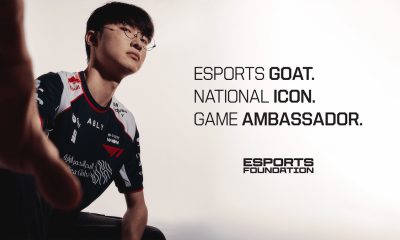











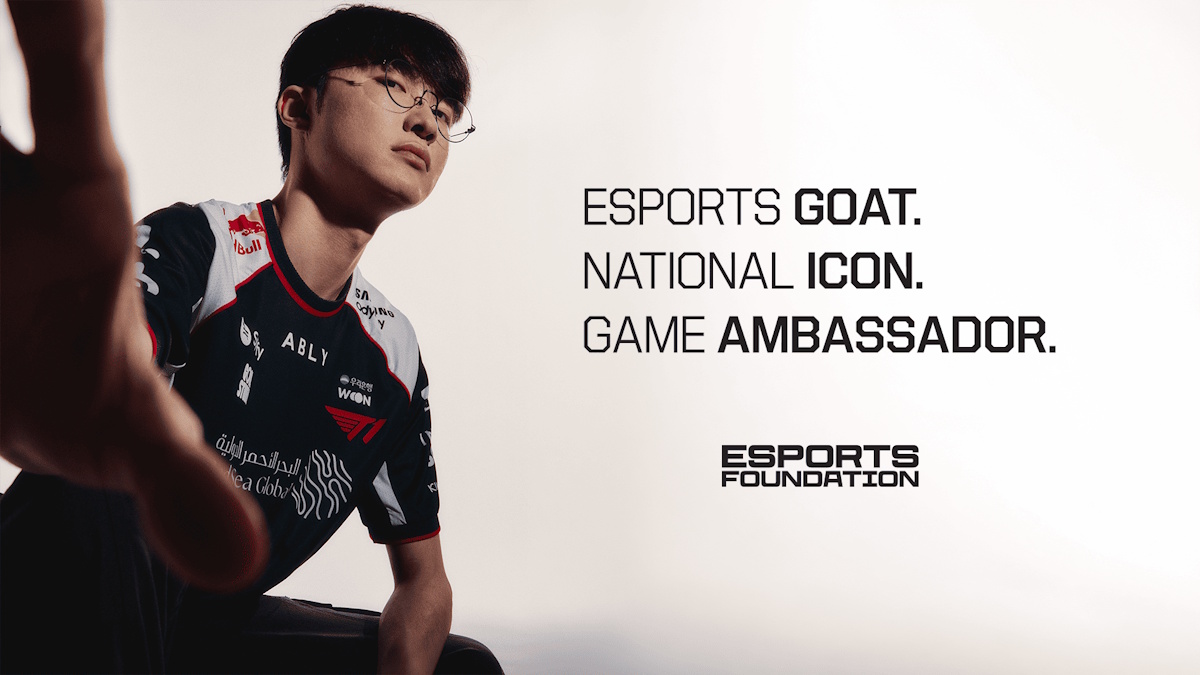
Lee “Faker” Sang-hyeok joins Cristiano Ronaldo and Magnus Carlsen in the Esports Foundation’s Ambassador Program.
The Esports Foundation (EF) has appointed Lee “Faker” Sang-hyeok as a Game Ambassador for the Esports World Cup (EWC) and Esports Nations Cup (ENC) through 2028, the organization said on July 15, 2026 in a statement issued from Riyadh and Paris.
EF said Faker joins Cristiano Ronaldo, listed as the Foundation’s Global Ambassador, and Magnus Carlsen as part of the Esports Foundation Ambassador Program. The Foundation said Faker will represent “the perspective of esports players” across its international events, athlete initiatives, media engagements and leadership forums.
“You can’t talk about esports without mentioning Faker. He is the defining athlete of competitive gaming: a champion whose excellence, discipline and longevity have inspired an entire generation,” said Ralf Reichert, Chief Executive Officer of the Esports Foundation. “As our Game Ambassador, Faker represents something fundamental to the Ambassador Program: esports creates its own global sporting icons. Across EWC, ENC and NGSC, he will help ensure that the players who built this sport have a voice in shaping where it goes next.”
Faker said: “Competition has shaped my life, and I am proud to join the Esports Foundation as Game Ambassador. I want to continue competing for the biggest titles with T1 while representing the players and fans who have helped esports grow worldwide. Through the Esports World Cup, Esports Nations Cup and the Foundation’s wider platforms, I hope to inspire the next generation to pursue excellence, remain resilient and believe in how far competitive gaming can take them. There is still much more to achieve.”
EF highlighted Faker’s competitive record, describing him as a six-time League of Legends World Champion, EWC 2024 winner, two-time MSI champion and ten-time domestic champion with T1. The Foundation also said Faker became the first esports athlete to receive the Blue Dragon Medal in 2026, describing it as the Republic of Korea’s highest sporting honor awarded by President Lee Jae-myung.
The post Esports Foundation names Faker Game Ambassador for EWC and ENC through 2028 appeared first on EE Gaming | Global iGaming & Tech Intelligence Hub.

Midnite has agreed a partnership with Middlesbrough FC that will see the UK bookmaker become the club’s principal partner and front-of-shirt sponsor for the 2026/27 campaign, which Middlesbrough describes as its landmark 150th season.
The companies announced the deal alongside a fan activation at Riverside Stadium on Thursday, July 9, branded “This Season’s On Us”. The initiative offered supporters prizes including 2026/27 season tickets, 2026/27 shirts, match tickets, or a £25 club shop voucher, with fans required to answer Middlesbrough trivia and complete a football challenge.
Middlesbrough former players Craig Hignett and David Wheater attended the event, and, according to the company, took bonus attempts on behalf of participants who missed out.
Andrew Mook, Midnite’s Head of Brand Marketing, said:
“Middlesbrough have a storied history and we’re delighted to announce this partnership during such a monumental year with the club celebrating their 150th anniversary.
“It was great to see so many Middlesbrough fans at the “This Season’s On Us” activation, we hope they enjoyed taking part and meeting club legends, with David Wheater hitting top bins on several occasions and allowing fans to win big with season tickets.
“We can’t wait to get to Riverside Stadium in August to kick-off a new season and we’re excited to say that we have plenty of new and captivating campaigns planned.”
Lee Fryett, Middlesbrough FC Chief Commercial Officer, added:
“We’re delighted to welcome Midnite as our new Principal Partner.
“We’re looking forward to working closely with Midnite to develop engaging campaigns, content and unique experiences that bring our fans even closer to the club.
“We’re confident this partnership will provide real value for our supporters while supporting our ambitions both on and off the pitch.”
The post Midnite signs as Middlesbrough FC principal partner for 2026/27 season appeared first on EE Gaming | Global iGaming & Tech Intelligence Hub.

ThrillTech has been awarded a Gaming-Related Supplier licence by the Alcohol and Gaming Commission of Ontario (AGCO), clearing the company to launch in Ontario’s regulated market.
The licence allows ThrillTech to deploy its opt-in side bet jackpots technology with regulated online casino, sports betting and lottery operators across the province.
Benjamin Bradtke, Co-Founder of ThrillTech, said: “Securing our AGCO licence is a major step in our mission to transform how jackpots are delivered at scale across regulated markets. This latest certification is testament to our robust technology and trusted compliance frameworks, allowing us to continue our global growth trajectory. We are thrilled to bring our proven, compliant jackpot technology to Ontario, empowering locally licensed operators to uplift revenue without cannibalising existing spend.”
The company said its “ThrillPots” mechanics sit as an independent, player-funded side bet and do not alter the underlying game’s return-to-player mathematics.
ThrillTech said the Ontario approval enables its existing multinational partners that also operate in the province to launch its side bet jackpots locally, while it also holds talks with potential new operator partners. The company lists its regulated footprint as including the United Kingdom, Sweden, the Netherlands, Romania, Malta, Gibraltar, Brazil and Peru.
The post ThrillTech secures AGCO supplier licence for Ontario launch appeared first on EE Gaming | Global iGaming & Tech Intelligence Hub.

-

 Compliance Updates5 days ago
Arizona Department of Gaming Issues Cease-and-Desist Orders to Multiple Operators Linked to Underage Gambling and Illegal Activity
-
 Latest News7 days ago
ELA Games releases Flames Fruits Frenzy Hold and Win slot
-
Compliance Updates6 days ago
KONAMI GROUP’s Konami Gaming Inc. First to Submit Manufacturer License Application in Japan’s Emerging IR Market
-
Latest News7 days ago
PG Soft appoints Hugo Baungartner as General Manager LatAm
-
Canada7 days ago
Canada’s Safer Gambling Gap: Why Market Success Doesn’t Always Equal Player Safety
-
Latest News7 days ago
Tom Horn Gaming ships Royal Ruby FeatureStorm slot worldwide on 14 July 2026
-
Latest News7 days ago
Booming Games launches Fish Tales: Double Catch Max Scatter
-
Latest News7 days ago
BC.GAME names Guillermo Ochoa brand ambassador for Mexico push