Compliance Updates
The ANJ publishes its 2024/2026 strategic plan aimed at drastically reducing the proportion of excessive gamblers

Three years after its establishment and the introduction of the new gambling regulation, the ANJ is presenting its strategic plan for 2024-2026. The reduction of excessive gambling and the social damages it causes, as well as the protection of minors, are at the heart of its actions. To achieve this ambitious objective, which reflects a problem that is no longer individual but social, the ANJ is calling on all economic and institutional players concerned to work alongside it.
The first cycle of regulation under the aegis of the French Gambling Authority (ANJ) ended in 2023 with the observation that the gambling market was booming, with revenues of more than €13 billion, representing an increase of more than 50% since the opening of the market in 2011. Over the years, gambling has become a mainstream consumer product for people of all ages and from all walks of life: more than half of all French people now gamble, spending more than €55 billion each year. Gambling is at the heart of our societies, and this phenomenon can be observed in every European country.
However, gambling is not a product like any other, and it is the risks inherent in this activity that have justified the government’s implementation of a restrictive regulatory policy, which translates into a legal objective of limiting and supervising the supply and consumption of gambling. In 2019, the public authorities wanted to strengthen player protection and the ANJ was created with this objective in mind.
Although gambling operators have made significant progress in this area over the past three years, problem gambling still plays too large a role in the gambling market. In 2019, the Gambling Observatory estimated the number of at-risk gamblers at 1.4 million, including almost 400,000 at pathological level. In total, problem gambling accounts for more than 38% of the sector’s turnover and excessive gambling alone for 21%. These figures, which are due to be updated shortly, illustrate the reality of a social problem, particularly for young people, with collateral damage in the gambler’s in the gambler’s immediate environment: excessive debt, family problems, difficulties at school, etc.
In this context, the ANJ has been working with all stakeholders to define the new regulatory guidelines for the period 2024-2026. These place the protection of minors and the reduction of excessive gambling and the social damage it causes at the centre of the regulator’s activities, like a common thread that inspires all its actions.
The ANJ’s new roadmap is based on three fundamental pillars:
- The first of these pillars, which reflects the public health implications of regulation, aims to drastically reduce the proportion and number of excessive gamblers in the gambling market. This key objective for the ANJ will require major efforts on the part of operators. It cannot be achieved without a coherent and balanced regulatory policy aimed at consolidating the French gambling market model.
- At the same time, this requires the ANJ to continue its efforts to preserve the transparency and integrity of the sector, with the fight against illegal gambling at the forefront (second pillar), and to strengthen the economic dimension of regulation in order to gain a better understanding of market balances and provide solutions to the changes it is facing today (third pillar).
Finally, the strategic plan is based on three foundations that are the conditions for the success of its ambition: to make scientific knowledge of the market and gambling practices the compass of regulation; to embody, at national and European level, regulation based on dialogue and cooperation to drive the repositioning of the market; and finally, to position the ANJ as a laboratory for bold, effective and exemplary public action.
This is a critical time for the French gambling market: it can both destabilise and strengthen the French model. This strategic plan should help to strengthen the French regulatory model as an acceptable compromise between openness and protection.
Isabelle FALQUE-PIERROTIN, President of the ANJ, said: “After three years in office, we now believe that the regulation of gambling must take a turn that involves the market gradually moving towards a less intensive model. This voluntary target to reduce the number of excessive gamblers and to strengthen the protection of minors will be monitored over a period of 3 years and adjusted in line with monitoring indicators and prevalence studies. It can only be achieved if all the players join forces alongside the regulator to move the goalposts: gambling operators, public authorities, institutions, associations, etc. “














Under the theme “Perspectives,” a total of 43 compliance staff members from the Merkur Group across various countries gathered from 30 June to 1 July to further develop compliance processes in a sustainable manner. Colleagues from Germany, Spain, England, Malta, Australia and the US traveled to the two-day meeting at Benkhausen Castle, the in-house training centre of the Merkur Group. The workshop set the stage with expert presentations on global and digital topics such as cybersecurity, risk management and artificial intelligence. A panel discussion featuring representatives from various international companies within the Merkur Group, as well as a digital quiz, rounded out the programme.
In keeping with its guiding principle, the workshop focused on sharing experiences, fostering global networking and providing impetus for the further development of compliance processes. Because informal exchanges are also key to close cooperation, the evening programme created a relaxed atmosphere and gave participants the opportunity to continue their conversations, make new connections, and further strengthen team spirit across company and national boundaries.
“The ideas and diverse perspectives gained during the workshop will now be incorporated into our day-to-day work and help us to continuously improve collaboration and existing processes,” said Ludwig Beckmann, Chief Compliance Officer of the Merkur Group.
The concluding feedback session also highlighted just how valuable the international exchange is. The term “collaboration” came up particularly often, a clear indication of how highly the participants value working closely together within the international compliance network.
The post Merkur Group Strengthens Global Compliance Strategy appeared first on EE Gaming | Global iGaming & Tech Intelligence Hub.
Anne Marie Caulfield
GRAI Launches New Campaign Helping Parents to Spot the Signs of Underage Gambling

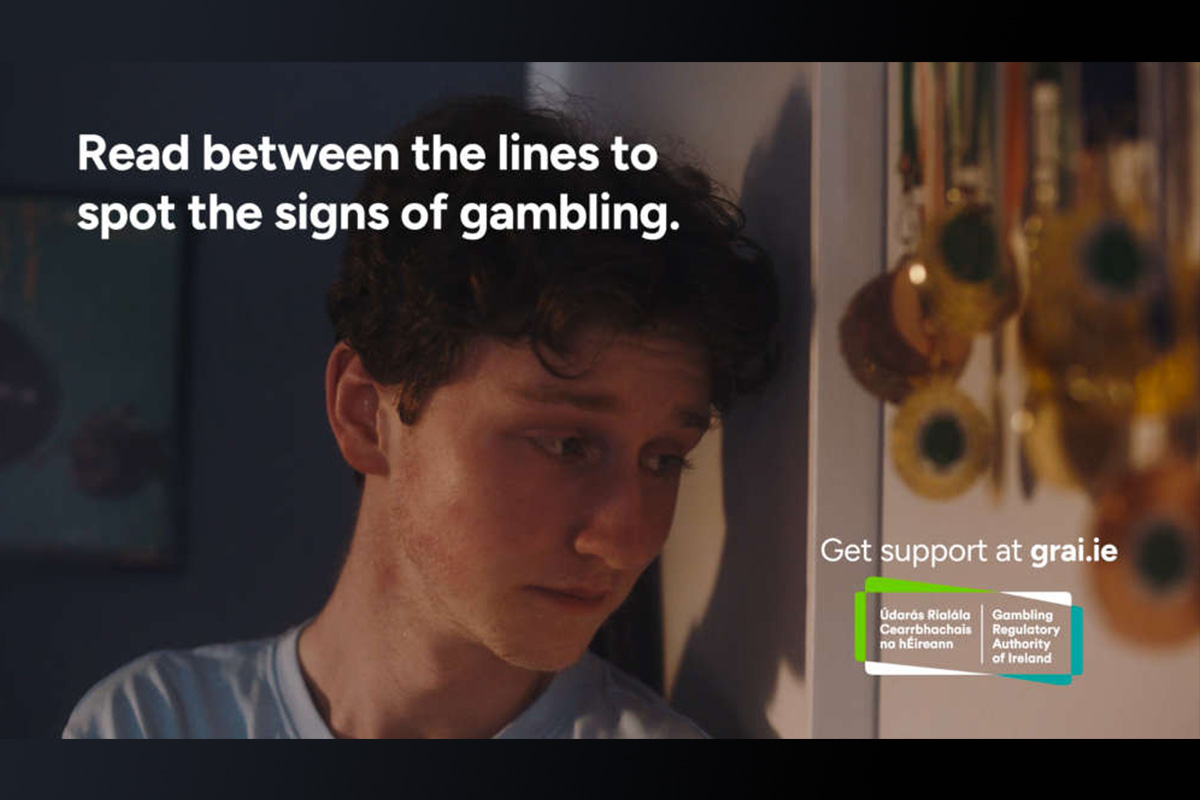
The Gambling Regulatory Authority of Ireland (GRAI) is encouraging parents and guardians to be alert to the signs of gambling among young people and to intervene early to prevent gambling harm.
The signs of gambling aren’t always visible, the GRAI in partnership with the Health Service Executive Addiction Services have developed dedicated advice on www.grai.ie to equip families with the knowledge to recognise the signs, advice on how to start the conversation with their children about gambling, and where to seek help if required.
To support the guidance, the GRAI has launched a national public awareness campaign across video on demand, radio, digital audio, and social media platforms, bringing this message directly to families across Ireland.
With the lines between entertainment and gambling increasingly blurred, especially online, what may look like harmless fun can still involve risk, money and chance in ways that affect young developing brains. Research commissioned by the GRAI and conducted by the Economic and Social Research Institute (ESRI) found that children who gamble are twice as likely to develop a gambling problem as adults.
Anne Marie Caulfield, CEO of the GRAI said: “We have launched this campaign to help parents start an important conversation about the risks of underage gambling. Children and young people are among the most at-risk members of Irish society when it comes to gambling exposure and harm. Children’s brains are still developing the judgement and impulse-control systems used to weigh up risk, which makes gambling appealing to them.
“With online gambling available at any time of the day, it is easy for the warning signs to be hidden. The guidance the GRAI developed with the HSE Addiction Services sets out some of the key behavioural signs to look out for in your child.”
The post GRAI Launches New Campaign Helping Parents to Spot the Signs of Underage Gambling appeared first on EE Gaming | Global iGaming & Tech Intelligence Hub.
Australia
NSW: EOI Opens for Candidates to Replace Retiring NICC Chief Commissioner and Commissioner

The NSW Government has announced the opening of an expression of interest process for Chief Commissioner and Commissioner roles on the NSW Independent Casino Commission (NICC).
On 20 May 2026 the Governor of NSW, on the recommendation of the Minister for Gaming and Racing David Harris, re-appointed the NICC Chief Commissioner Philip Crawford, and Commissioner Stephen Parbery for additional six-month terms to 24 November 2026.
The reappointments will ensure stability in the NICC’s leadership in coming months and an orderly transition to new commissioners.
Mr Crawford and Mr Parbery have announced they will retire from public service when their tenures expire in November.
Both were inaugural members of the NICC when it was established in September 2022 in response to the Bergin Inquiry recommendations to strengthen casino regulation and oversight in NSW.
Prior to appointment to the NICC, Mr Crawford served as Chairperson of the Independent Liquor and Gaming Authority (ILGA), while Mr Parbery served as an ILGA board member.
Both Mr Crawford and Mr Parbery played crucial roles in the NICC’s response to the two Bell inquiries into The Star and have contributed to strengthening oversight and accountability across the casino sector including the transition of Crown Sydney to an unrestricted licence.
The appointment process for the NICC Commissioner vacancies is being undertaken in accordance with requirements under the Casino Control Act 1992.
This includes establishment of a selection panel to prepare a list of recommended candidates for consideration by Minister Harris, as well as the appointment of a probity adviser.
The expression of interest process is open until Monday 3 August.
Minister for Gaming and Racing David Harris said: “I thank Philip Crawford and Stephen Parbery for their service and leadership, particularly during a critical period for casino regulation in NSW.
“As Chief Commissioner, Philip Crawford has played a key role in ensuring both casino operators meet strict regulatory requirements, following the various casino inquiries.
“His leadership has been instrumental in overseeing complex probity assessments, remediation programs and contingency planning during a period of significant regulatory reform and scrutiny.
“Stephen Parbery has also made a substantial contribution as Commissioner, bringing considerable expertise and judgement to the Commission’s work.
“Both Commissioners have helped drive important regulatory improvements that have restored public confidence in the integrity of casino regulation in NSW, and I thank them for their dedicated service.”
The post NSW: EOI Opens for Candidates to Replace Retiring NICC Chief Commissioner and Commissioner appeared first on EE Gaming | Global iGaming & Tech Intelligence Hub.

-

 Compliance Updates6 days ago
Arizona Department of Gaming Issues Cease-and-Desist Orders to Multiple Operators Linked to Underage Gambling and Illegal Activity
-
 Compliance Updates6 days ago
KONAMI GROUP’s Konami Gaming Inc. First to Submit Manufacturer License Application in Japan’s Emerging IR Market
-
Latest News7 days ago
PG Soft names Hugo Baungartner as General Manager LatAm
-
Latest News6 days ago
Enjoy Gaming Builds on Slot success with Diamond Slam: Xtra Power
-
Latest News6 days ago
Weekend Reels | Week 28: Slot Drops & Trends
-
Compliance Updates6 days ago
Spillemyndigheden Publishes Report on Illegal Gambling
-
Canada6 days ago
High 5 Games Expands Across Alberta’s Open iGaming Market Following AGLC Supplier Approval
-
Compliance Updates6 days ago
TaDa Gaming Accelerates LatAm Growth with Peru Licence Approval