Latest News
MiFinity to Exhibit in SiGMA Europe 2023 Summit in Malta

MiFinity, the innovative payments provider, is exhibiting its industry-leading products and solutions at the SiGMA Europe Summit in Malta. The conference, taking place between the 13th and 17th of November, presents professionals across the iGaming industry with an invaluable opportunity to network, exhibit, and gain industry insights.
MiFinity looks forward to inviting attendees to visit Stand 2012. Operators looking to partner with a payment service provider with extensive global reach, multiple payment options and innovative products should look no further than the MiFinity stand. At the booth, attendees will have the opportunity to explore the company’s vast portfolio of products while engaging in insightful discussions with the MiFinity Sales, Affiliate and Marketing teams.
MiFinity offers a range of exceptional payment solutions that are both efficient and cost-effective. The company has been operating in the online payments industry for over 18 years and has a constantly expanding network of global partner relationships. Furthermore, their technology platform is highly secure, regulated, and considered the best-in-class.
Attendees should ask the MiFinity team about its PayAnyBank and PayAnyCard services, which provide seamless and cost-effective ways to transfer funds. PayAnyBank offers fast international bank transfers across different industries, with settlement in local currencies for high and low transaction volumes. MiFinity’s PayAnyCard service supports transferring funds to VISA, MasterCard and UnionPay for merchants that need a highly effective and cost-effective method to process withdrawals to their customers.
Additionally, it is also worth asking about the MiFinity iFrame and seeing how it can easily integrate into your cashier, enabling customers to transfer funds from their existing eWallet balance, card payments or via other local payment options from your site.
The cornerstone of MiFinity’s core services is the MiFinity eWallet, which supports the transfer of money to almost anyone in the world through its banking network and local payment options. The market-leading MiFinity eWallet, is available to customers in over 225 countries and territories and has over 75 integrated payment methods available, offering customers a choice of 17 native currencies and 21 languages in the MiFinity app and desktop experience. In addition, the digital wallet is available for customers to use as a payment method for 700+ live brands, providing more choices than ever to its players.
MiFinity’s customers are also able to utilise the eVoucher to deposit funds in their online casino accounts or load their eWallet. MiFinity eVouchers are the perfect safe and secure solution to top up your MiFinity eWallet account without the use of bank, credit or debit cards.
As a plus, MiFinity launched the most competitive affiliate programme in the industry in July 2022 – MiFinity Affiliates. MiFinity’s affiliate programme pays the highest revenue commission in the industry – of up to 35%, with commissions paid on all transfers to and FX fees. MiFinity has invested significantly in its enterprise affiliate platform to help affiliate partners manage their programmes, track conversions and access 100% accurate and on-time payments.
Stop by the MiFinity Stand 2012 to learn more about MiFinity’s exceptional payment solutions. MiFinity is committed to building strong and mutually beneficial relationships that last. We hope to see you there!













GoldenRace has launched its next-generation V5 mobile solution, the supplier announced on 1 July 2026 in Malta. The company positions the release as a mobile delivery upgrade for its virtual sports and betting content, aimed at maintaining performance under high player traffic.
According to GoldenRace, V5 consolidates its previous architecture into a single application and “drastically reduces load sizes by 80–90%.” The company also said the platform is built “completely from the ground up” with a unified UI/UX designed to remain responsive across different network conditions.
On product features, GoldenRace said V5 introduces “advanced WebGL capabilities” to support high-fidelity graphics and operator-controlled branding. It also adds native gamification tools across games, including custom Tournaments, Leaderboards and Free Bets.
The company also outlined three mobile upgrades intended to reduce friction in the betting flow: a Lobby with modular layouts and a one-click toggle between scheduled and instant views; a next-generation Betslip with richer visual components and “smart organisation”; and dynamic Leaderboards with configurable funding and custom point logic.
GoldenRace said operators can switch to V5 by “changing a single line of code,” and added that a demo is available for operators evaluating the new mobile solution.
The post GoldenRace launches V5 mobile solution with unified app and WebGL branding appeared first on EE Gaming | Global iGaming & Tech Intelligence Hub.

PopOK Gaming has obtained certification for the Portuguese iGaming market, adding Portugal to its list of regulated jurisdictions where it can offer compliant gaming content to licensed operators.
The company said the certification confirms it meets local regulatory and technical requirements and supports its strategy to expand in regulated markets.
PopOK Gaming did not disclose which regulator or test lab issued the certification, which products are covered, or the date the approval was granted.
Portugal continues to operate a ring-fenced regulated online gambling framework, with market access dependent on product approvals and operator licensing. For suppliers, local certification is typically a prerequisite to distribute content to licensed brands.
The post PopOK Gaming secures certification for Portugal iGaming market appeared first on EE Gaming | Global iGaming & Tech Intelligence Hub.
Replay tool builds on St8’s graphical game round details and launches first with nine casino game studios.
St8 has launched game round replays, adding visual playback of completed casino game rounds to its existing single API platform. The company said the feature is designed to help operators verify outcomes faster and resolve player queries more efficiently.
The new capability builds on St8’s graphical game round details, which it said is already used by operators. With replays, support and operations teams can access a round’s visual playback to investigate gameplay disputes and respond to players with more transparency.
St8 also positioned the feature as a player engagement tool, with operators able to surface notable moments such as big wins and bonus rounds for promotional use.
Game round replays will initially support titles from AvatarUX, BGaming, Endorphina, Hacksaw, Peter & Sons, Pragmatic Play, Scatter Kings, Shady Lady, and Tequity Originals, with more providers to be added. St8 said the feature is delivered through its existing single API integration and requires no additional development work, and is intended to scale across multiple brands and regulated markets.
David Fall, Business Development Manager at St8, said: “Operators are under increasing pressure to deliver exceptional customer support while keeping operational costs under control. Our graphical game round details have become a trusted and widely used tool for operators, giving support teams quick access to the information they need to resolve player queries efficiently. Game round replays complement this capability by providing a visual playback of each round, helping teams resolve cases even faster and with complete confidence.
“Beyond operational efficiency, the feature also opens up new opportunities for engagement. Operators can showcase exciting gameplay moments, celebrate big wins and create richer player experiences – all through the same integration. Because game round replays are delivered through our existing single API, partners can access this functionality immediately while continuing to benefit from the simplicity and scalability that sit at the heart of the St8 platform.”
The post St8 adds game round replays to its single API platform appeared first on EE Gaming | Global iGaming & Tech Intelligence Hub.

-

 Asia7 days ago
PhilWeb Secures ₱2.02 Billion Strategic Investment from Lance Y. Gokongwei to Accelerate AI-Driven Technology Expansion
-
Africa7 days ago
BGaming signs PlaylogiQ distribution deal to grow Africa reach
-
BGaming7 days ago
LatAm: Beyond Brazil – Chile, Uruguay and Peru’s Regulatory Trajectories
-
Canada6 days ago
Gaming Corps goes live with OLG iCasino in Ontario
-
Compliance Updates6 days ago
PlayCity Partners with Streaming Platform Kick to Block Illegal Gambling Ads
-
3 Oaks Gaming6 days ago
Weekend Reels | Week 26: Slot Drops & Trends
-
3 Oaks Gaming6 days ago
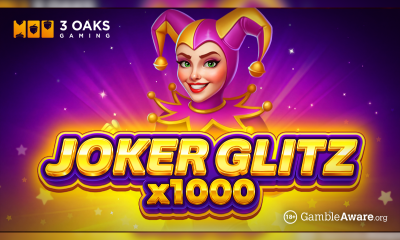
3 Oaks Gaming releases Joker Glitz x1000 slot with stacked multipliers
-
appointments6 days ago
OS Studios names Ishaan Arya country manager to lead India expansion