lottery
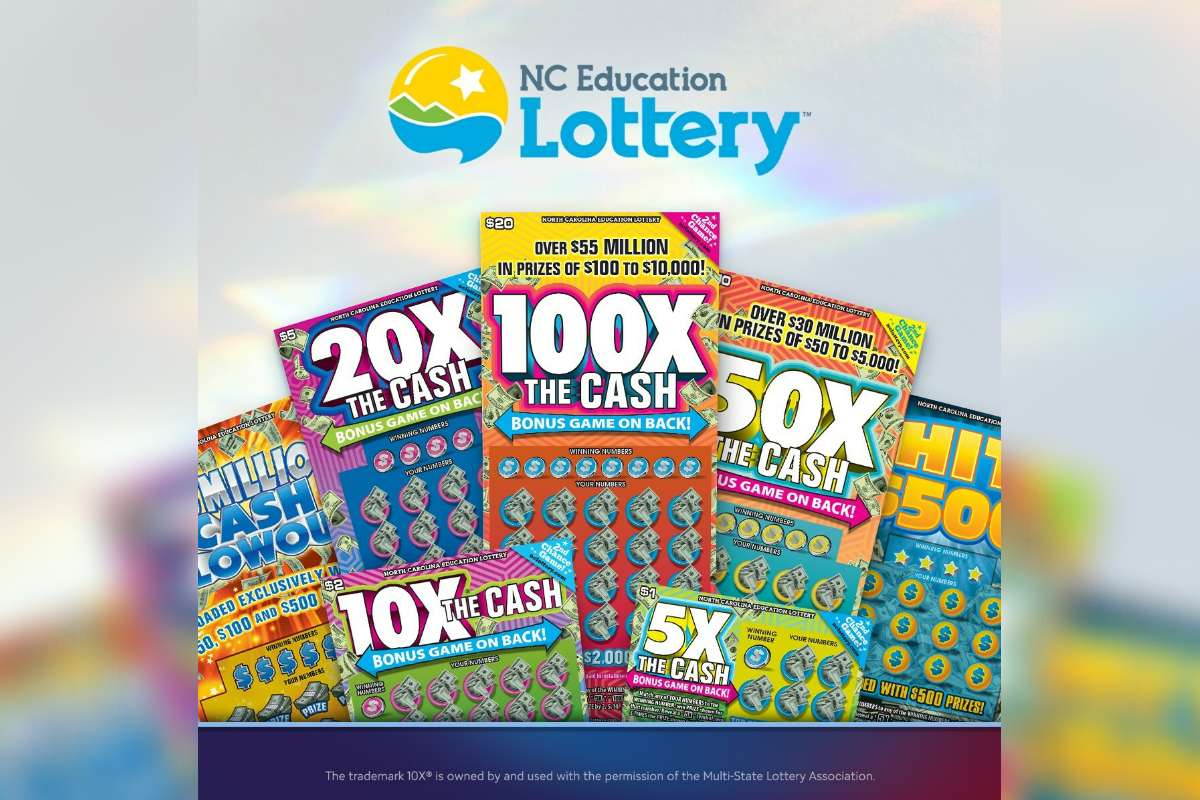
North Carolina Education Lottery Extends Fastest Growing Instant Game Program in U.S. with Scientific Games

Successful Partnership Positions Lottery for Future Growth to Benefit North Carolina Students, Serves as Model for World Lotteries
Scientific Games and the North Carolina Education Lottery have extended their partnership behind the fastest-growing instant scratch game program in the U.S. based on year-over-year growth. The partnership has propelled the NCEL to the No. 6 ranked lottery in the world for instant game performance (La Fleur’s 2022 Almanac per capita sales) and gained attention as the model for U.S. and international lotteries. The Scientific Games Enhanced Partnership helped responsibly grow NCEL Scratch-Off sales from $1.7 billion in fiscal year 2017 to $2.6 billion in fiscal year 2022. With this partnership, Scientific Games provides portfolio management across the Lottery’s entire scratch game offerings.
The Scientific Games Enhanced Partnership with NCEL began in 2017, aligning the Lottery for future growth to support education across North Carolina, including school construction and scholarships for students attending in-state colleges and universities.
Mark Michalko, NCEL Executive Director, said, “Our partnership with Scientific Games helps the N.C. Education Lottery achieve its goals, and we look forward to continuing our good work together. Last year, the success of scratch-off sales helped to raise $929 million to support education programs in North Carolina. We are aligned in our approach to maximize responsible growth in the coming years. Scratch-off games are the most popular games played in North Carolina and we look for continued success in our ongoing partnership with Scientific Games.”
Through the Scientific Games Enhanced Partnership, the company helps NCEL optimize its product portfolio through portfolio management and game design services, data-driven analytics, advanced logistics, licensed brand services, and retail sales and marketing support. The program is used by more than 20 lotteries, including six of the Top 10-performing instant game lotteries worldwide (La Fleur’s 2022 World Lottery Almanac).
John Schulz, President of Americas and Global Instant Products for Scientific Games, said, “The North Carolina Education Lottery is a great example of how Scientific Games and a lottery can partner on instant games to optimize the product portfolio and generate maximum revenues to benefit residents in the state. The program in North Carolina is a model for the world’s lotteries.”
With products generating more than 70% of global instant game retail sales, Scientific Games is the world’s largest instant games creator, producer and services provider in the world. The company provides retail and digital games, technology, analytics and services to 130 lotteries in 50 countries around the globe, including nearly every North American lottery.








Allwyn has completed a £450m transformation of the UK National Lottery, the biggest transformation since its launch in 1994. Through meticulous planning, testing and execution, Allwyn delivered more than 30 new systems – moving tens of thousands of retailer records, 18 million player records and over three billion historical transactions from old platforms to new ones.
Allwyn’s upgrade last summer of its core retail technology in its 43,500 retail partners and gaming systems was followed by the transformation of its digital capabilities earlier this year. The unprecedented changes allow for greater player protection and increased innovation both in retail and online. The £450m investment unlocks a comprehensive programme of new games to produce more winners and attract more players and generate more money for Good Causes.
Allwyn’s first full year as the operator of The National Lottery also saw a significant growth in sales: £8.1bn in 2025, up 3.5% on the previous year. More than £1.7bn was generated for Good Causes in 2025, the equivalent of £33m every week, up from £30m a week when Allwyn took over operations in February 2024.
In addition to money generated for National Lottery funded projects, almost £1bn (£967m) was raised in National Lottery Duty for the Treasury in the same period.
The National Lottery is the UK’s biggest single funder of the arts, sports, heritage and community outside Government. Allwyn is on track to double the amount the National Lottery generates for Good Causes from £30m a week to £60m a week by the end of the licence in 2034.
Allwyn’s transformation of The National Lottery’s digital capabilities – through wholesale overhauls of The National Lottery website and apps – is essential to bringing in a new generation of players and ensuring it continues to deliver week in, week out for the Good Cause beneficiaries who rely on its funding.
A record 12.1m people now play the National Lottery on digital platforms, with 1m more users logging on in 2025. In total, National Lottery digital sales hit £4.1bn in 2025, up 9.8% on 2024. Digital sales now account for 51% of all National Lottery sales, the first time digital has represented more than half of sales in its 31-year history.
The National Lottery’s retail estate has also been transformed with the nationwide rollout of new state-of-the-art terminals, which speed up transactions for retailers and players alike. The programme that spanned the length and breadth of the UK, with more than 41,000 outdated legacy terminals having now been swapped out.
From small corner shops and local newsagents to larger convenience stores and supermarkets – with independents making up the majority – Allwyn’s retail partners are the backbone of The National Lottery. With 94% of UK adults living or working within one mile of a National Lottery terminal, Allwyn is supporting high streets in every corner of the UK.
And with hundreds of lottery grants in every postcode district – ranging from world-class heritage projects to life-changing community projects, as well as funding Olympic and Paralympic athletes – most people in the UK will have benefited from a National Lottery-funded project at some point.
Andria Vidler, CEO of Allwyn UK, said: “Allwyn is committed to restoring the magic to The National Lottery and delivering long-term growth. Being the guardian of this unique UK institution is a privilege and a responsibility we take incredibly seriously.
“We are delighted to have delivered growth to The National Lottery while successfully completing the largest international upgrade in lottery history. This is a hugely exciting time for The National Lottery and its players, as these much-needed upgrades now allow us to launch new games and products, meaning we can generate more money than ever before for Good Causes.”
The post Allwyn Completes the £450M Transformation of UK National Lottery appeared first on Eastern European Gaming | Global iGaming & Tech Intelligence Hub.
Allwyn
Allwyn Launches Studio 59, a New Inhouse Creative and Content Studio for the National Lottery


Allwyn, operator of The National Lottery, has announced the launch of Studio 59, a new inhouse creative and content studio designed to strengthen how the brand creates, produces and distributes content across all channels. Studio 59 will open its doors in April 2026.
The new studio is being created in response to the rapid shift in the marketing and media landscape, with demand for timely, relevant and culturally attuned content growing across digital platforms.
By expanding its in‑house capability, Allwyn can accelerate content creation and simplify workflows, enabling teams to brief, create and deliver with greater clarity. This approach enhances the way Allwyn works with its agency partners, ensuring it is collaborating in smarter, more focused ways across campaigns and platforms.
Studio 59 will unite creative, content, social, production, planning and brand marketing into a single integrated structure, supporting three core areas of the business: Retail, Digital, and Communications and Earned, ensuring stronger earned storytelling and cultural engagement.
The studio is named after The National Lottery’s flagship Lotto game, where players select six numbers from 1 to 59 — a nod to one of the UK’s most recognisable draws and to the breadth of creative work Studio 59 will oversee.
Allwyn will continue to work closely with its existing agencies, including VCCP and Hearts & Science, particularly on major creative platforms and strategic planning. Studio 59 has been developed in partnership with The Creative Engineers (a Production Works company).
Steve Parkinson, Marketing and Brand Director, Allwyn UK, said: “The media landscape continues to evolve, with new formats, digital channels and audience expectations shaping how brands show up. To meet that challenge, we need to move faster, collaborate more closely, and bring more capability inhouse. Studio 59 allows us to do that. It gives us a more flexible, accountable model that strengthens our content creation and helps us show up more confidently in UK culture. Ultimately, it’s about returning more to Good Causes.”
Studio 59 is being designed to improve content creation from end to end, from planning and creative development to production and distribution. By housing teams together and shortening decision-making routes, Allwyn aims to boost turnaround times and create content that lands more consistently with players and communities.
As part of this, Studio 59 will play a central role in Allwyn’s new News Engine, an always on model that connects Communications and Earned with Creative and Social teams to identify opportunities, develop ideas at speed and produce content that travels further. From Good Causes milestones to moments in wider culture, the News Engine will help The National Lottery show up more often and more coherently across the UK.
Gillian Taylor, Director of Communications, Allwyn UK, added: “Studio 59 gives us the joined‑up firepower we need to create and react at speed. Bringing our creative and communications teams together unlocks a new level of collaboration. With the News Engine at its heart, we’ll be able to spot opportunities quickly and produce content that feels right for the moment, helping The National Lottery show up more often and with a clearer, stronger voice for players and communities.”
The post Allwyn Launches Studio 59, a New Inhouse Creative and Content Studio for the National Lottery appeared first on Eastern European Gaming | Global iGaming & Tech Intelligence Hub.

The UAE Lottery, dedicated to making a positive impact in the communities it serves, hosted a special Ramadan Iftar for 1,000 members of the blue-collar workforce, celebrating the spirit of the holy month and demonstrating its commitment to inclusivity and empowerment.
Aligned with the UAE’s Year of the Family and the values of Ramadan, the initiative underscores The UAE Lottery’s dedication to participating in one of the nation’s most meaningful traditions while supporting key national priorities.
This marks The UAE Lottery’s first-ever Ramadan outreach effort, carried out in partnership with SmartLife Foundation, a non-profit organization focused on improving the lives of blue-collar workers in the UAE, particularly those residing in labor accommodations.
Suzan Kazzi, Associate Director of CSR at Momentum – The UAE Lottery, commented: “Many of the individuals we are hosting for this Iftar spend this holy month far from their families while working hard to build a better future for their loved ones. Sharing a meal together is a simple but meaningful way to show appreciation and ensure they feel valued, supported, and part of a larger community.”
Alongside its flagship weekly draw, Lucky Day, offering prizes of up to AED 30 million, The UAE Lottery provides a growing portfolio of games, including Scratch Cards and Daily Draws, giving participants more chances to win while continuing to transform play into impact, one draw at a time.
The post The UAE Lottery Hosts a Special Iftar for the Blue-Collar Community appeared first on Eastern European Gaming | Global iGaming & Tech Intelligence Hub.

-

 bingo4 days ago
 -
Africa5 days ago
Virgin Bet goes live in South Africa
-
Charity Space Scotland5 days ago
Scottish Government Announces £7.9M Investment to Tackle Gambling Harms
-
ELA Games5 days ago
2026 SiGMA Americas Awards Features ELA Games in Two Major Categories
-
BetMGM5 days ago
PA Gaming Control Board Imposes $100,000 Fine on BetMGM
-
apuestas5 days ago
Brasil 2026: Bets presionan el presupuesto de los hogares y redefinen la competencia por el consumo
-
Betnacional4 days ago
Brazil: Betting pressures household budgets and reshapes the competition for consumer spending
-
Eilers & Krejcik – Fantini Game Performance Report5 days ago
Zitro Remains Latin America’s Top-Performing Supplier in the Eilers & Krejcik – Fantini Report