Latest News
Better Collective reports record-breaking Q4 and full year of 2022


Interim report October 1 – December 31, 2022.
Regulatory release no. 06/2023
Flash Highlights Q4 2022
- Revenue: 86.1 mEUR; growth of 63% YOY, organic growth 44%
- Recurring revenue: 41.3 mEUR; growth of 94% YOY
- Revenue share income: 30.2 mEUR; growth of 81% YOY
- EBITDA before special items: 35.2 mEUR; growth of 115% YOY; margin 41%
- New Depositing Customers: All time high with >580.000; growth 117% of which 78% were sent on revenue share contracts
- January trading update: Record breaking month with revenue of >37 mEUR; >40% YOY growth
Flash Highlights 2022
- Revenue: 269.3 mEUR; growth of 52% YOY, organic growth 34%
- Recurring revenue: 123.3 mEUR; growth of 54% YOY
- Revenue share income: 96.4m EUR; growth of 42% YOY
- EBITDA before special items: 85.1 mEUR; growth of 53% YOY; margin 32%
- New Depositing Customers: All time high at >1.680.000; growth 96% of which 76% were sent on revenue share contracts
- Earnings per share (EPS) increased >150% YOY
Highlights Q4 2022
- Financial targets for 2022 were 20-30% organic revenue growth, operational earnings of approximately 85 mEUR and net debt to EBITDA <3. On February 6, a guidance upgrade was released as 34% organic revenue growth was achieved, with 85.1 mEUR in EBITDA before special items and a net debt to EBITDA <3.
- Q4 Group revenue grew by 63% to 86.1 mEUR with recurring revenues growing 94% to 41.3 mEUR; organic revenue growth was 44%.
- Europe & ROW revenue grew 59% to 52.2 mEUR driven by an extraordinary strong performance with the men’s soccer World Cup where >300.000 NDCs were sent from the tournament alone and saw a good underlying business performance from Paid Media and media partnerships.
- US revenue grew 71% to 33.9 mEUR driven by a busy sports calendar and a successful Maryland state launch.
- The sports win margin continued to bounce back as the impacted European markets normalized as well as the sports wagering continued at all-time highs.
- Q4 Group EBITDA before special items grew 115% YOY to 35.2 mEUR.
- Europe & ROW delivered 20.7 mEUR in EBITDA before special items, which equals growth of 149% YOY and a margin of 40%.
- The US delivered 14.5 mEUR, in EBITDA before special items implying 81% growth and a margin of 43%.
- Cash flow from operations before special items was 21.0 mEUR an increase of 55%. The cash conversion before special items was 58% due to the extraordinarily high revenue in the quarter. During the quarter >11 mEUR were paid in taxes, of which 10.7 mEUR were paid in Denmark. By the end of 2022, capital reserves stood at 76 mEUR of which cash of 31 mEUR and unused bank credit facilities of 44 mEUR.
- New depositing customers broke all time high records with >580,000 in the quarter; growth of 117%. NDCs sent on revenue share contracts were 78%. During 2022 the Group delivered 1.7 million NDCs.
- Initiation of a share buyback program for up to 5 mEUR. The purpose of the buyback program was to cover future payments relating to completed acquisitions and LTI programs.
- Petra Zackrisson was appointed as SVP of Growth and joined the management team.
Significant events after the closure of the period
- The positive momentum from 2022 continued into January 2023, which posted record breaking monthly revenue of >37 mEUR, >40% YOY growth. The main driver was the Ohio state launch, and the growth comes on top of a strong comparison from last year where New York state launched.
- New media partnerships with Goal.com and Wirtualna Polska. Globally, Better Collective has several large partnerships like the ones with The Telegraph and The New York Post, as well as many smaller partnerships.
- On January 20, 2023, the share buyback program of 5 mEUR was completed with 394,645 shares accumulated under the program. In total Better Collective owns 1.1% of all outstanding shares.
- The board has decided to initiate a new share buyback program of 10 mEUR. The purpose of the buyback program is to cover future payments relating to completed acquisitions and LTI programs.
- A smaller asset deal for a sports media in an emerging market was completed for 4.3 mUSD with an upfront payment of 3 mUSD.
- Better Collective announced a share acquisition in Catena Media equaling 6,093,381 shares and a position of 8.5%.
- Esport community, HLTV, successfully hosted its annual HLTV Award Show 2022 in Stockholm for Counter Strike:Global Offensive.
- The board of directors implemented a 2023 Long Term Incentive (LTI) Plan for key employees in the Better Collective Group. Grants under the 2023 LTI will be in the form of performance share units and/or share options that are vesting after three years.
- The Better Collective HQ in Copenhagen will move ‘around the corner’ to a new and bigger office space. The leasing agreement runs for five years and has total rent obligation of approximately 12 mEUR during that period.
- The two founders of Better Collective, Jesper Søgaard and Christian Kirk Rasmussen were awarded with a lifetime achievement award at the iGB Affiliate Awards.
Financial targets 2023
The board of directors has decided on new financial targets for the Better Collective Group for 2023:
- Revenue in the range of 290-300 mEUR.
- EBITDA before special items of 90-100 mEUR.
- Net debt to EBITDA before special items of <2.
Better Collective invests in growing organically and will take one-off costs for 2023 investments to establish a stronger presence in LATAM and other emerging markets where regulation is or is expected to facilitate operations. An investment in the buildup of a proprietary technology platform for display advertising (“Adtech Platform”) will be made. The initiatives imply estimated 10 mEUR in added costs in 2023 in addition to the existing cost base. The Group will continue to push for revenue share in the US, and notes that the 2023 calendar is not as condensed as 2022’s with state launches and a men’s soccer World Cup. The above considerations have been built into the 2023 targets, and do not include impact from M&A activities.
CEO Letter
Q4 was a record-breaking quarter during which we benefited from our strong diversification, while we also cemented the synergies that can be achieved when combining efforts across the group.
Record breaking performance
During the year, it has been exciting to see how efforts to become the Leading Digital Sports Media Group are starting to materialize. Our sport communities have proved to be attractive “go-to-places” for millions of sports fans while also being strategically attractive for our business partners. Furthermore, I am humbled by the spirit of our employees, who delivered an amazing performance – a performance that resulted in an upgrade of our financial targets, which we set out in the beginning of 2022.
The Group delivered strongly both in terms of revenue growth as well as operational earnings. This performance was accomplished on the back of moving several US contracts from upfront payments (CPA) to revenue share, why implicitly the Group could have delivered an EBITDA of 100 mEUR, implying 80% growth. Undeniably, the ability to drive high profitable growth remains very important for Better Collective’s future ambitions.
Outstanding performance during the men’s soccer World Cup
The men’s soccer World Cup was a strong driver for us, during which we saw extremely high activity that exceeded our expectations. We started preparing for the World Cup many months ahead, which we benefited from across geographies. In the previous CEO letter, I expressed my excitement about having delivered + 1.1 million NDCs from Q1 to Q3. Therefore, I am even more proud to announce that with Q4 we brought this close to 1,7 million NDCs for 2022. Of the approximately 1.7 m NDCs, 76% were sent on revenue share contracts and out of Q4’s 580,000 NDCs, around 300,000 were delivered during the men’s World Cup. To put it into perspective, the 300,000 is more than the last four men’s World Cups and four men’s European Championships combined. When comparing to the men’s World Cup 2018, our key figures have increased tenfold; a true testament to how far we have come in just four years.
During the past decade, we have worked closely with our main business partners – mostly on revenue share contracts, from which Better Collective solely benefits if we manage to create long-term value for our partners. Consequently, we have accumulated a large “snowball” of revenue share accounts, which really came into play during the men’s World Cup, as our revenue share income broke all records with 30 mEUR for the quarter. This record was also made possible as the sports win margin continued to normalize. It is worth noting that sending 300,000 NDCs during the men’s World Cup has had a short-term dampening effect on our performance because many NDCs were sent on revenue share contracts. However, as stated many times over, this move brings a long-term benefit and builds for the future. Given this effect, it is even more outstanding that we still managed to surpass our organic revenue target.
2022 US revenue exceeded 100 mUSD
In connection with the 2021 acquisition of Action Network, the leading US sports betting media, we estimated that we could exceed 100 mUSD in US revenue by the end of 2022. At the time of acquisition, it was very ambitious as Action Network was a newer established business with many market uncertainties ahead – but as you may know Better Collective is built on ambition and strong visions. During Q4, our US business grew revenue 71% YOY to a record high 34 mEUR bringing total 2022 US revenues above the 100 mUSD mark. This is reached even with us having moved 15 mUSD – up from the estimated >10 mUSD in Q3 – from upfront payment (CPA) based contracts to revenue share.
2022 US revenue grew 102% YOY and it is worth mentioning that this growth comes on top of the 370% growth from 2020-2021. I am proud to see great results have been delivered in the US, despite having to navigate the Group through the changing climate, where sportsbooks shifted focus from growth to profitability. The performance was driven by all our US-based sports media as well as the launch of New York and Maryland, combined with a strong Paid Media performance. Let me comment further on our Paid Media business, as it really has taken off.
Amazing Paid Media performance
In 2020, we made a strategic investment into Paid Media by acquiring the Atemi Group, which specializes within the paid advertising space of the major search engines and social media platforms. This acquisition has turned out to be a great financial investment for Better Collective and brings synergies on multiple levels.
Firstly, Paid Media brings flexibility and scalability when entering new markets and during special sporting events like the recent men’s World Cup.
Secondly, this business provides deep insights into the improvement on our organic rankings in major search engines, insights into which keywords provide the best value as well as click through and conversion rate benchmarks.
Thirdly, we invest heavily in business intelligence as Paid Media comes with deep insights into the return on investment, as well as insights into market potential prior to making an investment, which is crucial for our decision-making process and long-term strategy planning.
Lastly, after acquiring Atemi, efforts were put into moving many of our CPA contracts to revenue share in our Paid Media business, which has turned out to be a very important investment. The move had a short-term dampening effect throughout 2021, where profitability slowed as we built for the future. We have now created a self-accelerating effect of stable revenue share income, which expectedly will grow larger over time. Consequently, the Paid Media business will have a larger pool of revenue to tap into when investing in advertising – which will continue to accelerate the revenue share “snowball” we are accumulating and grow the margin long-term.
Paid Media delivered strong growth of 94%, and with operations on a global scale, we have invested heavily in specific geographies during Q4, where we foresee that the return on investment will be the highest. Due to the massive topline growth, the Q4 Paid Media margin ended at all-time-high of 23%. The Paid Media performance is another indicator of the strength of having a large “revenue share ball” building up. The main contributors to the all-time-high Paid Media margin were the large pool of revenue share income that continues to fill, and solid CPA income in the US. As the US continues to move towards revenue share, we expect a lower CPA income to be mitigated by a larger revenue share “snow-ball”.
Despite having an extremely successful World Cup in terms of securing many NDCs, the tournament had a short-term dampening effect on the Group as well as the Paid Media margin due to extraordinarily high numbers of NDCs sent on revenue share contracts. Therefore, it is arguably even more impressive that we delivered a 23% Paid Media margin, while reaching our 85 mEUR Group EBITDA target. When we acquired the Atemi Group, the Paid Media business was in its mere infancy, and it now has been raised into its youth. We still have plenty of schooling to do to bring it to maturity – but we are ready for the journey! We will dive more into these developments at our Capital Markets Day on March 23, 2023.
Looking ahead
After the overwhelmingly good start to January, I look forward even more to 2023. January was boosted by the Ohio launch – giving us our best month ever – with revenues of >37 mEUR – implying growth of >40%, despite tough comparisons to the New York launch in January 2022, where we doubled the revenue from 2021. This year will expectedly have fewer large single events than 2022, with the main ones being the summer women’s World Cup in Australia and New Zealand, and the launch of sports betting in Massachusetts. We will continue our growth efforts in LATAM and keep an eye out for new market opportunities. We remain largely unaffected by the macroeconomic environment but will persistently monitor developments. Lastly, we will keep focusing on gearing our business for the future, which – among others – includes investing in a new AdTech platform and moving more US revenue to revenue share contracts – all of which is included in our 2023 guidance. I would like to round off another great year by thanking all my dedicated colleagues and partners – without you we would not be where we are today.
Jesper Søgaard
Co-Founder & CEO
Powered by WPeMatico


New software option replaces standard table announcements across cash games, tournaments and formats including All-In or Fold and Spin & Gold.
GGPoker on July 9, 2026 announced Action Voice, a new software feature that lets players replace standard table announcements with voice packs recorded by poker personalities, including Doyle Brunson.
The initial lineup named by the operator includes ten-time WSOP bracelet winner Doyle Brunson, Daniel Negreanu, Michael “The Grinder” Mizrachi and Kevin Martin, with additional voices “to be confirmed in the near future.”
Action Voice is available now across GGPoker’s product offering, including cash games, tournaments and formats such as All-In or Fold and Spin & Gold. Players can select voice packs in the desktop client via ‘My Page’ and then ‘My Action Voice’.
“Doyle Brunson may not be at the tables in the way that he used to, but his voice still can be,” said Sarne Lightman, Managing Director of GGPoker. “Action Voice is our way of keeping the legends who built this game part of the everyday experience – right alongside the players carrying it forward today, like Daniel and Michael. It’s a unique and fun new element to our software, and we can’t wait to reveal the rest of the lineup soon.”
GGPoker said more Action Voice packs will be announced in the coming weeks as it rolls out the full roster.
The post GGPoker adds Action Voice packs featuring Doyle Brunson and other pros appeared first on EE Gaming | Global iGaming & Tech Intelligence Hub.


GGPoker introduces Action Voice, letting players hear poker icons – including Doyle Brunson, Daniel Negreanu, Michael “The Grinder” Mizrachi and more – call their action at the tables
GGPoker, the World’s Biggest Poker Room, today unveiled Action Voice, a unique feature that gives players the option to replace GGPoker’s standard table announcements with those voiced by some of poker’s most iconic figures. For the first time, players can bet, raise, call, and fold to the voice of ten-time WSOP bracelet winner and back-to-back Main Event champion Doyle Brunson – alongside a growing roster of legends including Daniel Negreanu, Michael “The Grinder” Mizrachi, Kevin Martin, and additional names to be confirmed in the near future.
Action Voice is now available to all GGPoker players, who can select their preferred voice pack in the GGPoker software and hear it call their action while playing their favorite GGPoker games, including cash games, tournaments, and exclusive formats such as All-In or Fold and Spin & Gold.
“Doyle Brunson may not be at the tables in the way that he used to, but his voice still can be,” said Sarne Lightman, Managing Director of GGPoker. “Action Voice is our way of keeping the legends who built this game part of the everyday experience – right alongside the players carrying it forward today, like Daniel and Michael. It’s a unique and fun new element to our software, and we can’t wait to reveal the rest of the lineup soon.”
To select a new voice from within the desktop software, click on ‘My Page’, then ‘My Action Voice’. Choose your preferred voice by selecting the avatar, click ‘Apply’ and you are ready to hit the tables!
Additional voices will be revealed in the coming weeks as GGPoker rolls out the full Action Voice roster.
The post The Godfather Of Poker Returns To The Table: Doyle Brunson’s Voice Comes To GGPoker appeared first on Americas iGaming & Sports Betting News.
Haaland
International bettors back Haaland’s Norway to beat England in World Cup Quarter Final Clash

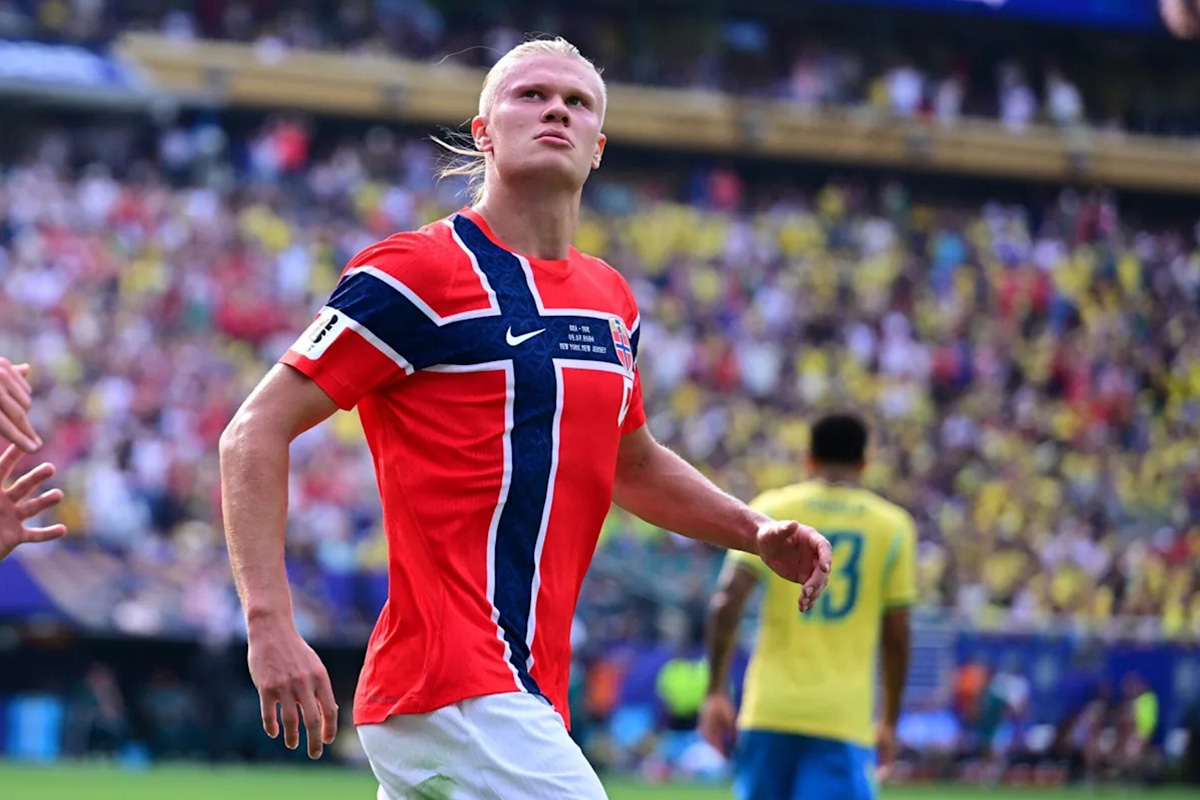
Kaizen Gaming shares Betano users’ predictions on teams heading to the World Cup semi-finals
As the World Cup moves into the last eight stage, Kaizen Gaming unveils exclusive proprietary data from its Betano platform, which reveals Argentina, Norway, Spain and France as the most backed teams by users globally to progress into the semi-finals.
Predicting the teams to qualify to the semi-finals (selections from the “To Qualify” market):
- Norway backed by 75% of users to qualify over England
- Argentina favoured by 80% of users to win over Switzerland
- Spain narrowly predicted to come out on top over Belgium with 55% of users’ bets
- France has been selected by 67% of users to pass through Morocco
With regards to two of the biggest surprises of the tournament this far, Brazil’s defeat to Norway and Germany’s elimination by Paraguay, it seems that for Betano users the shock wasn’t that big. In fact, 42% of users had seen Paraguay’s qualification coming, and 45% had predicted Norway getting through Brazil to reach the quarterfinals.
*The data shared has been extracted on the morning of July 8, 2026 from across 18 markets, excluding the UK. The international data sources may vary according to betting option availability per market.
The post International bettors back Haaland’s Norway to beat England in World Cup Quarter Final Clash appeared first on EE Gaming | Global iGaming & Tech Intelligence Hub.

-

 Affiliate Industry6 days ago
Hub Affiliations Triumphs at the iGB Affiliate Awards 2026: Winner of Programme/Network Campaign of the Year
-
Austria7 days ago
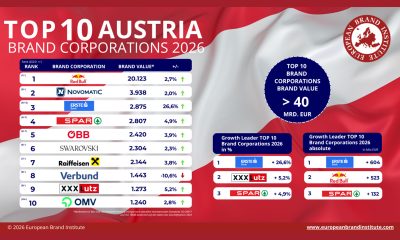
Austrian Brand Value Study: NOVOMATIC Defends Top Ranking
-
Latest News6 days ago
N1 Partners at iGB L!VE 2026: Bringing Together Affiliates, Art and Innovation
-
Africa7 days ago
PopOK Gaming sponsors Botswana’s TT Cup Challenge horse racing event
-
Amusnet7 days ago
Amusnet Releases its Latest Video Slot “Golden Snake”
-
Betsson CEO Pontus Lindwall7 days ago
Gaming in the Nordics launch event sets annual Copenhagen conference from 2027
-
Azerbaijani Parliament7 days ago
Azerbaijan to Impose Tougher Penalties for Illegal Online Gambling
-
Amusnet7 days ago
Weekend Reels | Week 27: Slot Drops & Trends