European Union
What Tourists Traveling to Poland Need to Know About Gambling in the Country

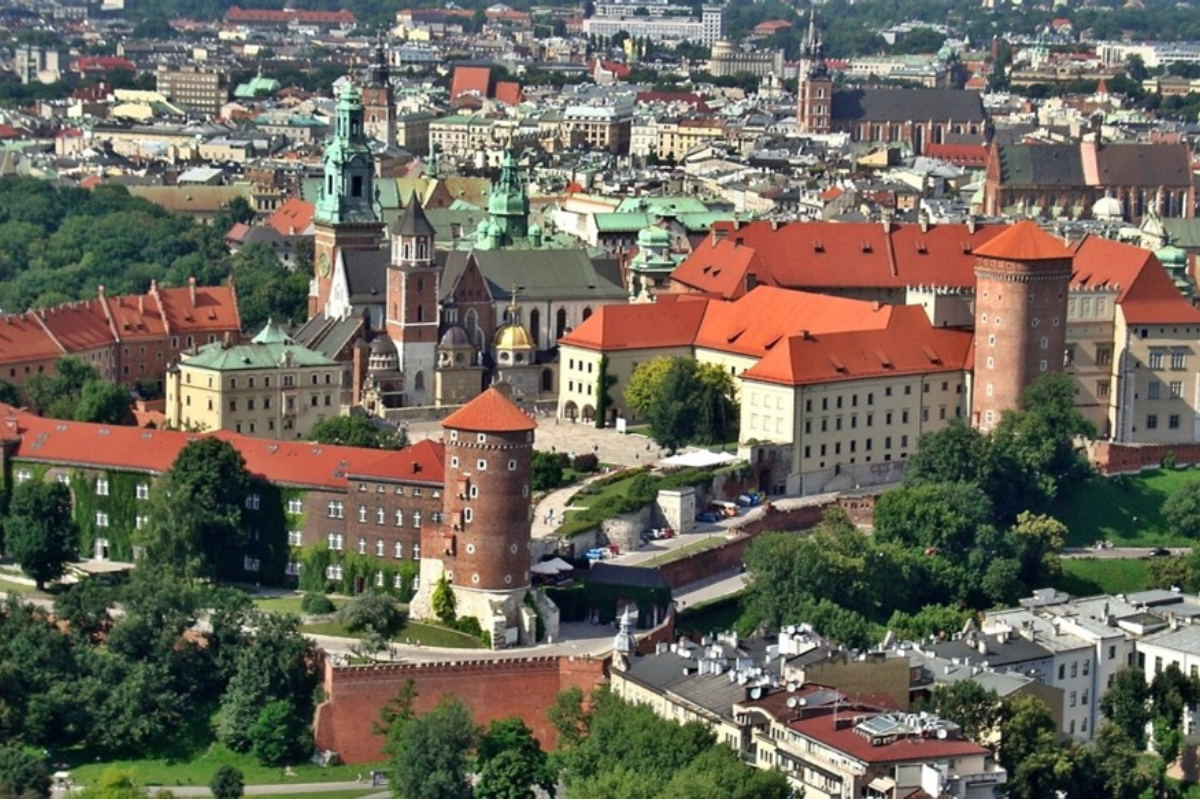
It is hardly surprising that Poland is an attractive tourist destination. The country is steeped in history and has hundreds of medieval castles and fascinating buildings to visit. The historical old towns of Warsaw and Krakow have beautiful ancient churches. The country has some somber history, too; many visitors pay tribute to the lost lives at the infamous Auschwitz Birkenau camp. Gdansk is another city not to be missed. It is an ancient seaport and was made famous by being the birthplace of the Solidarity Movement, which was responsible for bringing about the end of the communist regime in the country.
Poland has fourteen UNESCO world heritage sites, including the ancient Bialowieza Forest, which is home to the European Bison. Other areas of magnificent scenery include fabulous beaches on the Hel peninsula and the Carpathian Mountains, which run through the country. Poland is one of the most affordable European countries for tourists traveling from the USA. In addition, it is generally regarded as one of the safest countries in the world. It lands in the top twenty safest countries for travelers. The biggest threats are pickpocketing, petty theft, and overcharging.
Land-based Casinos
If you are someone who likes to have a flutter as part of your vacation, you will have the option of playing at over fifteen land-based casinos in Poland. These can be found in larger cities like Gdynia, Poznan, Lodz, Krakow, and Warsaw.
The biggest of these is the Olympic Sunrise Casino in Warsaw, which is open 24 hours a day. It is spread over 1700 square meters and boasts 100 slot machines and 30 game tables. Visitors might choose to stay in the hotel where it is located – The Hotel Hilton Warsaw. It is a centrally located modern hotel with 314 rooms over 27 floors. There is direct access to the casino from the lobby. Guests can enjoy a wide selection of Polish vodka-based cocktails at the bar or take a dip in the heated swimming pool.
Online Casinos in Poland
If you are planning a slightly more modest holiday, fear not; there are plenty of other options. Playing at online casinos in Poland is somewhat more complicated, however. The only legal online casino in Poland is the state-owned Total Casino. Visitors to the country can visit the website, look around, and play slots in demo mode. However, only Polish citizens can sign up and play for real money. Online casino gambling laws in Poland are very strict and do not allow domestic operators to offer casino games. Instead, visitors can sign up to offshore online casinos that accept players from Poland and play from the comforts of their vacation accommodation.
Online Betting
Online sports betting is more straightforward. Placing bets on sports events online in Poland is legal for citizens and visitors alike. Many licensed online bookies exist, including forBET, Fortuna Entertainment Group, and STS.
The Poles are fond of betting on soccer. The most bets are placed on Polish Football Federation teams. This includes both men’s and women’s national soccer teams and professional soccer leagues.
STS is the biggest of the online betting companies and currently accounts for 40% of all online wagering. They have been very proactive in creating mobile-friendly sites and invested a lot in their technology. You can download STS mobile betting apps for Android or iOS. Alternatively, their website has been optimized for mobile devices.
As well as traditional sports, there are opportunities to bet on politics, entertainment, and eSports.
Betting Shops
If you want a slice of a more traditional betting experience, Poland also has plenty of betting shops. For example, Fortuna and STS both have betting shops throughout most towns and cities.
Lotto
If you enjoy playing lotto games online, you can do so at Totolotek, Poland’s largest casino-style igaming site. It just does not have any traditional casino games. Totolotek is run by the state-owned gambling company Totalizator Sportowy and has been popular with Polish citizens for almost seventy years.













When it comes to regulations designed to improve the safety of consumers, gambling companies are used to being the centre of attention. Sometimes though, the industry simply gets caught in the crossfire — a problem that is increasingly the case with broad pieces of legislation designed to reign in search and social media giants.
From affordability rules to advertising bans, there’s no shortage of regulation that specifically constrains what gambling companies are allowed to do in specific markets, all in the name of protecting consumers.
In the face of these many overlapping layers of compliance, it can be easy to lose sight of the broader areas of new legislation that nevertheless also require attention from the European gambling industry.
Not just Facebook
At the EU level, this includes mammoth regulatory initiatives like the Digital Services Act (DSA).
Although it was created to force social media giants to be more responsible for the content posted on their platforms, as providers of online services within the bloc, gambling companies are well within its scope.
The DSA has a particular focus on hosting illegal content and requires service providers online to remove content that has been flagged or face costly enforcement.
On provision requires operators and marketing providers active in Europe are required to offer consumers a way to flag illegal content on their platforms and must have a process on how they respond to these requests.
The EU also expects to receive a so-called transparency report every year, which details what consumer requests were made and how they were dealt with.
Any requests made by law enforcement over potentially illegal content must also be included in that report.
The role of chat services, particularly where they allow your players to speak with one another, is also covered by the DSA.
This can create unique compliance headaches for gambling operators, particularly where a backend service is actually provided and maintained by a B2B provider.
Legal experts say that the EU has no issue with this sort of structure, but expects there to be a clear understanding about who is responsible for dealing with any issues that might arise.
“You need to make sure between the two of you, how you’re going to apportion responsibility for making things like the notice and action form available,” said Heather Catchpole, a senior associate with law firm Bird & Bird.
“If a user does request chat content to be removed, then who’s going to be responsible for actioning that? Who is able to remove that content on the back end? So, there’s some obligation apportionment things to think about here,” she said.
Brexit in name only
The UK has its own version of this kind of law called the Online Safety Act (OSA). It too attempts to enact tighter controls on digital businesses in the name of consumer safety, but in the process creates evern more unique problems for online gambling companies.
It casts a wide net. Even if your company has no physical presence in the UK, or even if it isn’t technically licensed there, operators may still find themselves covered by its provisions.
“If you are based in Gibraltar, if you are based in Cyprus or in Malta, you would still be caught by the online safety net if you have UK users on that service,” explained Bird & Bird partner, Emma Drake.
“Also, even if you thought that you didn’t target the UK and you still have UK users, if [digital regulator] Ofcom thought that you pose a material risk of significant harm, they might still consider you caught.”
For most gambling companies the risks are less about the kinds of enforcement or negative press you might expect to face from failures in gambling regulations, instead operators will need to make sure they have filled out the right paperwork to show officials they are following the rules.
In the UK, this includes an illegal content risk assessment, which requires a company to lay out the likelihood of users encouraging illegal content on their platform and what they are doing to mitigate those risks.
Although the odds of a gambler encountering something illegal in the UK on their platform, the report still needs to be filed and still requires significant time and effort from a compliance team, Drake said.
The challenge of complying with the OSA is made more difficult by its vagueness and even for seasoned professionals it has been a challenge to work out what elements of the act apply to gambling.
“The online safety act is amongst the poorest drafted pieces of legislation I’ve ever had the ‘joy’ to practice on,” Drake added.
These dual digital safety laws are just the tip of a very large and complex iceberg of broad spectrum legislation that has ensnared online gambling companies in the past few years.
Other examples just within the EU include, the AI Act, the Digital Markets Act and the Corporate Sustainability Reporting Directive.
As governments globally grow more aware of the role social media and AI plays in our societies, gambling companies can expect to be more regularly caught up in these kinds of big legislative projects.
The post How International Push For Online Safety Creates Online Gambling Headaches appeared first on Eastern European Gaming | Global iGaming & Tech Intelligence Hub.

The slow death of grey markets in Europe and the increasingly clear line between regulated spaces and the black market is set to divide the entire industry in two, including suppliers.
With almost all major European markets having adopted or being well on their way to enacting a full licensing regime for online gambling, the battle lines between what is on- and off-shore are clearer than ever.
For those nations that persist with restrictions on some sectors, like the continued monopoly in Norway or France’s ban on online casinos, it’s becoming nearly impossible to justify doing business in spite of these prohibitions – even for suppliers.
Regulators in the rest of Europe increasingly expect their licensees to follow not just their rules, but those of their fellow authorities across the continent.
Where once expectations of good behaviour were reserved exclusively for operators, B2B companies are now subject to the same scrutiny.
For the past few years, there has been a general building of pressure on suppliers, but this year B2B compliance has moved from a growing trend to become the status quo for the sector.
Where do you stand?
The industry is being asked to pick a side and even to play the role of regulator itself, in some cases.
“We understand that at least one piece of recent B2B regulatory enforcement [in the UK] may have come as a result of a B2C operator effectively reporting one of its suppliers,” said Andy Danson, the head of Bird & Bird’s international gambling practice.
It’s becoming clear that a meaningful percentage of operators have fully bought into the idea that those who continue to exist in European black or grey are threats to their bottom line.
Speaking on a recent webinar organised by his firm, Danson added: “There is an increasing use of commercial pressure and accountability alongside regulatory enforcement, and there is this growing expectation that licensed businesses consider who they support.”
Danson notes that, in his view, the burden on operators to self-police their industry is probably becoming too large.
“How much can a regulator really expect B2C licensees to regulate their suppliers? It is ultimately the regulator’s job to do that, and B2C really should be able to rely on their suppliers having a local license.”
This backwards pressure is also being exerted on suppliers in jurisdictions where they are required to obtain their own licenses.
Regulators expect suppliers not to sell their content to operators who service their local black market and look dimly on supplying companies active in illegal markets in any part of the world.
Gone are the days when these authorities would accept the excuse that aggregators are ultimately responsible for providing game content to these offshore operators. Instead, suppliers risk enforcement if they do not have oversight of the entire supply chain their products exist in.
Dealmakers
This pressure coming in from every angle leads to only one inevitable conclusion: M&A activity.
As suppliers are forced to choose either to abandon their high profit margin offshore clients or their reliable onshore customers, the possibility of dividing into two parts becomes more and more compelling.
“I think businesses will very likely look to separate and restructure, particularly where they currently have a real mix of regulated and unregulated market activities,” said Danson.
“We certainly saw similar trends five to ten years ago when the regulatory focus on this sort of issue was more on the B2B side,” he added.
This move would be driven partly by modern regulatory complexities, but also the impact of US investors entering the gambling market more prominently over the past five years.
US-based capital tends to be more skittish about any activity with uncertain regulatory backing and its law enforcement authorities are not shy about exerting their authority extraterritorially.
“International market exposure is becoming more and more relevant in an investment and M&A context,” Danson confirmed.
A dilemma
Those gambling businesses choosing the regulated environment are at least finding their authorities more willing than in previous years to take proactive action against the black market.
In the UK, the Gambling Commission has received a grant of £26m from the government to step up its work against illegal online gambling, for example.
Regulators are also understood to be sharing more information than ever before about the main bad actors afflicting their markets, through organizations like the Gambling Regulators Europe Forum (GREF).
Although it’s worth noting that officials also say they are swapping notes on the activities of their licence-holders as well, in yet a further example of international compliance becoming a local issue.
This, along with an atmosphere of zero compromise when it comes to tightening regulations, has created a situation where the choice between on- and off-shore is not a simple one.
Andy Danson summed up the problem: “By creating an environment which has become so burdensome and challenging for regulated markets to operate, and then challenging operators and suppliers to pick a side, regulators perhaps shouldn’t be all that surprised when some operators out there might not necessarily choose the side that they want them to.”
The post European Online Gambling Industry Faces Tough Offshore Choice appeared first on Eastern European Gaming | Global iGaming & Tech Intelligence Hub.

With Bill 55 on increasingly shaky ground amid a transitional era for online gambling, what does the future hold for Malta’s point-of-supply industry?
This week has seen the EU heap yet more pressure on Bill 55, a defensive measure introduced by the Maltese government to hold back a tidal wave of player refund lawsuits that could cost the industry hundreds of millions of euros.
Players in Austria and Germany have been able to successfully argue in court that they should be repaid all money lost to operators that offered gambling in their countries without a local licence. The cases stand to erase years of grey market earnings at many operators.
Bill 55, which in June 2023 became an official amendment to the Malta Gaming Act under the title Article 56A, allows judges to reject court rulings from other EU nations if they threaten the economic security of the island’s gambling industry.
It has served Maltese operators well since it was enacted, effectively blocking lawyers from passporting claims from Austria, Germany and elsewhere to the location where operators are legally headquartered, in order to force them to pay out.
This has triggered an international legal wrestling match, now being fought via a series of cases at the Court of Justice of the European Union (CJEU), the EU’s highest judicial authority.
So far, the judgements and opinions issued have not made comfortable reading for the Maltese industry or its regulatory officials.
Earlier this month, the court appeared to settle a longtime debate on which the entire premise of Malta as an offshore hub is founded. Judges said that the freedom to provide services within the EU does not allow for operators to ignore local prohibitions on certain types of gambling.
That was followed this week by an Advocate General (AG) advising judges that if they were to consider the legality of Bill 55, it should be struck down.
It also reaffirmed the court’s dim view of gambling as a cross-border service.
As the opinion put it: “Under the current state of EU law, Member States are under no obligation to recognise gambling licences issued by other Member States. Accordingly, a Maltese gaming licence is, in principle, valid only in Malta.”
This opinion is only advisory, and is unlikely to amount to anything in this particular case (C-683/24) because the AG also recommended that the case as a whole should be ruled inadmissible.
But this is just one in a handful of similar issues being considered by the CJEU and the more time that passes, the greater the pressure appears to be on Malta and Bill 55.
The EU is also taking a tandem approach: The European Commission, the EU’s executive arm, has itself opened an investigation into Malta and the legality of Article 56A and has indicated through its own statements and submissions to the CJEU that it considers the provision to be against EU law.
New tactics needed?
All of which leads to several difficult questions for Malta and the many gambling companies based there.
The first is a defensive issue: With Bill 55 on the ropes, how will the nation prevent the many operators who call its islands home from being stuck with a huge refund charge?
Work is already underway to mount a new defense. The tactic uses the same inspiration as Article 56A, which argues that allowing the foreign court judgments that demand large payments from operators would seriously damage the Maltese economy and thereby upset its “public policy”.
The EU principle, also known as “ordre public”, allows for member states to make legal exceptions in order to protect their society.
In a pair of new cases addressing transferred player refund claims from Austria, Maltese lawyers have argued, without reference to Bill 55, that granting the payment orders would upset the nation’s public order.
These two cases are a clear attempt to establish that, even without any specific Gaming Act amendments, the principle of ordre public protects Maltese gambling firms from having to pay up.
The problem is, the CJEU may have seen this coming.
“The fact that the enforcement of certain judgments may entail serious economic consequences for a national operator, an industry or even the Member State addressed does not justify recourse to the ‘public policy’ clause,” reads the recent AG opinion.
Although lawyers in Malta insist that the AG’s comments should be taken only to refer to Bill 55.
Meanwhile, lawyers fighting to recover refunds believe that cases like these, which have already been appealed, will themselves wind up in the CJEU and at least buy more time for Malta before payouts need to be made.
A new kind of industry hub?
Perhaps the more fundamental question is what Malta offers as a gambling hub over the next decade.
It’s been apparent for some time that the value of a Maltese licence is degrading, through no fault of local authorities.
As European nations gradually switched on their own licensing models, operators have needed to collect local approvals.
Even where nations have clung firmly to monopolies, like in Norway, authorities have also become more effective in enforcing against offshore operators who offer into their territories.
The clear trend of the CJEU also indicates that arguments based on the freedom to provide services are practically finished.
In face of this reality, regulators and business leaders in Malta are looking further afield. Maltese law firms have appeared in locations as far afield as the UAE and Taiwan in recent years, as they look to advertise the nation’s status as a centre of iGaming excellence to emerging online gambling markets.
Leaning into the density of online gambling expertise is also an increasingly important strategy for those looking to attract investment to Malta.
The reason that the industry flocked to Malta in the first place may no longer be relevant, but it’s still the case that two decades later the nation boasts a greater concentration of industry talent than in any other European nation.
There’s also been an increased focus on suppliers, which typically have lower local compliance overheads and more ability to run their businesses remotely from the territories where their content is used.
Although this sector is increasingly subject to local licensing, as well as new compliance burdens designed by regulators looking to drive a wedge between on- and offshore online gambling markets.
Change is inevitable
Malta has demonstrated its ability to adapt and survive, but there’s little denying that the nation’s gambling industry has never been more under siege than it is now.
After decades of growth and success, new ideas are needed to steer the sector into a new phase.
The success with which it emerges from the Bill 55 era will have a dramatic impact on Europe’s online gambling sector and beyond.
The post Malta faces new dawn as EU courts gather strength appeared first on Eastern European Gaming | Global iGaming & Tech Intelligence Hub.

-

 América Latina4 days ago
Las diferencias locales de Argentina representan tanto un desafío como una oportunidad para el sector del iGaming
-
Latest News4 days ago
Connect with N1 Partners at G Gate Conf 2026
-
game-launch4 days ago
Million Games launches East West Wild slot with progressive multipliers
-
AI4 days ago
Veikkaus rolls out OpenBet’s Neccton responsible gambling platform ahead of 2027 reform
-
Africa4 days ago
Booming Games signs content deal with World Sports Betting in South Africa
-
Gmonitor.ai4 days ago
Gmonitor llega a Latinoamérica: la plataforma de inteligencia de mercado para operadores debuta en seis mercados regulados
-
 Latest News4 days ago
Sportradar Report | World Cup 2026: Opportunities for the Latin American Sports Betting Market
-
eSports5 days ago
G2 partners with PUBG MOBILE Esports to scale Western Europe competition