Latest News
EL urges Council of the EU to exclude explicit mention of online gambling and betting services from Digital Services Act


EL urges the EU Member States’ representatives to exclude the explicit mention of online gambling and betting services in the context of freedom of establishment and freedom to provide services within the EU:
“[]…The applicable national laws should be in compliance with Union law, in particular including the Charter and the Treaty provisions on the freedom of establishment and to provide services within the Union in particular with regard to online gambling and betting services. … []
The specific reference to “in particular with regard to online gambling and betting services” wrongly implies that national regulations on illegal content in the gambling sector are often not in compliance with the EU law. Whereas there are definitely restrictions on the freedom to provide online gambling services in most Member States, these national laws aim to combat crime and fraud and to protect consumers in a manner that meets the requirements as set out in the caselaw of the Court of Justice of the EU.
”The explicit mention of online gambling and betting services in this particular context is misplaced and should therefore be deleted. It fails to take into account all the relevant case-law of the Court of Justice of the EU and the very nuanced approach to the gambling sector due to its peculiar nature. The Court clearly confirmed on several occasions that restrictions in the gambling sector are justified for reasons of public order, public security, public health, as well as for the overriding reasons in the public interest, such as consumer protection, combating fraud, crime or squandering of money. Failing to recognise this means risking increased activities of illegal gambling operators, damaging individuals and society as a whole. EL therefore urges to exclude the explicit mention of online gambling and betting services from the Digital Services Act in the context of freedom of establishment and freedom to provide services.” – Arjan van ‘t Veer, EL Secretary General
In its original proposal, the European Commission underlined that the DSA would be without prejudice to the e-Commerce Directive (2000/31/EC) and that it builds on the provisions laid down therein. This implies that the clear exclusion of the gambling activities as stipulated in the e-Commerce Directive would continue to apply under the DSA, too. It is therefore very unclear why “online gambling and betting services” would have an explicit mention in recital 29 of the final text of the DSA concerning the application of the free movement principles, especially when no other sector is mentioned.
Powered by WPeMatico



Alea is set to take a leading role in São Paulo as the Headline Partner for NEXT.io Focus Brazil, returning for a second straight year to one of the most important gatherings in the country’s regulated iGaming calendar.
The invite-only event takes place on Monday, 6 April at Palacio Tangará and brings together around 100 senior industry decision-makers to examine how Brazil’s market is evolving beyond its launch phase.
The agenda will center on the market’s new reality, including changing player behavior, regulatory maturity, and the long-term sustainability of Brazil’s iGaming sector. Alea CEO Jordi Sendra will open the afternoon by joining the panel “Brazil 2026: The New Reality of Regulated Gambling,” where leaders from TQJ Bet, Esportes, and Stake Brazil will discuss how operators can stay competitive in a more structured environment.
Alea says its renewed partnership reflects the company’s growing commitment to Brazil and its deeper local presence. Over the past year, the company has invested in building a stronger on-the-ground structure to support partners across the market, with Sendra describing Brazil as a fast-changing but increasingly organized industry where open dialogue remains valuable.
The São Paulo appearance also connects directly to Alea’s wider South American push. After NEXT.io Focus Brazil, the team is shortlisted for Best Aggregator at the SiGMA South America Awards, before continuing discussions at SiGMA South America from 7–10 April at Booth N145, where the company will showcase its localized portfolio and technical support for operators navigating Brazil’s evolving market.
The post Alea Leads Brazil iGaming Talks in São Paulo appeared first on Eastern European Gaming | Global iGaming & Tech Intelligence Hub.
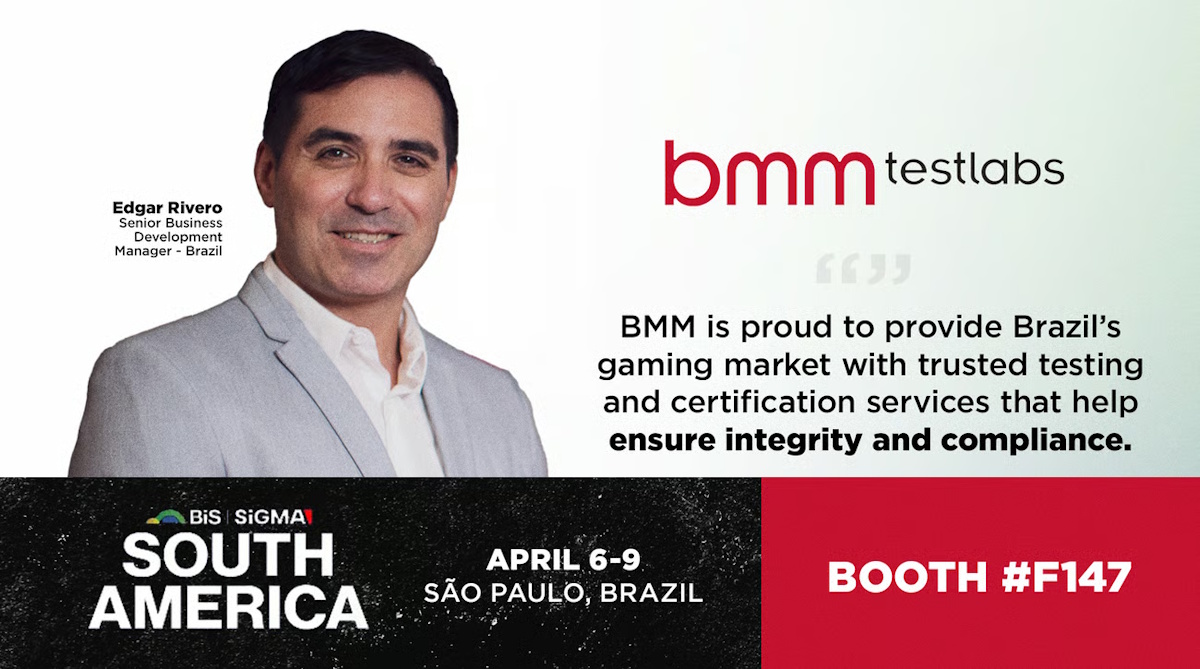
BMM Innovation Group is set to reinforce its leadership in compliance testing, cybersecurity, and professional training at the BiS SiGMA Americas, taking place from April 6–9 in São Paulo. Exhibiting at Stand F147, the company is doubling down on its long-term commitment to Brazil’s rapidly evolving regulated gaming ecosystem.
As one of the most dynamic gaming markets globally, Brazil presents both opportunity and complexity. BMM Innovation Group, through its specialized brands, is positioning itself as a critical enabler for operators, suppliers, and regulators navigating this fast-changing environment.
A Three-Pillar Approach to Gaming Compliance
Operating through its globally recognized divisions—BMM Testlabs, BIG Cyber, and RG24seven Virtual Training—the group delivers a comprehensive suite of services tailored to regulated gaming markets.
- Testing & Certification: BMM Testlabs ensures that gaming products meet stringent regulatory standards, enabling smoother market entry.
- Cybersecurity Solutions: BIG Cyber strengthens digital resilience, a growing necessity as gaming platforms become increasingly interconnected.
- Compliance Training: RG24seven Virtual Training provides certification programs designed to equip employees with the knowledge required to meet regulatory obligations.
Strategic Focus on Brazil’s Gaming Boom
With more than 40 years of industry experience, BMM Testlabs continues to play a pivotal role in supporting Brazil’s regulatory framework. Its investment in local infrastructure, including a dedicated test lab in São Paulo, signals a strong, long-term commitment to the region.
According to Marzia Turrini, Global President of iGaming & Cybersecurity, Brazil stands out as one of the most promising regulated markets worldwide. She emphasized that ensuring integrity, compliance, and cybersecurity readiness is essential for sustainable growth in the sector.
This localized approach allows BMM to help stakeholders confidently launch products while adhering to evolving regulatory requirements—an increasingly important factor as Brazil formalizes its gaming laws.
Driving the Future of Regulated Gaming in Latin America
Attendees at BiS SiGMA Americas will have the opportunity to engage directly with BMM’s experts and explore how the company’s integrated solutions support the future of regulated gaming not only in Brazil but across Latin America.
From certification to cybersecurity and workforce training, BMM Innovation Group is positioning itself at the intersection of trust, technology, and regulation—three pillars that will define the next phase of growth in the global gaming industry.
Industry professionals interested in learning more or scheduling meetings with BMM representatives are encouraged to connect during the event to explore tailored solutions for their operational and compliance needs.
The post BMM Showcases Gaming Tech at BiS SiGMA appeared first on Eastern European Gaming | Global iGaming & Tech Intelligence Hub.


New approvals in U.S. states and applications in Canadian provinces drive Catalist Sports’ latest expansion across regulated North American markets
Catalist Sports, a leading licensed supplier of sports betting content to the regulated U.S. marketplace, has continued to expand its regulated market footprint with new supplier licenses secured in Arkansas and Nebraska, alongside recently submitted Canadian applications in Ontario and Alberta.
Arkansas’ regulated sports betting market is set for significant growth, with major operators including DraftKings and FanDuel entering the state in March 2026. In addition to Arkansas, Catalist Sports has successfully obtained a supplier license in Nebraska.
Following the approval of its supplier license in Missouri, the latest state to regulate online gambling, in December, Catalist Sports is now licensed in 30 U.S. jurisdictions, with two Canadian provinces expected to follow.
These license updates reinforce Catalist Sports’ commitment to serving both U.S. and Canadian regulated betting markets with compliant, high-quality content and services.
“Securing licenses in new jurisdictions and strengthening our regulatory standing is fundamental to serving as a trusted, key supplier to our operator partners,” said James Monk, Vice President & General Manager of Catalist Sports.
“Arkansas represents an exciting next step for us, particularly as major brands prepare to enter the market. At the same time, our licenses in Nebraska, along with applications in Ontario and Alberta, and ongoing license upgrades, position Catalist to continue delivering scalable, compliant, and differentiated services to our partners.”
Catalist Sports’ expanding North American footprint supports the company’s broader strategy to provide licensed operators with premium data, live streaming, and advanced trading capabilities, helping partners maximize in-play engagement, product innovation, and long-term growth in regulated markets.
Catalist Sports distributes official data and live streaming rights from a vast portfolio of events to licensed U.S. sportsbooks. This includes top-tier tennis properties such as the Australian Open, ITF World Tour, Davis Cup, and Billie Jean King Cup, as well as events across soccer, basketball, and ice hockey, which power year-round engagement for sportsbooks seeking continuous, high-frequency, high-quality live betting content.
The post CATALIST SPORTS SECURES NEW SUPPLIER LICENSES IN ARKANSAS AND NEBRASKA appeared first on Americas iGaming & Sports Betting News.

-

 Betnacional6 days ago
Operational Leadership and the Driving Force Behind LatAm’s Largest Event
-
Australia6 days ago
NSW: More Than 650 Gaming Machine Exemptions Revoked to Address Gambling Harm
-
2026 SPiCE South Asia Awards6 days ago
QTech Games wins Innovation of the Year at the 2026 SPiCE South Asia Awards
-
Compliance Updates6 days ago
UK Government proposals to undermine the ‘aim to permit’ of the Gambling Act 2005?
-
Canada6 days ago
Peter & Sons Goes Live in Ontario with Ellipse Entertainment
-
BIS SIGMA SOUTH AMERICA 20266 days ago
VeliTech makes its Brazil debut at BiS SiGMA South America 2026
-
AMUSEBOX6 days ago
Casino Iveria Tbilisi Installs Amusnet’s Type S 50 F Slot Cabinets at its Gaming Floor
-
Austria6 days ago
Wazdan strengthens European foothold with Austrian market entry via win2day