Compliance Updates
UK Government proposals to undermine the ‘aim to permit’ of the Gambling Act 2005?

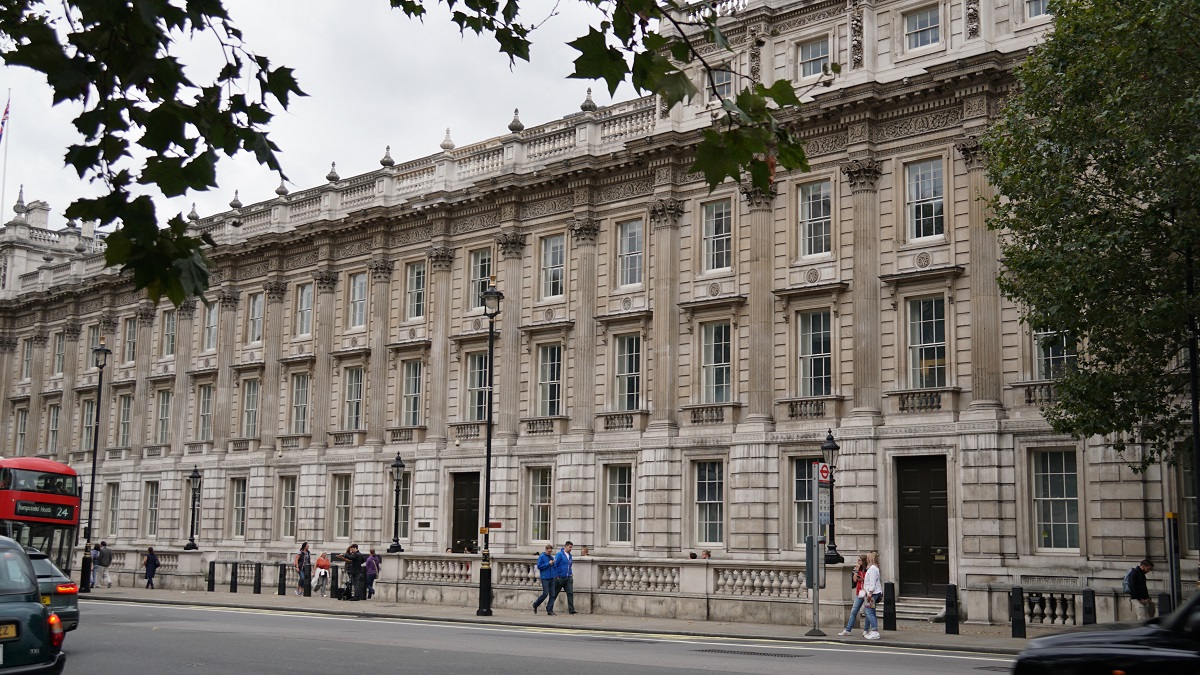
Richard Bradley, partner at gambling licensing law firm Poppleston Allen, shares how new proposals in Parliament may affect licensed premises
-
The ‘aim to permit’ principle may be under threat
-
Switching the burden of proof from “if nothing wrong with the application, it should in theory be approved” to “the application can be rejected if on the licensing authority’s opinion the grant may not uphold the licensing objectives”
Members of the House of Lords have begun their further examination of the English Devolution and Community Empowerment Bill, (EDCE) which is in report stage and will be discussed again today, with report stage concluding 13 April 2026.
Baroness Taylor of Stevenage, a Labour Life Peer in the House of Lords, has tabled an amendment to the English Devolution and Community Empowerment Bill which proposes to introduce Gambling Impact Assessments by inserting two new sections to the Gambling Act 2005 (‘the Act’).
If the amendment is passed and these sections are inserted into the Act, this will allow a licensing authority to publish a Gambling Impact Assessment (GIA) where the authority considers the granting of any relevant licence to premises in their area is not likely to be reasonably consistent with one or more of the licensing objectives because:
-
The cumulative impact of relevant licences in respect of premises in the affected part(s) or
-
Other reasons which relate to that licensing objective, or those licensing objectives, and to the affected part(s).
A relevant licence has been defined as being:
-
a bingo premises licence
-
adult gaming centre premises licence
-
family entertainment centre premises licence or
-
a betting premises licence.
An authority would also be able to limit the numbers of licences in an area.
As part of any published assessment, the authority must set out evidence for how they have come to the opinion that the grant of any relevant licence would not be reasonably consistent with the objectives set out above.
Authorities will also be required to review any published GIA from time to time, and should the authority take the view that the assessment should be revised or withdrawn, they must publish any revision.
Where an application is submitted for a relevant licence and a GIA has been published and the authority has included in its Statement of Gambling Principles that there will be a presumption to refuse applications for relevant licences, then it will be deemed lawful for the authority to refuse such application solely on the ground that it falls within the scope of the GIA.
That being said, the amendment does confirm that refusing an application will be unlawful where the applicant asserts in the application that the grant would be reasonably consistent with the licensing objectives or objectives set out in the GIA and provides evidence that the grant would be reasonably consistent with the objectives.
Full details of the tabled amendment can be found here.
The post UK Government proposals to undermine the ‘aim to permit’ of the Gambling Act 2005? appeared first on Eastern European Gaming | Global iGaming & Tech Intelligence Hub.

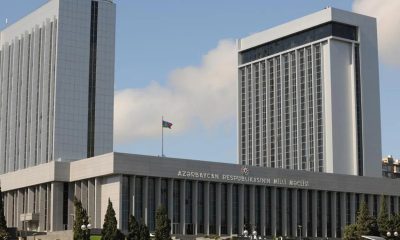









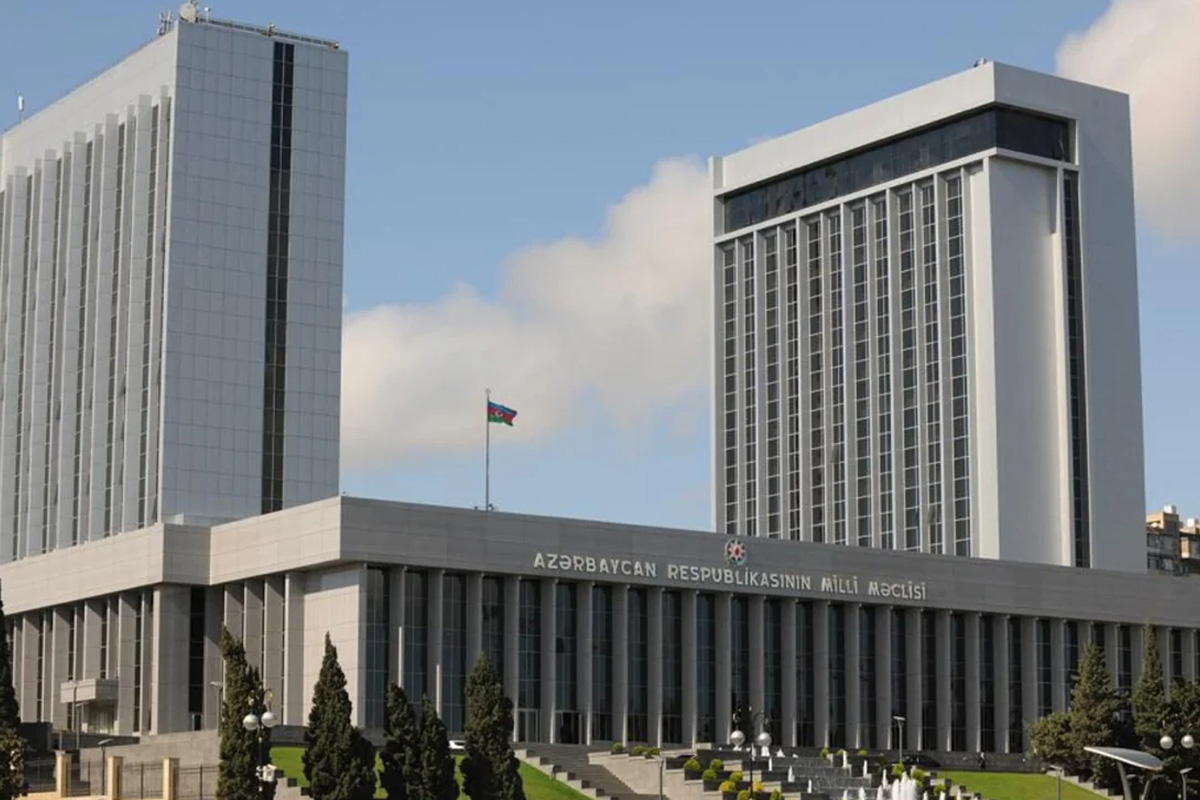
The Azerbaijani Parliament (Milli Majlis) has officially cleared the first reading of a bill to heavily increase criminal penalties for organising and operating illegal gambling.
The proposed amendments to the Criminal Code were discussed during an extraordinary parliamentary session.
Under the bill, organising gambling in virtual formats-including via the internet, mobile communications, social media platforms, electronic communication tools or other internet- and mobile-based applications-would carry tougher penalties. The same applies to offenses involving minors, crimes committed by a group acting in prior collusion or activities generating substantial illegal income.
Such offenses would be punishable by a fine of up to twice the amount of the income obtained through the crime, restriction of liberty for a term of two to four years, or imprisonment for the same period.
The proposed amendments also introduce stricter penalties for offenses committed by organised criminal groups or criminal organisations, as well as those generating large-scale illegal profits. These would be punishable by restriction of liberty or imprisonment for a term of three to five years.
The bill would also change the way fines are calculated. Instead of the current fixed range of AZN 10,000 to AZN 15,000, courts would be able to impose fines of up to twice the amount of the criminal proceeds.
In addition, the legislation proposes harsher punishment for repeat offenses involving the organisation or operation of gambling activities or gambling venues, particularly where minors are involved or where the offenses generate substantial, large-scale or especially large-scale illegal income.
Under the current legislation, repeat offenses are punishable by restriction of liberty for four to five years or imprisonment for four to eight years. The proposed amendments would make imprisonment for five to eight years the sole penalty for such offenses.
The post Azerbaijan to Impose Tougher Penalties for Illegal Online Gambling appeared first on EE Gaming | Global iGaming & Tech Intelligence Hub.
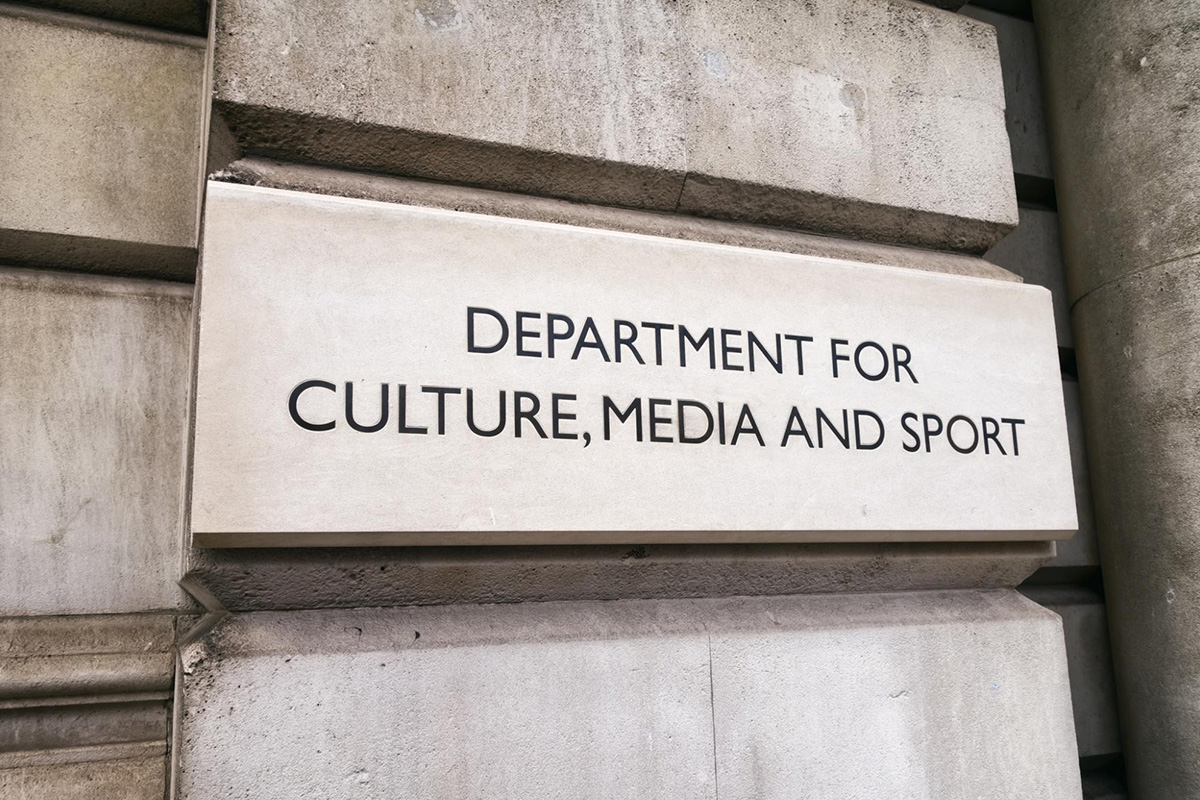
The Department for Culture, Media and Sport (DCMS) has published its consultation response on the funding of the Gambling Commission which took place between January and March this year.
The 2023 White Paper committed to a review of the Commission’s fees to ensure sufficient resources to deliver its core responsibilities and the commitments outlined in the Gambling Act Review.
The consultation findings now provide certainty on the Commission’s future income for the coming years.
Licence fees will increase by 25% overall, but the specific changes to fees will be different for each type of operating licence. New fee categories will also be introduced for most licences. Operators are strongly encouraged to review the annexes to the Government’s consultation response to understand how these changes affect their business.
Fees for society lotteries will be held at their current levels, and a new system of fees calculation will be implemented for non-remote general betting limited licence holders. Fees for personal licences will increase by a flat 25%.
Changes to the fees are subject to the passage of secondary legislation and will take effect on 1 October 2026.
Over the coming weeks, operators will be contacted by the Commission with further details about how this affects them and information about alignment to any new category. The criteria for the revised fee categories are set out in the DCMS consultation response. An operator’s submitted regulatory return data for 2025 to 2026 will be used to determine its new fee category.
For further information about the findings of the consultation you can visit the DCMS consultation response webpage.
The post DCMS Concludes Consultation on Gambling Regulation Funding appeared first on EE Gaming | Global iGaming & Tech Intelligence Hub.

The UK Gambling Commission has announced that Tim Miller, Executive Director of Policy & Research, has decided to leave the Commission in September 2026 after 10 years of service.
Following his departure, Tim will take up a new role outside of the British regulated gambling industry, supporting governments, regulators and other organisations that are developing and overseeing gambling regulatory systems around the world.
During his time at the Commission, Tim has played a leading role in strengthening the Commission’s research and evidence base, bringing greater rigour and robustness to its research framework. He has overseen the development and launch of the Gambling Survey for Great Britain – the largest survey of its kind anywhere in the world – helping to transform the evidence available to inform gambling regulation and policy.
Tim has also led the Commission’s work to implement the Government’s Gambling Act Review White Paper, overseeing the introduction of a wide range of new protections and regulatory measures. These include reforms to age verification, financial vulnerability checks, remote game design, direct marketing controls and wider measures to make gambling safer, fairer and free from crime.
Tim Miller said: “I have worked at the Commission longer than anywhere else during my career and have found it the most rewarding and fulfilling role. In large part this has been due to the amazing and dedicated colleagues that I’ve had the pleasure to work alongside. That’s what made it a hard decision to leave but after ten years I felt ready for the next challenge.”
Sarah Gardner, Acting Chief Executive of the Gambling Commission, said: “Tim has provided outstanding service to the Commission for ten years. I would like to thank Tim for his significant contribution to gambling regulation and wish him every success in the future.”
The post Tim Miller Announces Departure from UK Gambling Commission appeared first on EE Gaming | Global iGaming & Tech Intelligence Hub.

-

 content-supply5 days ago
Million Games launches Skull King’s Treasure with partner studio Arcane Pixel
-
Canada6 days ago
What Canadian Slot Players Are Really Comparing in 2026: Payout Speed, Interac and RTP Transparency
-
Alberta6 days ago
Octoplay secures conditional Alberta iGaming supplier approval from AGLC
-
Africa5 days ago
SpringbokCasino ties July free spins to ‘Minions in the Wild’ campaign
-
Africa5 days ago
Booming Games renews Hollywoodbets Durban July activation partnership
-
Casino Content6 days ago
SkillOnNet adds ODDSworks casino content across Ontario sites
-
GGPoker5 days ago
GGPoker opens satellites for WSOP Circuit CDMX México 2026
-
Evoplay5 days ago
Evoplay launches Safari Coins slot with fixed jackpots and collector mechanic