Latest News
Map Reveals: THIS is The MOST Followed Twitch Streamer per Country

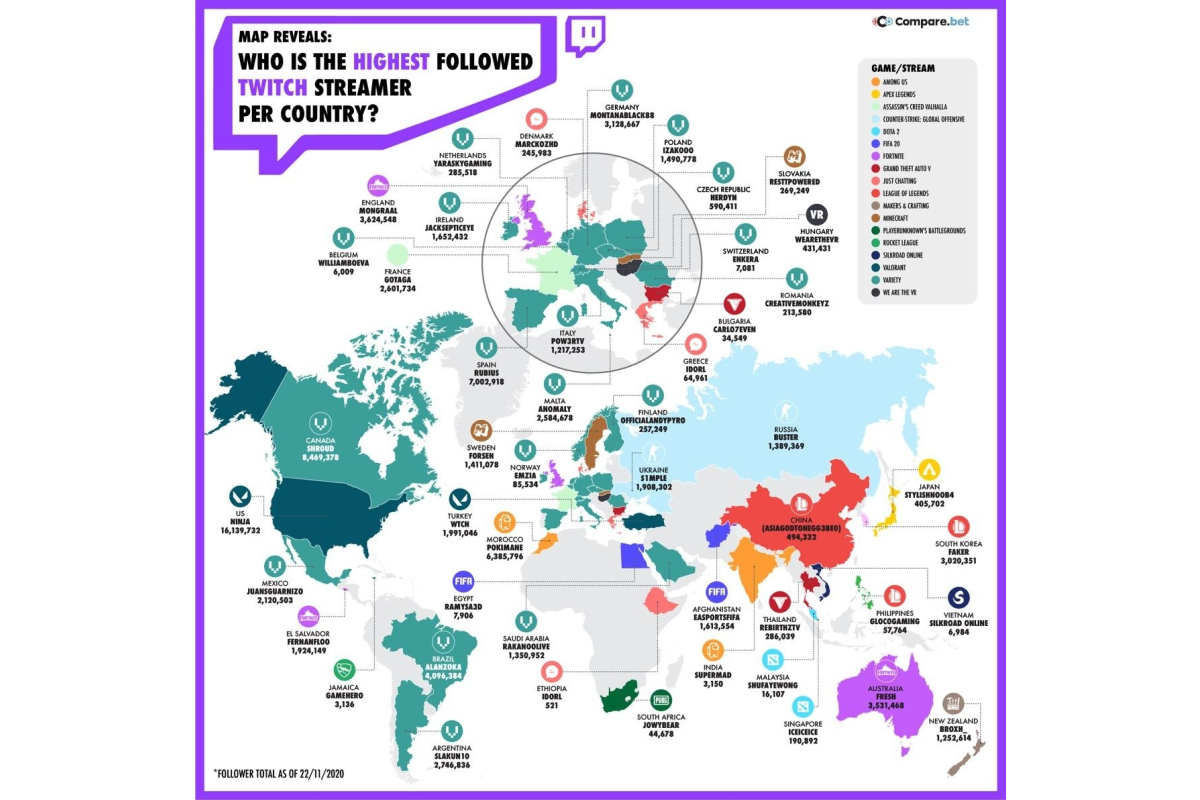
- Ninja, the USA’s favourite streamer, currently has the highest Twitch following at 16,139,732!
- Mongraal takes the number one spot for England, with 3,624,548 followers
- Rubius is the highest followed Twitch streamer in Spain with 7,002,918 followers
- Mexican gamer juansguarnizo potentially earns the most per stream at an estimated £255,697
- Coming in second and third place for highest paid are Buster (Russia) and Shroud (Canada) with potential earnings of $333,344 (£249,429) and $293,330 (£219,488)
With 15 million streamers worldwide and an average growth of 18% from 2018 to 2019, it is clear to see why Twitch is the number one live streaming platform.
This led Compare.bet/en-au/ to wonder who the most successful Twitch streamers are in each country? Utilising TwitchMetrics, Influencer Marketing Hub’s Twitch Money Calculator and IGFace Twitch Calculator; they were able to find the most popular streamer in 50 countries and calculate how much they could potentially be earning through their streams.
The Twitch streamer with the most followers, and top in the USA, is Ninja who currently has 16,139,732 followers. Born Tyler Blevins, originally from Michigan, he predominantly focuses on the game Valorant and is predicted to earn $79,815 (£59,821) per live stream, according to the Influencer Marketing Hub.
Shroud, AKA, Mike Grzesiek, comes in at number one place for Canada with a total of 8,469,378 Twitch followers. The 26-year-old Twitch star, from Mississauga, Ontario, is known on the platform for covering a variety of different genres. It is estimated that Shroud could potentially earn a whopping $293,330 (£219,852) per stream due to his current number of live streaming hours at 223.
Rubius is the most followed Twitch streamer from Spain, with 7,002,918 followers. His actual name is Rubén Gundersen and his estimated earnings are projected at $12,843 (£9,625) per live stream.
Pokimane takes the top spot for Morocco with 6,385,796 followers. The Twitch superstar’s real name is Imane. It is estimated that Pokimane could potentially be earning $61,555 (£46, 135) per live stream.
Taking the top spot for Brazil is Alanzoka, with 4,128,195 followers and an estimated potential earning of $3,003 (£2,250). His full name is Alan Ferreira and he is currently based in São Paulo.
Mongraal takes the number one spot for England, with 3,624,548 followers. The professional Fortnite player named Kyle Jackson, from Kent began to play competitively from a very young age. It is estimated that Mongraal could potentially be earning $16,095 (£12,063) per stream.
The number one spot for Australian streamers goes to Fresh with 3,531,468 followers and counting. Predominantly streaming Fortnite, it is estimated Fresh could be earning $15,568 (£11, 668) with each stream upload.
MontanaBlack88 is the number one streamer in Germany, with 3,128,667 current followers on Twitch. He is very well known for his YouTube channel MontanaBlack.
Top of the board for South Korea is Faker, with the total number of followers being 3,020,351. Better known as Lee Sang-hyeok, he is mainly specialising in League of Legends. It is estimated that Faker could be earning $36,378 (£27,265) per stream.
SLAKUN10 holds the number one spot for Argentina, with 2,746,836 followers. It is estimated that SLAKUN10 may have earned $4,036 (£3,025) per a stream.
Powered by WPeMatico


La semana pasada marcó un momento clave para la industria del gaming en América Latina, con SAGSE South America consolidándose como el principal hub de innovación y alineación estratégica en la región.
Al mismo tiempo, Brasil continuó fortaleciendo su marco regulatorio y ampliando su presencia en discusiones institucionales a nivel global.
Río de Janeiro en la vanguardia: Loterj y Embratur se unen a la élite global de UN Tourism
En un hito histórico para el mercado brasileño del gaming, Loterj fue formalmente invitada, en marzo de 2026, a convertirse en miembro afiliado de UN Tourism.
El movimiento posiciona a la institución como la primera autoridad reguladora de apuestas del país en integrarse a este grupo estratégico de las Naciones Unidas.
Embratur también se sumó a la iniciativa en la misma fecha, fortaleciendo la presencia de Brasil en los debates globales sobre innovación y sostenibilidad en el sector.
Según su liderazgo, la invitación valida una estrategia centrada en conectar el entretenimiento regulado con el desarrollo económico regional.
El objetivo es utilizar el gaming legal como motor para atraer inversión extranjera y expandir la infraestructura turística.
Datos del Ministerio de Turismo de Brasil indican que la legalización del sector tiene el potencial de aumentar la participación del turismo en el PIB del 8% al 12%, además de impulsar el empleo hasta en un 20% en toda la cadena de servicios.
En el estado de Río de Janeiro, las proyecciones son igualmente prometedoras: la regulación de las Video Lottery Terminals (VLTs) y la expansión de los sport bars podrían generar alrededor de 65.000 empleos formales en los próximos dos años.
Más allá de la generación de ingresos, el modelo regulado también ha permitido importantes retornos sociales.
En los últimos tres años, Loterj incrementó en un 4.530% su presupuesto destinado a proyectos en comunidades vulnerables.
Este avance está alineado con el fuerte desempeño del turismo en Río de Janeiro, que registró sus mejores resultados en tres décadas en 2025, con 12,5 millones de visitantes, incluidos 2,1 millones de turistas internacionales.
SAGSE South America 2026: el epicentro de la innovación y el salto del iGaming en América Latina
Buenos Aires se convirtió, entre el 18 y el 19 de marzo de 2026, en el corazón de la industria del gaming en América Latina.
La 34ª edición de SAGSE South America, celebrada en el icónico Hilton Buenos Aires, reafirmó su posición como un hub clave de negocios, reuniendo a más de 300 empresas y a un público de alto nivel, con un 60% de asistentes siendo tomadores de decisión internacionales.
La cobertura exclusiva de Gaming Americas indicó que el mercado regional vivió una de sus semanas más intensas, impulsada por un nivel de madurez regulatoria sin precedentes.
El análisis de la industria sugiere que América Latina ha dejado de ser una promesa para convertirse en una prioridad de ejecución para los actores globales.
Lanzamientos tecnológicos y estrategias de penetración de mercado
El principal destaque tecnológico del evento fue BetConstruct. Bajo el liderazgo regional de Sergio Longo, la compañía presentó CHOICE, su más reciente producto impulsado por inteligencia artificial.
Se destacó que esta innovación permite a los operadores analizar el comportamiento de los jugadores en tiempo real, ofreciendo experiencias altamente personalizadas y aumentando significativamente la retención.
Por su parte, Comtrade Gaming, representada por Marcello Reis, utilizó SAGSE como una plataforma estratégica para reforzar su penetración en el mercado brasileño.
La empresa busca expandir su presencia mediante infraestructura modular y soporte local para operadores que buscan estabilidad y cumplimiento dentro del nuevo entorno regulatorio.
Grandes actores en movimiento
Otras marcas líderes también marcaron el ritmo en el Hilton Buenos Aires: Pragmatic Play, 3 Oaks Gaming, Altenar y Eightroom.
Según Henrique De Simoni, Country Manager LatAM de 3 Oaks Gaming, la presencia de la compañía en SAGSE reforzó su compromiso estratégico con el mercado argentino, considerado un pilar clave en su expansión regional.
Indicó que Argentina presenta una dinámica única, con un modelo regulatorio provincial que exige un profundo conocimiento local y una gran capacidad de adaptación.
Asimismo, señaló que participar en un evento de esta relevancia permite fortalecer relaciones con operadores, socios y reguladores, además de seguir de cerca la evolución del mercado.
Añadió que el país representa un entorno altamente estratégico, tanto por su potencial comercial como por la madurez de su audiencia y el alto nivel de engagement de los jugadores en las principales provincias reguladas.
Finalmente, concluyó que la compañía continúa sólida con 3 Oaks en su mercado principal en LATAM.
Para Eightroom, su participación en la feria SAGSE de Buenos Aires representó una instancia sumamente valiosa para fortalecer nuestra presencia en el mercado argentino de gambling online.
Según Andres Palma, CMO, “este espacio nos permitió conectar directamente con operadores y potenciales partners, generando oportunidades de networking estratégico y afianzando relaciones clave en la industria.”
“Asimismo, SAGSE fue el escenario ideal para presentar el desembarco de Eightroom en Argentina, posicionándonos como una solución enfocada en la adquisición de jugadores de alto valor, capaces de aportar crecimiento sostenido y rentabilidad a las operaciones de nuestros socios.”
Además, empresas como Oddin.gg, Betsson Group, GR8 Tech, Bwise, Lotería de Buenos Aires, Pronto Paga y muchas otras también participaron, reforzando la idea de que la industria avanza hacia un modelo de crecimiento sostenible basado en seguridad, pagos rápidos e integridad operativa.
SAGSE 2026 demostró que el mercado LATAM se encuentra en plena expansión y que la colaboración entre proveedores y reguladores es el único camino hacia el éxito a largo plazo.
Tras la finalización de esta edición, ya se confirmaron las fechas para 2027, manteniendo a Buenos Aires como un punto clave de encuentro para la industria.









SPA habilita marco de adhesión para que estados y el Distrito Federal se integren al SINAPO
El desarrollo de un entorno federal cooperativo para el sector de apuestas alcanzó un nuevo hito esta semana.
El Ministerio de Hacienda de Brasil puso a disposición el acuerdo de adhesión al Foro Nacional de Sistematización de Apuestas (SINAPO), permitiendo que los estados y el Distrito Federal formalicen su participación.
El foro fue establecido mediante la Ordenanza N.º 227/2026 dentro de la Secretaría de Premios y Apuestas (SPA), creando un espacio permanente de diálogo entre las entidades federativas para el desarrollo y perfeccionamiento de la regulación del sector.
La iniciativa busca fortalecer la cooperación técnica, promover el intercambio de mejores prácticas, mejorar la integración de datos y apoyar estrategias conjuntas relacionadas con políticas públicas de apuestas.
Entre sus objetivos también se incluyen el perfeccionamiento del marco regulatorio, el aumento de la seguridad jurídica y la transparencia, así como el refuerzo de la integridad y la protección del jugador.
Alckmin anticipa nuevas restricciones al juego online
El vicepresidente de Brasil, Geraldo Alckmin, afirmó que el gobierno federal introducirá nuevas restricciones a las plataformas de apuestas online, con especial foco en el juego móvil debido a preocupaciones relacionadas con el comportamiento compulsivo.
El anuncio se realizó durante una reunión con representantes del sector minorista, que han vinculado el crecimiento de las apuestas con la caída del consumo y el aumento del endeudamiento de los hogares.
Sin embargo, representantes de la industria han cuestionado estas afirmaciones, argumentando que no existe evidencia empírica que conecte directamente el juego regulado con el desempeño del retail.
Datos del Ministerio de Hacienda indican que la mayoría de los apostadores brasileños mantiene un gasto mensual relativamente bajo, con un ticket promedio de aproximadamente R$122.
El debate refleja crecientes tensiones entre sectores, con disputas legales emergentes sobre el impacto económico y social del gaming en Brasil.
Sportradar y BSN fortalecen alianza en Puerto Rico
Sportradar amplió su acuerdo con Baloncesto Superior Nacional (BSN), reforzando su papel en el desarrollo del baloncesto profesional en Puerto Rico a través de tecnología, datos y soluciones de integridad.
En virtud del nuevo acuerdo, la compañía mantiene los derechos exclusivos globales de datos y contenido audiovisual relacionados con apuestas, además de derechos no exclusivos de coaching y scouting.
El acuerdo también incluye servicios de integridad y herramientas de rendimiento para mejorar las operaciones y el cumplimiento normativo.
Ambas partes señalaron que la alianza busca acelerar el crecimiento internacional, fortalecer los estándares de integridad y mejorar la eficiencia operativa de cara a las próximas temporadas.
The post SAGSE lidera mientras Brasil avanza en regulación y posicionamiento global appeared first on Americas iGaming & Sports Betting News.
Last week marked a pivotal moment for the Latin American gaming industry, with SAGSE South America emerging as the central hub for innovation and strategic alignment across the region.
At the same time, Brazil continued to strengthen its regulatory framework and expand its presence in global institutional discussions.
Rio de Janeiro at the Forefront: Loterj and Embratur Join the Global Elite of UN Tourism
In a historic milestone for the Brazilian gaming market, Loterj was formally invited, in March 2026, to become an affiliated member of UN Tourism.
The move establishes the institution as the first betting regulatory authority in the country to join this strategic United Nations group.
Embratur also joined the initiative on the same date, strengthening Brazil’s presence in global discussions on innovation and sustainability in the sector.
According to its leadership, the invitation validates a strategy focused on connecting regulated entertainment with regional economic development.
The goal is to use legal gaming as a driver to attract foreign investment and expand tourism infrastructure.
Data from Brazil’s Ministry of Tourism indicate that the legalization of the sector has the potential to increase tourism’s share of GDP from 8% to 12%, while also boosting employment levels by up to 20% across the service chain.
In the state of Rio de Janeiro, projections are equally promising: the regulation of Video Lottery Terminals (VLTs) and the expansion of sport bars are expected to generate around 65,000 formal jobs over the next two years.
Beyond income generation, the regulated model has also enabled significant social returns.
Over the past three years, Loterj has increased its budget for projects in vulnerable communities by 4,530%.
This progress aligns with the strong performance of tourism in Rio de Janeiro, which recorded its best results in three decades in 2025, welcoming 12.5 million visitors, including 2.1 million international tourists.
SAGSE South America 2026: The Epicenter of Innovation and the Leap of iGaming in Latin America
Buenos Aires became, between March 18 and 19, 2026, the beating heart of the Latin American gaming industry.
The 34th edition of SAGSE South America, held at the iconic Hilton Buenos Aires, reaffirmed its status as an essential business hub, bringing together more than 300 companies and a high-level audience, with 60% of attendees being international decision-makers (C-level executives).
Exclusive coverage from Gaming Americas indicated that the regional market experienced one of its most intense weeks, driven by an unprecedented level of regulatory maturity.
Industry analysis suggested that Latin America has moved beyond being a promise and is now an absolute execution priority for global players.
Technological launches and market penetration strategies
The main technological highlight of the event was BetConstruct.
Under the regional leadership of Sergio Longo, the company presented CHOICE, its latest artificial intelligence-driven product.
It was noted that the innovation enables operators to analyze player behavior in real time, delivering highly personalized experiences and significantly increasing retention.
Meanwhile, Comtrade Gaming, represented by Marcello Reis, used SAGSE as a strategic platform to strengthen its penetration in the Brazilian market.
The company aims to expand its footprint by offering modular infrastructure and local support for operators seeking stability and compliance within the new regulatory environment.
Major players on the move
Other leading brands also set the pace at Hilton Buenos Aires: Betby, Pragmatic Play, 3 Oaks Gaming, Altenar, Eightroom.
According to Henrique De Simoni, Country Manager LatAM at 3 Oaks Gaming, “Our presence at SAGSE reinforces our strategic commitment to the Argentine market, which continues to be a key pillar in our expansion across Latin America.
Argentina has a unique dynamic, with its provincial regulatory model requiring deep local expertise and a strong capacity for adaptation.
Being present at such a relevant event as SAGSE allows us to strengthen relationships with operators, partners, and regulators, while closely monitoring the evolution of the market,” he said.
“We see Argentina as a highly strategic environment, not only due to its commercial potential, but also because of the maturity of its audience and the high level of player engagement across the main regulated provinces.
We remain strong with 3 Oaks in our core LATAM market,” concludes Henrique.
For Eightroom, its participation in the SAGSE trade show in Buenos Aires represented an extremely valuable opportunity to strengthen its presence in the Argentine online gambling market.
According to Andres Palma, CMO, “this event allowed us to connect directly with operators and potential partners, generating strategic networking opportunities and reinforcing key relationships in the industry.
Furthermore, SAGSE was the ideal platform to announce Eightroom’s launch in Argentina, positioning us as a solution focused on acquiring high-value players capable of contributing sustained growth and profitability to our partners’ operations.”
In addition, companies such as Oddin.gg, Betsson Group, GR8 Tech, Bwise, Loteria de Buenos Aires, Pronto Paga and many others were also present, reinforcing that the industry is moving toward a sustainable growth model based on security, fast payments and operational integrity.
SAGSE 2026 demonstrated that the LATAM market is in full expansion and that collaboration between suppliers and regulators is the only path to long-term success.
With the conclusion of this edition, dates for 2027 have already been confirmed, maintaining Buenos Aires as a key meeting point for the industry.
SPA makes adhesion framework available for states and Federal District to join SINAPO
The development of a cooperative federal environment for the betting sector reached a new milestone this week.
Brazil’s Ministry of Finance made available the adhesion agreement for the National Betting Systematization Forum (SINAPO), allowing states and the Federal District to formalize their participation.
The forum was established through Ordinance No. 227/2026 within the Secretaria de Prêmios e Apostas (SPA), creating a permanent space for dialogue among federal entities on the development and improvement of sector regulation.
The initiative aims to strengthen technical cooperation, promote the exchange of best practices, enhance data integration and support joint strategies related to public betting policies.
Additional objectives include improving regulatory frameworks, increasing legal certainty and transparency, and reinforcing integrity and player protection.
Alckmin signals new restrictions on online betting
Brazil’s Vice President Geraldo Alckmin stated that the federal government will introduce new restrictions on online betting platforms, particularly targeting mobile gaming due to concerns over compulsive behavior.
The announcement was made during a meeting with retail sector representatives, who have increasingly linked betting activity to declining consumer performance and rising household debt.
However, industry representatives have challenged these claims, arguing that there is no empirical evidence directly connecting regulated betting to retail downturns.
Data from the Ministry of Finance show that most Brazilian bettors spend relatively low monthly amounts, with an average ticket of approximately R$122.
The debate highlights growing tensions between sectors, with legal disputes emerging over the economic and social impact of betting in Brazil.
Sportradar and BSN strengthen partnership in Puerto Rico
Sportradar expanded its agreement with Baloncesto Superior Nacional (BSN), reinforcing its role in supporting the development of professional basketball in Puerto Rico through technology, data and integrity solutions.
Under the renewed deal, the company retains exclusive global betting-related audiovisual and data rights, alongside non-exclusive coaching and scouting rights.
The agreement also includes integrity services and performance tools to enhance operations and compliance.
Both parties indicated that the partnership aims to accelerate international growth, strengthen integrity standards and improve operational efficiency ahead of future seasons.
The post SAGSE leads while Brazil advances regulation and global positioning appeared first on Americas iGaming & Sports Betting News.
Boomerang Partners
Boomerang Partners have been shortlisted for three categories at the prestigious GamingTECH CEE Awards 2026

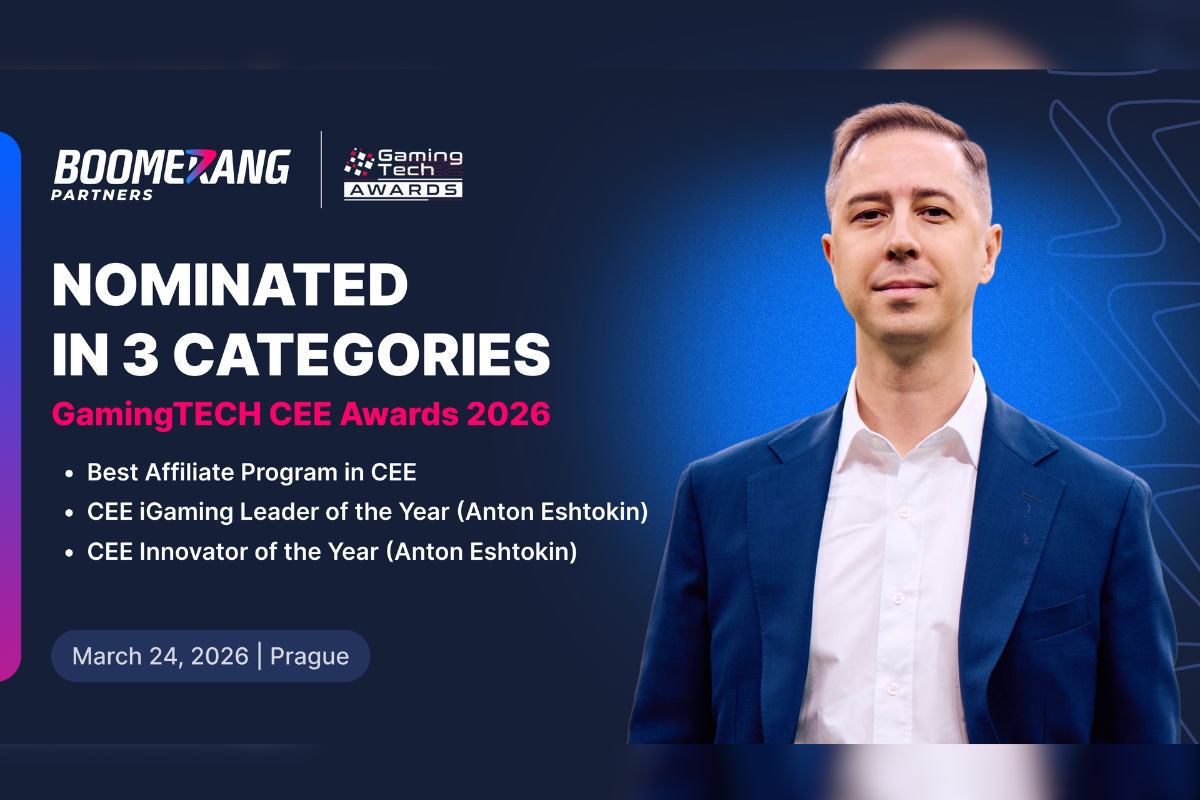
Boomerang Partners, a global affiliate gambling & betting marketing agency, and its Chief Marketing Officer, Anton Eshtokin, have been nominated in three categories at the GamingTECH CEE Awards 2026, including Best Affiliate Program in CEE, CEE iGaming Leader of the Year and CEE Innovator of the Year. The GamingTECH CEE Awards, which recognise the most innovative and impactful companies, products, teams and individuals across the Central and Eastern European gaming and tech ecosystem, will take place later this March. The nominations highlight the growing recognition of Boomerang Partners’ initiatives within the affiliate marketing industry.
Best Affiliate Program in CEE
Boomerang Partners is in contention for the Best Affiliate Program in CEE award, reflecting its position as one of the leading sports-focused affiliate programs in the industry. In four years, it has scaled to more than 3,000 affiliate partners (with a 10% increase in 2025 alone), supported by a strong in-house analytics department with deep sports expertise. In 2024 and 2025, the company hosted its global annual affiliate tournament, the Golden Boomerang Awards, and in September and October 2025, Boomerang launched the Golden Boomerang League, its first tournament dedicated solely to sports traffic.
CEE iGaming Leader of the Year
Anton Eshtokin, Chief Marketing Officer at Boomerang Partners, is nominated for the CEE iGaming Leader of the Year award for his strategic leadership and contribution to the company’s development. His multi-layered strategy, powered by in-house analytics and unit economics, has led several key initiatives, including the second season of the global Golden Boomerang Awards tournament and the launch of the Golden Boomerang League. In 2025, his leadership also contributed to a 194% growth in sports traffic.
CEE Innovator of the Year
In the CEE Innovator of the Year category, Anton Eshtokin is nominated for introducing innovative marketing formats and engagement mechanics in the affiliate industry. In 2025, this included further development of Boomerang’s affiliate tournaments, the launch of new sports-focused competition formats and creative brand activations at industry events. One notable example was the Boomerang Effect performances at SBC Summit Lisbon. The company also recorded an 81% increase in audience interest in sports, while two Boomerang YouTube channels received the Silver Play Button, reflecting the results of Anton Eshtokin’s strategy.
Anton Eshtokin commented: “These nominations at the GamingTECH CEE Awards are a meaningful recognition for Boomerang Partners and the work our team has been doing to push the boundaries of affiliate marketing. Over the past years, we have focused on strengthening our partnerships and continuously improving what we offer our affiliates, with the ambition to become the world’s number one sports-focused affiliate brand. Even the individual nominations attributed to me are truly a reflection of the effort, ideas, and dedication of the entire Boomerang team. I’m proud that together we continue to develop initiatives that resonate with the industry and our partners.”
The winners’ award ceremony will take place on March 24, 2026, as part of the Hipther Prague Summit. It will be held at the OREA Hotel Andels Praha (formerly Vienna House by Wyndham Andel’s Prague). Stay tuned.
About Boomerang
Boomerang Partners is a rapidly growing global marketing agency offering a wide range of services. Boomerang Partners is an Official Regional Partner of AC Milan. In 2024, it launched the inaugural Golden Boomerang Awards – a global tournament for affiliate teams. More than 400 affiliate teams participated in the second season of the tournament in 2025. Partners of the Agency launched six new products in 2024-2025, contributing to a nearly 1.5-fold increase in product users.
The agency’s client portfolio contains 10+ brands offering affiliate and entertainment services across 40+ markets in compliance with local regulations. These products provide personalized bonuses and 24/7 multilingual support.
The post Boomerang Partners have been shortlisted for three categories at the prestigious GamingTECH CEE Awards 2026 appeared first on Eastern European Gaming | Global iGaming & Tech Intelligence Hub.

-

 Games Global7 days ago
Games Global and Stormcraft Studios dive into aquatic adventure with Mermaid’s Millions Cashingo™
-
Edvardas Sadovskis CPO at ICONIC217 days ago
Patrick’s Lucky Fortune by ICONIC21 Rolls Out to Power Operator Growth and Seasonal Offers
-
Alex Fonseca CEO Superbet Brazil7 days ago
Fluminense and Superbet Renew Their Partnership
-
Africa6 days ago
BetConstruct AI to Drive Global Innovation and Strategic Growth AcrossKey Markets in LatAm, Asia, and Africa
-
Centurion Winner Grand Chance™5 days ago
New from Inspired: Luck It Up™ and Centurion Winner Grand Chance™ available online & on mobile
-
Blazin' Bonus5 days ago
Booming Games releases Blazin’ Bonus
-
Asia6 days ago
Mumbai to Host the Prestigious Global Esports Games (GEG) World Finals from March 19–22
-
Cristiano Blanco CEO of SpinCore Group5 days ago
SpinCore Group Enters Finnish Market via Finnplay Partnership