Press Releases
LeoVegas: A myth-enshrouded industry

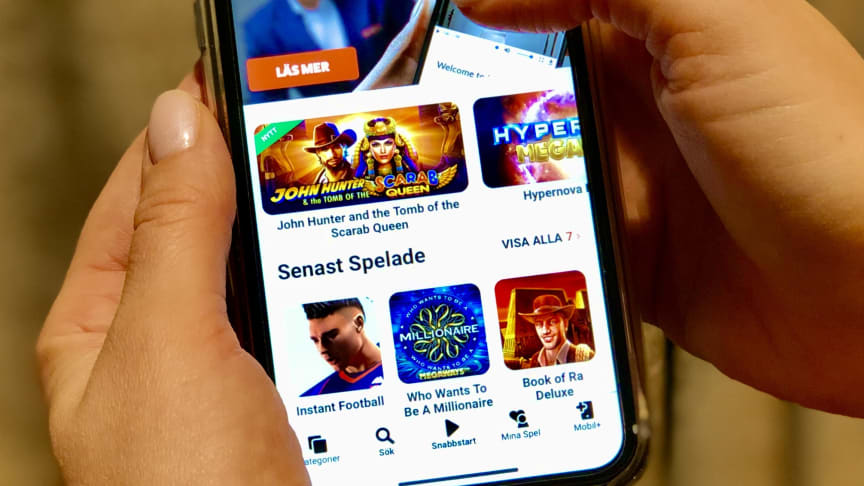
The gambling industry is a bit myth-enshrouded, including by a number of falsehoods about it. Below we explain a few of the things that are often questioned or unknown in an area intended to provide entertainment and relaxation for many people. In Sweden alone, hundreds of thousands of people play games every week.
A young company with Swedish roots
Many people do not know that LeoVegas was established in 2011 in Sweden by two individuals, that the Parent Company is Swedish, and that LeoVegas has a gambling licence that is regulated by the Swedish Gambling Authority. LeoVegas is also regulated in several other countries, which entails continuous oversight by licensing bodies and authorities. This is just like many other regulated industries, such as banking and telecom.
Who owns LeoVegas?
LeoVegas’ stock is listed on Nasdaq Stockholm, and roughly 85% is owned by Swedish shareholders, including mutual funds, insurance companies and more than 15,000 private investors (as per 1 January 2020).
Can anyone play as much as they want?
LeoVegas puts strong emphasis on ensuring that players have the financial means to support their gaming, and that players do not exhibit unsound gaming behaviour or signs of such a tendency. Many control mechanisms are in place, including algorithms that monitor gaming behaviour, personal contacts, and tools that players themselves can use, for example, to regulate the amount of time they spend playing and set amount limits.
How young can you be to play?
LeoVegas has an age limit, and you must be 18 to play.
What does a person need to do to limit their gaming?
LeoVegas offers various options for players to limit their gaming. LeoSafePlay, which is LeoVegas’ proprietary tool for responsible gaming, is one way. The website Spelpaus.se is another means, whereby players can limit their gaming with all gambling companies that have a licence to conduct gambling for money in Sweden. Players can also block themselves from playing and from direct marketing for one, three or six months, or until further notice. Other markets have similar self-blocking systems, such as Rofus in Denmark and GamStop in the UK.
Do the same rules apply for all gambling companies?
In licensed markets, all operators work under the same rules, which is important for consumer protection, among other things. Unfortunately, every regulated market has a black market, entailing gaming outside of the licence system. For example, in Sweden players can play with unlicensed gambling companies, which to not abide by the Swedish rules. These companies do not pay any gambling taxes, and the blocking mechanisms provided by Spelpaus.se do not work. There is no oversight of these companies, and there is a large risk that they are used for money laundering.
How much is the gambling tax?
Most countries have a gambling tax. In Sweden, revenue from gambling tax amounted to an estimated SEK 3.6 bn in 2019. This is tax revenue that was previously excluded from the national treasury. This amount corresponds to the costs (salaries and related payroll costs) for 5,100 nurses per year, or roughly twice the budget of the Swedish Security Service.
How much does LeoVegas play in gambling taxes?
The gambling tax rate varies from country to country. In Sweden it is 18%, while in the UK it is 21%. In total LeoVegas paid EUR 49.7 m in gambling taxes in 2019 (corresponding to SEK 525 m). In Sweden LeoVegas paid SEK 153 m in gambling taxes in 2019.
How much are the winnings at LeoVegas? How large is LeoVegas share of winnings?
For every krona in wagers with LeoVegas, 93%-98% goes back to players in winnings. This can be compared with other popular games in Sweden, such as V75 (pari-mutuel horse racing), where 65% of wagers go to winnings, or Triss (scratch lotteries), where only 49% of players’ wagers are returned in winnings. In general, the state-controlled operators in the various countries offer a considerably lower share of winnings to players than what LeoVegas and other commercial operators offer.
Why does LeoVegas have operations in Malta?
The island nation of Malta, which borders to Sicily and the rest of Italy, is a republic with a population of just under 500,000 and a member of the EU. Historically, gambling in many European countries has been run as a state monopoly, including Sweden until 2019. Malta was out early in offering a European gambling licence, under which gambling companies could offer their services to countries within the EU entirely legally. This was the starting shot and the main reason why many companies chose to establish themselves in Malta, including LeoVegas. Apart from this, the sunny climate and Mediterranean Sea attracts many to work on the island, which facilitates recruiting. Malta is the prime hub for gaming in Europe, and a number of large European gambling companies are domiciled in Malta.
How many people work for LeoVegas?
LeoVegas has approximately 800 employees from nearly 60 countries (including more than 400 in Malta and just under 200 in Sweden). The company has extensive breadth in its employees’ expertise, including 250 IT specialists, gaming developers and product specialists, 40 lawyers, five specialists in artificial intelligence, 20 designers, 80 people who work with marketing, 50 HR specialists, 35 economists and 150 customer service representatives. A total of some 70 people work with compliance and responsible gaming. LeoVegas is constantly searching for additional talent.
How many customers does LeoVegas have?
LeoVegas has roughly 500,000 active customers, and during a given month LeoVegas handles more than 1.2 billion gaming transactions.
What does LeoVegas provide for players and for society?
With ease of accessibility LeoVegas provides a moment of relaxation and entertainment for everyone (18 years and older). People have played games through the ages – even when the Great Wall of China was built, parts of it were financed by lotteries.
LeoVegas contributes large amounts to countries’ treasuries as a taxpayer through gambling taxes, income taxes, employer payroll taxes and other taxes.
LeoVegas is part of the Swedish IT wonder. The company employs highly educated people in programming, technology, search engine optimisation and artificial intelligence. It offers attractive jobs at numerous offices, including in Malta, where 412 work, and in Sweden, where LeoVegas has 182 employees in Stockholm, Västerås and Växjö.
What is LeoVegas doing to address players who exhibit an unsound relationship to their gaming?
Advocating for sound gaming and being vigilant about where gaming wagers come from have top priority. The part of our operations that addresses customers’ gaming is called responsible gaming.
The part of operations that is working to counter money laundering is called Anti-Money Laundering (AML). Put simply, money laundering refers to an operation where black money, i.e., money that has been obtained illegally, is used in a way that it appears to be legally originated or can be used for private consumption without raising suspicions. Black money can be, for example, money that has been received legally, in private or through business, but which has avoided taxation, or money that has originated from criminal activity, such as smuggling, drug trafficking or theft. Today the concept of money laundering also refers to legally or illegally obtained money that is used to finance terrorism.
Following is a description of a few areas in which LeoVegas is working on this issue:
- Responsible gaming
- LeoSafePlay
- Anti-Money Laundering (AML)
Responsible gaming
The responsible gaming department receives information on a continuous basis from all departments that have customer contact, such as customer support, the risk department, the fraud and payments departments, and so on. They review customer accounts to determine if there is a need to contact individuals based on their gaming behaviour and also based on customers’ correspondence with LeoVegas. The company also conducts proactive reviews of customer behaviours and trends in customers’ transactions to be able to identify a need to act. Following a thorough analysis, a decision is made on any measures to be taken. This may be in the form of an email, phone call, or offering education and/or information on unsound gaming. LeoVegas also has a dedicated website, separate from the Group’s gaming website, called LeoSafePlay. Here customers can find additional information about responsible gaming and tools to help individuals who may have a potential problems. LeoSafePlay is also targeted at family members or relatives of persons who exhibit unsound gaming behaviour.
LeoSafePlay
LeoSafePlay is the name of LeoVegas’ platform and work approach for responsible gaming. It incorporates everything from technology and technical solutions to the daily work in the operating activities with this issue. LeoSafePlay also includes the website LeoSafePlay.com, where players themselves can assess their gaming profiles and set time limits and wagering limits for their gaming, among other things. The website is a source of all information surrounding the company’s work with responsible gaming. One of the most important technical solutions used by LeoSafePlay is built upon extensive data analytics to proactively create a long-term relationship with customers and promote responsible gaming.
Central self-exclusion system
On the external website Spelpaus.se, individuals can block themselves from all gambling and from direct marketing during a self-chosen period. Unfortunately, the site does not cover unlicensed companies that operate and advertise in Sweden. This represents more than SEK 700 m in lost revenue to the country’s treasury.
Anti-Money Laundering (AML)
LeoVegas’ Anti-Money Laundering (AML) department works closely with the customer support and compliance departments to ensure full compliance with regulatory requirements and LeoVegas’ policies and routines. This is done by applying a risk-based approach employing system-generated warnings, transaction monitoring algorithms and specialist-trained employees augmented by mandatory training for all employees in the organisation. Identification of fraudulent behaviour helps reduce risks that the company may be exposed to daily. AML risk assessment has high priority and is initiated as soon as a customer registers with LeoVegas.
FACTS ABOUT THE SWEDISH MARKET
How many companies have gambling licences in Sweden?
After the new Gambling Act (Spellag (2018:1138)) came into force on 1 January 2019, 96 companies are now licensed in Sweden (as per 5 March 2020).
How much money do swedes spend on gaming?
Customers in Sweden (18 and older) spend an average of SEK 173 per month with operators licensed in Sweden, net, i.e., after paid winnings. Added to this is gaming with operators without licences, amounting to an estimated SEK 70 per month. (By gaming is meant gaming for money, i.e., where the chance of winning to various degrees is based on odds. Source: Swedish Gambling Authority2018 https://www.spelinspektionen.se/om-oss/statistik/).
What portion of the Swedish population plays games?
Sixty per cent of all Swedes say that they have played for money during the last 12 months. Of those who play, 33% play once a week, and 58% play once a month. Lotteries and pari-mutuel horse racing are the most common forms of gaming/betting. Seventy-five per cent of those who have played games have bought lottery tickets, 38% have bet on horses, and 5% have played casino games. Number games, such as Lotto, account for 50%, and sports betting, such as Oddset, account for 21%. (In this compilation, players may have played more than one type of game, which is why the sum is greater than 100%.) The gender breakdown for gaming is even.
Powered by WPeMatico


New title adds Fire Spins and Blitz Spins bonuses plus Standard, Super and Ultra Power Play modes at 5x, 10x and 20x stake.
Blueprint Gaming has released a new slot, Wolf Fury Fire Blitz, built around an “evolving Fire Blitz mechanic” and two bonus paths: Fire Spins and Blitz Spins.
The game uses a Fire Blitz logo above the reels as a meter. In the base game and Power Play, the supplier said every Cash and Wolf symbol contributes to the meter, with boosts able to add extra symbols and “guarantees either Fire Spins or Blitz Spins.”
Fire Spins triggers when six or more Cash symbols land in view. Each reel position spins independently to add more Cash or Wolf symbols, with new symbols resetting a three-spin counter and locking in place. Blueprint said the Wolf can land on the centre reel to collect all Cash symbols in view, then collect additional prizes that land for the remainder of the feature.
Blitz Spins activates when a Wolf symbol lands on reel three alongside Cash symbols on two adjacent reels. During the bonus, the Wolf collects every Cash symbol that lands before the reels respin, and additional Wolf symbols can lock in place, with up to three collectors active at once.
The title also includes Blueprint Gaming’s multi-level Power Play, offering Standard, Super or Ultra modes at 5x, 10x or 20x the base stake. In these modes, the company said only Cash and Wolf symbols appear on the reels.
Jo Purvis, Director of Marketing, PR and Events at Blueprint Gaming , said: “Wolf Fury Fire Blitz combines several of our most engaging mechanics into a fast-paced experience that offers players frequent feature opportunities and exciting collection gameplay. The Fire Blitz mechanic creates anticipation throughout every session, while the dual bonus structure ensures plenty of variety.
“The addition of our multi-level Power Play further enhances the experience by giving players greater control over how they engage with the game, reinforcing our commitment to delivering innovative, feature-rich content that performs across regulated markets worldwide.”
The post Blueprint Gaming releases Wolf Fury Fire Blitz slot appeared first on EE Gaming | Global iGaming & Tech Intelligence Hub.

Playson has launched 4 Chili Pots: Hold and Win, a new slot built around Hold and Win and Pots mechanics with two bonus modes and jackpots reaching 10,000x.
The game runs on a 5×3 grid and triggers a Hold and Win Bonus Game with Chili Features when red, orange or green Chili Bonus symbols land, combining with enlarged matching chilis above the reels. The chilli colour determines the feature in play: red triggers a Multi Feature that adds multipliers up to 5x; orange triggers a Mystery Feature that can award Mini, Minor or Major jackpot values or a coin value up to 75x; and green triggers a Collect Feature that gathers the value of all symbols in play, including any attached multipliers.
A golden Super Chili Bonus symbol can trigger a Super Bonus Game on an expanded 5×5 grid, with random Multi, Mystery or Collect features, including combinations. During the round, the active Super Chili Feature lands random Chili Bonus symbols until six are present, which then activates a new feature or enhances the current one.
Playson said jackpots can be triggered in both bonus modes. Filling all 15 cells in the classic bonus awards the Grand Jackpot at 3,000x, while filling all 25 cells in the Super Bonus Game awards the Super Jackpot at 10,000x. Skull-themed symbols can also appear in bonus play and transform into red, orange or green Chili Bonus symbols. The title includes two Buy Bonus levels, allowing players to trigger the Bonus Game or Super Bonus Game with one, two or three Chili Features.
Anton Ivannikov, CPO at Playson, said: “Our fiery new title showcases our continued focus on evolving proven mechanics in fresh and exciting ways. By combining two player-favourite features with layered bonus progression, dynamic Chili Features and a Super Bonus Game offering even greater rewards, we have created a title that delivers excitement throughout every stage of play.
“Complemented by its vibrant Mexican fiesta theme and engaging gameplay, we are confident 4 Chili Pots: Hold and Win will prove to be another valuable addition to our partners’ casino offerings.”
The post Playson releases 4 Chili Pots: Hold and Win with dual bonus modes appeared first on EE Gaming | Global iGaming & Tech Intelligence Hub.
affiliate marketing
Media Troopers cites 2026 acquisition lift from NBA Finals and World Cup betting campaigns

Media Troopers reported stronger seasonal campaign performance during the NBA postseason and the FIFA World Cup, citing increases in traffic, player registrations, first-time depositors, and affiliate revenue.
The company said that so far in 2026 it has gained more than 100 thousand new depositing customers, a 60% increase compared to the previous year. Media Troopers also pointed to a January surge in bets it attributed mainly to Super Bowl-driven activity.
During the NBA Finals window (June 3 to June 13), Media Troopers said betting interest was concentrated across game winners, spreads, totals, player props, futures, and live betting. The company reported a 120% spike in betting activity compared with the previous year.
For the World Cup period (June 11 to July 19), Media Troopers said its campaigns reached a wider audience and that betting activity rose 80% compared with last year, when it said no tournament was taking place. The release also referenced tournament changes including 48 teams across 104 matches.
“Major sports moments create a powerful combination of fan attention, betting intent, and acquisition opportunity,” Media Troopers CEO Shmulik Segal said. “The NBA postseason and FIFA World Cup gave us two highly active campaign windows, and our early performance indicates that our localized, data-led approach helped operator partners capture meaningful demand.”
The post Media Troopers cites 2026 acquisition lift from NBA Finals and World Cup betting campaigns appeared first on EE Gaming | Global iGaming & Tech Intelligence Hub.

-

 Compliance Updates6 days ago
Arizona Department of Gaming Issues Cease-and-Desist Orders to Multiple Operators Linked to Underage Gambling and Illegal Activity
-
 Compliance Updates6 days ago
KONAMI GROUP’s Konami Gaming Inc. First to Submit Manufacturer License Application in Japan’s Emerging IR Market
-
Latest News7 days ago
PG Soft appoints Hugo Baungartner as General Manager LatAm
-
Canada7 days ago
Canada’s Safer Gambling Gap: Why Market Success Doesn’t Always Equal Player Safety
-
Latest News7 days ago
Tom Horn Gaming ships Royal Ruby FeatureStorm slot worldwide on 14 July 2026
-
Latest News7 days ago
Booming Games launches Fish Tales: Double Catch Max Scatter
-
Latest News7 days ago
BC.GAME names Guillermo Ochoa brand ambassador for Mexico push
-
Latest News7 days ago
PG Soft names Hugo Baungartner as General Manager LatAm