Industry News
The untapped potential of SEO in iGaming

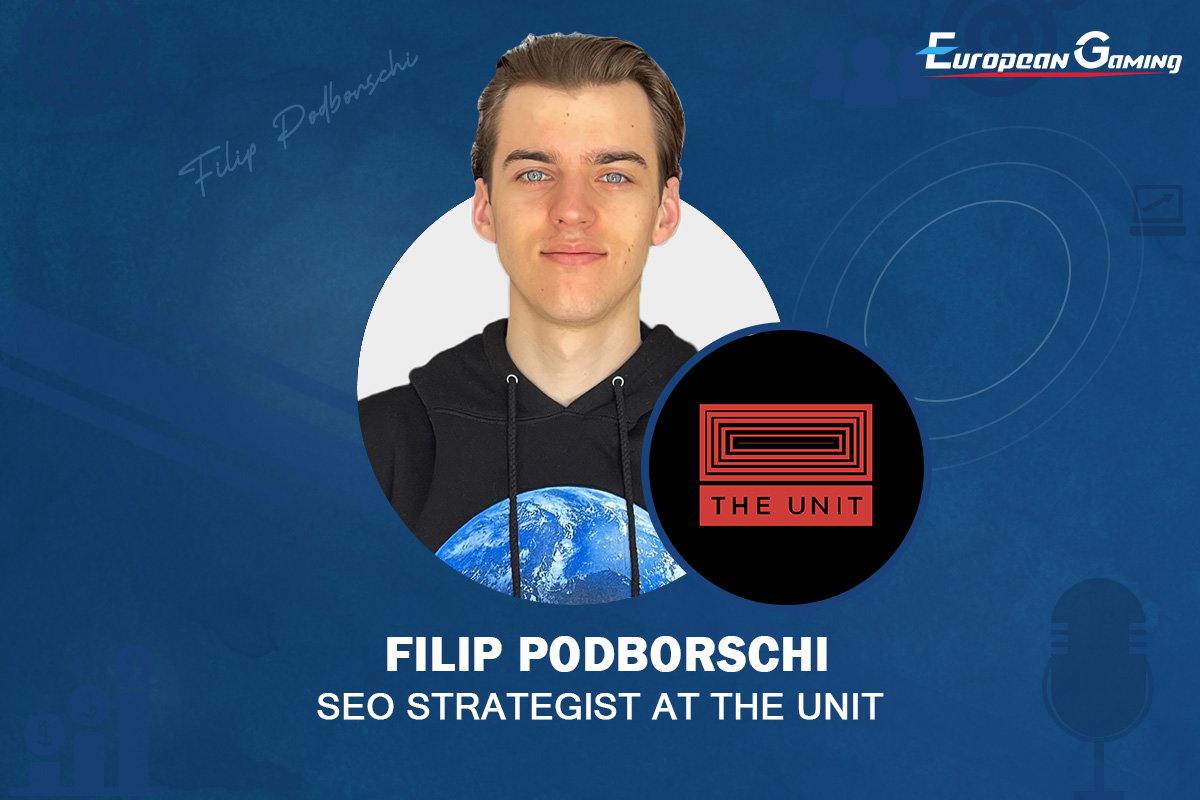
With Filip Podborschi, SEO Strategist at The Unit
From our experience in SEO in igaming, there are a number of areas where we see room for improvement and common mistakes which can be rectified. Let’s take a look at these facets of SEO one by one, with our best tips for how to make sure you can maximise your search ranking and drive more volume to your website.
Keyword strategy
The first thing operators should do in this area is identify the best performing keywords that result in higher search volumes on each post. It’s pages that rank rather than websites, so you need a different search intent on each page, and that increases the list of keywords you’re ranking for.
The way to do this is by checking the search volume, and then implementing the keywords according to SEO best practices, which means having primary and secondary keywords and adjusting repetition accordingly.
The common mistake we see here is that companies don’t go into enough depth when conducting competitive analysis; especially when they’re new to the industry. Identifying what exactly your competitors are doing regarding SEO is harder than it looks, and it’s an area where marketing agencies tend to be quite lazy. They may use some tools which will show the standout competitors by algorithm, but they won’t crawl for long enough to ascertain what services they offer and provide a comparison with their client’s service. You need to find out which sites could be ranking better than you, and why.
We also see issues with the ranking of sites based on the user’s location. For example, you may have a website that ranks well in Canada, and when I as a user based in Romania search for that category, I’m not going to get the same list of results as a user who is based in Canada. The best thing to do is use a VPN to gauge how your websites are ranking and performing with your specific audience in your domestic geographical area.
SEO tags optimisation
With SEO tags, which are essentially the page title and description you see on the search engine results page, the page title has the highest ranking power. Google will first check the page title to get an idea of what the page is about and what searches it is relevant for. It will then check the H1 and the content, and it may look through the H2 as well.
A common issue here is some websites have templated SEO tags, especially for the inner pages, so it’s more of a formula within the code to generate a random structure. It is very obvious they are templated and that the operator doesn’t really care about the length.
The key thing with tags is to make sure your pages have titles that don’t exceed the ideal length. This is a big mistake if you get this wrong, and it is very important to optimise your titles. SEO tags can be optimised around keywords. Once doing so, it is very important to prioritise your main pages. If you have 10 pages as part of the main menu, then you should optimise those, before optimising the inner pages.
Identifying duplicate pages is also important, as well as making sure meta inscriptions include CTAs; those inscriptions don’t impact rankings directly, but they do impact the CTR. You have to do that without being too spammy though, so it’s advisable to avoid words like ‘sale’ or calls to “CLICK HERE NOW”.
Headings
Keywords must be implemented in headings; especially in H1s and H2s. Make sure not to overuse H2s and keep them optimised for content value.
If we structure the ranking power of the elements that are bringing results, we would optimise with the page title first, H1 second, content third and H2s fourth. It is better to have five H2s with three of them being optimised around the same search intent that is highlighted in H1, than it is to have 3/10 optimised around keywords. Too many H2s will just confuse Google about your search intent. You can have similar search intent as with H1s, and also have H3s and H4s to highlight value to the reader.
Interlinking strategy
Interlinking between pages is often missing. I’m not talking about interlinking from the main menu, as every page has the ability for you to go back, but I’m talking about interlinking within content, which Google considers to be much more important, because it cares about the relevancy. Google will consider pages with high-quality content as a higher authority page.
Our advice would be to implement anchor links on both branded and non-branded keywords. You should make sure there is an anchor link to the parent page. For example, domain.com/blog is a parent for domain.com/blog/igaming-seo.
It’s very important to have child pages linking to the parent page, passing authority to the parent page. Having that interlinked structure will pass more authority to that parent page.
To explain that in a little more detail, let’s say you have a sportsbook page with 10 more child pages that reflect a particular set of sports. Having each of those 10 pages optimised so they have some authority and linking them to the parent page would pass authority to that parent page. Parent pages usually have a keyword with higher search volume, and passing as much authority as you can to the child page is very important. Too often websites lack content on child pages.
The future of SEO and experience needed
Going forward, we see AI as one of the most significant developments in SEO. At this point, we are not able to rank user engagement in AI, and it is important to keep yourself updated with how Google is reacting to this.
Google in time may provide additional options if you want to be eligible for a particular set of results in that environment. Keep an eye on what features it will offer and the types of websites. Google may consider implementing specific types of results for betting, such as displaying odds or a comparison of odds from three or four sites at the same time.
With all these issues, it is vital to have the relevant experience on board, particularly when it comes to the skill of conducting very in-depth competitor analysis, and this is something The Unit can provide. Conducting competitor analysis is something we have done across several industries, and not just in igaming. The main strength you can have with SEO is to know your competitors inside out, and those skills can be adjusted based on your needs.
The post The untapped potential of SEO in iGaming appeared first on European Gaming Industry News.

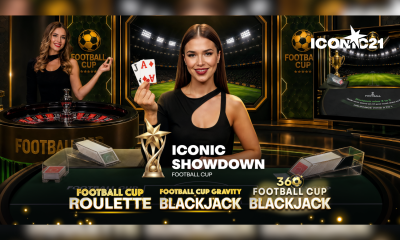







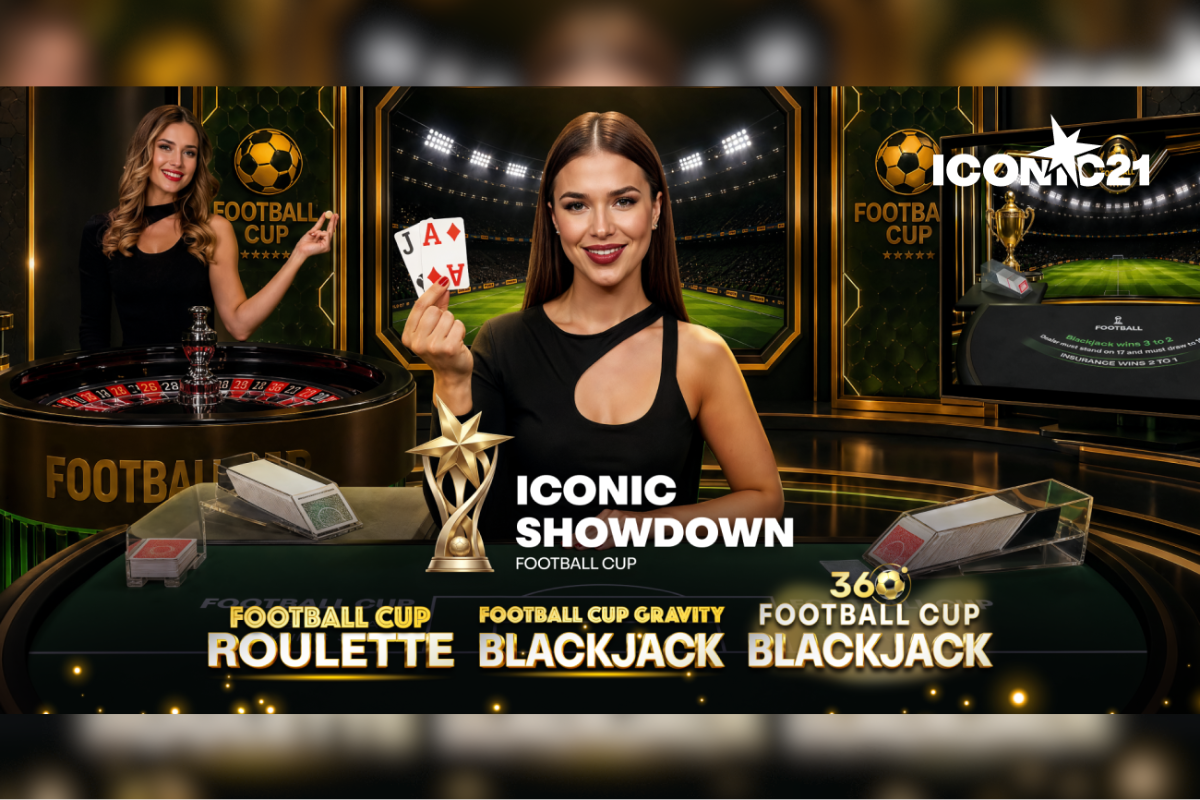
ICONIC21 has rolled out three limited-edition Football Cup-branded casino games and launched its first network tournament, ICONIC Showdown Football Cup, running from 9th of July to 19th of July.
The new titles are Football Cup Roulette, Football Cup Blackjack 360, and Football Cup Gravity Blackjack. ICONIC21 said the releases showcase different customisation approaches, including green screen production for the roulette environment and an updated visual rebrand for its RNG blackjack table.
For Football Cup Gravity Blackjack, ICONIC21 said it used its latest LED technology and applied the Gravity Series multiplier mechanic, with a custom felt, a football gate, and bespoke 3D-printed decorations.
Alongside the three new games, ICONIC21 pointed to its previously launched slot Soccer World Championship, plus The Kickoff and Top Card, which it said received football-season branding and UI/UX updates.
The ICONIC Showdown Football Cup tournament covers 11 games in total and is positioned around the quarter finals, semi-finals and final period. ICONIC21 said 1,000 winners will share a €50,000 prize pool, and operators can enroll via their account manager or by contacting the company directly.
Edvardas Sadovskis, Chief Product Officer at ICONIC21, said:
“What I’m most proud of with this project is the turnaround. We built three fully branded, technically distinct games, enhanced existing ones with promotional branding, and launched our first-ever network tournament around them, all timed to coincide with peak player interest and traffic.
That kind of speed doesn’t happen by accident, it reflects how this team works. ICONIC Showdown is a meaningful first step for us as a provider, and launching it during the Football Cup, with this much energy around the game, feels like the right way to do it. We’re genuinely excited to see how the leaderboard shapes up and even more excited for the finals.”
The post ICONIC21 launches Football Cup-branded casino games and debut network tournament appeared first on EE Gaming | Global iGaming & Tech Intelligence Hub.
Brand Ambassador
Ronaldinho visits CreedRoomz Yerevan studio to front Marble Cup and Kickoff Roulette


CreedRoomz has brought footballer Ronaldinho to its headquarters in Yerevan, where the company filmed an “exclusive interview” with the former player in connection with two new live casino game shows, Marble Cup and Kickoff Roulette. CreedRoomz said Ronaldinho is the global ambassador for both titles.
In the interview, Ronaldinho said: “For me, it’s a great joy to be a part of this partnership. Since arriving here at the office, everyone has treated me with great affection. I already feel at home, very happy.” Asked to choose between the two games, he added: “Honestly, it’s difficult to choose one, both are wonderful, I loved them, so it’s very difficult to choose one, I think everyone will really like them, I think the whole world will really enjoy them.”
Ronaldinho also described his first impressions of the studio and gameplay: “I was surprised and very happy, everything is very beautiful, everything is very innovative, so I believe that’s why everyone will really like them, so I’m looking forward to everyone starting to enjoy them a lot.”
On why CreedRoomz expects the titles to gain traction, he said: “These are different games. I think that will attract attention, the fact that football is a global passion also helps, so I believe everyone will like it for those reasons.. and for the innovation of everything that is happening.”
CreedRoomz linked the interview to upcoming “World Cup and R10 Tournaments,” with Ronaldinho closing by telling fans: “A message of gratitude for the continued affection. I’m very happy and excited. for the next competitions for the next games, the games are all ready, I hope everyone enjoys them and everyone be very happy and have good times together.”
The post Ronaldinho visits CreedRoomz Yerevan studio to front Marble Cup and Kickoff Roulette appeared first on EE Gaming | Global iGaming & Tech Intelligence Hub.
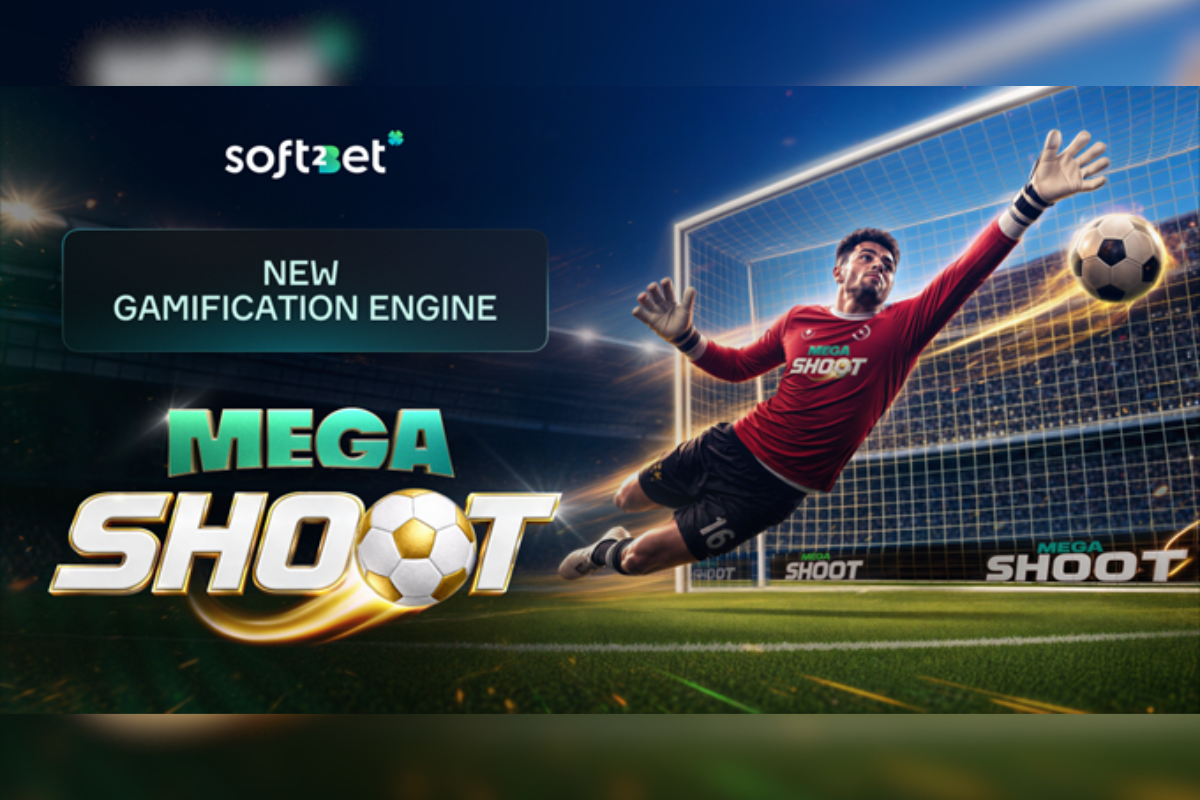
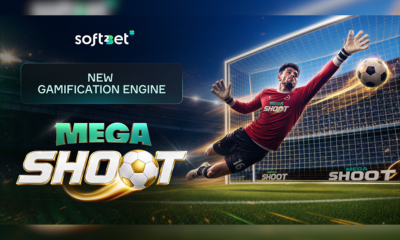
Soft2Bet has launched MEGA Shoot, a football-themed gamification engine designed around the 2026 FIFA World Cup, aimed at helping sportsbook operators retain players during the tournament.
The product will be deployed across selected Soft2Bet brands including Betinia, Swiper, Campobet, ToonieBet and Elabet, with availability spanning markets including Denmark, Greece, Mexico, New Jersey, Ontario, Romania, and the rest of Canada, according to the company.
MEGA Shoot uses a player-versus-player best-of-five penalty shootout format. Players alternate between striker and goalkeeper, with the striker selecting where to shoot and the goalkeeper selecting where to defend. Each round resolves as a goal or a save before roles switch.
Soft2Bet said early internal results show 31.9% engagement among active players across selected brands, with 71.2% of MEGA Shoot players going on to play a second match. The company also claims a 13.5% player retention uplift.
Yoel Zuckerberg, Chief Product Officer at Soft2Bet, said: “The World Cup runs from 11 June to 19 July, so retention has to work across the full tournament calendar. MEGA Shoot gives operators a football game that players can understand quickly, with head-to-head competition tied to the sport they already follow. With almost 32% engagement among active players and about 71% converting into a second match, the early data shows how tournament-led gamification can strengthen sportsbook engagement during major football events.”
The post Soft2Bet launches MEGA Shoot World Cup gamification engine appeared first on EE Gaming | Global iGaming & Tech Intelligence Hub.

-

 Gmonitor.ai7 days ago
Gmonitor llega a Latinoamérica: la plataforma de inteligencia de mercado para operadores debuta en seis mercados regulados
-
 Latest News7 days ago
Sportradar Report | World Cup 2026: Opportunities for the Latin American Sports Betting Market
-
DBET6 days ago
HockeyAllsvenskan names DBET main partner in three-year deal from 2026/27
-
Baltics6 days ago
Digitain Named Best Sportsbook Provider at HIPTHER Baltic & Nordics Gaming Awards 2026
-
Blazing Flower6 days ago
CT Interactive Strengthens its Presence in Romania with Newly Certified Games
-
Asia6 days ago
S8UL’s League of Legends roster qualifies to represent India at Asian Games 2026
-
Australia4 days ago
Former Star Entertainment Executives Mathias Bekier and Paula Martin Disqualified and Ordered to Pay Penalties
-
CFTC5 days ago
Novig Secures CFTC Designation, Bringing the First Prediction Market Built for Sports Fans Nationwide