Interview
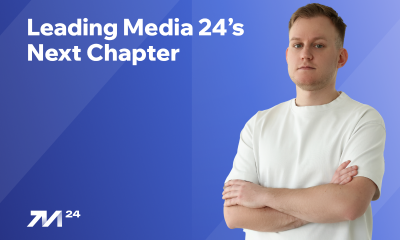
Arturs Korolkovs on Leading Media 24’s Next Chapter

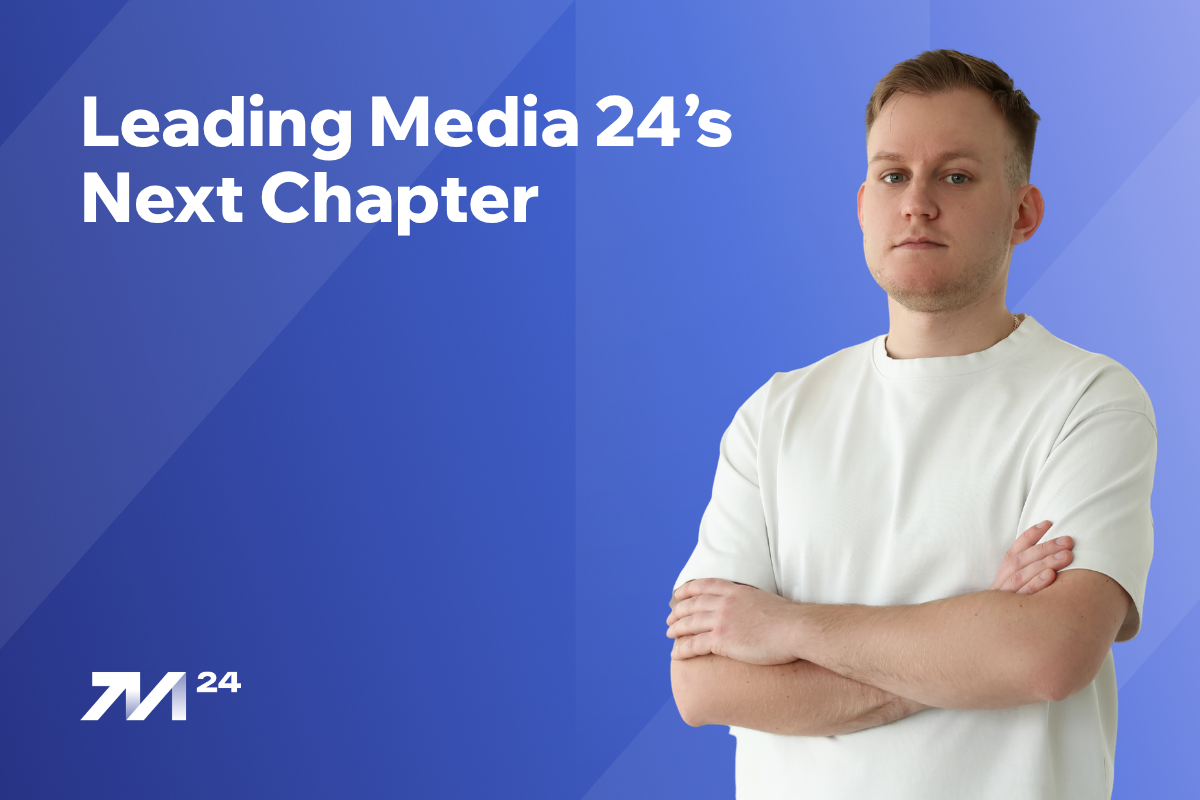
To understand the story of Media 24, you really have to understand Arturs’ journey. He was the company’s very first employee, joining at the absolute beginning and helping build the foundation of what the business is today. After several years as Head of Sales, he has now stepped up to lead the entire organization into its next chapter.
In this interview, we’re going to talk about that transition from first employee to CEO. We’ll discuss Arturs’ vision for evolving Media 24 from a traditional affiliate into a modern digital ecosystem, his philosophy on internal leadership and delegation, and how the company is preparing for a massive 2026.
How does coming from a Head of Sales background change the way you view the CEO role compared to someone who might come from a product or tech background?
Coming from sales, you’re always focused on the finish line. A tech person might get caught up in making things perfect or adding features just because they’re cool. I don’t have that luxury. My focus is on things that actually move us forward. I’ve spent years talking to partners and seeing exactly what makes money and what doesn’t.
We’ve had that same philosophy at Media 24 since I started as the first employee. Act fast, check the data, and improve on what works.
Coming from sales also makes me more comfortable with the human side of the business. Being CEO isn’t just about decisions. But also about selling a vision to the team so they actually want to follow you. In sales, if people don’t believe in what you’re saying, you fail. I’m just applying that same logic here.
You were the first employee in Media 24, doing everything yourself. Now that you’re CEO, how do you handle stepping back and letting your team take the lead?
In the early days, If something needed doing, I did it. But you can’t scale a company if you’re making every decision yourself. My job now is to give my team the resources and the space to lead.
We’ve always believed in growing our own talent. For example, we recently promoted our new Head of Growth and our Head of Website Operations from within. Both have been with us for years. They’ve seen the company evolve, and I trust them completely.
I’m not looking for people who always agree with me. I want professionals who understand this business as well as I do, if not better. By promoting from within, I’m surrounding myself with people who have Media 24’s mindset but bring their own expert perspectives. My role now is to clear the path for them so they can build the products that will define our next few years in the industry.
We are seeing constant core updates. How is Media 24 protecting itself against the volatility of organic search?
You can’t ever truly be prepared for a Google update if your entire strategy is based on trying to trick an algorithm. If you spend all your time looking for shortcuts, you’re always going to be chasing the ones who lead.
Last year at Media 24, we took a serious look at our approach and redesigned our product strategy. Today, we aren’t building sites just to rank well. Instead, we’re building platforms that aim to be the undeniable go-to resource for each specific market
That means we’re investing heavily in the things that actually matter to a human being, not just a crawler. We’re re-imagining our content to provide real value, doubling down on UX, and constantly improving the product itself. By focusing on the end-user, search rankings become a byproduct of our quality rather than a lucky break we’re trying to keep.
Affiliates are often seen as “top of funnel.” How is Media 24 trying to own more of the user journey after the initial click?
It’s true that most affiliates stop at the click, but we see that as a missed opportunity. We understand that acquiring a new depositor is always significantly more expensive than retaining an existing one.
We’re moving toward building actual communities around our top platforms. A user might come to us for a specific bonus, but they are likely interested in other offers or new products down the road.
To capture that, we are creating touchpoints beyond just the website. We’re building a presence on social media and other channels where our users actually spend their time. If we can stay in front of the user where it matters, then we aren’t just sending traffic to operators. We’re delivering a much more loyal and valuable player.
There are cases when operators discontinue affiliate programs or cut commission rates. How do you future-proof a business that’s dependent on those relationships?
Unfortunately, that’s just the reality of the industry sometimes. You have to accept that these risks exist. For us, navigating those shifts is part of the process of building long-term relationships. You find out very quickly who your true partners are when things get tough.
That’s exactly why we invest so much time being present. We attend a lot of conferences and industry events throughout the year to meet our partners face-to-face. By staying close to the market and our partners, we can spot the red flags early and focus on the operators who actually value a fair, long-term collaboration.
Is Media 24 looking to diversify away from pure SEO traffic? Are PPC or social media traffic on your 2026 roadmap?
For 2026, our focus is staying on what we do best and what operators actually value most. SEO traffic is still the gold standard for quality in this industry. It takes a massive amount of work and patience to earn those positions, but the quality of that traffic is well worth the effort.
Regarding becoming multi-channel. It’s a conversation we’re having, and we are definitely exploring how to expand our expertise into new niches. But it won’t happen this year. 2026 is a massive year for us because of the World Cup. All our energy, investment, and product innovation are currently funneled into making sure our platforms are the best they can be for that event. We don’t want any distractions right now.
The lines between affiliate, media company, and data business are blurring. Does Media 24 see itself evolving beyond pure affiliate marketing?
I think affiliate marketing is really just a business model. It’s not the whole identity. If you look at the most successful players in our space today, they’ve already become hybrids.
We see ourselves the same way. We are a media company because we employ talented content writers and manage a social media presence. We are a data business because we have to understand user behavior at a very deep level to stay competitive.
The industry has evolved significantly. The best companies have evolved too. At Media 24, we don’t want to be put in a box. We are a digital business that uses an affiliate model to monetize. But our actual value lies in our content, our product, our data, and our ability to reach an audience better than anyone else.




“En el mercado regulado de apuestas sentí que estaba intentando nadar en un océano dominado por tiburones. En el mercado de predicciones, estamos ayudando a construir el propio océano.” (C.S)
El mercado de predicciones comienza a ganar espacio en Brasil en un momento de transformación para la industria del gaming y los productos digitales basados en probabilidades.
Aunque todavía es un concepto incipiente en el país, y contradictorio en países vecinos, este modelo, que combina elementos de mercados financieros, tecnología y comportamiento del usuario, ya ha demostrado su potencial en otras regiones al ofrecer estimaciones colectivas sobre eventos futuros.
Sin embargo, su avance ha sido conflictivo en América Latina.
En mercados como Argentina, por ejemplo, está enfrentado restricciones e incluso prohibiciones, en medio de debates regulatorios sobre su naturaleza y su posible similitud con las apuestas tradicionales.
En este contexto, Brasil aparece como un terreno aún en definición, donde la reciente regulación de las apuestas deportivas abre espacio para discutir nuevos formatos digitales basados en probabilidades.
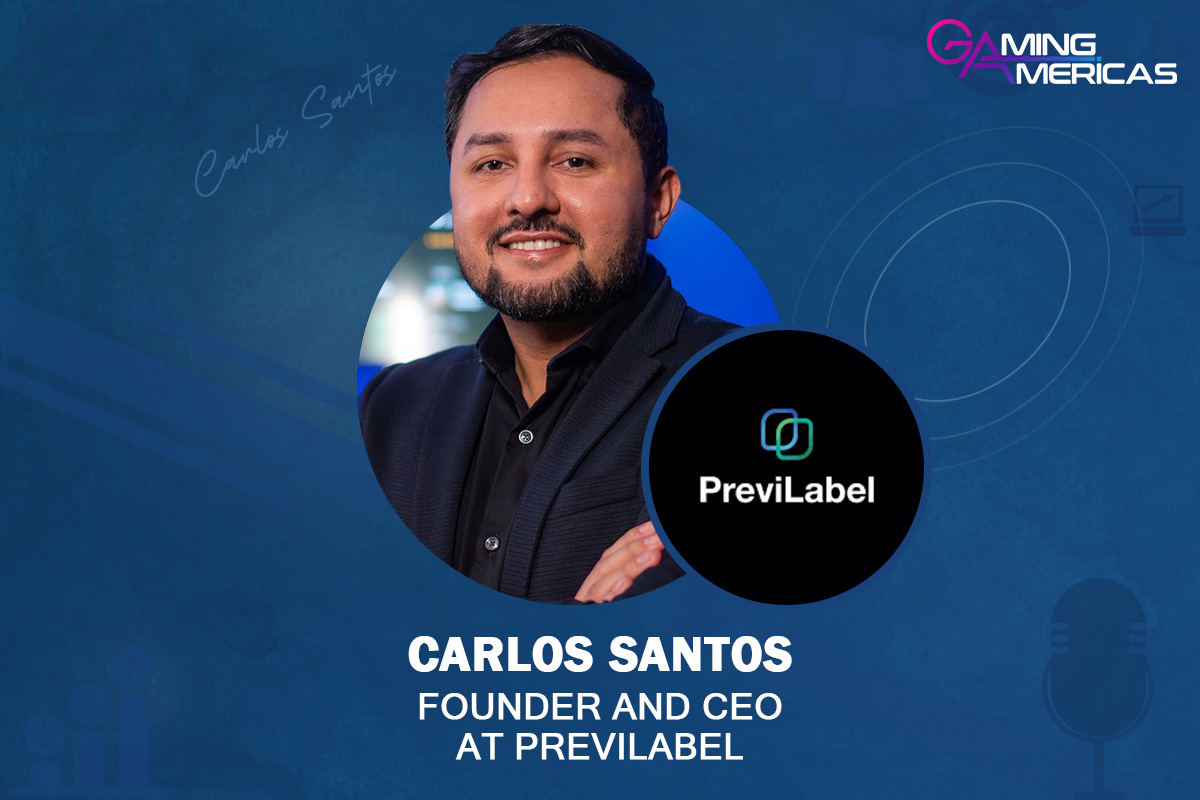
Es en este escenario donde surge la figura de Carlos Santos, CEO y uno de los impulsores de este segmento en el mercado brasileño con el lanzamiento de Previlabel.
Con experiencia previa en el ecosistema de apuestas, Santos decidió dar un paso más allá del modelo tradicional para apostar por la construcción de una nueva categoría en el país: los mercados de predicción.
A través de su visión y su proyecto, el ejecutivo busca no solo introducir este concepto en Brasil, sino también desarrollar la infraestructura tecnológica necesaria para que nuevos operadores y empresas puedan formar parte de este ecosistema emergente.
En esta entrevista, Carlos Santos analiza el potencial del mercado de predicciones en Brasil, los desafíos de su desarrollo y las oportunidades que pueden definir el futuro de este segmento en la región.
¿El mercado de predicciones aún es poco conocido en Brasil. ¿Cómo explicaría este concepto a alguien que nunca ha oído hablar de él?
Los mercados de predicción son plataformas donde las personas negocian probabilidades sobre eventos futuros.
En lugar de simplemente apostar por un resultado, los usuarios compran o venden posiciones basadas en la probabilidad de que algo ocurra.
El precio de estas posiciones termina reflejando lo que el mercado cree que es la probabilidad de ese evento.
Por eso, muchos describen este modelo como una especie de bolsa de valores de probabilidades, donde la información, la opinión y el dinero se combinan para formar una estimación colectiva del futuro.
¿Por qué cree que Brasil puede convertirse en un mercado relevante para plataformas de predicción?
Brasil tiene varios factores que favorecen este tipo de mercado. En primer lugar, es un país altamente conectado digitalmente y con una gran adopción de nuevas tecnologías financieras.
En segundo lugar, existe una cultura muy fuerte en torno a los deportes y a los eventos públicos, lo que genera naturalmente interés por las predicciones.
Además, la reciente regulación de las apuestas deportivas ha abierto espacio para nuevas discusiones sobre productos relacionados con probabilidades y mercados digitales.
El país acaba de regular las apuestas deportivas. ¿Los mercados de predicción son una evolución natural de esto o una industria diferente?
Están relacionados, pero no son exactamente lo mismo.
En las apuestas deportivas tradicionales, las probabilidades son definidas por la casa de apuestas.
En los mercados de predicción, en cambio, son los propios usuarios quienes forman esas probabilidades al negociar posiciones entre sí.
Esto crea una dinámica más cercana a un mercado financiero, donde el precio cambia a medida que surgen nuevas informaciones y las personas ajustan sus expectativas.
¿Cuáles son los principales tipos de eventos que podrían volverse populares en este mercado en Brasil?
El deporte probablemente será el punto de entrada más natural, ya que existe una gran base de usuarios interesados en este tipo de eventos.
Pero con el tiempo, estos mercados pueden expandirse hacia áreas como política, economía, entretenimiento e incluso tecnología.
En otros países ya existen mercados de predicción sobre elecciones, indicadores económicos y grandes eventos globales.
Esto demuestra que el modelo tiene potencial para ir más allá del entretenimiento.
¿Existe el riesgo de que el mercado de predicciones sea confundido con las apuestas tradicionales?
Sí, especialmente al inicio.
Como ambos involucran dinero y probabilidades, es natural que exista cierta confusión. Sin embargo, la diferencia está en la dinámica del mercado.
En las plataformas de predicción, los usuarios pueden negociar probabilidades y reaccionar ante nueva información, lo que hace que el sistema sea más parecido a un mercado financiero que a una apuesta tradicional.
Con el tiempo, a medida que el público entienda mejor el funcionamiento, esta distinción tenderá a ser más clara.
En el exterior, las plataformas de predicción ya existen desde hace tiempo. ¿Qué puede aprender Brasil de estas experiencias?
La principal lección es que estos mercados funcionan mejor cuando hay transparencia, liquidez y reglas claras de operación.
Las experiencias internacionales muestran que, cuando están bien estructurados, los mercados de predicción pueden generar estimaciones bastante precisas sobre eventos futuros. Sin embargo, también ha quedado claro que es fundamental contar con mecanismos de integridad y un entorno regulatorio que acompañe la innovación.
Brasil tiene la ventaja de poder observar estos ejemplos y adaptar las mejores prácticas a su propio contexto.
¿Qué le hizo mirar hacia los mercados de predicción en lugar de continuar únicamente en el mercado tradicional de apuestas?
Durante el último SBC en Lisboa tuve un momento muy claro de reflexión sobre el mercado. Me di cuenta de que estaba intentando competir en un entorno extremadamente difícil para empresas nuevas: enfrentar directamente a gigantes ya consolidados en el sector de apuestas.
El mercado regulado de apuestas en Brasil es altamente competitivo y está dominado por empresas con gran capital. Es como intentar nadar junto a tiburones en un océano que ya les pertenece.
Fue entonces cuando entendí que tal vez la oportunidad no era competir en ese mercado de la forma tradicional, sino participar en la construcción de una nueva categoría dentro del sector. El mercado de predicciones aún está en sus inicios en Brasil, lo que abre espacio para la innovación, la tecnología y el liderazgo.
Percibí que podía aprovechar toda la experiencia adquirida en el sector de apuestas para ayudar a estructurar este nuevo momento del mercado en el país.
¿Cuál fue el momento en que decidió convertir esto en un negocio?
Cuando regresé a Brasil después del SBC Lisboa, mi visión de negocio cambió completamente.
Comencé a estudiar más profundamente el mercado de predicciones y entendí que no era solo una tendencia global, sino también una oportunidad real para construir infraestructura en este sector en Brasil.
A partir de esta visión, iniciamos una asociación con Brasil Bitcoin, aprovechando toda su experiencia en Web3 e infraestructura digital para desarrollar esta tecnología.
La idea fue combinar esa experiencia en blockchain con nuestra visión de producto y mercado, creando una base tecnológica capaz de aportar más competitividad e innovación a este nuevo segmento.
¿Cuáles fueron los mayores desafíos al comenzar en este sector?
El principal desafío fue construir la tecnología.
Los mercados de predicción requieren una infraestructura muy específica, que incluye sistemas de negociación de probabilidades, liquidez, gestión de eventos y mecanismos de integridad.
Como este mercado aún es muy nuevo en Brasil, prácticamente no existían soluciones listas adaptadas a la realidad local. Esto exigió un gran esfuerzo de desarrollo para crear una tecnología sólida capaz de sostener el crecimiento de este ecosistema.
¿El público brasileño está preparado para entender y utilizar los mercados de predicción?
Creo que sí. El brasileño ya ha demostrado una gran capacidad de adaptación a nuevos productos digitales.
Basta observar el crecimiento de las apuestas deportivas, las criptomonedas y las plataformas financieras en los últimos años.
Cuando el modelo se explica bien y la experiencia es simple, la adopción tiende a ocurrir rápidamente.
¿Qué hace exactamente Previlabel dentro de este mercado?
Previlabel es una empresa de tecnología enfocada en infraestructura para mercados de predicción.
Desarrollamos la tecnología que permite a emprendedores crear sus propias plataformas de predicción y construir negocios dentro de este nuevo segmento que está comenzando a surgir en Brasil.
Nuestro objetivo es facilitar la entrada de nuevos operadores en este mercado.
Ustedes no operan solo una plataforma — venden tecnología para quienes quieren crear la suya. ¿Cómo funciona este modelo?
Exactamente.
Previlabel funciona como un proveedor de tecnología para este mercado. En lugar de operar una única plataforma, desarrollamos la infraestructura que los operadores pueden utilizar para lanzar sus propias marcas dentro del mercado de predicciones.
Esto permite que emprendedores y empresas ingresen en este sector de forma mucho más rápida, sin necesidad de desarrollar toda la tecnología desde cero.
¿Cree que veremos muchas plataformas de predicción surgir en Brasil en los próximos años?
Creo que esto ocurrirá muy rápidamente. En los próximos meses ya deberíamos ver varias plataformas emergiendo en Brasil.
Históricamente, el país siempre ha atraído nuevos modelos de negocio digitales debido al tamaño del mercado y al alto nivel de adopción tecnológica.
Cuando surge un nuevo segmento prometedor, Brasil suele convertirse en uno de los principales mercados de experimentación.
¿Existe una especie de “carrera” para crear el primer gran mercado de predicción brasileño?
Sí, esto es algo natural en cualquier industria naciente.
Cuando un nuevo mercado comienza a formarse, siempre existe una competencia inicial entre empresas para ver quién logra posicionarse primero y convertirse en referencia.
Probablemente estamos en el inicio de este proceso en Brasil, y quien consiga construir una tecnología sólida, ganar la confianza del público y escalar primero tendrá una ventaja muy importante.
The post Los mercados de predicción ganan terreno en Brasil con la entrada de Previlabel appeared first on Americas iGaming & Sports Betting News.

Sebastian Jarosch is the founder of Mithrillium Media Ltd, and a very famous figure in the iGaming industry. His contributions to the market have been immensely influential. Jarosch has overlooked several projects relating to the online gambling market, most notably those involving affiliates. Because of his past works, we believe he is uniquely qualified to address the topic of Review Fatigue, that seem to be plaguing the industry right now.
Actions speak louder than words. And Jarosch’s actions have earned him several of the most notable industry awards. Among the most notable are the Casinomeister 2020 Awards for Best Casino Group, the AskGamblers Awards for Best Partner in 2021, and the Affpapa Awards Affiliate Programme of the Year 2022.
Interview Questions:
What is “review fatigue,” and why do you think it’s becoming a growing issue in the iGaming space?
Review fatigue happens when players are faced with repetitive, overly long, or generic content. With so many casinos offering similar bonuses, games, and licensing, users quickly lose interest if every review sounds the same. Many reviews lack real insight and simply list features without context, often sounding too good to be true. As a result, players tend to skim or move on entirely, especially if they’ve already seen the same structure and wording on multiple other sites.
How can overly technical or overly promotional content alienate users instead of helping them?
When content is too technical, it can confuse or intimidate newcomers. Ideally content is educational and written with the player in mind. On the flip side, a sales pitch feels dishonest, especially to experienced players who know what to look for. Users are looking for clarity and guidance, not marketing sugar coated casinos. If a review sounds like it’s trying to sell rather than help, it erodes trust immediately. Players want transparency, real pros and cons, not just buzzwords.
What are the most important things players want to see in a casino comparison, and what can we safely leave out?
Players want to know the promotions, payment methods, withdrawal speeds, licensing, game variety, and reliability of a casino. They also care about things like support quality, KYC, ownership, RTPs, and real player feedback. What they don’t want is generic content that could apply to any casino and offers no real value. Sites like Casino-Groups help players pick the right casinos based on individual preferences.
How do you balance clarity with completeness when writing or designing reviews?
It’s all about prioritizing information and guiding the reader. We aim to answer the most important user questions right at the beginning, often using summary tables to make things easier to digest. More detailed information comes later for those who want to dive deeper. It’s important to avoid walls of text and explain complex terms in plain language. The goal is to give users exactly what they need to know, without bombarding them with unnecessary information.
Do players trust shorter, more digestible content more than long-form reviews today? Why or why not
Shorter content tends to convert better because users find what they’re looking for quickly, without digging through long paragraphs full of filler. Dense, meaningful content with no waste often performs best. A short, clear, and well-structured review can build more trust than a long one filled with fluff. That said, some players do enjoy longer reviews, especially when they’re broken up with visuals, clear sections, and genuinely useful insights.
What role does tone of voice play in making reviews feel more human and less “salesy”?
A review should feel like it’s written by a real person who’s an expert in the field, not by ChatGPT or a salesperson. We use conversational language where possible and speak directly to the user. If something’s bad or a bonus is just average, it needs to be mentioned. That kind of honesty builds far more credibility than flashy design or empty buzzwords.
How do you verify and present information (e.g., licensing, terms, payment speed) in a way that’s both accurate and user-friendly?
We manually verify everything by signing up, testing support, and reading the fine print. We also check licenses through official registries and monitor user feedback on watchdog sites. To present the information clearly, we use tables, lists, screenshots, and both internal and external links to relevant pages. All our reviews follow a consistent format so players know what to expect and can easily find the details they need.
Have you experimented with visual elements like comparison tables, badges, or rating meters to reduce cognitive load?
Pictures speak a thousand words and help break up content into smaller, more digestible sections, reducing review fatigue. We use comparison tables for things like bonus terms, game selection, and payment methods. Every review includes a rating, and we apply badges to highlight our top casinos. This makes it easier for users to compare options at a glance and make smarter decisions with less effort.
What strategies do you use to keep review formats consistent while still personalizing the experience for different user types?
We follow a consistent structure that works well for both SEO and conversions. However, if a specific area needs emphasis or additional context, we’re happy to deviate from our standard format to ensure topical completeness. Some casinos offer unique features that deserve extra attention, and in those cases, we’ll add dedicated sections. The framework is consistent, but we stay flexible where it counts.
Looking ahead, how do you think casino reviews will evolve to meet changing user expectations and attention spans?
We’ll see more interactivity, personalization, and smarter use of data. Reviews could adapt in real time based on user preferences, highlighting crypto options for one user and game selection for another. AI chatbots may help users find the best match and answer questions about a casino instantly. Integration with platforms like Discord or Telegram where players can exchange themselves could also make reviews feel more social and trustworthy. Reviews need to become sharper, more authentic, and more genuinely helpful than ever before.
The post Review Fatigue Is Real: How to Make Casino Comparisons Clear, Honest, and Huma appeared first on Gaming and Gambling Industry in the Americas.

-

 content-supply6 days ago
Million Games launches Skull King’s Treasure with partner studio Arcane Pixel
-
Alberta6 days ago
Octoplay secures conditional Alberta iGaming supplier approval from AGLC
-
Canada6 days ago
What Canadian Slot Players Are Really Comparing in 2026: Payout Speed, Interac and RTP Transparency
-
Africa5 days ago
SpringbokCasino ties July free spins to ‘Minions in the Wild’ campaign
-
Africa5 days ago
Booming Games renews Hollywoodbets Durban July activation partnership
-
Evoplay5 days ago
Evoplay launches Safari Coins slot with fixed jackpots and collector mechanic
-
Casino Content6 days ago
SkillOnNet adds ODDSworks casino content across Ontario sites
-
GGPoker6 days ago
GGPoker opens satellites for WSOP Circuit CDMX México 2026