GambleAware
GambleAware Reports Success for Public Health Campaign to Raise Awareness of Gambling Harm and Stigma

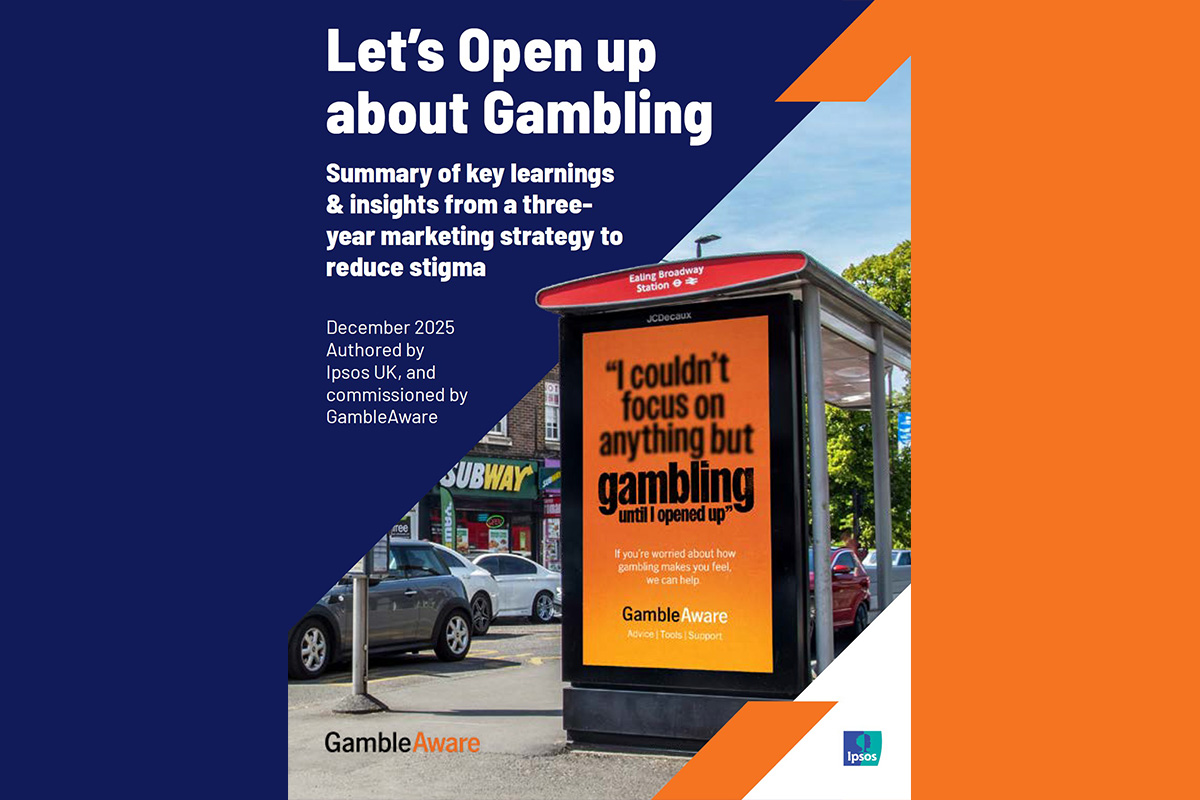
GambleAware has revealed the impact of its groundbreaking three-year marketing campaign to reduce gambling stigma and encourage people to seek support for gambling harms. The charity’s campaign drove significant behaviour change, with over 90% of the target audience reached taking action, including seeking advice and using digital tools for support.
Despite these achievements, GambleAware warns that urgent action is needed to curb gambling advertising, as operators spend up to £2 billion annually – far outweighing the amount spent on public health messaging. The charity is calling for more public health campaigns to reduce gambling harms in 2026 and stronger restrictions to ensure people are aware of the risks.
GambleAware’s campaign, “Let’s Open Up About Gambling”, was the first public health campaign of its kind designed to reduce the stigma people face, which can stop people asking for help when experiencing gambling harm.
The campaign ran across three phases between April 2023 and May 2025, and featured advertising, media campaigns and partnerships with other organisations, with creative assets co-created with individuals with lived experience of gambling harms. The campaign followed a strategy to use the real stories and feelings of real people to ensure its messages truly resonated, and aimed to raise awareness of gambling harm, stigma and the support available for anyone who may be struggling.
The campaign has been independently evaluated by Ipsos, who produced the new report. It found that the campaign led to change, including increasing people’s awareness and understanding of gambling harms. As well as the 90% of the target audience who saw the campaign and said they had taken action as a result, such as searching GambleAware online for more advice, two in five of the target audience also said they had a conversation about gambling as a result of the campaign. The campaign also increased uptake of support and digital tools on GambleAware’s website, such as its Service Finder tool and Self-Assessment tool.
The report also contains learnings and recommendations gained from the campaign, which are being shared by GambleAware to help inspire and inform future campaigns to reduce gambling harms. Recommendations include that future campaigns should be co-created with people who have lived experience, who can share their personal stories to build trust and connection and reduce stigma by showing how anyone can be affected.
GambleAware is calling for similar campaigns to reduce gambling harms to be run in 2026 – following the introduction of the new statutory gambling harms system – any future public health campaigns will be carried out by the new prevention commissioner. GambleAware is also calling for more restrictions on gambling advertising including for health warnings to be put on all gambling advertising and for them to signpost to where people can get help3.
Emma Munro-Faure, GambleAware Director of Marketing, said: “We’re proud that this campaign helped thousands of people to seek support for gambling harms. But stigma remains a major barrier, and with gambling companies spending £2 billion a year on advertising, we need stronger restrictions and clearer signposting to the free help and support available.”
Matt Gainsford from Lucky Generals, the lead creative agency that worked to produce the campaign, said: This was one of the most important briefs we’ve worked on. We’re incredibly proud of the impact the campaign has had, particularly when you look at it in the context of what the gambling industry spend on advertising. However, breaking down stigma is more than a three year job and we hope this is the beginning of a long-term, sustained effort to get millions more across Great Britain to open up about gambling.”
Maxine Ames, Strategic Planning Business Director at Manning Gottlieb, added: “Working on GambleAware’s ‘Let’s Open Up About Gambling’ campaign was one of the most fulfilling and impactful projects I’ve had the privilege of working on. The media strategy we developed was built around three carefully orchestrated phases – Educate, Reassure, and Enable – each designed to meet people where they are in their journey and guide them toward support. What made this campaign so special was how we used behavioural signals and contextual targeting to intercept people at moments of risk, while leveraging trusted environments to model help-seeking behaviour. Seeing our strategic approach achieve 98% reach across our target audience was incredibly rewarding but this wasn’t just about reach and frequency; it was about using our craft to genuinely help people and reduce stigma around gambling harms.
Tracy Madlin, who shared her lived experience of gambling harm as part of GambleAware’s campaign, supporting its installation featuring 85,000 poker chips at Westfield London, said: “Throughout my life I felt stigma on occasions, especially in my teens and later in life due to being female. Being part of the stigma campaign was amazing and I felt so very proud to be part of such an amazing campaign to help prevent gambling harm, the campaign I believe is saving lives and shows there is nothing to be ashamed of.”
The post GambleAware Reports Success for Public Health Campaign to Raise Awareness of Gambling Harm and Stigma appeared first on Eastern European Gaming | Global iGaming & Tech Intelligence Hub.













Anna Hargrave
GambleAware Warns Outdated Gambling Advertising and Marketing Regulations are Leaving Children at Risk of Gambling Harm


Reading Time: 2 minutes
Regulations for online gambling marketing must urgently be brought into the digital age, a new report from the charity GambleAware has warned.
The report reveals that despite gambling being an age-restricted product, children are being exposed to gambling marketing online, before they reach an age at which they can critically evaluate it. This is leading to gambling being normalised and portrayed as “risk-free”, which increases the risk of them experiencing gambling harm.
Gambling harms are becoming an increasing part of children’s lives, with previous research finding that in 2024, around 85,000 children in Britain were experiencing harm from their own gambling, a figure which has doubled since 20233. GambleAware’s new report highlights how seeing gambling marketing and content, online and via social and streaming platforms, could be encouraging children to gamble and contributing to the number experiencing harm.
The new report calls out poor regulation of gambling marketing online, highlighting how more needs to be done to ensure the rules reflect the unique challenges presented by the digital age and urges a reduction in self-regulation to protect children from being exposed to age-restricted gambling content. Alongside this, GambleAware is also calling for mandatory health warnings to be put on all gambling marketing so people are aware of the risks and support available.
Specific changes to help protect children could include moves to hold online platforms to greater account and ensuring existing government programmes, such as the Online Safety Act and Online Advertising Programme, more directly address gambling marketing and content online. Alongside this, other recommendations include the alignment and strengthening of online safety regulatory powers and programmes.
GambleAware research also found strong public support from children and adults for changes to gambling marketing and advertising regulation. Around four in five children (79%) say they want more rules around gambling content and advertising on social media. Alongside this, over seven in ten adults also agree, saying they want more regulation around gambling advertising on social media (74%) and gambling related content on social media (70%).
Anna Hargrave, GambleAware Transition CEO, said: “Gambling operators invest significant resources into online marketing because it works at getting people to gamble more. This has resulted in children and young people being exposed to gambling content online before an age at which they can critically evaluate it and understand the risks that come with it.
“The current regulations covering gambling marketing and advertising online were designed before most children had easy access to the internet. Urgent action is needed to update these rules and bring them into the digital age to help keep children and young people safe from gambling harm.”
The post GambleAware Warns Outdated Gambling Advertising and Marketing Regulations are Leaving Children at Risk of Gambling Harm appeared first on European Gaming Industry News.

The Sydney Kings and Sydney Uni Flames have joined Reclaim the Game and will reject sports betting sponsorships and advertising, in a first for Australian basketball.
Reclaim the Game is a partnership program to counter the normalisation of sports betting and advertising in sport and to raise awareness of gambling harms. The program helps fans to enjoy sport, free from betting advertising and sponsorships.
Sydney Kings and Sydney Uni Flames join a growing list of clubs which have taken a stance against sports betting advertising. Cricket’s Sydney Sixers and Sydney Thunder, AFL’s Sydney Swans and the A-League’s Western Sydney Wanderers FC and Macarthur FC have all signed up to the program and are helping their players, fans and communities to be gamble aware.
Chairman and Owner of the Sydney Kings and Sydney Uni Flames, Paul Smith, said the partnership is important.
“It speaks to our commitment to social and community responsibility,” Mr. Smith said.
“Our own players have been victim to abuse on social media because betting got out of hand. By working with GambleAware, we are encouraging our fans and the community to stay within their means and to not let betting take away from what sport should be about.”
More than $270 million was spent on gambling advertising in Australia in 2018. Recent research by the Office of Responsible Gambling revealed 77 per cent of the community believe there is too much gambling advertising. Four in five believe advertising increases the risk of developing a problem with gambling.
Director of the Office of Responsible Gambling, Natalie Wright, said online betting is endemic in sport, and wagering sponsorships kept gambling front and centre in the minds of audiences.
“We’re seeing sports betting advertising in almost every aspect of sport which sends a message that betting is part and parcel of enjoying sport,” Ms. Wright said.
“Gambling advertising’s whole purpose is to convince you to place a bet.
“Reclaim the Game is about creating a space for fans to enjoy sport without betting advertising and reducing their exposure to advertising and promotions which can lead to risky gambling.”
The Office of Responsible Gambling is in discussions with other clubs and expects to announce new Reclaim the Game partners in 2022.
If you or someone you care about needs support or advice, please call GambleAware on 1800 858 858 for free and confidential help and support 24/7 or visit gambleaware.nsw.gov.au.
Powered by WPeMatico

-

 Africa7 days ago
BetConstruct AI to Drive Global Innovation and Strategic Growth AcrossKey Markets in LatAm, Asia, and Africa
-
Centurion Winner Grand Chance™5 days ago
New from Inspired: Luck It Up™ and Centurion Winner Grand Chance™ available online & on mobile
-
Blazin' Bonus6 days ago
Booming Games releases Blazin’ Bonus
-
Cristiano Blanco CEO of SpinCore Group6 days ago
SpinCore Group Enters Finnish Market via Finnplay Partnership
-
Australasian Hospitality and Gaming Expo6 days ago
IGT Showcases Integrated Gaming, Systems, and FinTech Innovations Designed to Drive Growth at Australasian Hospitality and Gaming Expo 2026
-
Asia7 days ago
Mumbai to Host the Prestigious Global Esports Games (GEG) World Finals from March 19–22
-
Africa7 days ago
BetConstruct AI Fuels Global Innovation Strategy Across Latin America, Asia and Africa
-
23 Broadway7 days ago
23 Broadway secures $3m seed funding to launch AI-powered user acquisition financing platform