Latest News
Is the UK Drifting Toward a Two-Speed Gambling Market

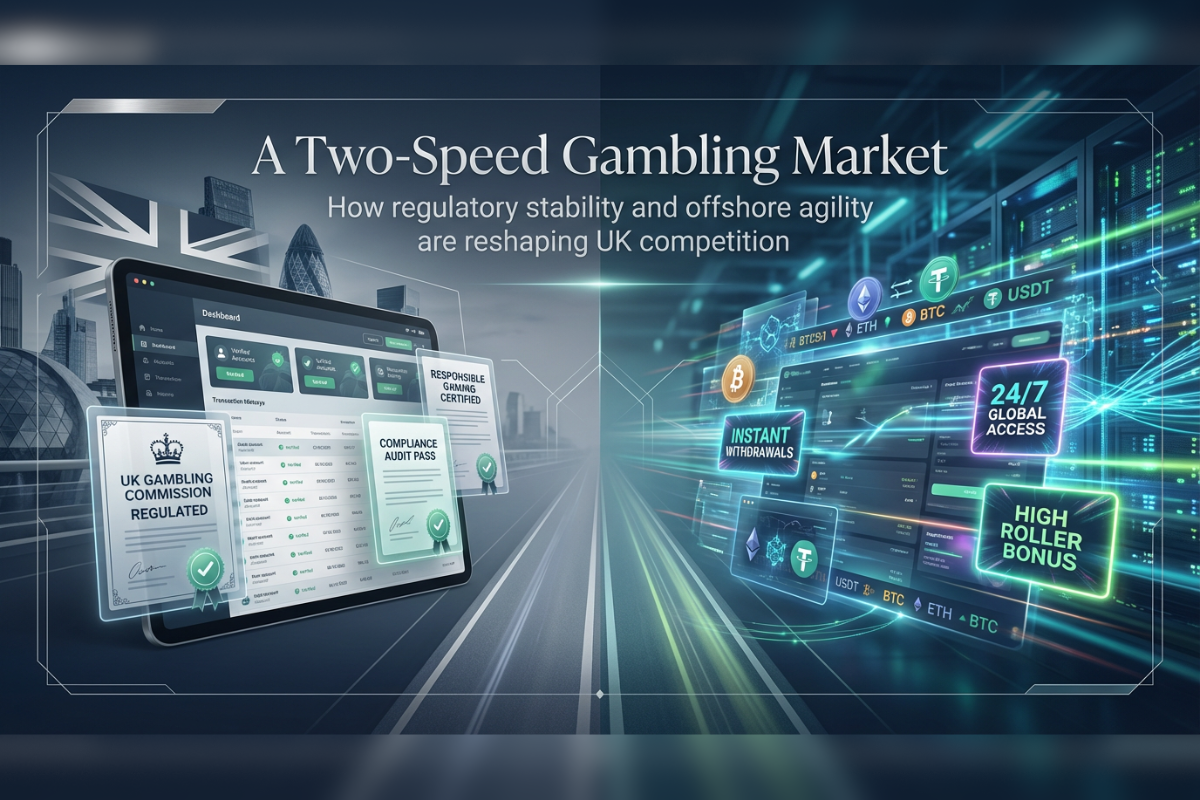
A Two-Speed Gambling Market: Regulated Stability vs Offshore Agility
It was for a long time that the UK gambling market basically operated as one unit. Within a single regulatory system, licensed operators competed, they were similarly taxed, advertising rules were the same and the supervisory body was the same one. Everything was planned, orderly and centrally controlled. Such unity is becoming less of a feature of the current landscape.
In fact, what we gradually see is not a shrinking but a splitting. On one hand, there is the mainstream that is heavily regulated and compliance intensive. On the other hand, there is an offshore, less regulated, agile, and faster-moving sector that is circumventing the formal licensing boundaries and continues to focus on UK consumers. Both sides exist simultaneously but under very different sets of conditions.
One can visually see this outcome as an ecosystem working at two different speeds.
The Regulated Core: Stability Through Oversight
The mainstay of the gambling industry of the UK is still the licensed operators that are regulated and supervised by the UK Gambling Commission. The regulatory environment is characterized by affordability checks, marketing limitations, higher safety standards and increased reporting requirements. Through these measures, consumers are provided with channels for formal complaints, transparent dispute settlement and well-known brands they can trust.
People always appreciate stability. Institutional investors like clear policies. Payment companies prefer working with licensed businesses. Even if there are advertising constraints, at least everyone knows what the rules are.
However, at the same time, such stability has its limits. Compliance departments grow bigger. Legal consultations make new product rollouts slower. Marketing becomes more cautious. Operational agility narrows.
Rules and regulations serve a very useful purpose of providing order, but they also create barriers.
The Offshore Periphery: Speed and Flexibility
Apart from the regulated core, a separate segment exists which is known for its greater agility. British gambling enthusiasts are the main target of offshore operators who frequently run faster registration processes, provide less regulated promotional offers and give more room for product experimentation. Many even allow customers to open GBP accounts. They have attractive English-language user interfaces and customer support service seems very professional. The main difference is the level of oversight.
Without being subject to the same affordability restrictions or advertising regulations, offshore operators have the advantage of quickly changing bonuses, trying new pricing models, and adding new features without having to go through long approval cycles. At the same time, the use of cryptocurrencies reduces the dependency on traditional banking methods.
They do not have to be big in order to justify doing business at a higher pace. Being quick and nimble thus becomes a weapon in the fight for customers.
Diverging Cost Structures
Compliance as Competitive Variable
UK-licensed gambling products are no longer able to use compliance as a cost advantage to the extent that these operators have understood this. There is an increasing demand for submissions to regulators. Taxation has increased. Investments in technology that promotes safer gambling are being extended. All these costs are then incorporated into the product prices and marketing budgets.
On the other hand, offshore platforms have a much lower level of operational costs as well as other fixed costs such as rents, remodelling heritage properties, and building facilities in luxury resort communities. In other words, they are fundamentally and structurally different. Customer due diligence might still be present but probably is less strict.
As a result, the two play differently with their margins, the bonuses they give to their players, and the contents of their payment structures.
Even if the two operators are catering to the same consumer, they are both under completely different financial constraints.
Product and UX Flexibility
In addition to costs, flexibility is also important. A regulated operator that wants to adjust a single campaign needs to be aware of whether their changes will break the rules. In contrast, offshore competitors have the ability to quickly release new versions. The terms of their wagers might be different the morning after the changes and their cashback programs may be different from week to week.
What it practically means is that outside the regulated environment, the user experience can feel more dynamic. It is this dynamism that appeals most to certain segments of players, especially those who prefer immediacy over scrutiny. The regulator simply cannot keep up with agility.
The Gambling Data Divide: Transparency vs Opacity
Regulated gambling markets have no qualms about publishing their performance data. They even tend to produce their revenue reports, tax payments, and rolling monthly betting statistics for all and sundry to see. A case in point is when the Arizona Department of Gaming releases December sports betting figures. This is a testament to how such transparent reporting works within licensed frameworks.
The availability of data naturally ensures that those who have the responsibility of taking action are held accountable for it.
However, offshore business is almost completely hidden from the view of the public. Details of revenue are basically guessed through estimation using modeling techniques. Traffic patterns become the surrogate for filing reports. Market share is just a matter of inference rather than declaration.
This difference makes it harder to measure things accurately. While channelisation may be very high in the official statistics, the leakages at the margins become almost impossible to measure precisely.
Lack of transparency by itself does not necessarily mean dominance, quite simply it means uncertainty.
Is Segmentation Becoming Structural in Online Igaming?
A market split rarely happens overnight. It is the slow and incremental result of the influence of incentives. Where there is an increase in the friction of compliance in a licensed environment, some player segments that are most affected by such friction start to look for ways around it. Not everyone. Only a few.
Mainstream individuals — casual bettors, people who are risk-averse, and those who appreciate brand trust — are the majority and they stay inside the regulated systems. On the contrary, the offshore market attracts high-frequency players, bonus-sensitive segments, and those who are comfortable with alternative payment methods. So instead of the market disintegrating completely, it just becomes segmented.
Most UK bettors will stay with licensed brands because they trust them and the payments just work. The leakage tends to come from a narrower crowd – high-frequency players, bonus hunters, and people already showing riskier patterns, because they’re the ones most sensitive to extra steps, limits, and reduced offers. Maybe it is 5% today, but it matters because it’s the part of the market where harm (and spend) can concentrate fastest, says Martin Eriksen, BritishGambler.co.uk, an online igaming affiliate.
Such segmentation transforms the industry’s game to the extent that regulated operators are competing intensely with one another in efforts to attract the compliant mainstream audience while at the same time offshore brands have been successful in attracting small but potentially very valuable niche segments. Two speeds. One consumer base.
Competitive Pressure and Innovation Drift
Flexibility is being rewarded with more innovation. If regulated frameworks become too slow for product experimentation, a creative drive may be manifested in a different place. Lighter oversight becomes the space where new gaming formats, aggressive reward schemes, and payment integration are first introduced.
As a consequence, there can be a difference in the way the two brands are perceived. The regulated ones are seen as safe and reliable. The non-regulated ones are recognized for their promotion and speed.
These two can be regarded as disconnected parallel worlds. Most of the time, they are unaware of each other, but their co-existence is marked by disagreement and competition for users.
Why the UK Still Holds the Core
On the other hand, the regulated sector has significant assets and a solid track record that it can leverage as a weapon. The power of the brand is still very much intact. The trust of consumers in the licensed operators is relatively high. The payment providers and advertising channels continue to be on the side of the regulated operators.
Enforcement actions taken against unlicensed operators are evidence of the regulator’s capacity. Cooperation with Internet Service Providers (ISPs) and payment intermediaries provide additional resources.
The regulated sector is strong and has a core that is not easily destabilized. Its strength lies in its structure.
Nonetheless, being structurally sound is only a necessary condition, not a sufficient one for a sector to dominate a market. The sector must rely on the structure as its competitive edge.
Long-Term Risks of a Two-Speed System
There are more risks involved in a divided market than those arising from revenue shifts alone. Tax leakage becomes harder to track. Influence of regulators over the operating segments existing outside of the formal oversight decays. Within licensed tiers, competitive pressure might lessen if offshore options are able to siphon the high price-elasticity players away.
Meanwhile, licensed operators are completely burdened with the costs of compliance and yet they are still forced to compete with entities that operate with fewer restrictions.
Parallel systems have brought about major imbalances.
Most importantly, imbalances, as they ripple through time, eventually become the major reshapers of the incentive landscape.
Stability Versus Speed
Consumers in regulated markets are inherently desirous of stability as evidenced by their protective frameworks. If consumers know what to expect financially, they have fewer worries. Compliance clarity is a good thing for financial institutions. Public perception looks favorably upon regulated areas.
Still, speed is something that a lot of people find attractive. Opening accounts doesn’t take long. Ads are more lively. There’s less hassle with paperwork. Those who are used to communicating and conducting transactions in the digital age want to be catered to immediately.
Generally, the UK’s dilemma is that of the precarious balance between these two forces. Too much friction and you run the risk of breaking the market into segmented pieces at high speed, and too little oversight will give rise to abuses.
Thus, the adjustment of forces becomes the main subject of strategic consideration.
A Market in Transition
It’s not the UK gambling industry that is breaking up into scattered fragments. It continues to be predominantly regulated, centralized, and monitored. That being said, there is a clear sign of structural divergence.
Locally licensed businesses proceed with caution while their offshore rivals are in a hurry. Consumers however are sandwiched between two forces and they are the ones who have to figure out their way.
Eventually, this gap will continue to expand if the incentives of the economy go each on their own way. One tier is characterized by stability. The other by agility.
If durability is identified with regulation and flexibility is a trait of offshore, equilibrium in the long run will depend upon adaptability of the core that has been licensed.
Generally, markets are not known to operate at a single speed for an indefinite time.
The post Is the UK Drifting Toward a Two-Speed Gambling Market appeared first on Americas iGaming & Sports Betting News.













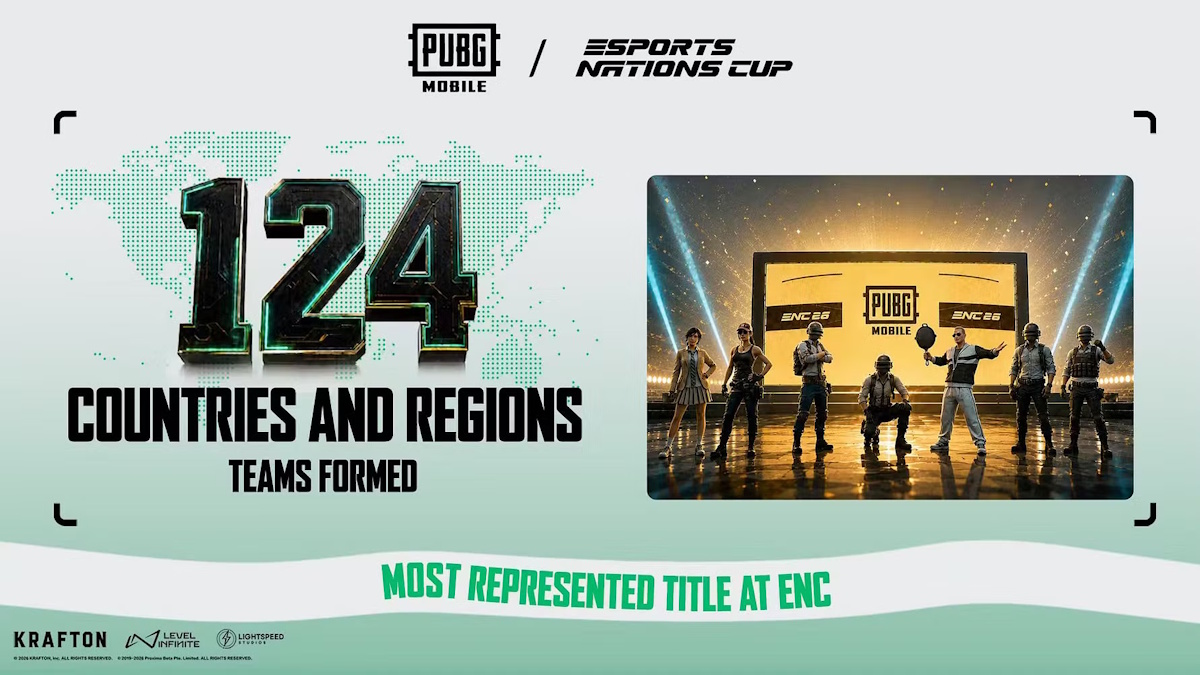
124 countries and territories registered for selection; the 32nd “Solidarity” Wildcard slot is still to be confirmed.
PUBG MOBILE has confirmed 31 of the 32 national teams for PUBG MOBILE at the Esports Nations Cup 2026, scheduled for November 3-8 in Riyadh. The publisher said 124 countries and territories registered and submitted official rosters for the selection process. The event will play for a $1.32 million USD prize pool.
The confirmed lineup includes 14 teams advancing from nine regional qualifiers: Indonesia, Cambodia, Hong Kong, Kyrgyzstan, Uzbekistan, Jordan, KSA, France, Italy, Mexico, Colombia, Chile, Mauritania and Madagascar.
A further 12 teams are invited via ENC Rankings: Türkiye, Mongolia, Brazil, Pakistan, Myanmar, Vietnam, Thailand, Nepal, South Africa, United States, Ukraine and Argentina. Four Special Invite teams—China, South Korea, India and Japan—also join the Group Stage.
Two Wildcard slots are listed: Kuwait as the Host Region representative, and one “TBD (Solidarity)” team still to be confirmed. From November 3, teams will be split into four groups of eight for a round-robin Group Stage, with the top four from each group advancing to the Grand Finals.
The Esports Nations Cup was announced in August 2025 as a multi-title national-team competition, with future international iterations planned, according to the company. PUBG MOBILE also claimed it is the “#1 game title at the Esports Nations Cup in terms of participating countries and territories,” citing the 124 registered countries and territories for its selection process.
The post PUBG MOBILE confirms 31 teams for Esports Nations Cup 2026 in Riyadh appeared first on EE Gaming | Global iGaming & Tech Intelligence Hub.
Tonybet says a player in Laurier-Station, Canada has claimed the “golden card” prize worth $20,000 CAD in the operator’s World Cup Card Collection. The announcement was made Tuesday 21st July 2026.
The World Cup collection featured 51 cards in total, including 48 digital cards representing participating World Cup nations, plus three unique prize cards in bronze, silver and gold. Tonybet said the bronze card—available during the group stage—was previously found by a customer in Saint-Colomban, Canada, while the silver card—available during the knockout rounds up to the quarter-finals—was won by a player in County Kildare, Ireland.
The golden card became available for the semi-final, third-place play-off and final, and has now been claimed, Tonybet said.
Tonybet Head of Product Kiryl Liudvikevich said: “You can plan a campaign down to the last detail, but you can’t plan what the World Cup brings.
“We designed the collection to evolve with the tournament, and every knockout round created new stories we couldn’t have predicted. Seeing players complete their collections and discovering who would uncover each prize was the most rewarding part of the campaign.
“I hope everyone enjoyed the experience for what it was meant to be: a fun addition to the tournament, played responsibly and always within their limits.”
Tonybet said the collection will remain open until 31 July for players who are still completing sets and spending coins, although all grand prizes have been awarded.
The post Tonybet player in Canada claims $20,000 CAD golden World Cup card prize appeared first on EE Gaming | Global iGaming & Tech Intelligence Hub.
Tonybet says a player in Laurier-Station, Canada has claimed the “golden card” prize worth $20,000 CAD in the operator’s World Cup Card Collection. The announcement was made Tuesday 21st July 2026.
The World Cup collection featured 51 cards in total, including 48 digital cards representing participating World Cup nations, plus three unique prize cards in bronze, silver and gold. Tonybet said the bronze card—available during the group stage—was previously found by a customer in Saint-Colomban, Canada, while the silver card—available during the knockout rounds up to the quarter-finals—was won by a player in County Kildare, Ireland.
The golden card became available for the semi-final, third-place play-off and final, and has now been claimed, Tonybet said.
Tonybet Head of Product Kiryl Liudvikevich said: “You can plan a campaign down to the last detail, but you can’t plan what the World Cup brings.
“We designed the collection to evolve with the tournament, and every knockout round created new stories we couldn’t have predicted. Seeing players complete their collections and discovering who would uncover each prize was the most rewarding part of the campaign.
“I hope everyone enjoyed the experience for what it was meant to be: a fun addition to the tournament, played responsibly and always within their limits.”
Tonybet said the collection will remain open until 31 July for players who are still completing sets and spending coins, although all grand prizes have been awarded.
The post Tonybet player in Canada claims $20,000 CAD golden World Cup card prize appeared first on Americas iGaming & Sports Betting News.

-

 ESPN Networks4 days ago
THE 57th ANNUAL WORLD SERIES OF POKER® CONCLUDES AN EXTRAORDINARY SUMMER OF GLOBAL ENGAGEMENT AND ELITE COMPETITION
-
Latest News5 days ago
Booming Games launches Tasty Bonanza Max Scatter slot
-
Latest News6 days ago
SCCG Management Launches Dedicated SCCG Brazil Division with Local Partner Thomas Carvalhaes
-
Latest News6 days ago
Esportes Gaming Brasil takes two ClienteSA Awards 2026 wins; exec named Personality of the Year
-
Canada5 days ago
Peter & Sons launches full game portfolio in Alberta
-
Canada4 days ago
PENN Entertainment Launches theScore Bet Sportsbook & Casino and theScore Casino and Hollywood Casino Standalone Apps in Alberta
-
Latest News6 days ago
QTech signs EXCO Game Studio slots for emerging markets
-
Compliance Updates6 days ago
Merkur Group Strengthens Global Compliance Strategy