Fujitsu
Fujitsu launches ‘Fujitsu Accelerator Program for SPORTS’ to create new value through Sports x Technology


Reading Time: 3 minutes
Fujitsu today announced the launch of “Fujitsu Accelerator Program for SPORTS,” a global partner co-creation program aimed at fostering new innovation in the sports sector.
Through Fujitsu Accelerator, Fujitsu collaborates with startups and other companies to create new businesses and solve challenges by leveraging cutting-edge technologies such as AI and quantum computing. This new program seeks to expand the value and monetization potential of corporate sports. It will achieve this by combining the strengths of Fujitsu’s sports teams and athletes—including its American football, women’s basketball, and track and field teams—and facilities, with the innovative technologies and ideas of partner companies. Through co-creation, the program aims to generate new value in sports and related fields such as entertainment, tourism, and merchandise and build a corporate sports ecosystem.
Fujitsu will begin recruiting new partners who want to engage in new business creation from December 1. Selected companies will be determined after a pitch event scheduled for February 2026. Proof of Concept (PoC) initiatives are planned to commence from fiscal year 2026.
Through various collaborations facilitated by this program, Fujitsu will continue to promote “improving people’s well-being,” one of the indispensable contribution areas of its materiality. In addition to promoting sports through its long-standing support for various teams and athletes, Fujitsu will further accelerate collaboration with local communities and encourage employee engagement.
Application Themes
1. Athlete and Team Enhancement
- Measures to improve athlete performance and results (e.g., training support, mental health support, etc.)
- Data analysis and collection for team sports
2. Well-Being
- Health promotion initiatives targeting a wide range of people, from athletes to general participants and local residents
- Efforts to improve exercise habits and encouragement to start an exercise regimen
3. Fan Engagement Enhancement
- Measures to enhance the appeal of corporate sports teams and athletes, and to attract fans
- Merchandise sales utilizing team IP, improved viewing experiences, and digital fan-participation projects
4. Regional Revitalization
- Revitalization of areas around home arenas and grounds. Business planning in collaboration with local communities (local governments, educational institutions, shopping districts, etc.)
- Tourism planning, especially initiatives linked to the Kawasaki area
5. Social Inclusion
- Access to sports for all demographics (para-sports, adaptive sports), sports experiences for elementary and junior high school students, and club activity support
6. Operations and Business Foundation
- Sports management platforms, corporate sports revenue models, event management, sponsor visibility, DX planning for venues, and athlete second career support
Fujitsu’s Sports Teams
Fujitsu manages many sports teams including its American football team “Fujitsu Frontiers,” the women’s basketball team “Fujitsu Red Wave,” and the track and field team. These teams have produced top athletes who aim for national and world championships. Athletes work as full-time employees of Fujitsu while engaging in their athletic activities, embodying the company’s values and social mission through sports.
1. Fujitsu Frontiers (American Football Team):
Eight-time X-League champions, aiming for an unprecedented ninth title.
2. Fujitsu Red Wave (Women’s Basketball Team):
Achieved their second W-League championship in 16 years in 2023. A top team that values player autonomy.
3. Track and Field Team:
A top-level team that has produced world, Asian, and Japanese record holders. Athletes excel in a wide range of events, including race walking, marathon, and sprints.
4. Other Sports Teams:
In addition to the above, Fujitsu also has various other sports teams, including in women’s cheerleading, men’s basketball and volleyball, 9-man volleyball, swimming, horseback riding, and golf.
Upcoming Schedule (Tentative):
- February 6, 2026: Application deadline
- February 26, 2026: Pitch event
- March 2026: Selection of adopted companies
- April 2026: Start of PoCs
Companies selected to participate in this program will be provided with opportunities to interview and survey athletes and staff belonging to Fujitsu’s sports teams. Fujitsu will offer its training facilities for the PoCs, support the development of use cases, and promote and sell co-created services through the Fujitsu Group.
Fujitsu’s Commitment to the Sustainable Development Goals (SDGs)
The Sustainable Development Goals (SDGs) adopted by the United Nations in 2015 represent a set of common goals to be achieved worldwide by 2030.
Fujitsu’s purpose – “to make the world more sustainable by building trust in society through innovation” – is a promise to contribute to the vision of a better future empowered by the SDGs.
The post Fujitsu launches ‘Fujitsu Accelerator Program for SPORTS’ to create new value through Sports x Technology appeared first on European Gaming Industry News.





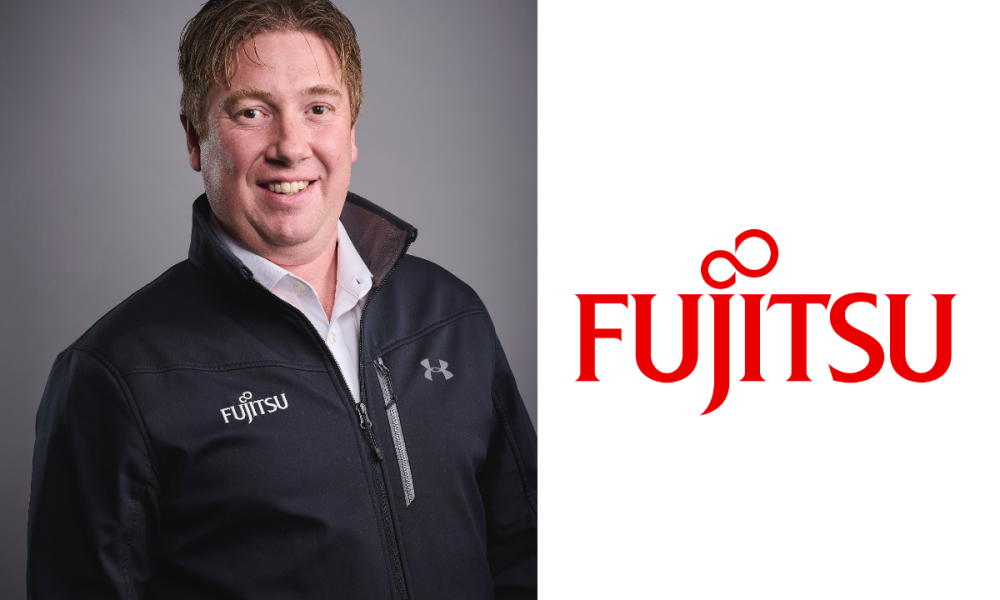
Nik McDonald, Senior Account Director at Fujitsu, says absolutely not but that it does come with some risks and drawbacks that organisations should be aware of.
What makes AI such a hot topic across the industry right now?
Operators and suppliers have come to understand that artificial intelligence can have a seismic impact on their businesses, whether that be streamlining internal processes or improving the solutions, tools, services and experiences they provide to their customers. But as the understanding of AI has deepened, so too has the awareness that the impact AI has can be both positive and negative. This has ultimately left some organisations nervous and unsure how to approach it, let alone integrate it into their workflows, services and products. And this is why it’s become a hot topic, with stakeholders across the sector keen to learn more about it.
Is there a certain type of AI that’s best suited to this industry? If so, what makes this type of AI such a good fit?
There are several types of AI including Narrow AI, General AI, Super AI, Reactive Machines, Limited Memory, Theory of Mind and Self Aware. The category most are interested in is Narrow AI and in particular, Generative AI – this is AI that can create new data including texts, images and videos by learning the structure and patterns of its training data to generate new ideas with similar characteristics. It can be trained to understand human language, programming language, art, chemistry, biology, law and countless other complex subjects and is often powered by Large AI models, often referred to as foundation models. This means Generative AI can perform a wide range of tasks including summarisation, classification and answering queries. This scope is what makes it ideally suited to businesses in this industry, regardless of whether they have a B2B or B2C focus.
Can you give a real-world example of Generative AI?
ChatGPT is the most famous example. It’s essentially a chatbot that runs on the foundation of large language models, trained on vast amounts of data to produce texts that humans understand. Users ask a question and ChatGPT breaks down the query into smaller components to analyse their meaning and determine what the user is really asking it to do. It then returns the words and sentences it thinks best answer the query based on the data it’s been trained on. It’s pretty cool, but it does have some drawbacks and risks to be aware of.
Could you explain some of these drawbacks and risks?
The accuracy of results is a big concern, as is inconsistent outputs, bias, lack of explainability and even threats to privacy, security and intellectual property. People often forget that ChatGPT is a public service and that as well as sharing information, it consumes it. This means users must approach with caution if using it in the workplace or to ask questions about proprietary and sensitive information and data. Users also need to cross-check the answers that are provided to their queries given the inaccuracies and biases it can have.
Does this mean Generative AI should be feared?
Not at all. Organisations should embrace the power of Generative AI and the clear benefits it can bring to their operations. We are already seeing companies use it, whether that be a slot studio harnessing its creativity to come up with new game concepts, designs, animations and even mechanics, to compliance platforms that use it to spot patterns in player behaviour. This sector has always been at the cutting edge, and I would include operators and suppliers to push the boundaries of AI but just to be mindful of some of the risks it presents.
How has Fujitsu approached Generative AI?
We have been busy developing a chatbot that’s similar to ChatGPT but that organisations can use with confidence. Instead of using publicly available data, it sits on top of the company’s data warehouse and allows teams and employees to ask questions and queries and have answers generated based on the proprietary data the foundation models have been fed on. Data can be siloed within the warehouse and with different levels of permission granted to different employees and teams. With our PrivateGPT, companies can really benefit from the power of Generative AI but with confidence that data is safe, secure and private, that responses are accurate and unbiased, and that the right level of permission is granted to individual employees.
Can you give an example of how organisations can use your PrivateGPT?
Our PrivateGPT has lots of use cases including being able to ask any question, chat with company data, find new answers and insights, foster deeper collaboration, jointly generate insight and evaluate results and develop decision support systems. Specifically, it might be a legal and compliance team wanting to ask a question about a previous market entry and a specific legal requirement, or it might even be to offer a consumer-facing tool where bettors can see how a team or player had performed across historic bet outcomes. This is what makes Generative AI so exciting and why it will continue to be a hot topic for some time to come.
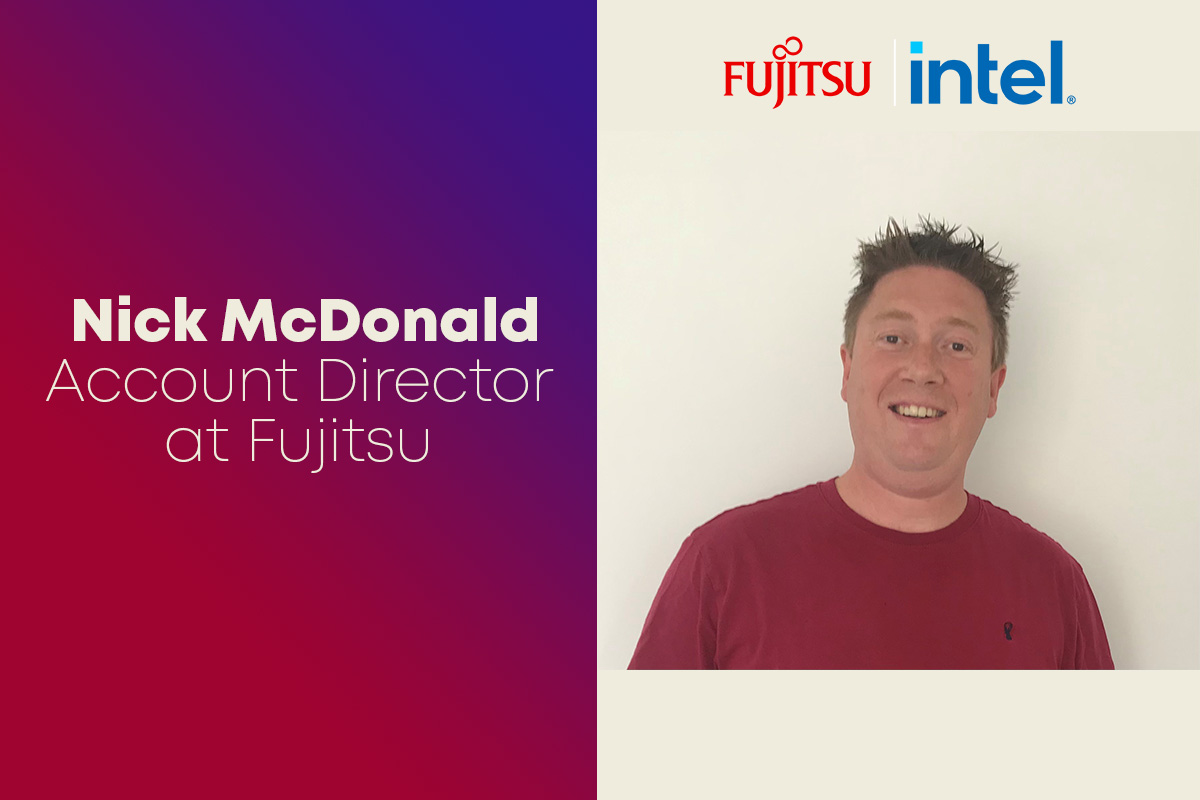
Fujitsu is on a mission to help companies in the iGaming industry rethink their approach to IT infrastructure. The company has worked in the industry for over seven years, helping companies make the move to hybrid cloud work environments. We sat down with accounts director Nick McDonald to look at Fujitsu’s two leading hybrid cloud solutions, PRIMEFLEX and uSCALE.
Can you introduce Fujitsu’s PRIMEFLEX and uSCALE products?
Our mission at Fujitsu is to change how companies in the iGaming space approach their cloud architecture, and we believe PRIMEFLEX and uSCALE are how we are going to achieve this.
PRIMEFLEX provides companies with an integrated hybrid cloud solution that enables them to maintain an on-site IT presence while also utilising public and private clouds.
This is complemented perfectly by uSCALE, a scalable solution that uses an as-a-service model to allow companies to adjust their costs depending on usage. It provides all of the hardware, software, and services needed on a monthly subscription model. This gives businesses full control over their IT infrastructure and data storage, allowing them to upscale and downscale according to their needs.
What are the benefits for a company switching to a hybrid-cloud environment?
There are a lot of benefits for iGaming companies that decide to switch to a hybrid cloud environment. Not only is it a more sustainable approach, but it also provides them with flexibility, agility, and resilience, all of which are qualities that are essential to success in the current iGaming landscape.
Crucially, a hybrid cloud infrastructure can also improve a company’s bottom line. Products like uSCALE ensure that businesses never spend any more money than they need to on their IT infrastructure, allowing them to invest wisely elsewhere.
How does Fujitsu help iGaming companies transition to a hybrid-cloud infrastructure?
The idea of transitioning to a new IT infrastructure can be daunting, but Fujitsu is there to help every step of the way. We provide standardized implementation and infrastructure support services ensuring smooth infrastructure deployment.
We also help our clients with technical solution support with a single point of contact. This provides instant access to any help and infrastructure support that might be needed. Our aim is to make sure companies feel comfortable using our products and that they can take full advantage of everything they offer.
To get started, we also provide clients access to the uSCALE Price Estimator. This will help give companies an idea of how much they will be spending and, ultimately, saving by switching to uSCALE.
What kind of flexibility does the uSCALE product provide?
uSCALE is a fully flexible consumption-based solution that ensures companies only pay for what they use. The as-a-service model has proven to be a huge hit with our iGaming clients, allowing them to scale according to their needs. It ensures companies are not spending a huge amount on resources that they do not need and do not match their business model and ambition.
Sustainability is a key target for Fujitsu; how can your products help a company achieve its own sustainability and ESG targets?
We have placed sustainbility at the centre of everything we do, and we want to work with companies that share similar goals. We work closely with an ecosystem of partners, including Intel, to help companies find long-term, sustainable solutions to their IT and data problems. We’re looking for long-term solutions to these issues, and we believe switching to a hybrid cloud environment is essential for that.
PRIMEFLEX and uSCALE can both help companies achieve their ESG and sustainability goals. With PRIMEFLEX, uSCALE allows companies to use their resources more efficiently, preventing unnecessary losses and waste. With the monthly subscription model provided, companies do not need to make large, long-term investments in IT equipment every few years, they just pay for what they use.
Can you tell us more about how Fujitsu supports companies as they look to expand into regulated markets?
The iGaming industry is expanding at a rapid rate, and one of the biggest goals for most companies is to enter more regulated markets. Having a hybrid cloud infrastructure and a scalable model like uSCALE can provide companies with the flexibility they need to adjust to new regulations and explore new markets. Remaining agile and being able to adapt as and when you need to is essential in such a competitive industry, and having a hybrid cloud solution can provide that agility.
Data compliance, for example, is hugely importance when going into newly regulated markets, so having a flexible system that can allow you to scale as and when needed can be crucial. Fujitsu has years of experience in the iGaming industry and has worked with clients from all over the world, giving us an insight into what companies need to do to comply with different market regulations.
Abacus Solutions International Group is pleased to announce a new integration partnership with Fujitsu Frontech North America Inc. providing its Lottery Everywhere service to Fujitsu U-SCAN self-service retail customers.
The Abacus Lottery Service (based on the Abacus Fusion Platform) brings retailers, lottery, and gaming vendors together, ensuring lottery can be played as seamlessly across all channels of a retailer’s point of sale solution. It removes retailers’ need to create cumbersome integrations to gaming providers on dedicated terminals, and it simplifies the entire deployment and engagement process. The Abacus Lottery App will become available as an addition to the Fujitsu U-SCAN suite of products, allowing retailers to offer lottery sales at any self-checkout, increasing basket size and revenue.
Self-service checkout is now a consumer expectation in most retail environments. With U-SCAN hardware and software, Fujitsu has played a leading role in the evolution and innovation of Self-Checkout for more than 20 years. As part of Fujitsu’s S3 Self-Service Simplified suite of retail hardware and software technology, U-SCAN is a modern and flexible software platform that operates on both Fujitsu and third-party Self-Checkout environments. U-SCAN’s functionality allows retailers to deliver improvements in performance, supportability, and operational efficiency to the self-service channel.
“The partnership with Fujitsu and their U-SCAN software allows us to offer retailers the Abacus managed lottery services in a simple and effective way, cutting significant effort and time for retailers and allowing them to realize increased sales and a broader, more integrated way of selling lottery to their customers,” said Simon Butler, Abacus CEO.
“Fujitsu Frontech North America continues to lead the digital transformation of retail technology by offering our customers simplified self-service options designed to be used in any store environment. Through our partnership with Abacus, we are excited to be able to offer our retail customers a quick and simple way to introduce lottery, everywhere. This powerful tool will provide retail customers with the self-service options they want, while helping retailers increase revenue,” said Shuhei Oyake, President and CEO of Fujitsu Frontech North America.
Powered by WPeMatico

-

 Africa4 days ago
Virgin Bet goes live in South Africa
-
bingo3 days ago
-
Charity Space Scotland4 days ago
Scottish Government Announces £7.9M Investment to Tackle Gambling Harms
-
ELA Games4 days ago
2026 SiGMA Americas Awards Features ELA Games in Two Major Categories
-
BetMGM4 days ago
PA Gaming Control Board Imposes $100,000 Fine on BetMGM
-
apuestas4 days ago
Brasil 2026: Bets presionan el presupuesto de los hogares y redefinen la competencia por el consumo
-
Betnacional4 days ago
Brazil: Betting pressures household budgets and reshapes the competition for consumer spending
-
Compliance Updates4 days ago
Peter Knutsson Becomes New Director General of Swedish Gambling Authority