AI
AI isn’t replacing creativity in gaming – it is democratising it


Reading Time: 3 minutes
Tom Smallwood, Chief Commercial Officer at OpenSlots
The growth of AI in the industry is a talking point you cannot ignore. From sceptics to those convinced it will have a big role to play, AI dominates discourse. However, it is widely accepted that it will play a significant role in product development. In our industry, the biggest misconception is that AI will replace creativity in game development. In my experience, it has the power to do the exact opposite. I’ve watched countless studios struggle with the same challenge of transforming creative vision into market-ready slot games without requiring a six-figure budget a six-month timeline only to fail to achieve distribution. Yet that’s exactly what the traditional route to market looks like now.
AI is removing the technical barriers that risk keeping creative minds locked out of our industry. At OpenSlots, we’re beginning to see firsthand how AI can help turn a game creator’s ‘napkin sketch’ into a playable prototype in a fraction of the time.
The hidden costs of traditional slot development
The harsh reality facing game creators today is staggering. Developing and distributing even a basic slot requires substantial budgets and months of specialised expertise. Factor in regulatory compliance, RNG certification, and multi-platform optimisation, and smaller studios face insurmountable barriers.
These costs aren’t just financial, they affect the creative output too. When a single game requires months of mathematical modelling, extensive asset creation, development and technical integration it is inevitable that innovation stagnates. Game developers tend to play it safe, but even then, they risk not getting any ‘airtime’ in the face of the overwhelming quantity of games released by larger studios. The result is a market flooded with similar games, from the same providers, while innovative ideas never see daylight.
The OpenSlots approach
At OpenSlots, we are building a platform aimed at non-technical professions in which every element of the development process is optimised. Our AI-powered system lets operators and game designers create professional slot games through an agentic interface and AI-powered game creation workflows all on a tried and trusted RGS. You describe your vision, say, a high-volatility Norse mythology theme with cascading reels, and OpenSlots, backed by human expertise, handles everything from the creation of your game design document to the game build itself. We even have an WYSIWYG editor prior to publishing.
Real democratisation means accessible innovation
True democratisation isn’t just about making existing processes slightly easier, it is about changing who can participate. When we enable game creators to describe their vision in natural language and watch AI generate playable prototypes, we’re not replacing human creativity, we’re amplifying it. The most successful implementations don’t replace human expertise, they eliminate tedious and costly tasks that prevent creative professionals from focusing on innovation. This is as true for an operator as a studio. We do not see AI as a magic wand, to make everything easy, especially in a highly regulated industry. However, it is an enabler that can create a certain originality and independence for B2Cs and a voice to smaller game design studios.
Why this matters now
The timing for this transformation couldn’t be more critical. The slots market generates over half of total casino revenue, with operators facing pressure to deliver personalised, engaging content at speed. As mobile gaming dominates consumer spending and competition grows, the traditional development model can’t keep pace with market demands.
This creates an opportunity for platforms that can democratise game creation while maintaining quality and compliance. The industry needs solutions that allow rapid iteration and testing, branded content creation, and market-specific customisation, all without the costs that have historically limited who can participate in game development.
Building the future of game creation
The winners in this transformation won’t be the companies with the most advanced AI algorithms. They will be the ones who best understand how to apply AI practically to real challenges.
The future belongs to platforms that combine industry knowledge with cutting-edge AI capabilities. It’s not about auto-generating second rate game assets, just to for the sake of speed and cost, but leveraging the power of AI to amplify human expertise and give the chance for innovation. In many ways we are giving people the chance to make mistakes. And that, of course, is how we grow.
The question isn’t whether AI will transform gaming development. It’s whether we allow the broader ecosystem be part of that transformation or left behind by it.
The post AI isn’t replacing creativity in gaming – it is democratising it appeared first on European Gaming Industry News.








As player expectations rise, generic casino lobbies are no longer enough — AI-driven personalization is becoming essential to engage, retain, and grow audiences.
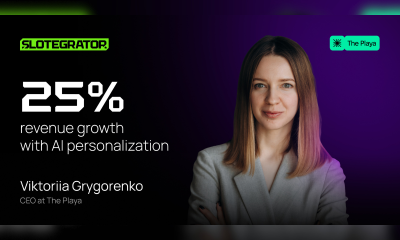
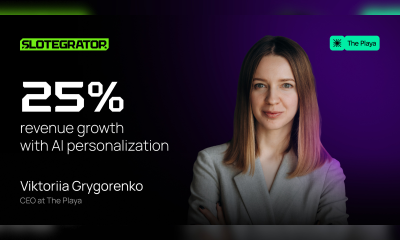
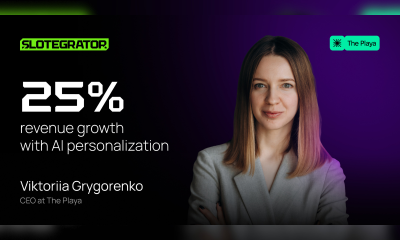
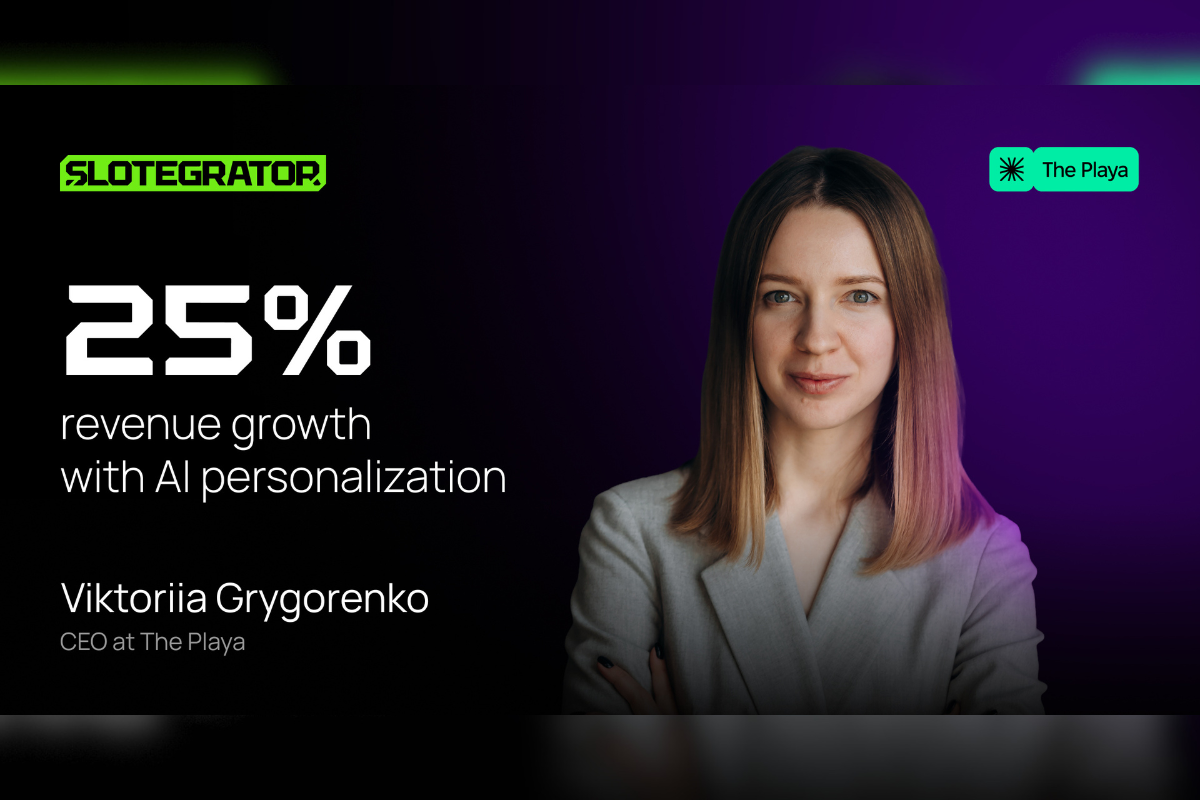
In this evolving landscape, The Playa is positioning itself at the forefront of iGaming personalization. Slotegrator spoke with Viktoriia Grygorenko, CEO, about the company’s journey, emerging industry trends, and how data-driven experiences can boost revenue by up to 25%, and often beyond.
Founded at the intersection of artificial intelligence and iGaming, The Playa started as a small experimental project and quickly grew into a full-scale platform. Today, the company delivers solutions across the entire player lifecycle — from lobby personalization and acquisition intelligence to VIP insights and retention optimization — serving operators with a monthly GGR of over $10 million.
According to Viktoriia, the industry has long underutilized one of its most valuable assets: player data. “iGaming generates enormous amounts of behavioral data — from game preferences to betting patterns — but most operators still rely on basic segmentation,” she explains. “That’s a missed opportunity.”
The gap is even more obvious compared to global entertainment platforms competing for audience attention. As Viktoriia points out, top companies invest billions in learning what their users want and delivering it instantly, while many online casinos offer identical experiences to all players. However, the industry is beginning to catch up.
Internal research by The Playa shows that 77% of iGaming companies leaders believe AI will be a key competitive advantage within the next two to three years. At the same time, major operators are rapidly expanding their data science capabilities — a clear signal of where the market is heading.
Beyond technology, player behavior itself is evolving. A new generation of users is entering the market, bringing different expectations around user experience. Behavioral data can reveal differences in preferences and risk patterns — opening the door to more effective personalization strategies.
Looking ahead to 2026, Viktoriia highlights three major trends shaping the industry: a stronger focus on retention, the rise of true one-to-one personalization, and a redefinition of loyalty. Retention, in particular, is becoming critical as rising acquisition costs and tighter regulations put pressure on margins.
Read the full interview to discover how The Playa is transforming player experiences with AI-driven personalization and why growth in iGaming depends on understanding players at every step of their journey.
Contact Slotegrator to learn how customized solutions can help grow your business.
Slotegrator
ABOUT THE COMPANY
Since 2012, Slotegrator has been one of the iGaming industry’s leading software and business solution providers for online casino and sportsbook operators.
The company’s main focus is software development and support for online casino platforms, as well as the integration of game content and payment systems.
The company works with licensed game developers and offers a vast portfolio of casino content: slots, live casino games, poker, virtual sports, table games, lotteries, casual games, and data feeds for betting.
Slotegrator also provides consulting services in gambling license acquisition and business incorporation.
ABOUT THE PLAYA
The Playa is a leading iGaming company specializing in AI-powered personalization solutions, enabling operators to deliver tailored player experiences across the full lifecycle — from lobby personalization and acquisition intelligence to VIP insights and retention optimization.
Through advanced behavioral profiling and personalized player recommendations, the company provides iGaming operators with the tools they need to grow, retain players, and maximize revenue.
The post The Playa for Slotegrator: why personalized player experiences are the future of growth appeared first on Eastern European Gaming | Global iGaming & Tech Intelligence Hub.

As player expectations rise, generic casino lobbies are no longer enough — AI-driven personalization is becoming essential to engage, retain, and grow audiences.
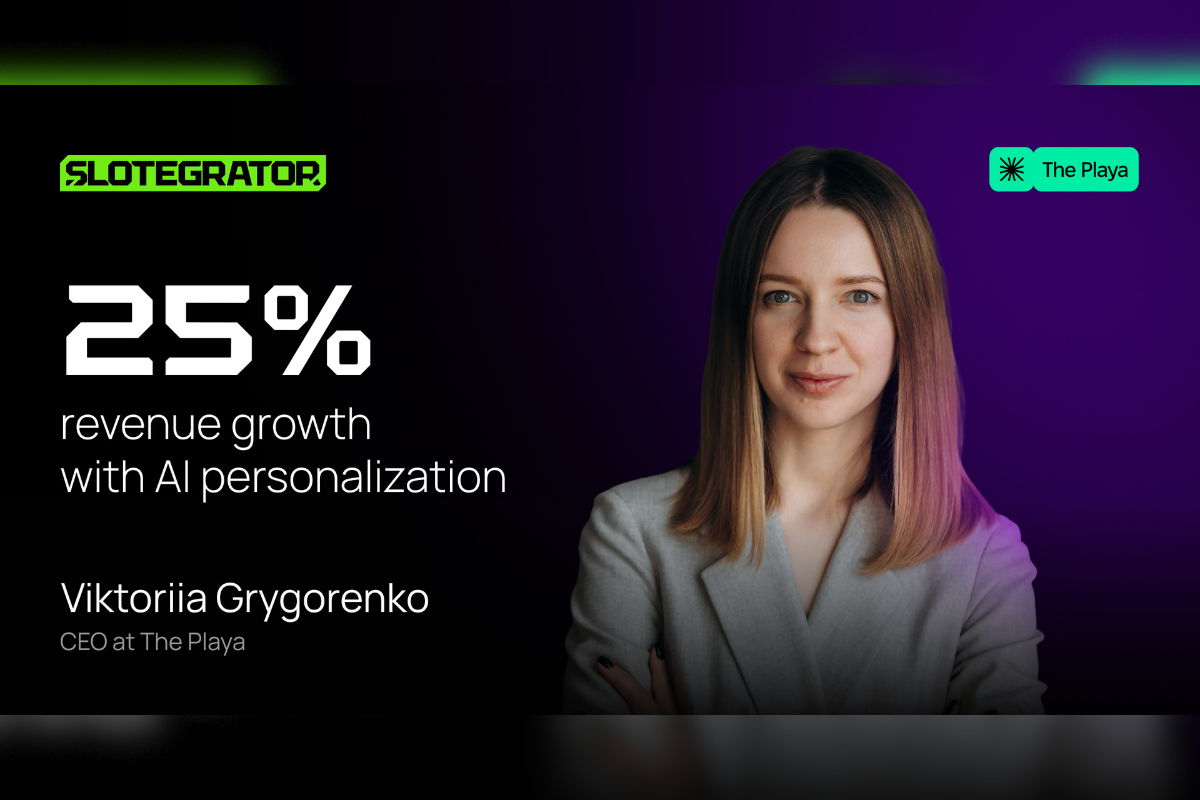
In this evolving landscape, The Playa is positioning itself at the forefront of iGaming personalization. Slotegrator spoke with Viktoriia Grygorenko, CEO, about the company’s journey, emerging industry trends, and how data-driven experiences can boost revenue by up to 25%, and often beyond.
Founded at the intersection of artificial intelligence and iGaming, The Playa started as a small experimental project and quickly grew into a full-scale platform. Today, the company delivers solutions across the entire player lifecycle — from lobby personalization and acquisition intelligence to VIP insights and retention optimization — serving operators with a monthly GGR of over $10 million.
According to Viktoriia, the industry has long underutilized one of its most valuable assets: player data. “iGaming generates enormous amounts of behavioral data — from game preferences to betting patterns — but most operators still rely on basic segmentation,” she explains. “That’s a missed opportunity.”
The gap is even more obvious compared to global entertainment platforms competing for audience attention. As Viktoriia points out, top companies invest billions in learning what their users want and delivering it instantly, while many online casinos offer identical experiences to all players. However, the industry is beginning to catch up.
Internal research by The Playa shows that 77% of iGaming companies leaders believe AI will be a key competitive advantage within the next two to three years. At the same time, major operators are rapidly expanding their data science capabilities — a clear signal of where the market is heading.
Beyond technology, player behavior itself is evolving. A new generation of users is entering the market, bringing different expectations around user experience. Behavioral data can reveal differences in preferences and risk patterns — opening the door to more effective personalization strategies.
Looking ahead to 2026, Viktoriia highlights three major trends shaping the industry: a stronger focus on retention, the rise of true one-to-one personalization, and a redefinition of loyalty. Retention, in particular, is becoming critical as rising acquisition costs and tighter regulations put pressure on margins.
Read the full interview to discover how The Playa is transforming player experiences with AI-driven personalization and why growth in iGaming depends on understanding players at every step of their journey.
Contact Slotegrator to learn how customized solutions can help grow your business.
Slotegrator
ABOUT THE COMPANY
Since 2012, Slotegrator has been one of the iGaming industry’s leading software and business solution providers for online casino and sportsbook operators.
The company’s main focus is software development and support for online casino platforms, as well as the integration of game content and payment systems.
The company works with licensed game developers and offers a vast portfolio of casino content: slots, live casino games, poker, virtual sports, table games, lotteries, casual games, and data feeds for betting.
Slotegrator also provides consulting services in gambling license acquisition and business incorporation.
ABOUT THE PLAYA
The Playa is a leading iGaming company specializing in AI-powered personalization solutions, enabling operators to deliver tailored player experiences across the full lifecycle — from lobby personalization and acquisition intelligence to VIP insights and retention optimization.
Through advanced behavioral profiling and personalized player recommendations, the company provides iGaming operators with the tools they need to grow, retain players, and maximize revenue.
The post The Playa for Slotegrator: why personalized player experiences are the future of growth appeared first on Americas iGaming & Sports Betting News.
Quick Custom Intelligence (QCI), a leading provider of AI-driven operations software for tribal gaming resorts, announced it will showcase its evolving QCI Agentic Platform at the Indian Gaming Association (IGA) Tradeshow & Convention, March 31–April 2, 2026, at the San Diego Convention Center (Booth #2735).
The QCI Agentic Platform reflects the continued advancement of the company’s enterprise system, enabling operators to move from real-time insight to real-time action across gaming, marketing, player development, and hotel operations. Designed for on-premise and hybrid environments, the platform supports secure, property-level AI deployment while maintaining full operational control.
Rather than introducing a new system, QCI’s approach extends the capabilities operators already use—bringing analysis and execution closer together within a unified operational environment.
“This is a continuation of the platform our customers already rely on. We’re building on what works and extending it, so operators can act on information faster, without changing the way their business runs,” said Dr. Ralph Thomas, Co-Founder and CEO of QCI.
The QCI Agentic Platform builds on QCI’s established product suite, including:
• AGI56.1, a major platform release featuring more than 1000 enhancements across operations
• Chatalytics, QCI’s conversational analytics interface for real-time data access
• QCI Dispatch, a new core operational tool supporting real-time coordination and execution
Together, these capabilities enable operators to unify data, streamline workflows, and respond more quickly to changing conditions across the property.
Attendees will experience how QCI connects data, decision-making, and execution within a single operational system.
“We’re focused on practical improvements that help teams do their jobs more effectively. This is about making systems more responsive, more connected, and easier to use in day-to-day operations,” added Thomas.
The post QCI to Showcase Agentic Platform Capabilities at IGA 2026 appeared first on Americas iGaming & Sports Betting News.

-

 bingo3 days ago
 -
Africa4 days ago
Virgin Bet goes live in South Africa
-
Charity Space Scotland4 days ago
Scottish Government Announces £7.9M Investment to Tackle Gambling Harms
-
ELA Games4 days ago
2026 SiGMA Americas Awards Features ELA Games in Two Major Categories
-
BetMGM4 days ago
PA Gaming Control Board Imposes $100,000 Fine on BetMGM
-
apuestas4 days ago
Brasil 2026: Bets presionan el presupuesto de los hogares y redefinen la competencia por el consumo
-
Compliance Updates4 days ago
Peter Knutsson Becomes New Director General of Swedish Gambling Authority
-
Betnacional4 days ago
Brazil: Betting pressures household budgets and reshapes the competition for consumer spending