Financial
NIGC Announces Record $43.9 Billion in FY 2024 Gross Gaming Revenues

The National Indian Gaming Commission (NIGC) announced Gross Gaming Revenues (GGR) of $43.9 billion for fiscal year 2024. This historic figure reflects a $2.0 billion increase over FY 2023, representing an overall growth of 4.6% across the Indian gaming industry.
“This year’s GGR reflects not only the resilience of the tribal gaming industry, but also the dedication of tribal leadership in preserving and growing this important economic driver for their communities. The continued success of Indian gaming is a testament to the strong tribal governance and the sound regulation that protects the integrity of the industry,” said NIGC Acting Chairwoman Sharon Avery.
The GGR figure is calculated from independently audited financial statements from 532 independently audited gaming operations owned by 243 federally recognized tribes across 29 states. Two NIGC regions, Oklahoma City and Washington, D.C., reported double-digit growth over the previous fiscal year.
“These revenue numbers demonstrate the positive impacts of tribal gaming and the essential role it plays supporting tribal sovereignty, job growth, infrastructure, education, and important social, health, and welfare programs in tribal communities – just to name a few. NIGC remains committed to working with Tribes and their regulators to ensure the long-term integrity and success of Indian gaming,” said Vice Chair Jeannie Hovland.
The post NIGC Announces Record $43.9 Billion in FY 2024 Gross Gaming Revenues appeared first on Gaming and Gambling Industry in the Americas.











ADG
Arizona Department of Gaming Reports $46.2 Million in Tribal Gaming Contributions for the Fourth Quarter of Fiscal Year 2026
The Arizona Department of Gaming (ADG) announced $46,232,390 in tribal gaming contributions to the Arizona Benefits Fund for the fourth quarter of Fiscal Year (FY) 2026. This represents an approximate 1.9 percent increase when compared to the same quarter of FY 2025.
“As we close out the fiscal year, the fourth quarter report of tribal gaming contributions underscores the vital role these funds continue to play in supporting programs and services that strengthen communities across Arizona,” said Jackie Johnson, Director of the ADG. “The latest contribution of $46.2 million will be instrumental in funding important priorities including public safety, education, wildlife conservation, and other crucial programs and services.”
The Arizona Benefits Fund receives 88 percent of tribal gaming contributions, providing significant dollars to support instructional improvement for schools, trauma and emergency care, tourism, and wildlife conservation throughout the state. For the FY 2026 period, tribal gaming contributions to the Arizona Benefits Fund totalled $170,766,048.
The Arizona Benefits Fund receives 88 percent of tribal gaming contributions, providing significant dollars to support instructional improvement for schools, trauma and emergency care, tourism, and wildlife conservation throughout the state. If interested in viewing the cumulative tribal gaming contributions by year, please visit our reports webpage: gaming.az.gov/resources/reports.
Tribal gaming contributions to the Arizona Benefits Fund for the third quarter of the State’s FY 2026 are as follows:
Instructional Improvement Fund/Education – $25,287,379
Trauma and Emergency Services Fund – $11,521,112
Arizona Department of Gaming Operating Costs – $2,323,969
Arizona Wildlife Conservation Fund – $3,291,746
Tourism Fund – $3,291,746
Problem Gambling Education, Treatment and Prevention – $516,438
Total: Tribal Gaming Contributions to the Arizona Benefits Fund – $46,232,390
Per the Arizona Tribal-State Gaming Compact, the remaining 12 percent is distributed by the tribes to the cities, towns, and counties of their choosing for community services and public safety programs for local governments. Since FY 2004, cumulative contributions have totaled approximately $2.5 billion, benefitting both the state and its cities, towns, and counties.
Currently, there are 26 Class III casinos in Arizona, which ADG regulates in partnership with Arizona tribes. For more information, view our tribal gaming webpage: gaming.az.gov/tribal-gaming-page.
The post Arizona Department of Gaming Reports $46.2 Million in Tribal Gaming Contributions for the Fourth Quarter of Fiscal Year 2026 appeared first on Americas iGaming & Sports Betting News.


Codere Online has released its preliminary unaudited financial results for the quarter ended March 31, 2026.
The net gaming revenue rose to €64.4M during the first quarter of 2026, marking a 13% increase compared to the same period in 2025. Spain generated €25.5M in revenue, reflecting a 16% year-on-year rise, while Mexico contributed €34.6M, up 13%. Revenue from other markets totaled €4.4M, slightly down by 2%.
Average monthly active players also showed strong growth, reaching 183,500, a 14% increase year-on-year. Spain recorded 59,000 active players (+13%), while Mexico saw a significant jump to 98,200 (+20%). Other markets experienced a slight decline to 26,300 players (-3%).
Aviv Sher, CEO of Codere Online, said: “We delivered a very strong start to 2026, achieving record quarterly net gaming revenue of €64.4 million, up 13% year‑on‑year. In Spain, performance accelerated meaningfully, with net gaming revenue growing 16%, reflecting a clear continuation and acceleration of the positive trends we began to see in the second half of 2025, particularly in the fourth quarter. Mexico also continued to deliver double‑digit growth on the back of a 20% increase in the number of active customers.”
The company also reported a significant improvement in profitability. Adjusted EBITDA reached €6.0M in Q1 2026, an increase of €4.2M compared to the previous year. Net income stood at €7.0M, a marked turnaround from a €0.7M loss in Q1 2025.
Marcus Arildsson, CFO of Codere Online, said: “Q1 2026 marked a clear step forward in profitability, with Adjusted EBITDA reaching €6.0 million, €4.2 million above the same period last year and a net profit of €7.0 million. We closed the quarter with a solid total cash position of €56.2 million and no financial debt, providing a strong balance sheet. Based on this performance, we reiterate our outlook for full year 2026, with expected net gaming revenue of €235–245 million and Adjusted EBITDA of €15–20 million.”
The post Codere Online Reports Financial Results for the First Quarter of 2026 appeared first on Eastern European Gaming | Global iGaming & Tech Intelligence Hub.
Brazil’s National Monetary Council Resolution 5.298 marks a clear regulatory boundary for prediction markets such as Polymarket and Kalshi.
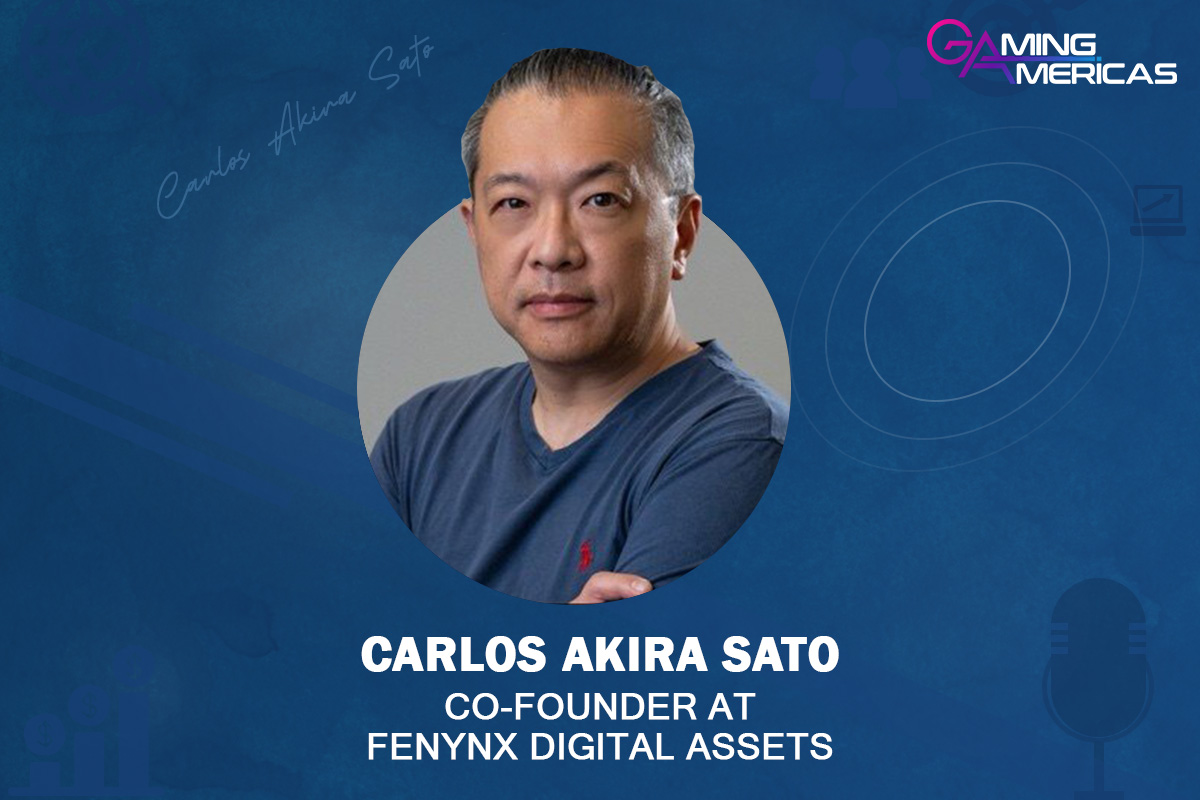
In this analysis, Carlos Akira Sato examines how the measure reflects a deeper shift in Brazil’s financial architecture, redefining what qualifies as a legitimate financial instrument and setting limits on the financialisation of non-economic events.
Carlos Akira Sato is co-founder of Fenynx Digital Assets and a specialist in regulated markets, financial infrastructure and responsible gambling.
In this op-ed, he argues that Brazil’s Resolution 5.298 is less about banning Polymarket and Kalshi than about defining the boundaries of the next generation of the financial system.
Brazil’s National Monetary Council Resolution 5.298 sets an unambiguous limit for platforms such as Polymarket and Kalshi in the country. The conclusion is straightforward: these models no longer find regulatory space in Brazil. But the significance of the decision lies not in the prohibition itself, it lies in what it reveals about the future of financial architecture.
Resolution 5.298 does not explicitly address prediction markets. It operates at a deeper level, redefining what can be considered a legitimate financial instrument. By requiring that contracts be tied to economic variables with objective price formation, the regulator eliminates the possibility of structuring instruments, however sophisticated in appearance, based on political, social or behavioural events. This is not a peripheral adjustment. It is a conceptual repositioning.
For years, platforms like Polymarket and Kalshi thrived precisely on ambiguity. They are not traditional bookmakers, nor do they fit neatly as derivatives exchanges. They operate in an intermediate territory, contracts based on probabilities, financial language and an implicit promise of efficient price discovery about the future. That grey zone was always their main asset, and their greatest regulatory risk. What Brazil has now done is eliminate it.
The most sophisticated aspect of the resolution lies in its design. The CMN did not target the technology, the format of the platforms, or their location. It targeted the essence: the nature of the risk being traded. In doing so, it made irrelevant whether the operation occurs through bilateral contracts, offshore platforms or blockchain-based protocols. If the risk is not economic, the contract is not admissible. It is a form of regulation that privileges substance over form — and is, for that reason, likely to prove more resilient.
This decision projects effects well beyond the gambling debate. It speaks directly to the discussion around tokenisation and the widely held idea in recent years that any event could be converted into a digital asset. Brazil signals the opposite. Innovation is welcome, but not unlimited. Tokenisation finds legitimacy when anchored in the real economy, credit, receivables, productive assets, and loses it when it attempts to capture behaviour, opinion or social events as the basis for trading.
It is at this point that the resolution also reveals an institutional tension. The normative text itself assigns to the CVM the responsibility of issuing complementary regulation. The choice is legally understandable, but institutionally questionable.
If the regulator’s own diagnosis recognises that these are hybrid instruments, moving between derivatives, securities and fundraising structures, the absence of a joint initiative from the outset is notable. The option for sequential regulation, with the CMN setting guidelines and the CVM filling in the detail, introduces a lag that may temporarily reopen the very grey zone it intends to close.
The paradox is evident. The resolution is sophisticated in attacking the economic essence of contracts, but fragments regulatory execution by distributing competencies non-simultaneously.
In an environment where financial innovation occurs at the intersection of different regimes, banking, capital markets and, in certain cases, gambling, coordination ceases to be desirable and becomes necessary. The lack of synchrony may generate divergent interpretations, legal uncertainty and, above all, residual arbitrage opportunities.
Even so, the core of the decision remains solid. By restricting what can be considered a financial asset, Brazil establishes a silent but powerful limit on the financialisation of reality. Not every event can be turned into a contract. Not every expectation can be converted into a price. And not everything that can be tokenised should necessarily be traded.
To say that Polymarket and Kalshi cannot operate in Brazil is therefore correct, but it is only the surface. What is at stake is the definition of boundaries for the next generation of the financial system. A system that will continue to incorporate technology and innovation, but that, at least in the Brazilian case, will remain anchored in the real economy. And in that process, the quality of coordination between regulators will be as decisive as the clarity of the rules themselves.
Carlos Akira Sato is co-founder of Fenynx Digital Assets and a specialist in regulated markets, financial infrastructure and responsible gambling. In this op-ed, he argues that Brazil’s Resolution 5.298 is less about banning Polymarket and Kalshi than about defining the boundaries of the next generation of the financial system.
The post An unequivocal decision for prediction markets in Brazil appeared first on Americas iGaming & Sports Betting News.

-

 Amusnet7 days ago
Connecting Business and Diplomacy: Amusnet Supports BBLF’s Annual Meeting of the Diplomatic Corps
-
AGCO6 days ago
AGCO Fines Great Canadian Entertainment $120,000 for Using Unauthorised Gaming System Software at Four Casinos
-
Affiliate Industry5 days ago
Hub Affiliations Triumphs at the iGB Affiliate Awards 2026: Winner of Programme/Network Campaign of the Year
-
Latest News5 days ago
N1 Partners at iGB L!VE 2026: Bringing Together Affiliates, Art and Innovation
-
certification7 days ago
PopOK Gaming secures certification for Portugal iGaming market
-
Canada6 days ago
St8 expands Octoplay aggregation deal to Ontario and the UK
-
Latest News6 days ago
LEON announces LEON.bet Masters, a new CS2 tournament in Portugal
-
Asia6 days ago
The UAE Lottery joins SAGIP outreach with Philippine Consulate and Infinite Communities