Latest News
Las Vegas Sands Reports First Quarter 2026 Results


Las Vegas Sands has reported the financial results for the quarter ended March 31, 2026.
“We continued to execute our strategic objectives during the quarter as we delivered growth in both Singapore and Macao while continuing to increase the return of capital to shareholders,” said Patrick Dumont, chairman and chief executive officer.
“Looking ahead, we remain confident that our people, our products and our focus on delivering outstanding service, hospitality and entertainment experiences to our customers will drive growth for the company and deliver strong returns to our shareholders in the years ahead.”
Net revenue was $3.59 billion, compared to $2.86 billion in the prior year quarter. Operating income was $904 million, compared to $609 million in the prior year quarter. Net income in the first quarter of 2026 was $641 million, compared to $408 million in the first quarter of 2025.
Consolidated adjusted property EBITDA was $1.42 billion, compared to $1.14 billion in the prior year quarter.
Sands China Ltd. Consolidated Financial Results
On a GAAP basis, total net revenues for SCL increased 23.6% to $2.10 billion, compared to the first quarter of 2025. Net income for SCL increased 45.5% to $294 million, compared to $202 million in the first quarter of 2025.
Other Factors Affecting Earnings
Interest expense, net of amounts capitalized, was $188 million for the first quarter of 2026, compared to $174 million in the prior year quarter. The weighted average debt balance was $16.0 billion during the first quarter of 2026, compared to $13.86 billion during the first quarter of 2025. The weighted average borrowing cost was 4.6% during the first quarter of 2026, compared to 4.9% during the first quarter of 2025.
The effective income tax rate for the first quarter of 2026 was 14.3%, compared to 13.4% in the prior year quarter. The income tax rate for the first quarter of 2026 was primarily driven by a 17% statutory rate on the Singapore operations.
Stockholder Returns
“During the first quarter of 2026, we repurchased $740 million of our common stock (approximately 13 million shares at a weighted average price of $56.64). The remaining amount authorized under our share repurchase program was $817 million as of March 31, 2026. Since the resumption of our share repurchase program in the fourth quarter of 2023 through March 31, 2026, we have repurchased 14.3% of our outstanding shares, approximately 109 million shares of our common stock at an average price of $47.95, for a total investment of $5.24 billion. The timing and actual number of shares to be repurchased in the future will depend on a variety of factors, including the company’s financial position, earnings, legal requirements, other investment opportunities and market conditions,” the Company reported.
The post Las Vegas Sands Reports First Quarter 2026 Results appeared first on Americas iGaming & Sports Betting News.











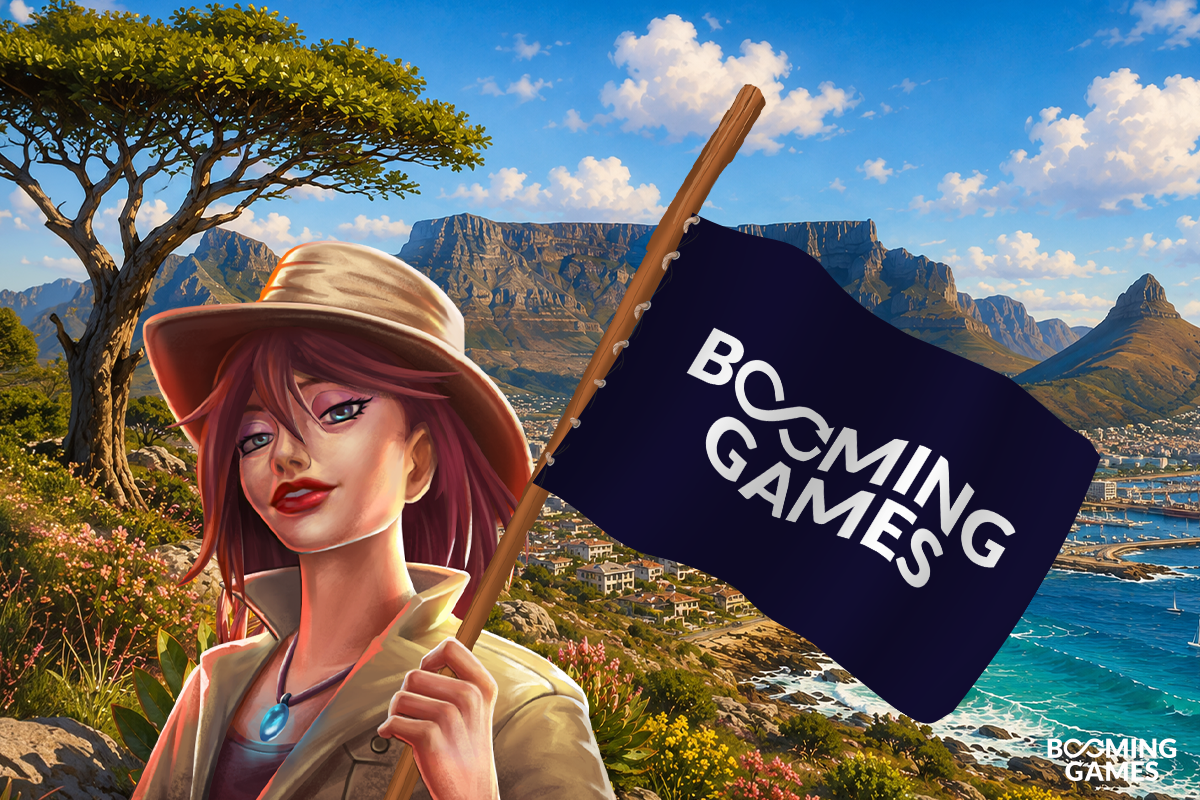
Booming Games says it is marking two years in South Africa and is setting a target to be “recognised as the market’s leading games provider in the next 1-2 years,” according to a company statement dated 14 July 2026.
The Malta-based supplier entered the market in July 2024 and says it has since grown from a single partner relationship to working with “a host of tier one operators across Africa.” The company also claims its local team has doubled in size, with further hiring planned in the coming months, and noted shortlistings at the SiGMA Africa Awards and iGA Summit Awards earlier this year.
In South Africa, Booming Games said it has more than 145 titles “tested, approved and live” in Mpumalanga, Western Cape and Eastern Cape. The company also pointed to a partnership announced last month with World Sports Betting (WSB), under which a selection of its titles will be integrated into WSB’s platform.
Solomon Godwin, Head of Africa at Booming Games, said: “Close partnerships with operators is central to our ability to innovate and deliver at speed. These collaborations allow us to establish a comprehensive feedback loop that informs future games. Put simply, we listen to our punters through our partners.”
Looking ahead, Booming Games said it plans to expand into “every remaining province” and increase investment in local presence and operator partnerships, including targeting new aggregator platforms entering the market. The supplier also said it will expand its release pipeline with localised titles and is developing new games across crash and instant categories, alongside updates to existing games.
Max Niehusen, Founder of Booming Games, said: “South Africa already drives the largest proportion of our revenues in Africa, and as we celebrate two successful years here, we are well placed to build out our offering even further over the years ahead.”
The post Booming Games marks two years in South Africa, targets top supplier spot appeared first on EE Gaming | Global iGaming & Tech Intelligence Hub.

Tonybet has awarded a €7,000 prize to a player in Kilcock, Ireland, after the customer found the campaign’s silver card in the operator’s World Cup Card Collection promotion. The update was announced Tuesday 14th July 2026.
The World Cup Card Collection includes 51 cards: 48 digital cards representing each participating World Cup nation, plus three unique cards—gold, silver and bronze—tied to prize payouts. Tonybet said the bronze card was available during the group stage and was previously found by a customer in Canada.
According to the operator, the silver card was available during the knockout rounds through the quarter-finals. The gold card is now in play for the semi-finals, third-place play-off and final.
Tonybet Head of Product Kiryl Liudvikevich said: “Our Tonybet World Cup Card Collection Bronze prize went during the group stage; now Silver has gone too!
“A massive congratulations to our lucky winner in Kilcock, County Kildare. Silver was always the knockout-round card, available once the World Cup reached the stage where a single result ends a team’s tournament. It has found its winner just as the field thins to the last handful of nations.
“Now we’re down to the final four, that’s where the competition really hots up, leaving just the golden card still hidden somewhere for our lucky winner to find. Best of luck to all of our players as this amazing World Cup reaches its conclusion this week.”
Tonybet said its World Cup Card Collection runs until 31 July. With the bronze and silver cards already claimed, the remaining campaign prize depends on when the gold card is found before the promotion ends.
The post Tonybet awards €7,000 silver prize in World Cup Card Collection campaign appeared first on EE Gaming | Global iGaming & Tech Intelligence Hub.
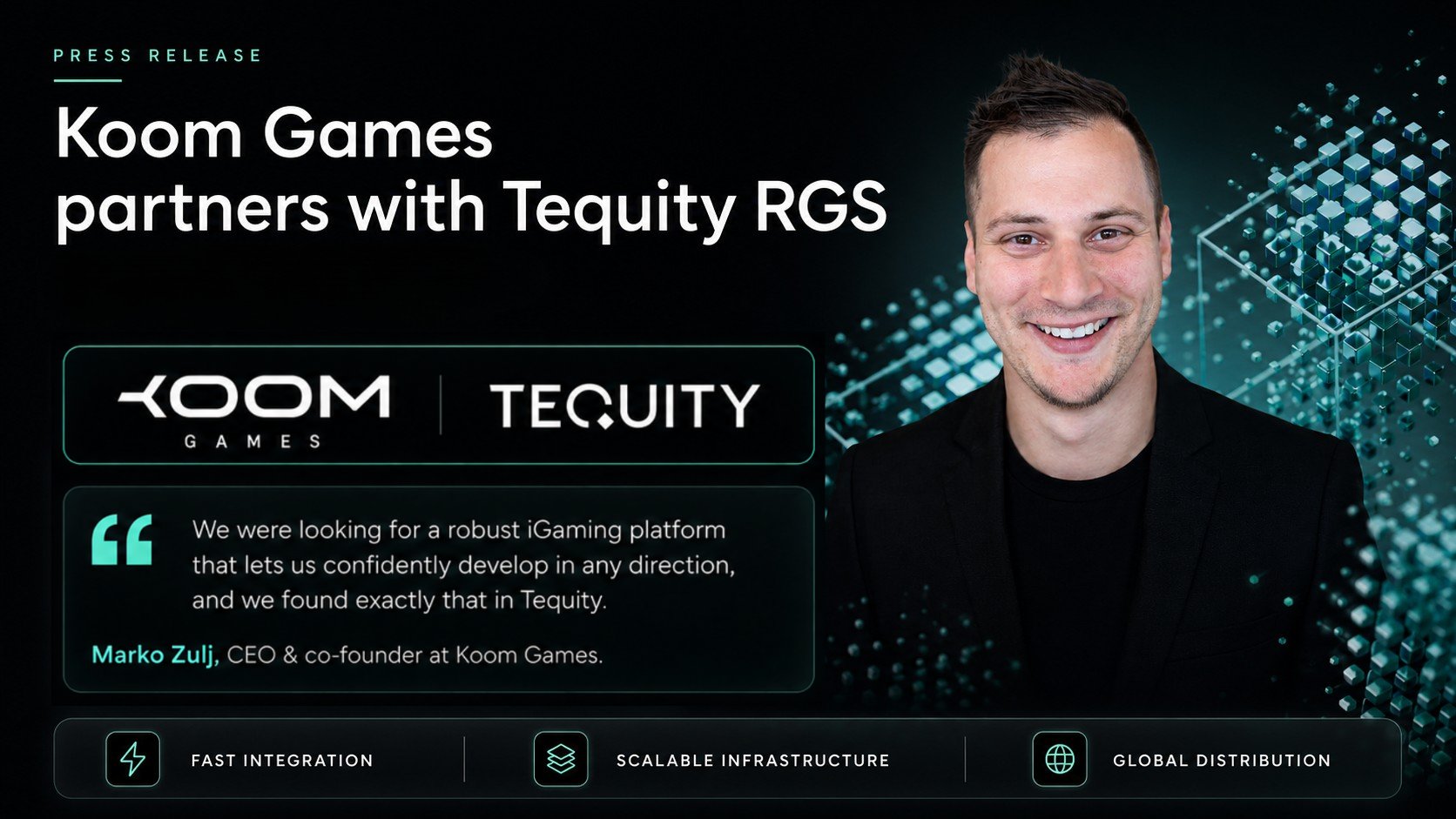
Tequity has agreed a Remote Gaming Server (RGS) deal with slot studio Koom Games, with the partnership announced on 14 July 2026. Koom Games will use Tequity’s licensed modular RGS to develop and roll out new titles for distribution to operators worldwide.
Under the agreement, Koom Games will use Tequity’s infrastructure to handle game delivery while keeping control of its creative and development roadmap. The studio said its approach is to build content closer to mobile and social gaming than traditional casino titles.
Tequity said it currently supports 31 RGS clients and manages more than 130 integrations across regulated markets. The company positioned the Koom Games deal as part of a wider run of commercial agreements with providers and operators.
Tanja Bergman, VP of Partnerships at Tequity, said: “Koom Games is a studio that is looming to enter the global market by making a big splash. The team’s dedication to creating content that is genuinely fresh is highly impressive. We are thrilled to offer the stable, high-performance environment needed to transform this creative vision into a market-leading reality.”
Marko Zulj, CEO & co-founder at Koom Games, said: “Whenever operators and aggregators ask us what category our games fit into, we actually struggle to give a traditional answer. Instead, we tell them, ‘you’ll need to try them, because you haven’t played this before’.
“Our games come with completely new mechanics, fresh math, and features built for social engagement. To scale such a vision and remain agile, we needed more than a reliable RGS — we were looking for a robust iGaming platform that lets us confidently develop in any direction, and we found exactly that in Tequity.”
The post Tequity signs Koom Games to its RGS platform appeared first on EE Gaming | Global iGaming & Tech Intelligence Hub.

-

 Compliance Updates7 days ago
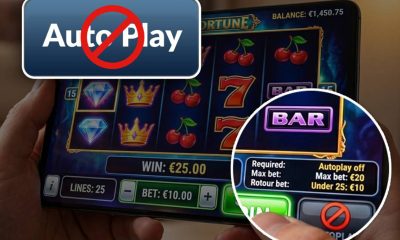
Kasinohai Audit: Most Slots Could Be Affected by Finland’s Draft Gambling Rules
-
Latest News6 days ago
BetMakers Technology Group Selected to Distribute ATG Horse Racing Content Across Australia and New Zealand
-
Latest News7 days ago
Belatra signs cooperation deal to distribute slots via VeliGames
-
Compliance Updates7 days ago
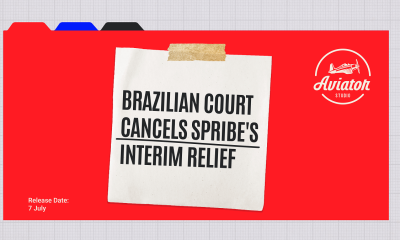
Pernambuco court revokes Spribe’s interim relief in Aviator trademark dispute
-
Compliance Updates6 days ago
ACMA Warns MMA Fighter Jamie Mullarkey for Breaches of Online Gambling Laws
-
 Compliance Updates4 days ago
Arizona Department of Gaming Issues Cease-and-Desist Orders to Multiple Operators Linked to Underage Gambling and Illegal Activity
-
Latest News5 days ago
PG Soft appoints Hugo Baungartner as General Manager LatAm
-
Canada6 days ago
Gaming Corps expands Entain partnership with major Canadian rollout