Compliance Updates
Texas House Passes Bill to Abolish Texas Lottery Commission

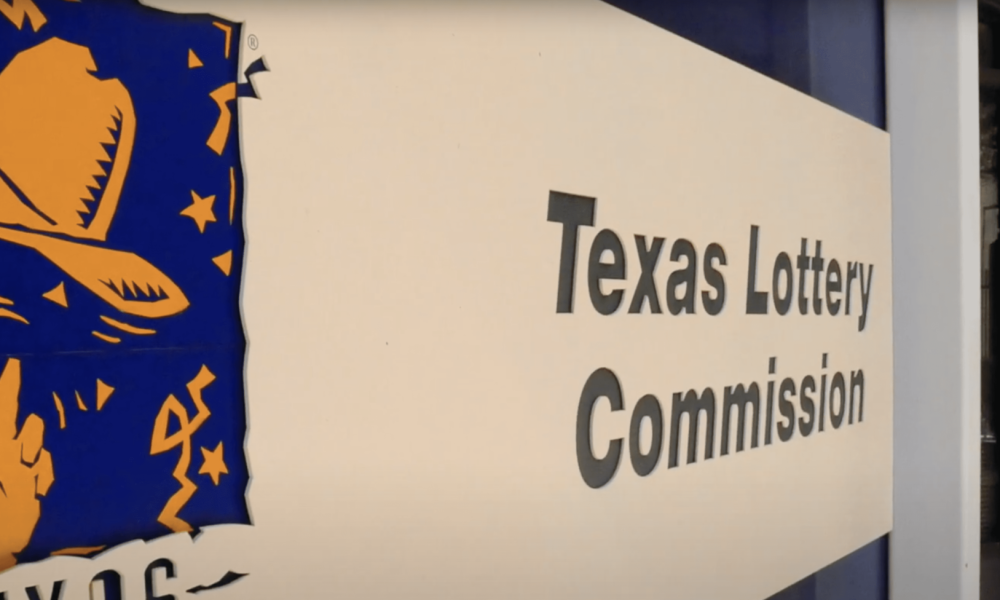
The Texas House has approved legislation to abolish the Texas Lottery Commission and reform lottery operations after multiple scandals have rocked the agency.
Authored by State Sen. Bob Hall (R-Edgewood), Senate Bill 3070 abolishes the commission that has overseen the lottery since shortly after its founding in 1991, moving operations to the Texas Department of Licensing and Regulation.
As originally written, the bill would also limit ticket sales per transaction, require age verification at the point of sale, push the agency into a two year probationary period and provide for greater oversight of the lottery—oversight that has been either intentionally or unintentionally lacking.
In January, Lt. Gov. Dan Patrick made an impromptu visit to a lottery ticket reseller responsible for selling millions of tickets online. During the course of his visit, he was denied access to the area where ticket printing was taking place.
The bill, as originally written, would allow the lieutenant governor, Speaker of the House, attorney general, and governor the ability to act as inspectors of lottery operations.
At the eleventh hour, State Rep. Charlie Geren (R-Fort Worth) offered a 58-page amendment to the measure that removed this and other critical parts of the bill. It was this amended bill that was, according to Geren, drafted with the lottery vendors, colloquially called stakeholders, that ultimately passed the House.
Among other changes, the Geren amendment changed vendor and employee retention.
While it was argued that the current employees would provide for a smoother transition from the TLC to TDLR, this would include members of the staff who were complicit in the extra legislative expansion of gambling in the state of Texas, and covering for the lottery’s multiple sins.
The Geren amendment, passed under the watchful eye of IGT’s lobbyist and former chief of staff to Gov. Greg Abbott, Luis Sanez, also guarantees that the state lottery contract will remain with its current vendor, IGT. According to a lawsuit filed in Houston, the company played a critical role in an international gambling syndicate’s rigging of the April 2023 $95 million jackpot.
According to testimony given to the Texas Senate State Affairs Committee, representatives from IGT were onsite for hours during the ticket printing at a location that conducted no retail business, which is against state rules. This is the same location where children were filmed printing tickets.
Geren, a longtime proponent of expanding gambling in Texas, failed to pass a bill last session that would have allowed casino gambling in the state. This session, the lottery, and its corrupt operation took all the oxygen out of the room.
State Rep. Brent Money (R-Greenville) offered an amendment to Geren’s amendment that would have abolished the lottery and not just the commission. Money’s amendment failed by a vote of 71-58.
Geren’s amendment was ultimately adopted in a vote of 91-44.
The legislation passed in a vote of 110-29.
Now, the bill requires one more vote in the House before going back to the Senate for either approval or to be reconciled in a conference committee.
If the bill is not reconciled, the lottery may be abolished, or a special session could be forced to save the corruption-plagued institution.
The post Texas House Passes Bill to Abolish Texas Lottery Commission appeared first on Gaming and Gambling Industry in the Americas.













Gaming Laboratories International (GLI) has become the first international gaming lab to be accredited in Ukraine.
GLI Europe B.V. was appointed by Ukrainian regulatory authority, PlayCity, as both a testing/certification and inspection body for gambling equipment in the country and is currently the only foreign entity to be accredited.
GLI Europe B.V. will perform testing and certification of all gaming related hardware and software in accordance with the requirements of PlayCity and the Ukrainian gaming regulatory framework. GLI will deliver all Ukrainian certification services through its European operational hub, GLI Europe B.V., ensuring certification is conducted under GLI’s ISO/IEC 17025, 17020, and 17065 accreditations.
The company will work with both foreign and Ukrainian suppliers, whereas Ukraine is considered a regulated market, and suppliers will need to hold a certificate of approval from PlayCity in order to request certification for the market.
“We are grateful for the trust PlayCity has placed in GLI. At GLI, we work with regulators in more than 710 jurisdictions, and we will bring our global expertise to PlayCity and to suppliers who wish to enter the Ukrainian market, guaranteeing the highest levels of testing quality and compliance,” said James Boje, Managing Director, EMEIA.
The post GLI Becomes First International Gaming Lab to be Accredited in Ukraine appeared first on Eastern European Gaming | Global iGaming & Tech Intelligence Hub.

The Minns Labor Government continues to reduce gambling harm by delivering on its commitment to remove outdated exemptions that enabled more than 650 pubs and clubs to operate gaming machines during standard shutdown hours.
Following an announcement in December by the Minister for Gaming and Racing David Harris that exemptions would cease from 31 March 2026, more than 650 venues will be required from 1 April to shut down all gaming machines between 4am to 10am each day, in line with NSW standard shutdown hours.
The six-hour shutdown is a harm minimisation measure intended to provide players with an important break in play.
Of the 672 venues with a varied shutdown period, usually for three hours instead of six, many have been in place for more than 20 years. These were given for reasons including being in high traffic ‘tourist’ locations, a history of earlier opening hours or financial hardship.
Venues that believed they had a strong case to keep their exemptions under the legislation and the revised Ministerial Guidelines, had the opportunity to put their case to Liquor & Gaming NSW.
As of 24 March 2026, 649 have been revoked by Liquor & Gaming NSW under delegation from the Independent Liquor & Gaming Authority and 10 by the Authority itself. Thirteen venues remain under assessment. All venues will be considered and an outcome communicated by 31 March 2026.
Sixty-two venues applied to keep their exemptions. Of the 49 applications assessed so far, all have been revoked.
Liquor & Gaming NSW will undertake a compliance campaign after 1 April when the new requirements come into effect, to ensure all venues are abiding by the changes.
A Review of Gaming Machine Shutdown Hours Framework conducted by Liquor & Gaming NSW in 2024 found that a minimum six-hour shutdown period, commencing no later than 4am, is effective at minimising gambling harm.
The move continues a suite of gaming reforms which the Minns Government has implemented since coming into office, including:
• Reducing the cash input limit from $5000 to $500 for all new gaming machines
• Reducing the state-wide cap on gaming machine entitlements, so that every year the number of gaming machines reduces based on forfeiture rates
• Banning political donations from clubs with electronic gaming machines
• Banning external gaming-related signage and internal gaming-related signage that can be seen from outside the venue
• Introducing Responsible Gambling Officers in venues with more than 20 gaming machine entitlements and mandating that extra Responsible Gambling Officers be on duty in venues after midnight
• Mandating that all venues with gaming machines must keep a Gaming Plan of Management and a Gambling Incident Register
• Banning gambling advertising on public transport and the ferries and terminals people catch it from
• Consulting with the community on a third-party exclusion scheme and use of mandatory facial recognition technology to support a statewide exclusion register for NSW hotels and clubs with gaming machines
Launching a NSW-first code of practice for the use of facial recognition in pubs and clubs that use the technology, following full consultation with a wide range of stakeholders including harm minimisation advocates, the NSW Privacy Commissioner and industry.
Minister for Gaming and Racing David Harris said: “The Minns Labor Government takes gambling harm minimisation seriously and that’s why I called for a review of the gaming machine variations back in December that has removed outdated exemptions that enabled more than 650 pubs and clubs to operate gaming machines during standard shutdown hours.
“Following months of review, it was clear these variations enabling about 20 per cent of clubs and pubs with gaming machines to operate outside of the mandated hours, some of which were more than 20 years old, were no longer fit for purpose.
“To enable variations to be revoked, I updated the Ministerial Guidelines and set up a streamlined process for venues to make their case if they wished to keep their variation, and to allow for a transition period.
“These changes are expected to prevent and reduce gambling harm.
“The NSW Government will continue to deliver evidence-based reforms to ensure we are striking the balance of addressing gambling harm while supporting sustainable development of an industry that employs more than 150,000 people in NSW and injects billions into the economy.”
The post NSW: More Than 650 Gaming Machine Exemptions Revoked to Address Gambling Harm appeared first on Eastern European Gaming | Global iGaming & Tech Intelligence Hub.
Compliance Updates
UK Government proposals to undermine the ‘aim to permit’ of the Gambling Act 2005?

Richard Bradley, partner at gambling licensing law firm Poppleston Allen, shares how new proposals in Parliament may affect licensed premises
-
The ‘aim to permit’ principle may be under threat
-
Switching the burden of proof from “if nothing wrong with the application, it should in theory be approved” to “the application can be rejected if on the licensing authority’s opinion the grant may not uphold the licensing objectives”
Members of the House of Lords have begun their further examination of the English Devolution and Community Empowerment Bill, (EDCE) which is in report stage and will be discussed again today, with report stage concluding 13 April 2026.
Baroness Taylor of Stevenage, a Labour Life Peer in the House of Lords, has tabled an amendment to the English Devolution and Community Empowerment Bill which proposes to introduce Gambling Impact Assessments by inserting two new sections to the Gambling Act 2005 (‘the Act’).
If the amendment is passed and these sections are inserted into the Act, this will allow a licensing authority to publish a Gambling Impact Assessment (GIA) where the authority considers the granting of any relevant licence to premises in their area is not likely to be reasonably consistent with one or more of the licensing objectives because:
-
The cumulative impact of relevant licences in respect of premises in the affected part(s) or
-
Other reasons which relate to that licensing objective, or those licensing objectives, and to the affected part(s).
A relevant licence has been defined as being:
-
a bingo premises licence
-
adult gaming centre premises licence
-
family entertainment centre premises licence or
-
a betting premises licence.
An authority would also be able to limit the numbers of licences in an area.
As part of any published assessment, the authority must set out evidence for how they have come to the opinion that the grant of any relevant licence would not be reasonably consistent with the objectives set out above.
Authorities will also be required to review any published GIA from time to time, and should the authority take the view that the assessment should be revised or withdrawn, they must publish any revision.
Where an application is submitted for a relevant licence and a GIA has been published and the authority has included in its Statement of Gambling Principles that there will be a presumption to refuse applications for relevant licences, then it will be deemed lawful for the authority to refuse such application solely on the ground that it falls within the scope of the GIA.
That being said, the amendment does confirm that refusing an application will be unlawful where the applicant asserts in the application that the grant would be reasonably consistent with the licensing objectives or objectives set out in the GIA and provides evidence that the grant would be reasonably consistent with the objectives.
Full details of the tabled amendment can be found here.
The post UK Government proposals to undermine the ‘aim to permit’ of the Gambling Act 2005? appeared first on Eastern European Gaming | Global iGaming & Tech Intelligence Hub.

-

 Asia6 days ago
Skyesports and GodLike signs MoU with Maharashtra Cyber to promote esports and cyber hygiene in Maharashtra
-
Africa7 days ago
TaDa Gaming Officially Enters the Regulated South African Market
-
AGLC7 days ago
Bede Gaming cleared for Alberta market entry
-
Central Europe7 days ago
Casino Interlaken teams up with Wazdan to bolster Swiss market presence
-
Andrzej Hyla7 days ago
Wazdan Releases its Latest Slot “Easter Coins”
-
Central Europe7 days ago
Sportradar Extends its Data and Audiovisual Betting Rights Agreement with Deutscher Fussball-Bund
-
Alberta6 days ago
Media Troopers Prepares for Alberta iGaming Launch with Canadian Gaming Law Firm
-
40 Sparkling Crown6 days ago
TaDa Gaming Enters South Africa via Strategic Betway Partnership