Latest News
Still Working Under Risky Curaçao? Here Are 3 Reliable Alternative Licenses

The European online gambling market is rapidly growing. The next few years show growth from $52.30 billion in 2024 to $88.16 billion in 2029, thus recording an 11.01% yearly increase. Although Curaçao currently holds a significant share of the market, this is likely to change rapidly, especially now that the official abolishment of the Curaçao master license regime has entered into effect. These issues are becoming increasingly evident amid recent court decisions, which have increasingly favored European players.
Many operators choose to work under a Curaçao license due to its easy accessibility and simplicity during the initial stages. However, the easy access to the license is now no longer relevant, as operators are required to go through a more scrutinizing licensing process with the Curaçao Gambling Control Board to obtain a license. Previously, operators could simply engage with an existing master license holder, but with the abolition of this status, this previous advantage no longer applies.
Consider a typical player from a European country who plays at an online casino licensed by Curaçao instead of a local license as required by local law. When the player experiences a loss, they may decide to recover their money and file a lawsuit against the gaming platform in a court that adheres to European Union legislative acts. After obtaining a favorable judgment in their home country, the player can then bring this judgment to Curaçao for enforcement. According to the latest case law in Curaçao, the courts there have taken a very permissive approach towards such claims and have enforced them. The alternative for Curaçao-based companies and operators who refuse to pay such claims is the risk of being declared bankrupt. This process has provided a platform for fraudulent players and opportunistic lawyers to exploit the legal system to recover their so-called “lost” funds. Consequently, many operators are abandoning Curaçao licenses in favor of other jurisdictions like Kahnawake, Anjouan, or Tobique.
The current lack of specific protective measures found in other jurisdictions is a critical aspect of the issue. For example, Malta has promulgated Bill No. 55, which safeguards the licenses within its jurisdiction from the interference of foreign court rulings. This legislation is one of the most important in the field, ensuring online casino operators are not subjected to discrimination. To illustrate, if an operator is sued by players from Europe who have placed bets or wagers with the operator under a Maltese license, the local courts in Malta will not deliberate cases in which the legality of the use of the Maltese license is questioned if the license was used in accordance with Maltese requirements. Instead, the courts will block or dismiss any foreign judgment introduced in Malta, thereby protecting the operators. In contrast, Curaçao courts have taken a completely different course, actually paving the way for players to exploit the system and bring claims against Curaçao operators for the reinstatement of legitimately “lost” funds.
Alternative Licenses: Kahnawake, Anjouan, and Tobique
Amid this danger and lack of protection, operators are increasingly considering alternative licensing options in other jurisdictions such as Kahnawake, Anjouan, and Tobique. These jurisdictions offer several advantages that make them attractive to operators.
Kahnawake: The Kahnawake is one of the oldest and most reliable of the jurisdictions providing a license for online gambling, and can be found in Canada. It is famed for its rigid regulatory regime coupled with strong legal resistance against opportunistic litigation. Kahnawake licensed operators can rest assured that the legal environment will be stable and predictable, thus, the legal issues that can be very costly are minimized.
Anjouan: Part of the Union of the Comoros, Anjouan also offers favorable conditions for online gambling operators. This jurisdiction does not require operators to have a physical presence, allowing them to avoid direct oversight by local courts. Anjouan provides flexible business conditions and reliable legal protection, making it an attractive alternative for operators looking to minimize legal risks.
Tobique: Also located in Canada, Tobique offers online gambling operators unique opportunities. This jurisdiction is characterized by flexible management and provides operators with a stable and predictable legal environment. With no requirements for physical presence and strong protection against lawsuits, Tobique is an appealing option for operators seeking a secure and stable licensing base.
These jurisdictions share several common advantages that make them preferable for operators:
Protection against opportunistic lawsuits: These jurisdictions often have better protections against frivolous or opportunistic lawsuits, reducing the risk of costly legal battles.
Flexible jurisdiction management: Many alternative licenses do not require operators to have a physical presence in the licensing jurisdiction. This allows operators to avoid direct oversight by local courts, which can lead to unfavorable rulings.
Stability and predictability: By choosing a jurisdiction with a more stable and predictable legal environment, operators can safeguard their business from the type of legal exploitation observed in Curaçao.
The i-gaming sector is a bright and always growing one, with many new regulators, permissions, prohibitions, jurisdictions, and licenses coming up all the time. By working under just one well-known license, operators narrow down their options, which is an unwise strategic decision. Surely, the Curaçao license is one of the easiest to get and most recognizable today, but this strong brand name has very high risks. Nevertheless, new licenses give new chances for the operators, with the major advantages being stability and safety.





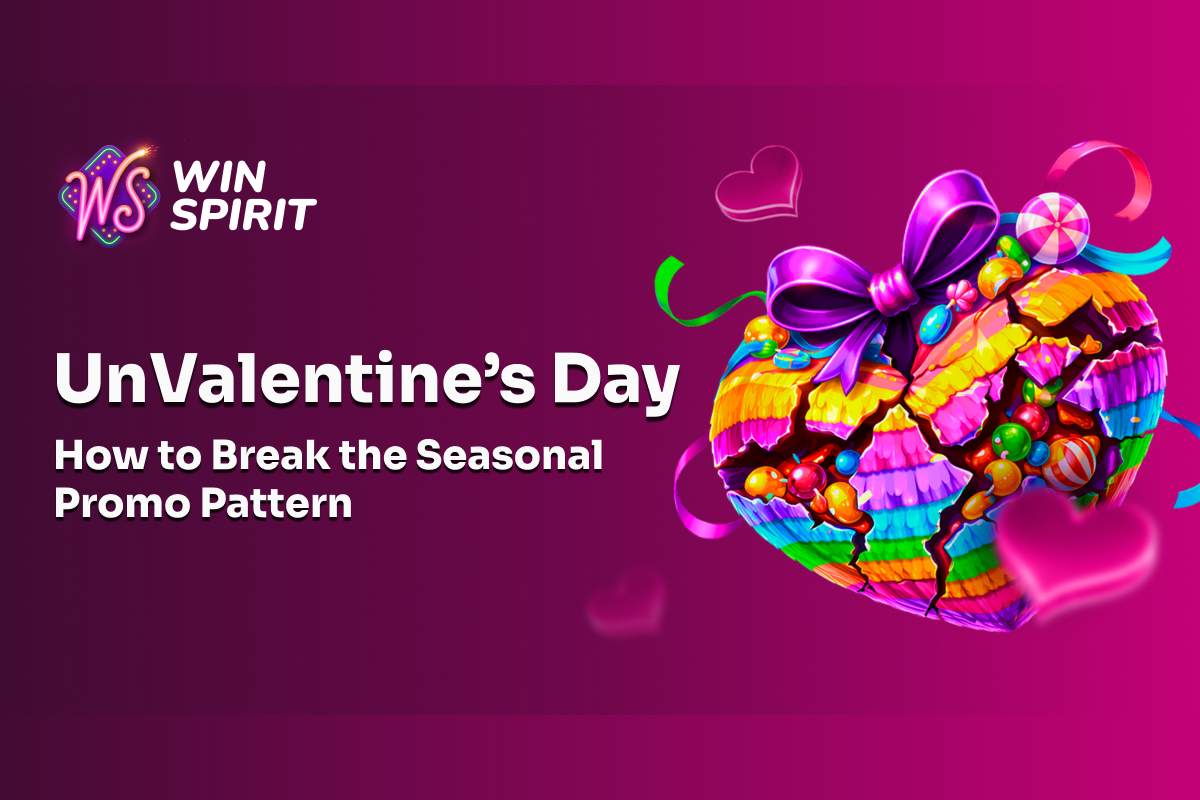
Every February, online gaming platforms look remarkably similar: red-dominated palettes, heart-shaped motifs, and the same “Love is in the Air” promotions. The formula is predictable, the competition intense, and for many players, the seasonal narrative itself has begun to feel hollow.
WinSpirit Casino took a different route. Instead of competing in the same tired Valentine’s language, the brand launched a campaign that embraced a rare player sentiment: a playful eye-roll at clichés. The result — UnValentine’s Day — demonstrates how emotionally intelligent campaigns can drive measurable growth without relying on heavy bonus mechanics.
The Idea
The campaign featured a dedicated landing page with a single interactive mechanic: a poll asking players to vote for the Valentine’s cliché that annoyed them most. Options were framed with gaming metaphors for natural crossover:
-
“Booking a table like catching a Jackpot”
-
“Heart-shaped pizza? Just give me a Wild”
-
“Love songs instead of coin drop sounds”
-
“Love letters without promo codes”
Every participant received 20 Free Spins, positioned as a lighthearted gesture rather than a transactional reward. No complex flows, no heavy mechanics — just a simple, relevant touchpoint.
What the Players Said
Over 5,000 players participated. Key takeaways include:
-
28% voted for “Booking a table like catching a Jackpot”, revealing that for many, Valentine’s Day feels more like a logistical challenge than romance.
-
22% chose “Heart-shaped pizza? Just give me a Wild”, reflecting the gaming audience’s preference for practical rewards over aesthetic gestures.
-
17% picked “Overthinking a spin like it’s a first date”, showing appreciation for humor and acknowledgement of the real player experience.
The remaining 33% were distributed across other options, emphasizing that the dominant sentiments were clear and actionable.
The Impact
During the one-week campaign:
-
+8% player activation frequency
-
+7% overall engagement
-
+5% growth in deposits
-
+4% increase in average bets per player
For a campaign built around a single, simple engagement mechanic with minimal investment, these results highlight a critical insight: emotional relevance can outperform financial incentives. Reactivated players returned for reasons beyond transactional value, and deposit and betting growth suggest emotional engagement can translate into real product behavior.
Part of a Bigger Picture
UnValentine’s Day reflects WinSpirit’s broader strategy of prioritizing emotional resonance over purely promotional tactics. Earlier, the Wish Express holiday campaign invited players, streamers, and partners to write letters to Santa. Over 2,000 wishes were submitted, social reach grew by 169%, and engagement rose 76%. The most memorable moment: WinSpirit covered round-trip flights for a player to reunite with family after eleven years.
Both campaigns — Wish Express and UnValentine’s Day — share a principle: meet players where they actually are. One campaign responded to nostalgic wishes, the other to playful skepticism. Both were rooted in empathy, and both delivered measurable results.
Why the Industry Is Watching
Seasonal, bonus-heavy campaigns are hitting diminishing returns. Acquisition costs are rising, and differentiation in February is structurally challenging. WinSpirit has shown that emotional differentiation is achievable, scalable, and measurable.
The secret isn’t complexity or oversized budgets — it’s insight. Find the emotional undercurrent your audience feels, create a simple way for them to express it, and let the interaction drive brand connection.
Players don’t want more mechanics. They want to feel heard. UnValentine’s Day proves that a single, well-timed question can outperform elaborate campaign architectures.
The post When Everyone Sends Hearts, WinSpirit Asked a Different Question appeared first on Eastern European Gaming | Global iGaming & Tech Intelligence Hub.

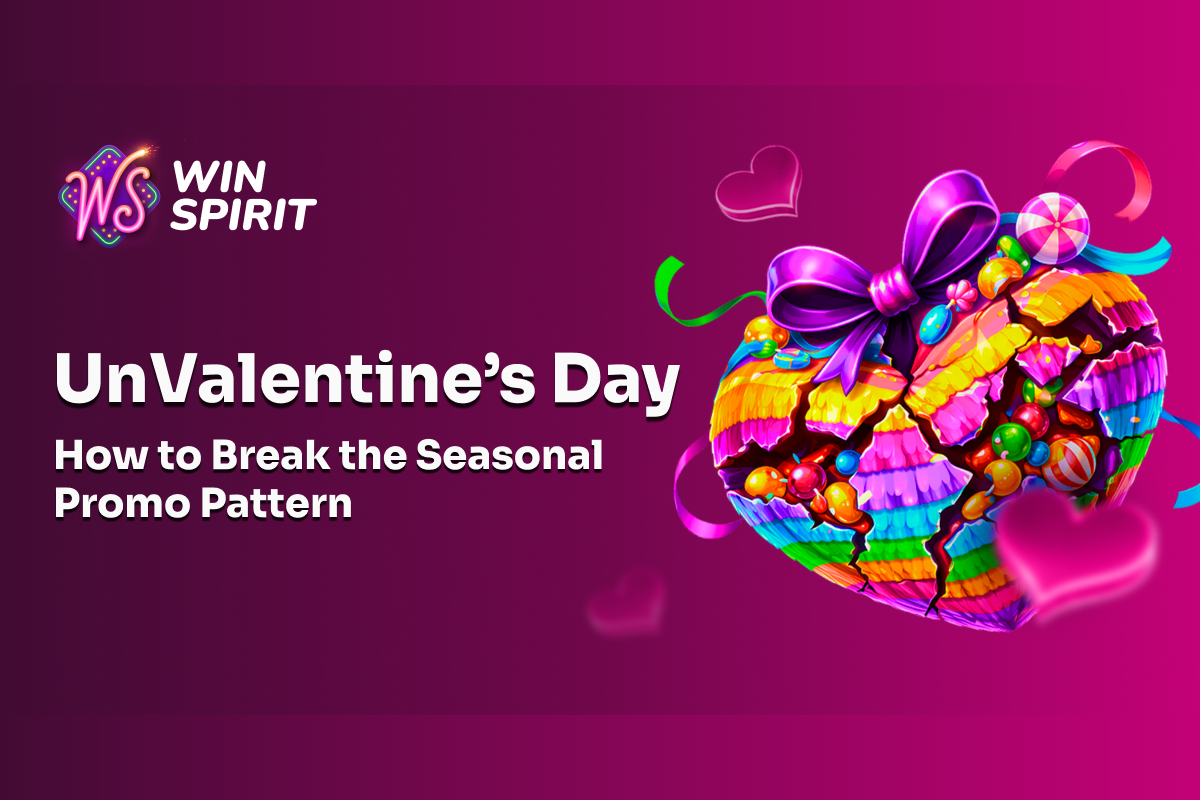
Every February, online gaming platforms look remarkably similar: red palettes, heart-shaped imagery, “Love is in the Air” promotions. The formula is familiar, the competition intense — and for a growing share of the audience, the seasonal narrative itself has begun to lose emotional relevance.
WinSpirit Casino chose a different path. Instead of competing within the same seasonal language as everyone else, the brand built a campaign around something players rarely get to express publicly: a lighthearted eye-roll at Valentine’s Day clichés. The result — UnValentine’s Day — is a case study in how emotionally intelligent campaigns can generate measurable product growth without structural dependence on bonus-driven mechanics.
The Idea
The campaign launched a dedicated landing page with a single interactive mechanic: a poll asking players to vote for the Valentine’s cliché that annoyed them most. The options were framed using familiar gaming metaphors, making the crossover feel natural:
“Booking a table like catching a Jackpot” “Heart-shaped pizza? Just give me a Wild” “Love songs instead of coin drop sounds” “Love letters without promo codes”
Participation was acknowledged with 20 Free Spins, framed as a lightweight reward mechanic positioned as a gesture of engagement rather than a transactional incentive. No complex mechanics, no lengthy flows. Just a low-friction touchpoint that felt genuinely relevant to the moment.
What the Players Said?
Over 5,000 players participated. The results reveal more than just a ranking — they offer insight into how players emotionally interpret seasonal rituals.
28% voted for “Booking a table like catching a Jackpot” — the clear winner, confirming that for a significant share of players, Valentine’s Day reads more like a logistics challenge than a romantic occasion.
22% chose “Heart-shaped pizza? Just give me a Wild” — a result that speaks directly to the gaming audience’s core values: practical rewards over aesthetic gestures.
17% picked “Overthinking a spin like it’s a first date” — proof that players appreciate when a brand acknowledges the real texture of their experience, even through humor.
The remaining 33% was distributed across the remaining options — reinforcing the dominance of the leading choice rather than diluting it. For the industry, that’s a useful reminder: the gaming audience is diverse, personal, and pays attention when a brand actually listens.
The Impact
All metrics reflect growth within the one-week campaign period:
+8% frequency of player activation
+7% overall engagement
+5% growth in deposits
+4% growth in average bets per player
For a campaign built around a single, simple engagement mechanic and a low-cost incentive model, the results clearly demonstrate a key insight: emotional relevance can outperform financial motivation in driving short-term audience engagement. The engagement lift reflects reactivated players returning for reasons beyond transactional value. The deposit and betting growth further suggest that an emotional entry point can translate into measurable product behavior.
Part of a Bigger Picture
UnValentine’s Day didn’t emerge in isolation. It reflects a deliberate strategic direction: emotional resonance, rather than promotional mechanics, as the primary driver of engagement.
Earlier this season, WinSpirit’s Wish Express holiday campaign invited players, streamers, and industry partners to write a literal letter to Santa — a gesture of nostalgia in an industry that tends toward hard metrics. Over 2,000 wishes were submitted. Social reach grew by 169%, engagement by 76%. The campaign’s most memorable moment came when WinSpirit covered the cost of round-trip flights so one player could reunite with family members they hadn’t seen in eleven years.
What connects Wish Express and UnValentine’s Day isn’t a tactic — it’s a consistent belief that the most effective brand interactions are the ones that meet people where they actually are. One campaign said: we believe in the power of sincere wishes. The other said: we see you rolling your eyes at the heart-shaped pizza, and so do we. Both are forms of empathy. Both worked.
Why the Industry Is Watching
For operators and marketers tracking the evolution of seasonal engagement, WinSpirit’s approach offers a model worth studying. Bonus-heavy campaigns face diminishing returns. Acquisition costs rise. And in a landscape where every February looks identical, differentiation becomes structurally difficult.
What WinSpirit has demonstrated — in two consecutive seasons — is that emotional differentiation is achievable, scalable, and measurable. The campaign architecture is not complex. The investment is not outsized. What makes it work is the quality of the insight driving it: find the emotional undercurrent your audience is already feeling, create a simple format for them to express it, and let the interaction itself do the brand-building work.
Players don’t want more mechanics. They want to feel that someone is listening. UnValentine’s Day proved that a single well-aimed question — asked at exactly the right moment — can outperform complex campaign architectures.
The post When Everyone Sends Hearts, WinSpirit Asked a Different Question appeared first on Americas iGaming & Sports Betting News.

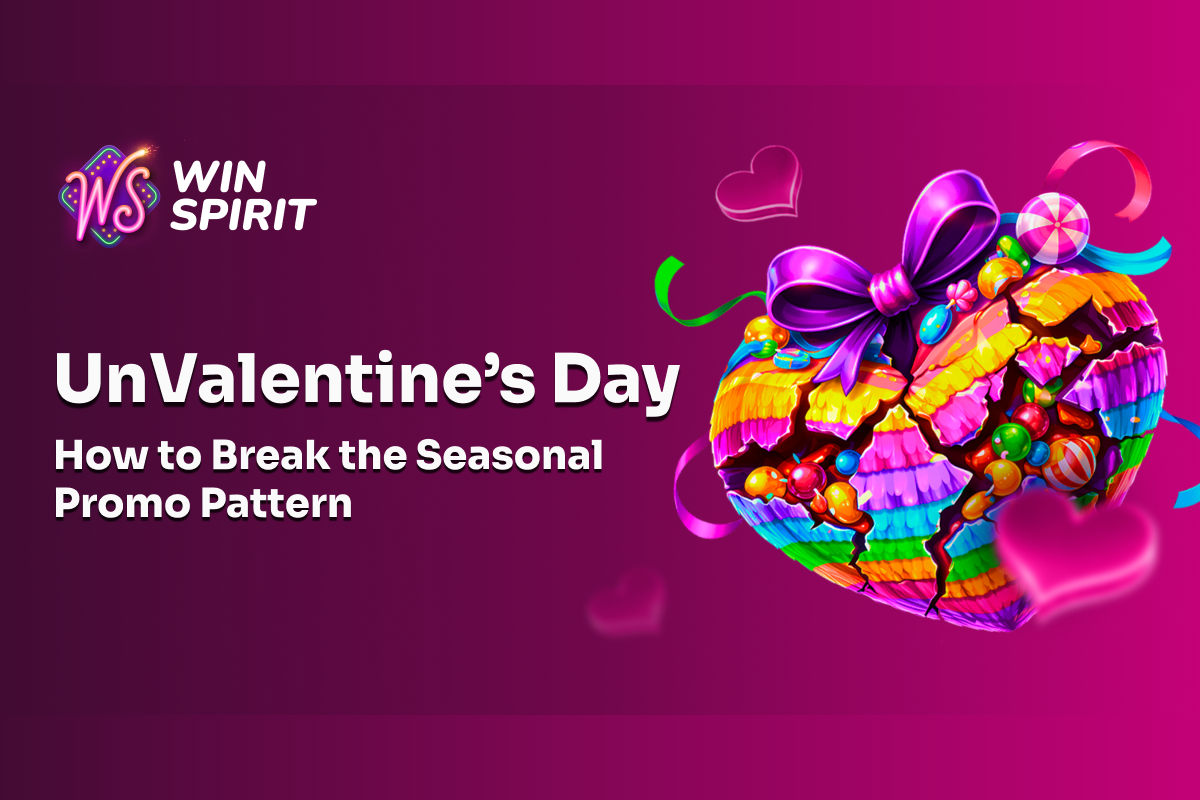
Every February, online gaming platforms look remarkably similar: red palettes, heart-shaped imagery, “Love is in the Air” promotions. The formula is familiar, the competition intense — and for a growing share of the audience, the seasonal narrative itself has begun to lose emotional relevance.
WinSpirit Casino chose a different path. Instead of competing within the same seasonal language as everyone else, the brand built a campaign around something players rarely get to express publicly: a lighthearted eye-roll at Valentine’s Day clichés. The result — UnValentine’s Day — is a case study in how emotionally intelligent campaigns can generate measurable product growth without structural dependence on bonus-driven mechanics.
The Idea
The campaign launched a dedicated landing page with a single interactive mechanic: a poll asking players to vote for the Valentine’s cliché that annoyed them most. The options were framed using familiar gaming metaphors, making the crossover feel natural:
“Booking a table like catching a Jackpot” “Heart-shaped pizza? Just give me a Wild” “Love songs instead of coin drop sounds” “Love letters without promo codes”
Participation was acknowledged with 20 Free Spins, framed as a lightweight reward mechanic positioned as a gesture of engagement rather than a transactional incentive. No complex mechanics, no lengthy flows. Just a low-friction touchpoint that felt genuinely relevant to the moment.
What the Players Said?
Over 5,000 players participated. The results reveal more than just a ranking — they offer insight into how players emotionally interpret seasonal rituals.
28% voted for “Booking a table like catching a Jackpot” — the clear winner, confirming that for a significant share of players, Valentine’s Day reads more like a logistics challenge than a romantic occasion.
22% chose “Heart-shaped pizza? Just give me a Wild” — a result that speaks directly to the gaming audience’s core values: practical rewards over aesthetic gestures.
17% picked “Overthinking a spin like it’s a first date” — proof that players appreciate when a brand acknowledges the real texture of their experience, even through humor.
The remaining 33% was distributed across the remaining options — reinforcing the dominance of the leading choice rather than diluting it. For the industry, that’s a useful reminder: the gaming audience is diverse, personal, and pays attention when a brand actually listens.
The Impact
All metrics reflect growth within the one-week campaign period:
+8% frequency of player activation
+7% overall engagement
+5% growth in deposits
+4% growth in average bets per player
For a campaign built around a single, simple engagement mechanic and a low-cost incentive model, the results clearly demonstrate a key insight: emotional relevance can outperform financial motivation in driving short-term audience engagement. The engagement lift reflects reactivated players returning for reasons beyond transactional value. The deposit and betting growth further suggest that an emotional entry point can translate into measurable product behavior.
Part of a Bigger Picture
UnValentine’s Day didn’t emerge in isolation. It reflects a deliberate strategic direction: emotional resonance, rather than promotional mechanics, as the primary driver of engagement.
Earlier this season, WinSpirit’s Wish Express holiday campaign invited players, streamers, and industry partners to write a literal letter to Santa — a gesture of nostalgia in an industry that tends toward hard metrics. Over 2,000 wishes were submitted. Social reach grew by 169%, engagement by 76%. The campaign’s most memorable moment came when WinSpirit covered the cost of round-trip flights so one player could reunite with family members they hadn’t seen in eleven years.
What connects Wish Express and UnValentine’s Day isn’t a tactic — it’s a consistent belief that the most effective brand interactions are the ones that meet people where they actually are. One campaign said: we believe in the power of sincere wishes. The other said: we see you rolling your eyes at the heart-shaped pizza, and so do we. Both are forms of empathy. Both worked.
Why the Industry Is Watching
For operators and marketers tracking the evolution of seasonal engagement, WinSpirit’s approach offers a model worth studying. Bonus-heavy campaigns face diminishing returns. Acquisition costs rise. And in a landscape where every February looks identical, differentiation becomes structurally difficult.
What WinSpirit has demonstrated — in two consecutive seasons — is that emotional differentiation is achievable, scalable, and measurable. The campaign architecture is not complex. The investment is not outsized. What makes it work is the quality of the insight driving it: find the emotional undercurrent your audience is already feeling, create a simple format for them to express it, and let the interaction itself do the brand-building work.
Players don’t want more mechanics. They want to feel that someone is listening. UnValentine’s Day proved that a single well-aimed question — asked at exactly the right moment — can outperform complex campaign architectures.

-

 CEO of GGBET UA Serhii Mishchenko7 days ago
GGBET UA kicks off the “Keep it GG” promotional campaign
-
Latest News6 days ago
TRUEiGTECH Unveils Enterprise-Grade Prediction Market Platform for Operators
-
Canada6 days ago
Rivalry Corp. Announces Significant Reduction in Operations and Evaluation of Strategic Alternatives
-
Acquisitions/Merger6 days ago
Boonuspart Acquires Kasiino-boonus to Strengthen its Position in the Estonian iGaming Market
-
Firecracker Frenzy™ Money Toad™6 days ago
Ancient fortune explodes to life in Greentube’s Firecracker Frenzy™: Money Toad™
-
Blueprint Gaming4 days ago
Blueprint Gaming unleashes Frankenstein’s Fortune blending dynamic modifiers with multi-path bonus offering
-
Big Daddy Gaming5 days ago
Big Daddy Gaming® Expands European Footprint After MGA Licence Approval
-
Africa6 days ago
EveryMatrix gains South Africa licence with customer launch pipeline on the rise