Interviews
Q&A w/ Jean-Pierre Houareau, CEO at Live Solutions

Why is it important for operators to offer live content to players?
Live content provides players with an engaging and immersive experience that they cannot get from pre-recorded content, so there are great reasons for people to use this kind of product. But there are benefits for operators too because live content helps keep players engaged, while also providing further opportunities for monetization.
Being able to see the action at the same time as the other players at the table generates trust and allowing people to communicate in a natural fashion with a casino representative is another way of generating confidence. Having all these assurances in place can help to improve retention rates and increase revenue for the operator.
What content actually falls into the live category? Is the definition of live being pushed by new and innovative products?
“Live content” typically refers to any type of game that is happening in real time and can be seen by players. “Live” is defined as anything which is not generated by a machine, so interactions streamed by video between players, or between the house and players, is the definition of live. The implementation of innovative products such as virtual reality and augmented reality is now stretching the boundaries of what constitutes live content, making the industry think differently about what the term ‘live’ actually means and how it can be best employed.
Why is live content so popular? What makes it appealing to players?
Live content is popular because we live in a world where people are trying to achieve the best live experience in whatever they are doing – and that includes casino games.
This form of content appeals to players for many reasons. It allows for a more interactive and absorbing experience than traditional kinds of content. It also provides people with the opportunity to interact with their communities and other players, which can lead to more engagement. Finally, live content offers a level of unpredictability that keeps players interested, since they never know what surprises may come from the next game or presenter!
Does live content appeal to certain player types more than others? Which demographics in particular?
Our live streaming product appeals to players across all demographics. We believe this is because over the last few years, people have become more comfortable using their devices for both work and socially. However, live content generally appeals to younger demographics in particular, such as millennials and Gen Z, who are more likely to use new technologies and media formats.
Live content also appeals to gamers looking for a more interactive and memorable experience than what other, more traditional forms of content can provide. Live streaming can also attract casual players who may not necessarily be looking for entertainment but may be interested in a particular event or broadcast.
How can live content be used to drive acquisition?
Live content can bring new players to the table by offering incentives for them to join the platform. For example, operators or providers can offer exclusive in-game rewards and discounts when players sign up. Our unique multiplayer casino table games platform is the only one of its kind in the industry and is therefore in a very strong position to drive the acquisition of players.
Additionally, live streaming can be used to create buzz around an event or game, which can generate more interest among potential players. Operators can also leverage their existing player base to drive acquisition by incentivizing them to invite friends and family to join their community.
Can it be just as effective when it comes to retention?
Live content promotes the engagement of both players and presenters, which in turn builds trust and relationships. This is a foundation as to why players keep coming back. Also, by offering attractive content and providing incentives for players to stay and watch, operators can create a sense of loyalty among players, which can lead to increased retention rates.
It’s also true to say that players can form strong bonds with one another over time by regularly taking part in live streams, which also helps to boost retention.
Does live content present any unique challenges for operators and providers? How can these challenges be overcome?
Live content is faced with the need to deliver content quickly while maintaining high quality. Our product has a particular challenge when it comes to the recruitment of presenters as this takes a lot of time to recruit and train them. Ensuring we have enough presenters spanning all languages, countries and time zones is an ongoing process.
Player behaviour is also a challenge when dealing with live content. The procedures we have employed to manage this is our “Eye in the Sky” technology which monitors all play at all tables and has a Control Room team who interacts with both players and the presenters at the table, with the ability to intervene at their discretion, usually by blocking player video streaming.
Other ways that operators and providers can overcome these challenges are by using advanced compression technologies to minimize bandwidth use and providing robust network infrastructure to ensure the delivery of content with minimal latency. Additionally, operators can employ data analytics to optimize their content delivery flows for maximum efficiency.
As a developer of live content, how are you bringing new ideas and innovations to the space? What does next gen live content look like?
We’re constantly looking for new ways to enhance the user experience. As technology advances, our processes include utilising data analysis to optimize content delivery flows, leveraging emerging technologies such as virtual reality and augmented reality to create more interactive experiences, and incorporating players and presenter feedback into development cycles for more tailored experiences.
The next generation of live content will focus on creating even more immersive experiences for users, such as personalized content recommendations, multi-user gaming experiences, and interactive challenges. The future looks very exciting in this regard, and you can be sure that Live Solutions will be at the forefront of any use of the latest technologies.
Powered by WPeMatico



By Giuseppe Barbanera, Head of Commercial LATAM at Games Global
In an industry that prides itself on global reach, it is easy to assume that scale alone guarantees success. But in iGaming, “global” should never mean uniform.
The markets we serve are not interchangeable and nowhere is this clearer than in Latin America.
Too often, companies attempt to replicate European or US customer service models across every region, assuming efficiency and standardisation will translate universally.
In reality, operating across multiple regions does not necessarily mean the same model applied everywhere will succeed. In practice, success depends on how well strategies are adapted to each market.
A strategy that works effectively in Europe or the US can fall flat in Latin America if it does not consider cultural nuances and the way people prefer to communicate and build trust.
The real question for our industry is not whether we can operate globally, but whether we are willing to adapt locally. Are we prepared to meet markets on their own terms?
While iGaming is international in scope, when it comes to customer service and account management, there is no universal rule of thumb. Each region brings its own business culture and has its own expectations.
Understanding those differences is essential to building lasting partnerships. Ignore this, and you risk missing the full potential of high-growth markets. Latin America exemplifies this particularly strongly.
The region is expanding rapidly and offers significant opportunities with its own distinct dynamics and pace of development.
Different regions require different approaches, and success depends on adopting a much more hands-on and adaptable approach that reflects local market conditions.
Relationships and trust form the foundation of business, and partners value time, presence and consistency.
Account management is not just about supporting day-to-day operations; there is a heavy focus on guiding partners through regulatory change while tailoring solutions that reflect both cultural preferences and player behaviour.
Cultural nuance therefore plays a key role in building strong partnerships. Speaking the same language and recognising local customs helps create genuine connections.
These small but important touchpoints turn business conversations into personal relationships, which in turn build trust and make collaboration much easier, ensuring strategies are more relevant and effective.
After all, a business is built by people, and if you were choosing a partner, would you not favour one who has taken the time to understand your culture and values?
Flexibility and empathy are equally important. While priorities may vary by market, balancing efficiency with strong communication and collaboration is key everywhere.
In Latin America, dialogue and relationship-building play an especially important role. Operators and partners want to know their challenges are understood and that the solutions offered reflect their business needs and are tailored to the local market.
That means technical expertise is not enough. True success comes from being culturally aware and having the willingness to adapt global models to fit local needs, rather than forcing local markets to adapt to global models.
Having a presence on the ground also makes a tangible difference. Local teams and studios provide direct insight into shifting trends, regulations and player preferences.
The proximity allows companies to respond quickly, whether by launching content that resonates with global audiences, tailoring campaigns to local celebrations, or helping partners navigate evolving compliance requirements.
Combining global scale with a local presence enables support that feels both relevant and reliable.
What we see in Latin America is that customer service is never a one-size-fits-all exercise. It is shaped by people just as much as by products.
By listening to local perspectives, investing in relationships and embracing cultural nuance, customer service becomes more than problem-solving and becomes a driver of long-term growth.
That is the difference between being just another supplier and a true partner.
The region rewards those who take the time to listen, adapt and connect, and as Latin America continues to grow and mature, cultural understanding will remain a defining factor in the most successful collaborations.
The post Cultural nuance: Localising customer service for Latin America appeared first on Americas iGaming & Sports Betting News.

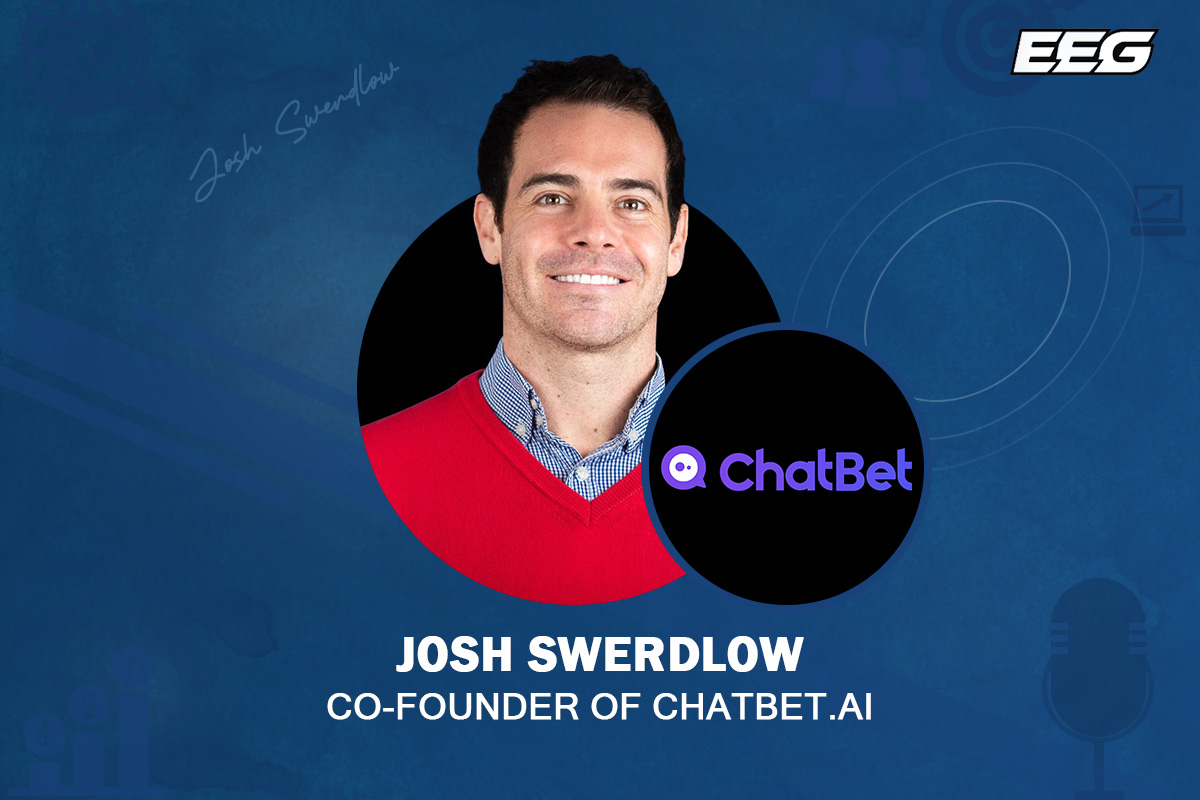
As legacy sportsbooks struggle with ‘search and click’ fatigue, Josh Swerdlow, Founder and CEO of ChatBet, says the next industry titan will win by owning the conversational intent layer where billions of users already live.
Why is the current sportsbook UX struggling to keep up with modern tech?
It comes down to legacy debt. Current sportsbook apps are just digital spreadsheets – grids from the 1990s that have been optimised for desktop and not mobile-first intuition. With the majority of sportsbooks, users are forced through deep menus and endless scrolling, creating a “hurdle race” for every transaction. This leads to cognitive overload – while hardcore bettors might tolerate the clutter, casual punters encounter analysis paralysis and this usually leads to betslip abandonment. As user behaviour shifts from “search and click” to “intent and fulfilment”, and against a backdrop of spiraling acquisition costs and high levels of churn, this is really putting the squeeze on operator profitability and ultimately long-term sustainability.
What do you mean when you say we are moving from “search and click” to “intent and fulfilment” and what does this mean for online sportsbooks?
In a “search and click” world, the user does the heavy lifting – navigating deep menus and grids just to find a single market. “Intent and fulfillment” flips that script. It’s the shift from a user searching for a bet to simply commanding it. If a consumer can book a five-star hotel in Rome by sending a single text, they naturally expect to back their favorite team with the same level of ease. For the operator, this means the sportsbook evolves into a high-powered back-end utility – the engine – while the messaging interface becomes the front-of-mind “steering wheel”. By moving away from the friction of standalone apps and capturing intent directly within WhatsApp or Telegram, operators stop being a destination the user has to find and start being a conversation the user is already having.
How does conversational betting actually chance user behaviour and crush the conversion funnel?
Traditional betting can take between 10 to 12 steps and up to 60 seconds – a solution like ChatBet reduces that to a single text or voice note and ten seconds or less. It also shifts the player from architect to director – instead of manually building complex parlays by scrolling through 50+ toggles, the user simply asks the AI to “Build a safe 3-leg parlay for the United game” and then confirms the wager. The result? Data from a ChatBet pilot shows an 82% drop in time-to-bet and a 28% increase in conversion rates.
From an operator’s perspective, is this a rip and replace of the current technology or is it much easier to implement than that?
Conversational betting solutions such as ChatBet are an orchestration layer, not a replacement. Our solution literally plugs into existing APIs. This also helps from a regulatory and compliance perspective, with core functions such as KYC, wallet management and responsible gambling triggers remaining securely within the operator’s existing stack. This allows for overnight modernisation – operators can update their UX for the “TikTok generation” without the multi-year cost of rebuilding their entire core tech.
Why is intent data now considered the ultimate competitive moat?
It’s about context over clicks. Traditional trackers show where the user clicked but conversational data reveals exactly what they want in their own words. Then there’s the network effect – every interaction trains the AI on local slang, fan sentiment and individual patterns and preferences. This provides operators with an insurmountable defence. A competitor can copy your odds, but they cannot easily clone a refined, high-context relationship with millions of users.
Why is this a billion-dollar venture-scale opportunity right now?
Viral distribution. Conversation betting piggybacks on billions of WhatsApp and Telegram users to allow operators to solve the skyrocketing customer acquisition cost crisis they face. There’s also the retention advantage, with messaging-native users showing a 35% higher day-30 retention rate because the interface is “always on”. What’s more, chat-based betting allows for “nudge” technology and lower-friction, smaller-stake engagement, which aligns with 2026 global regulatory shifts toward safer play.
Predictions markets are throwing the sports betting industry into chaos. How does conversational betting help traditional operators get in on the action?
Prediction markets are exploding because they tap into the “stock market of everything” but for traditional operators, these markets are often too complex to display in a standard grid and too intimidating for the average punter to navigate. Conversational betting bridges this gap by acting as a natural language translator for complex binary contracts. Instead of forcing a user to decipher order books or probability curves, a chat interface allows them to simply trade on their opinions, like the weather or political shifts, as easily as sending a text. Because chat has “unlimited shelf space”, operators can offer an infinite array of niche markets without clogging their app’s UI. Ultimately, it turns prediction markets from a niche financial product into a social, real-time experience, capturing “hot takes” in WhatsApp or Telegram and instantly converting them into priced, compliant transactions.
If this shift is as inevitable as you say, what is the one thing legacy operators need to do right now to avoid becoming the ‘Blockbuster’ of the betting industry?
They need to stop thinking about their “app” and start thinking about their “API”. The battle for the customer has moved off the home screen and into the chat thread. Right now, the opportunity is to be the first mover in the conversational space – to own the “intent layer” before it becomes the industry standard. The winners of 2026 won’t be the ones with the loudest marketing, but the ones who make placing a bet as easy as telling a friend who you think will win.
The post Betting at the Speed of Chat appeared first on Eastern European Gaming | Global iGaming & Tech Intelligence Hub.

Backed by Grupo Silvio Santos, founded by Silvio Santos, the company aims to position itself as a platform that goes beyond traditional betting.
In an interview during BiS SiGMA South America, Fernando Justos Fischer, CEO of TQJ, detailed the company’s strategic pillars, the sector’s challenges and its long-term vision for the Brazilian market.
According to Fischer, the current moment is one of consolidation in the regulated market.
The expectation is that the sector will move toward more mature discussions, focusing on compliance, sustainability and user protection.
In this context, the event is seen as a strategic space for alignment between operators, regulators and partners, driving more structured growth.
TQJ’s strategy is based on three main pillars: strengthening brand and distribution by leveraging the group’s assets; a data-driven operation focused on efficient acquisition and sustainable retention; and responsible gaming as a core principle of the business.
All of this, according to the executive, is supported by technology and intelligence applied to the user experience.
The backing of Grupo Silvio Santos is highlighted as a key competitive advantage.
For Fischer, the combination of credibility, scale and expertise in entertainment allows TQJ to position itself as an accessible, trustworthy brand with a strong connection to the Brazilian audience.
The goal is to lead the market in trust and responsibility.
In a highly competitive environment, the company is focusing on integrating proprietary distribution, gamified experiences and the intensive use of data and artificial intelligence for personalization.
Fischer notes that competitive advantage will increasingly lie in retention, supported by advanced CRM, engagement mechanics and solid responsible gaming practices.
During the event, this positioning was also demonstrated in practice.
Bet do Milhão came to life in a live game show format, directly connecting entertainment and betting. The activation generated engagement and reinforced the company’s value proposition.
Among the main challenges in the Brazilian market, Fischer highlights the need to build a sustainable environment amid intense competition, as well as the importance of educating consumers and combating illegal operators.
He states that operators with discipline, governance and a long-term vision will have a competitive advantage.
In terms of responsible gaming, TQJ already implements tools such as deposit limits, self-exclusion, behavioral monitoring and active communication with users.
The company adopts a preventive and continuous approach that goes beyond regulatory compliance.
This monitoring is carried out through real-time behavioral analysis, enabling the identification of risk patterns and allowing for fast and precise interventions.
Fischer emphasizes that the company aims to go beyond regulatory requirements, viewing responsible gaming as both a competitive differentiator and an institutional commitment.
Artificial intelligence plays a central role in the operation. In marketing, it is used for campaign optimization, prediction and content generation.
In product, it supports the continuous evolution of the user experience. In security, it strengthens analysis and protection systems.
Additionally, AI enables deeper integration between entertainment and betting, creating more interactive and personalized experiences.
Features such as real-time personalization and gamified mechanics are already part of the company’s roadmap.
Even so, Fischer stresses that there is a clear limit when it comes to personalization: user protection. All strategies must operate within responsible parameters, without encouraging risky behavior.
In summary, the CEO defines TQJ’s role in this new phase of the market as a platform capable of connecting entertainment and betting in Brazil with responsibility, technology and trust.
The post TQJ bets on entertainment and responsible gaming in Brazil’s regulated market appeared first on Americas iGaming & Sports Betting News.

-

 Compliance Updates7 days ago
Ukraine Launches Online Portal for Gambling Licence Applications
-
B2B gaming licence7 days ago
Wicked Games wins Swedish B2B gaming licence
-
Canada7 days ago
DraftKings Announces Intent to Launch Online Sportsbook and Casino in Alberta, Canada
-
Balkans6 days ago
Pasha Hotel & Casino Group and Platinum Casino Launch Pasha Platinum Casino at Grand Hotel Plovdiv in Bulgaria
-
Amusnet7 days ago
Amusnet’s Type S27 Slot Cabinets Debut in Ireland
-
Game Development7 days ago
Nailed It! Games and Lottomart launch co-branded Goal Bonanza slot
-
AGCO6 days ago
Endorphina secures AGCO supplier registration in Ontario
-
Adjarabet6 days ago
Galaxsys Enters into Strategic Partnership with Adjarabet