Gaming
How game studios can avoid common network and infrastructure issues


Mathieu Duperré, CEO and Founder of Edgegap
It’s common for video game developers to launch a day-one patch for new releases after their games have gone gold. The growing size of video games means it’s inevitable that some bugs will be missed during the QA period and go unnoticed until the game is in players’ hands.
Some of the most common issues experienced by game developers at launch are related to network and infrastructure, such as the connection issues causing chaos in Overwatch 2 and Call of Duty: Modern Warfare 2, as some players experience issues connecting to matches. And while there’s no way of eliminating lag, latency and disconnects from multiplayer games, developers can minimize the chances of them occurring and the disruption they cause by following a few simple steps.
Plan for the worst, expect the best
For many video game developers, the best-case scenario for the launch of their game – that it’s a huge hit and far more people end up playing it than they expected – can also be the worst-case scenario for infrastructure-related issues. An influx of too many players can lead to severe bottlenecking, resulting in lag and connectivity issues. In a worst-case scenario, servers become overloaded and stop responding to requests, usually leaving players unable to connect to online matchmaking.
Another worst-case scenario is planning for big numbers at launch and building the necessary infrastructure to support this, only for your game to launch and have nowhere near the traffic you were expecting. Not only is this a big problem for your bottom line, but things can get worse if you rush your search for an infrastructure provider and forget to read through the T&Cs properly.
Some infrastructure suppliers will onboard new studios on a fixed contract, not letting them scale back if they’ve overprovisioned their servers. Some infrastructure providers offer a lot of free credits, to begin with, only for those credits to expire after the first few months. Game studios then discover they’re responsible for fronting the cost of network traffic, load balancers, clusters, API calls, and many more products they had yet to consider.
With that in mind, try not to sign up for long-term agreements that don’t offer flexibility for scaling up or down. Your server setup has a lot to gain by being flexible, and your server requirements will likely change in the weeks following launch as you get a better idea of your player base; under-utilized servers are a waste of money and resources.
Test, test, and test again
You haven’t tested your online matchmaking properly if you’ve tested your servers under the strain of 1000 players, but you’re expecting 10,000 or 100,000 at launch. Your load tests are an essential part of planning for the worst-case scenario, and you should test your network under the same strain as if you suddenly experienced a burst in players.
Load testing is important because you’ll inevitably encounter infrastructure issues as your network comes under strain. Still, it’s only by facing those issues that you can identify them and plan for them accordingly once your game launches.
Similarly, you want to test your game in as many different locations as possible because there’s no way of telling where your traffic will be coming from. We’ve had cases where studios released a very popular game overnight in Chile but needed data centers. Thankfully, you can mitigate issues such as these by leveraging edge computing providers to reduce the distance between your players and the point of connection.
Consider the specific infrastructure needs of your game’s genre
Casual games with an optional multiplayer component will have a completely different network requirement to MMORPGs, with thousands of players connected to a centralized world. Similarly, a first-person-shooter with 64-player matchmaking will have a different network requirement than a side-scrolling beat ’em up or fighting game, which often requires custom netcodes due to the fast-paced nature of the combat.
People outside the video game industry assume all video games have similar payloads, but different game genres are as technically different in terms of infrastructure requirements as specific applications.
With that in mind, it’s essential for game studios, especially smaller ones, to regularly communicate with infrastructure partners and ensure they’ve got a thorough understanding of how the multiplayer components of your game will work. A decent infrastructure provider will be able to work with you to not only ensure load testing is carried out correctly but also help diagnose any broader issues.
Too many tools and not enough resources to use them
One thing that large network providers are very good at providing is tools, but these are often complex and require specific knowledge and understanding. It’s worth noting that large game studios have dedicated teams of engineers to manage these tools for AAA games with millions of players.
Smaller studios need to be realistic about the number of players they expect for new game releases and their internal resources to manage network and infrastructure-related issues and queries. You should partner with a provider that can handle all of this, so your studio can focus on making the best game possible. The more automation you can plan into your DevOps methodology, the better!
Takeaways for small game studios
While game studios likely encounter many issues as part of their game development journey, working these three pieces of advice into your DevOps pipeline is a sure way of minimizing infrastructure-related headaches.
Don’t reinvent the wheel – We’ve seen many studios trying to build bespoke systems rather than automate and use what’s already out there. If you can develop your netcode, engine and manage your Kubernetes, that’s great! But is it necessary, or is building these things from scratch just going to create trouble further down the line?
Understand your workflows – Plan for everything, use tech-agnostic vendors to remain flexible, get real-time visibility and logs for your matchmaking traffic, and have a 24/7 support plan for when your game is live. The more potential problems you’re aware of, the better.
Load testing your game – Build tiny tools and scripts to generate as much traffic as you can, breaking your system as often as possible.
Powered by WPeMatico


Following a strong showing at SBC Summit Rio earlier this month, EGT is set to present its Brazil-focused portfolio once again at BiS SiGMA South America 2026, taking place in São Paulo from April 7–9. Visitors can explore the company’s latest solutions and partnership opportunities at stand L146.
“Don’t miss the chance to experience our products firsthand and discover how we can work together,” said Celina Guedes, Regional Director Brazil at EGT.
Advanced Land-Based Solutions
A key highlight will be EGT’s Super Sorte Video Lottery Terminals. The range includes the slant-top Super Sorte 27/27 ST, featuring dual 27-inch full-HD touchscreens with 4K UHD resolution, and the vertical Super Sorte 43V, equipped with a single 43-inch curved display. Both models are designed to deliver an immersive, next-generation gaming experience.
Also on display will be EGT’s latest online betting terminals, Top Estrela and Bar Estrela. The Top Estrela unit features a sleek 24-inch portrait touchscreen, while Bar Estrela offers a compact solution ideal for bars and smaller venues. Both are supported by an intuitive platform that ensures smooth navigation and secure access to a broad content library.
All terminals will feature the Gold VLT multigame package, offering 50 titles across diverse themes. This includes popular classics such as Amazons’ Battle and Rise of Ra, fruit-themed favourites like Burning Hot, and regionally popular games such as Keno Universe.
Expanding Digital Capabilities
EGT Digital will also present its growing iGaming portfolio, including more than 180 in-house slot titles. Among the highlights are established jackpot series such as Bell Link, Clover Chance, and Gods & Kings Link, alongside newer releases like Panda Ventura, which has quickly gained traction with players thanks to its distinctive style and engaging gameplay. The title also marks the beginning of a new character-driven series, with Tiger Ventura set to follow.
In addition, the company will demonstrate its modular X-Nave platform, which integrates casino, CRM, payment gateway, bonus management, and an aggregator offering over 20,000 games from 200+ providers. The platform also includes a high-performance sportsbook with flexible integration and advanced personalisation features, supported by AI-driven tools that enhance engagement and automate key processes.
Strengthening Regional Partnerships
“Our main goal at BiS SiGMA South America is to strengthen strategic partnerships with operators, platforms, and stakeholders shaping Brazil’s regulated market,” Guedes added. “It’s also an opportunity to showcase our full technology and content ecosystem, supporting both online growth and potential future land-based developments such as VLT operations. Ultimately, we’re focused on building long-term relationships and positioning EGT as a trusted partner across Brazil and Latin America.”
The post EGT to showcase its gaming portfolio for Brazil at SiGMA Americas 2026 appeared first on Eastern European Gaming | Global iGaming & Tech Intelligence Hub.
Gaming
Soft2Bet launches MEGA Islands, a new gamification engine designed to increase player retention

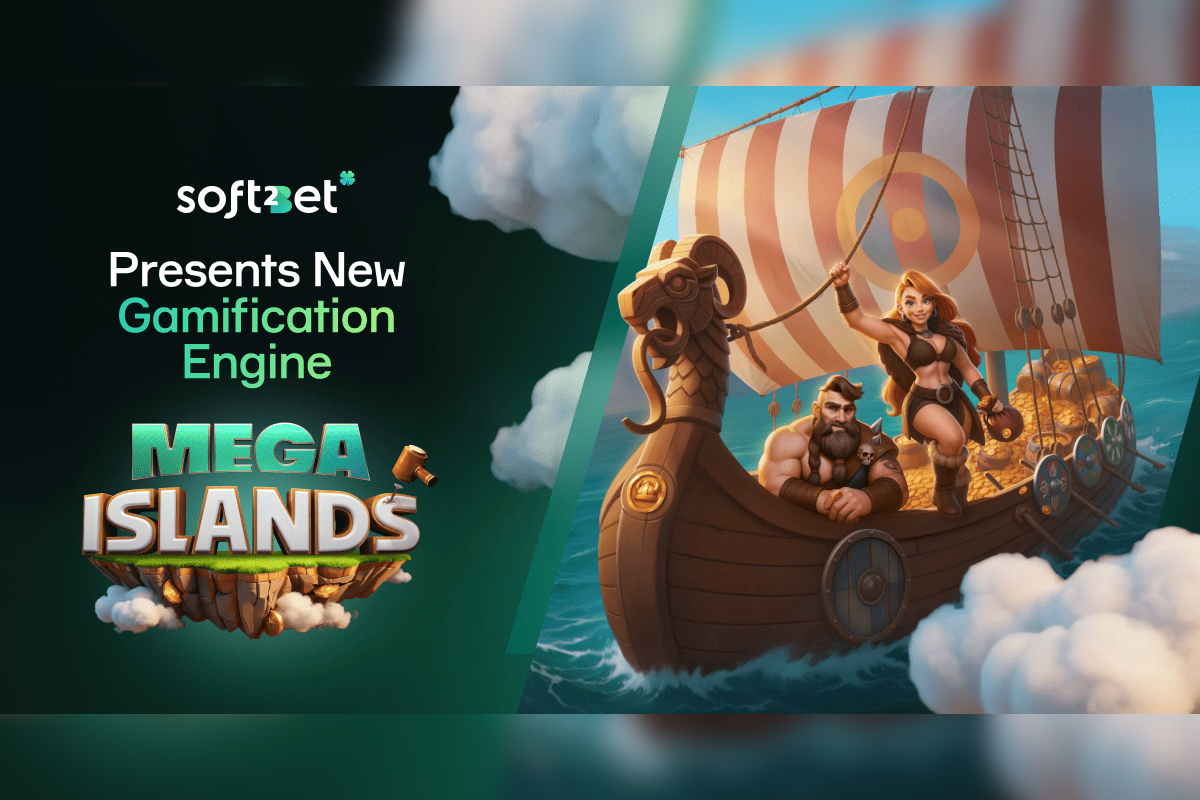
Soft2Bet has unveiled MEGA Islands, the latest addition to its MEGA Suite, designed to enhance player engagement and retention across both casino and sportsbook offerings.
The new engine introduces a persistent progression system that carries over across sessions, giving players an ongoing reason to return. Through island-building, resource collection, and continual advancement, players embark on a long-term journey that transforms short play sessions into sustained engagement.
First previewed in Soft2Bet’s recent Lodur release, the MEGA Islands system allows players to develop their own islands over time. Resources earned through gameplay can be used to construct new buildings, upgrade existing structures, and unlock further stages of progression. Each upgrade opens new goals, creating a loop of continuous advancement that keeps players invested.
The engine also incorporates plundering mechanics, giving players an additional path to gather resources by raiding other islands. This feature not only accelerates growth but also maintains a dynamic and engaging progression loop. With no fixed endpoint, MEGA Islands is built to encourage repeat play through a satisfying cycle of building, collecting, and advancing.
“MEGA Islands is designed to make retention feel natural by providing players with a progression journey they want to return to,” said Yoel Zuckerberg, CPO at Soft2Bet. “By building islands, collecting resources, and unlocking upgrades—including through plundering—each session becomes part of a longer experience. It gives players a clear reason to come back while providing operators with a retention tool that integrates seamlessly across casino and sportsbook.”
The launch of MEGA Islands underscores Soft2Bet’s commitment to gamification as a driver of long-term growth. As part of the MEGA Suite, the new engine offers operators a powerful tool to extend player journeys, increase engagement cycles, and deliver consistent value in competitive markets.
The post Soft2Bet launches MEGA Islands, a new gamification engine designed to increase player retention appeared first on Eastern European Gaming | Global iGaming & Tech Intelligence Hub.

Pragmatic Play, a prominent content provider for the iGaming sector, has enhanced its arcade collection with the debut of Chicken+, a retro-themed game showcasing fast-paced action and significant winning opportunities.
Brought to existence with retro 8-bit visuals, the game tests players to evade approaching vehicles and various dangers, leading the chicken safely over the road.
With each lane successfully cleared, the win multiplier increases. Players can withdraw their earnings whenever they choose or try to navigate all lanes for the top reward, but a single random mishap concludes the round as a defeat. Players are able to view the possible winnings and the likelihood of success in reaching each lane to aid in their decision-making.
There are four levels of risk – Easy, Mid, Hard, and Daredevil. Raising the level reduces the number of lanes per round and increases the volatility, enhancing the maximum win potential from 24x in Easy mode to over 3,000,000x in Daredevil.
Blending nostalgic visuals with an eccentric theme, a user-friendly interface, and rapid betting rounds, Chicken+ meets the increasing demand for engaging, fast-paced games.
The title signifies the newest entry in Pragmatic Play’s continually growing arcade collection, succeeding the launches of Plinko+, Spire+, and Mines+.
Sharon McHugh, Director of Public Relations at Pragmatic Play, said: “Chicken+ blends retro charm with simple, high-engagement mechanics. With configurable risk levels and significant win potential, it stands out as another compelling addition to Pragmatic Play’s diverse arcade portfolio, inviting players to test their nerve and cross the road.”
The post Pragmatic Play Elevates Arcade Roster with the Im-Peck-Able Chicken+ appeared first on Eastern European Gaming | Global iGaming & Tech Intelligence Hub.

-

 bingo6 days ago
 -
Compliance Updates6 days ago
EGBA Urges EC to Tackle Rising Online Fraud in Gambling Sector
-
Greentube6 days ago
Greentube hauls in big wins with Rumble Riches™ Haulin’ Gold™
-
DEGEN Studios6 days ago
DEGEN Studios ignites a brutal blood feud with Vendetta Fury
-
Baroness Fiona Twycross4 days ago
BGC AGM 2026 Discussed About Surging Illegal Gambling Black Market
-
Bonus Rush5 days ago
RAW iGaming launches BONUS RUSH® – a new family of feature-focused games
-
Booming Games4 days ago
Booming Games releases Ultra Buffalo Hold and Win
-
Adam Pentecost Chief Revenue Officer at Gaming Corps6 days ago
Gaming Corps Taps Betty to Boost Content Options for Ontario Players